
 Garden jobs Pruning
Pruning fruit trees
The most important pruning decision is not where to cut, but when. Apples and pears want winter. Plums, cherries and their relatives want spring or summer.
In short
Prune apple and pear trees in winter, from November to early March, while they are leafless, removing 10 to 20% of the canopy. Prune plums, cherries, apricots and peaches in spring or summer, in dry weather, never in winter: that lowers the risk of silver leaf and bacterial canker.

The short answer: two groups, two seasons
Fruit trees fall into two groups for pruning.
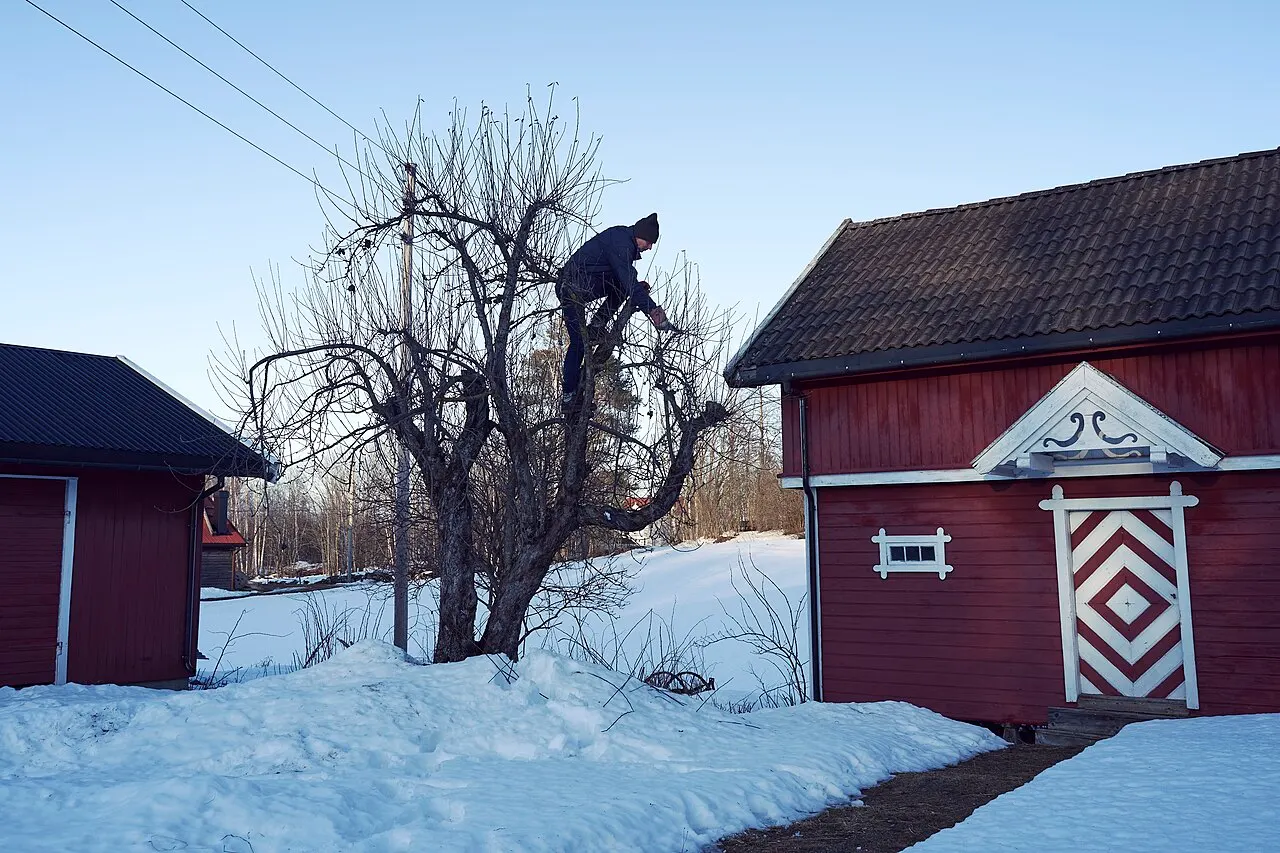
Apples and pears: winter. The RHS gives the window as November to early March, while the tree is leafless. Trained forms such as cordons and espaliers are also pruned in summer.
Stone fruit: spring or summer. Plums, cherries, apricots and peaches belong to the *Prunus* family. The RHS says to prune them in spring or summer, and only in dry weather, because that lowers the risk of infection from silver leaf and bacterial canker. For plums it says plainly: avoid pruning in winter.
If you remember only one thing from this page, make it this: never prune a plum or cherry in winter.
For step-by-step guides to each tree, see apple trees, pear trees, plum trees and cherry trees.
Garden jobs: what to do and when
Under cover and outdoors, for UK conditions. The weather differs from year to year and from north to south, so check your local conditions too.
Why stone fruit is never pruned in winter
Silver leaf is a fungal disease caused by *Chondrostereum purpureum*. The RHS says its spores are released mainly in autumn and winter in damp conditions, and infectious spores are active from September to May. They enter healthy branches through wounds, especially pruning cuts.
Who gets it. The RHS lists plums, apples, apricots, almonds, cherries and their relatives among the trees most often affected. The silvery sheen on the leaves is most noticeable on plums.
Why summer is safer. In summer there are fewer spores, and wounds heal faster, the RHS says.
Symptoms to look for. Leaves take on a silvery sheen, and affected branches then die. A cut branch may show an irregular dark stain in the centre, and dead branches can carry bracket-shaped fungi. The RHS cuts affected branches back 10–15 cm (4–6 in) beyond the end of the stain.
Our reading: apples are on the RHS silver leaf list too, yet the RHS still prunes them in winter. The firm summer-only rule is for the *Prunus* group, where the RHS ties it to silver leaf and bacterial canker.
Winter pruning apples and pears
The RHS guide to pruning apples and pears sets out the aims:
- Renew the fruiting wood. Remove some old wood each winter to stimulate new growth. Fruiting wood is best kept at one to four years old. - Let in light and air. Open the centre, so light reaches the shoots and fruit, and air moves freely to discourage disease.
How much. Take off 10–20% of the overall canopy in any one winter, working evenly round the tree. If the pruning pile looks large, stop and continue next year.
How to cut.
- Stagger the cuts through the whole canopy. Pruning only the top gives a "haircut" effect, with a thicket of non-fruiting shoots. - Think twice before cutting a branch over 10–12 cm (4–5 in) across. Trace it back to a narrower point, such as a fork, and cut there. - Most cuts should be on branches of 1–5 cm (½–2 in). A fully pruned tree may need only 10 to 20 cuts. - Leave no stubs. - Pruning paint is not needed on apples or pears.
Watershoots. Heavy pruning can produce vigorous upright shoots. The RHS cuts those in a useful gap back by about a third, and removes the rest where they start.
Tip bearers. Some apples, such as 'Bramley' and 'Discovery', are tip or partial tip-bearers. The RHS warns they lose fruit if most of the fruiting wood is removed.
Tools. Sharp secateurs, a good pruning saw and, for safety, a fruit tripod ladder.
Summer pruning trained apples and pears
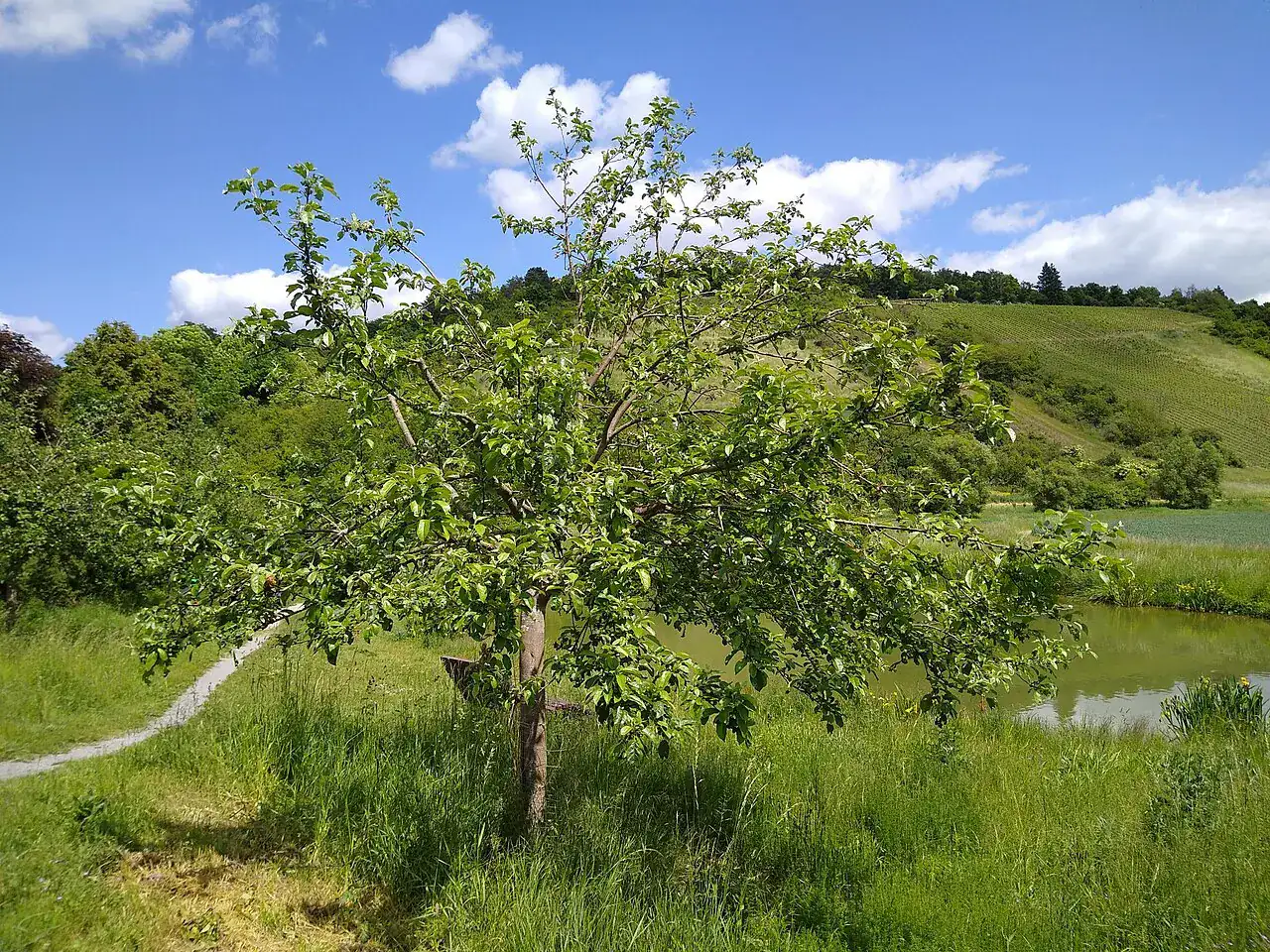

For cordons, espaliers, fans and pyramids, the RHS calls summer pruning the main method of pruning. It restricts growth, encourages fruit buds on short spurs, and lets light and air into the tree.
When. The RHS summer pruning guide gives:
- Pears: late July or early August. - Apples: mid to late August.
The real signal is when shoots stop growing and form a bud at the tip. A heavy crop can allow earlier pruning in August. Vigorous growth, a light crop, a wet summer or a garden in the north or west all suggest waiting a little.
How.
1. Tie in shoots you need to extend the framework. 2. Prune young shoots longer than about 20 cm (8 in). 3. Shoots from the main framework: cut to about 5 cm (2 in) from the base. 4. Shoots from existing spurs: cut to about 2.5 cm (1 in) from the base. 5. Leave shorter shoots. They usually carry a fruit bud at the tip.
If new shoots grow again afterwards, prune them to one bud beyond the previous cut in autumn. Missed summer pruning altogether? The RHS says do it in autumn or winter, rather than waiting until next summer.
Plums: April or July
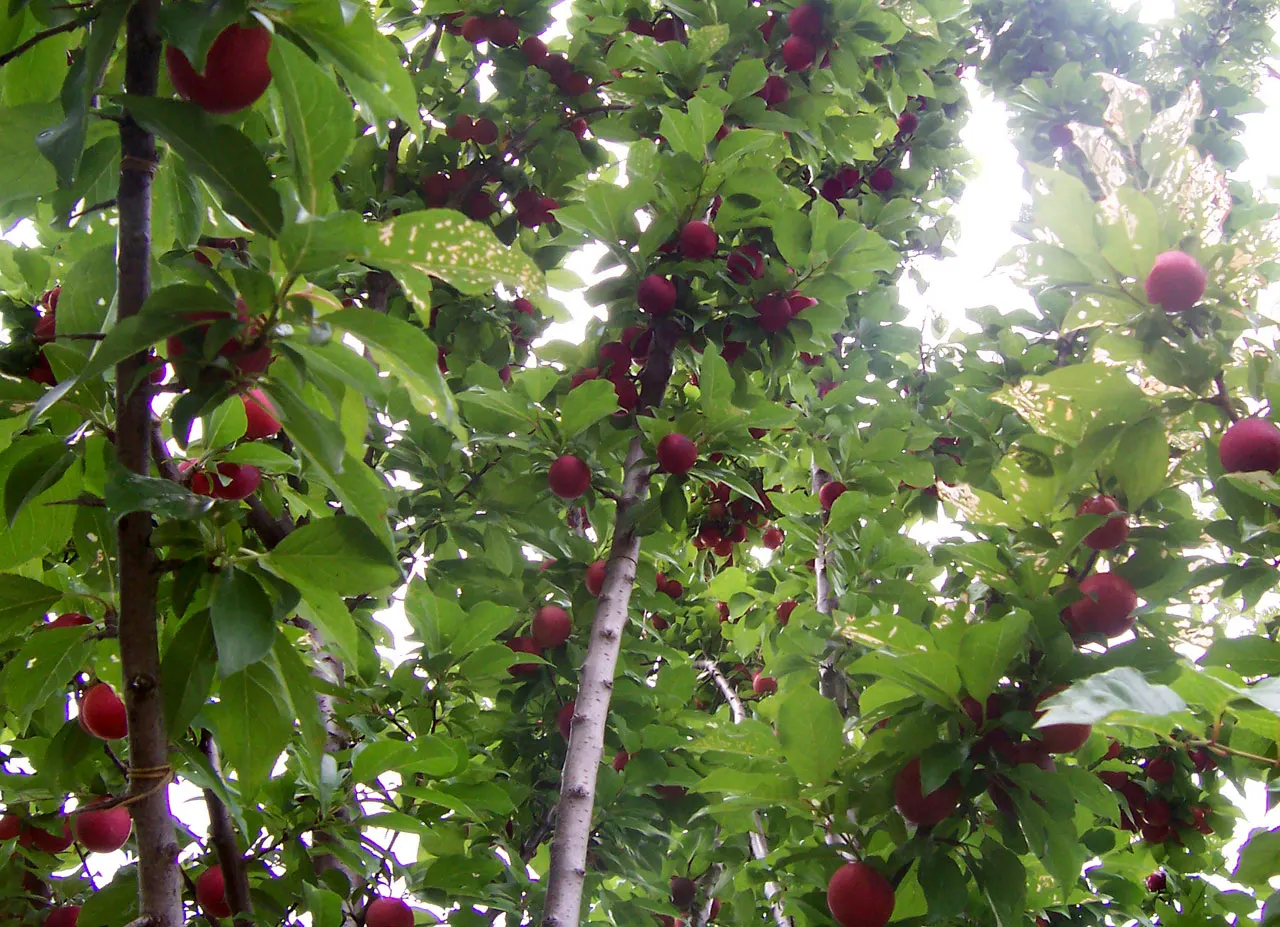

The RHS plum pruning guide gives two windows: early spring or mid-summer, specifically April or July.
- Young trees: spring is usually best. - Established trees: mid-summer is usually best.
Why not winter. Pruning plums in winter increases the risk of silver leaf, the RHS says, and plums and other *Prunus* are prone to it.
Rootstock decides the size. The RHS gives the eventual height of a plum bush by rootstock: about 3 m on 'Pixy', 3.6–4.5 m on 'St. Julien A', and 6 m on 'Brompton' or 'Myrobalan B'.
For the full routine, see when to prune plum trees.
Trained stone fruit: pinching in summer
Plums, cherries, apricots and peaches can all be grown as fans and cordons, the RHS says. Their pruning is done in spring or summer, and only in dry weather, to lower the risk of silver leaf and bacterial canker.
Spring. Tie in shoots that will extend or replace the framework. Pinch out or cut off shoots growing straight towards the wall or fence as soon as they appear. Spur systems get crowded over time, so thin them in spring.
Early summer. Pinch the tips of shoots with seven or eight leaves back to six. The RHS says this is often in June for plums and sweet cherries, and possibly May for apricots.
Late July or early August. Shorten the same shoots again, to three leaves. Pinch any regrowth back to one leaf.
Timing shifts with the weather. The RHS says it is usually later in the west of the country and in cool, wet summers.
Wound paint, stubs and big cuts
Wound paint. The RHS no longer recommends binding, wrapping or painting pruning cuts as standard practice. Let them heal naturally. The one exception it mentions is silver leaf: where the disease keeps coming back, painting the wounds of susceptible trees might be the less harmful option.
Stubs. The apple and pear guide says to avoid leaving a stub.
Big cuts. Prefer cuts under 10–12 cm across, and cut back to a fork or a narrower point instead.
Our reading: the right season does more for a fruit tree than anything you put on the cut. Get the timing right for the tree's group, and keep the cuts small.
Common mistakes
Pruning plums and cherries in winter. Silver leaf spores are active from September to May (RHS).
Pruning stone fruit in the rain. The RHS prunes them only in dry weather.
Taking too much off an apple or pear. The RHS limit is 10 to 20% of the canopy a winter.
Pruning only the top. It gives a "haircut" and a thicket of non-fruiting shoots (RHS).
Cutting off the fruit of tip-bearers. On 'Bramley' and 'Discovery', heavy pruning removes the fruiting wood (RHS).
Painting every cut. The RHS no longer recommends it as standard.
Pruning soft fruit too? See how to prune raspberries and how to prune gooseberries.
When to prune fruit trees
| Tree | When | Main job |
|---|---|---|
| Apples and pears (free-standing) | November to early March | Remove 10 to 20% of the canopy |
| Trained pears (cordon, espalier) | Late July or early August | Shorten new shoots over 20 cm |
| Trained apples (cordon, espalier) | Mid to late August | Shorten new shoots over 20 cm |
| Plums, young trees | Spring (April) | Formative pruning |
| Plums, established trees | Mid-summer (July) | Maintenance pruning |
| Fan-trained plums, sweet cherries | Often June, then late July or early August | Pinch shoots to six leaves, later to three |
| Fan-trained apricots | Possibly May, then late July or early August | Pinch shoots to six leaves, later to three |
| All stone fruit | Never in winter | Silver leaf spores are active September to May |
How to do it
- Work out which group your tree belongs to: apples and pears, or stone fruit (plums, cherries, apricots, peaches).
- Apples and pears: prune in winter, from November to early March, while leafless.
- Stone fruit: prune in spring or summer, on a dry day. Never in winter.
- Remove dead, damaged and diseased wood first.
- On an apple or pear, take out no more than 10 to 20% of the canopy in one winter, spread evenly round the tree.
- Cut back to a fork or side branch. Leave no stubs.
- Stop when the pile looks large. Carry on next year.
Common questions
When is the best time to prune fruit trees in the UK?
It depends on the tree. Apples and pears: winter, November to early March (RHS). Plums, cherries, apricots and peaches: spring or summer in dry weather, never in winter.
Can I prune fruit trees in summer?
Yes. Stone fruit is pruned in spring or summer. Trained apples and pears are also pruned in summer: pears in late July or early August, apples in mid to late August (RHS).
Why shouldn't I prune plum trees in winter?
Winter pruning increases the risk of silver leaf, the RHS says. Its spores are active from September to May and enter through pruning cuts.
How much can I cut off an apple tree?
No more than 10 to 20% of the overall canopy in one winter, the RHS says, spread evenly round the tree.
Should I paint pruning cuts on fruit trees?
Not as standard. The RHS no longer recommends it. Where silver leaf keeps recurring, painting cuts on susceptible trees might be the less harmful option.
Sources
We wrote this page using the sources below.
- Apples and pears: pruning made easy, Royal Horticultural Society (RHS)
- Summer pruning fruit trees, Royal Horticultural Society (RHS)
- Plums: pruning, Royal Horticultural Society (RHS)
- How to summer prune trained stone fruit trees, Royal Horticultural Society (RHS)
- Silver leaf, Royal Horticultural Society (RHS)