
 Fig trees Pruning
When to prune fig trees
A fig carries next summer's crop as tiny fruitlets on the tips of this year's shoots. Prune at the right time and you keep them; prune at the wrong time and you cut them off.
In short
Prune fig trees twice a year, the RHS says. In early to mid-spring, once the hard frosts are over, thin and shorten the framework. In early summer, pinch the tips of new shoots at five or six leaves. Stop by midsummer, and do no autumn pruning except removing unripe figs.

The short answer: spring, then a summer pinch
Prune a fig twice a year. The RHS pruning guide gives two windows: early to mid-spring, once the last hard frost has passed, and early to mid-summer. Gardeners' World says the same: prune in spring after all danger of frost has passed but before the tree starts new growth, and again in early summer, but not after midsummer.
Spring in practice. An RHS feature on pruning figs, with RHS horticultural advisor Adrian Thorne, puts the main prune in April in the southern UK and May further north, after the frosts.
Summer. From early summer you pinch out the tips of new shoots. The RHS says to stop pruning new growth by midsummer. Later cuts leave too little time for next year's fruit embryos to form.
Autumn. No pruning at all, only a tidy-up. In mid-autumn the RHS removes the larger figs that failed to ripen.
Winter. Gardeners' World notes that older advice was to prune figs in winter to avoid sap bleeding. It now recommends spring instead.
Why bother with two visits? The RHS says regular pruning, together with restricting the roots, controls the fig's vigour and encourages fruit rather than leafy growth. Left unrestricted, figs grow into large, bushy trees.
Fig trees: what to do and when
Under cover and outdoors, for UK conditions. The weather differs from year to year and from north to south, so check your local conditions too.
Why timing matters: the fig's two crops
A fig in Britain tries to fruit twice a year, but usually succeeds only once. The RHS growing guide explains the pattern.
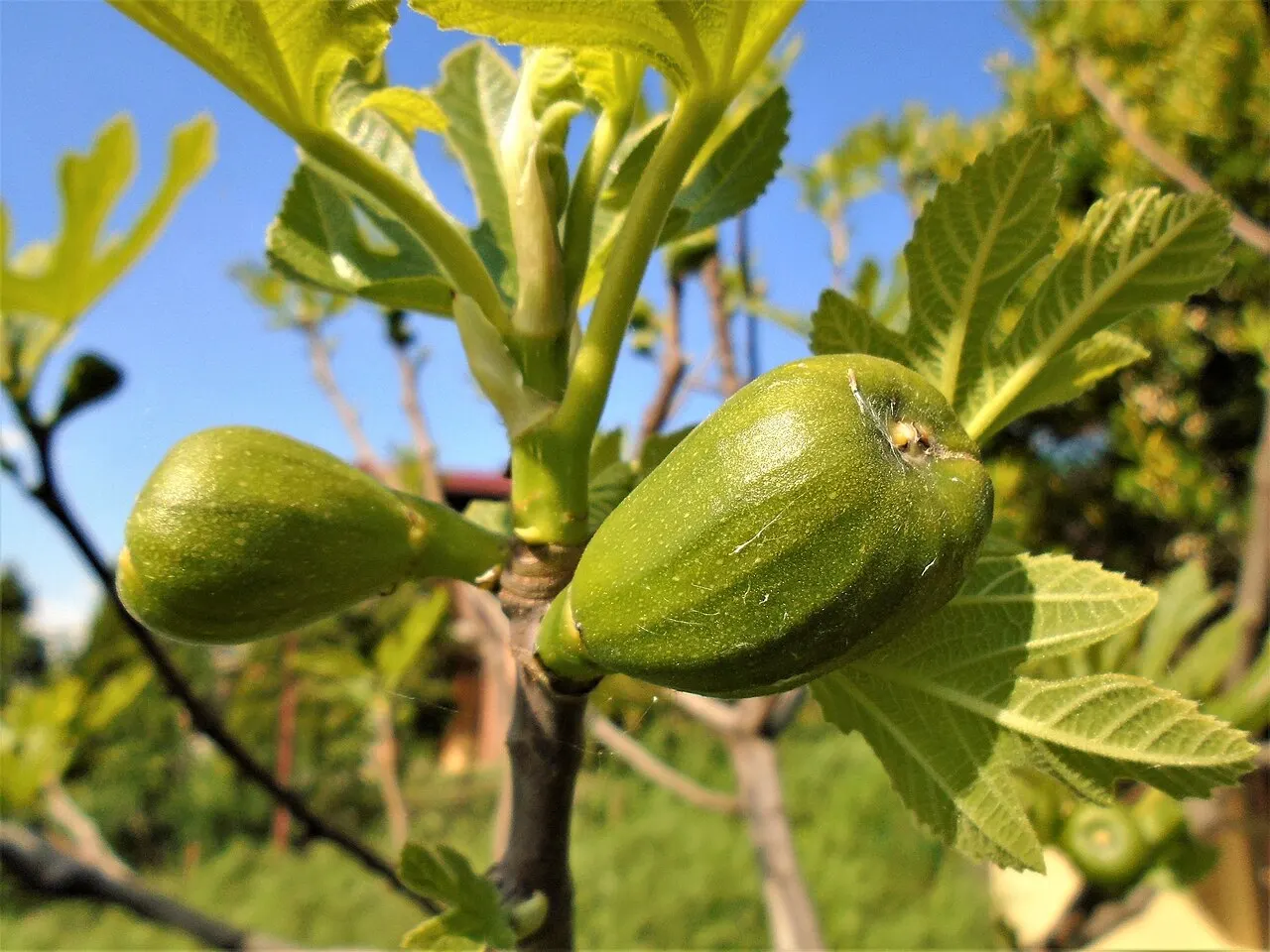
- The first crop forms in late summer as pea-sized fruitlets at the tips of the branches. They spend the winter on the tree and ripen the following summer. This is the crop you eat. - The second crop forms on the current season's shoots in late spring and early summer. Outdoors it rarely ripens and stays hard and green. The RHS says usually only the first crop ripens in the UK.
That explains both pruning dates.
Spring: the fruitlets are already sitting on last year's shoot tips. The RHS warns against heavy spring shortening, because it removes them. So you thin whole shoots out instead of cutting every shoot back.
Summer: the RHS feature says next year's figlets develop in the leaf axils of the pinched summer shoots. Pinch too late, after midsummer, and they have no time to form.
Autumn: the second-crop figs will not ripen the next year either, the RHS says, so remove any that are bigger than a pea at the end of summer or in mid-autumn. The RHS feature notes you can leave them for wildlife if they do not bother you.
Figs are also easy in one way. The RHS says they are seedless and develop without fertilisation, so no pollination is needed.
Sap: gloves, sleeves and work upwards
Fig sap is an irritant. The RHS asks you to wear protective gloves, and long sleeves when pinching or pruning a fan.
Two habits help:
- Start at the base and work upwards. Cut tips may bleed sap, and working from the bottom keeps the drips off you. The RHS feature adds a hat if the plant is taller than you. - Use a saw for thick branches. The same feature uses secateurs for shoots and a saw rather than loppers for thicker wood.
Wear a glove for summer pinching too, as the RHS feature does.
Pruning a fan-trained fig in spring
A fan against a wall is the classic British way to grow a fig. The RHS growing guide prefers a warm, sunny, sheltered spot, ideally a south- or south-west-facing wall. A fan can be kept to about 1.8 m tall and 3.5 m wide, or larger if there is room. The RHS pruning guide fixes horizontal wires 30 cm apart.
The RHS spring routine, once the danger of long, hard frosts has passed:
1. Thin last year's shoots. Cut back about a third of the young shoots made last year, leaving 2.5 cm stubs. Favour good spacing, and take out the lanky shoots that carry no tiny fruitlets. 2. Remove crowded replacements. If a replacement shoot would be crowded or badly placed, take it out completely. 3. Renew the old wood. On a mature fan, cut one or two over-long bare branches back to 5–8 cm stubs. They will send out new shoots low down. 4. Deal with shoots growing out or in. Prune shoots growing outwards from the wall hard back, and remove shoots growing inwards towards the wall completely. 5. Tie in the new shoots to the wires in a fan shape.
Gardeners' World also cuts back about a third in spring and ties in the new growth. It adds one more point: to stop a branch regrowing, remove it entirely, with no stub. The RHS feature adds that a shoot growing forward can be kept if you can ease it sideways into a gap on the wires.
Bare branches need a hard cut. The RHS says shortening long bare branches lightly achieves very little. Cut them hard so they make replacement shoots low down.
Pruning a bush, standard or potted fig in spring
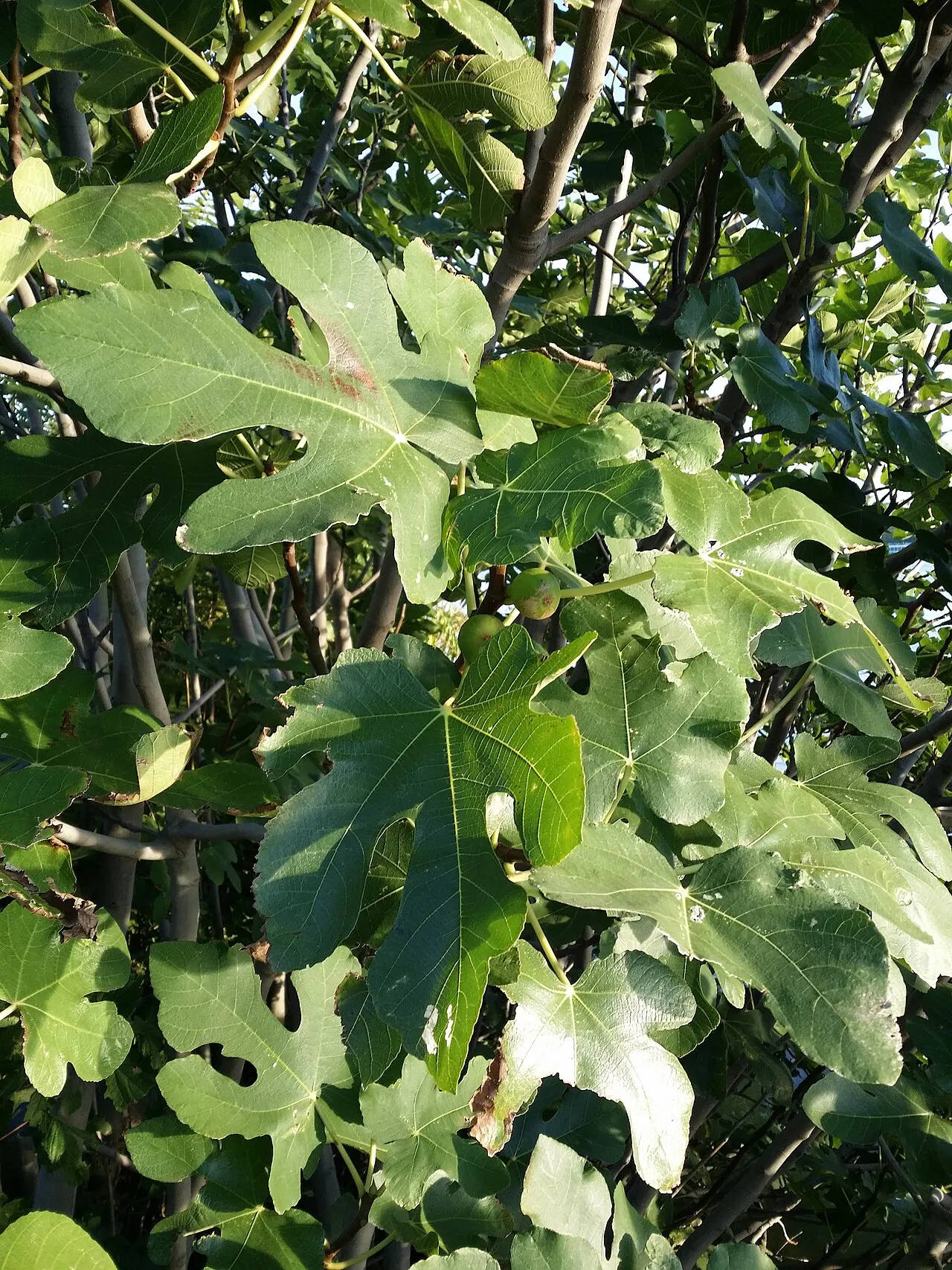

A free-standing fig can be a small bush on a short trunk, a standard on one tall stem, or a multi-stemmed shrub. The RHS prunes all of them in spring, after prolonged hard frosts but before new growth starts.
1. Frost damage and weak wood. Cut frost-damaged, crossing or weak branches back to 2.5 cm stubs. Keep the shoots that carry tiny fruitlets. 2. Crowding. Remove crowded branches completely, with no stub, and clear growth from the middle of the bush. 3. Old wood. On a mature plant, cut one or two over-long bare branches back to 5–8 cm stubs.
Gardeners' World aims for a balanced bowl shape. The RHS feature, for container figs, keeps the centre open "like a bowl", aims to remove about a third of the stems and may replace an old stem with a strong new one.
Do not top the tree. Gardeners' World warns that cutting off the top encourages even more growth.
The RHS feature has a simple rule for every cut: prune a shoot hard back to old growth, or leave it alone. And cut suckers off at the base whenever you see them.
The early summer pinch
Pinching means taking off the soft tip of a shoot with finger and thumb. The RHS says it encourages branching, and calls it a key part of summer pruning.
- Fan: in early summer, tie in new shoots. Then pinch out the tip of every other young shoot once it has five leaves. - Bush, standard or pot: pinch back new shoots once they have five to six leaves. - Stop by midsummer.
Gardeners' World puts it slightly differently: shorten all sideshoots to five leaves from the base, and leave the other leaves alone.
The RHS feature adds a summer tidy-up: long, whippy shoots that will not become part of the framework are cut hard back to 5–8 cm.
Our reading: the three guides agree on five or six leaves and on finishing by midsummer. They differ only on whether every shoot or every other shoot is pinched on a fan. Follow the RHS pruning guide for a fan and pinch every other one.
Old, overgrown figs
A fig that has been left alone for years can be brought back, but slowly. The RHS advises staggering major pruning over several years, unless total renovation is urgent. Hard pruning all at once causes excessive regrowth.
- Each spring, remove about a third of the vigorous regrowth. - Each early summer, pinch out the shoot tips to encourage branching. - Be patient. In the ground, the RHS says, getting regrowth under control may take three to five years.
Control the roots as well. Pruning alone will not tame a fig in rich soil. The RHS growing guide plants figs in a hole 60 cm deep and wide, lined on the sides with vertical paving slabs that stand 2.5 cm above the soil. The base is left unlined, with a 10–20 cm layer of rubble or stones for drainage. Plant at least 20 cm from the wall. Gardeners' World suggests the same lined hole, or a large container, or a large pot sunk in the ground.
At RHS Wisley, the article on the fig National Collection notes that root restriction is not needed there, because of dry summers and sandy soil. On heavy clay, a square of paving slabs limits the spread and improves the harvest.
Figs in pots and winter protection
A potted fig is pruned in the same way as a bush. The RHS growing guide uses a pot about 30 cm wide and deep, and repots every couple of years in March, moving up only slightly in size each time.
Frost. The mature wood of most varieties tolerates frost, but the young shoot tips with their fruitlets do not, the RHS pruning guide says. That is next summer's crop.
- Fan on a wall: after the leaves fall, pack straw or bracken round the branches and hold it in place with netting, hessian or fleece. Remove it gradually in spring once growth starts. - Pot: move it into an unheated greenhouse, shed or porch in autumn until after the last frost in late spring, or wrap it in the same way.
The fig National Collection article adds that a fan is far easier to cover than a free-standing tree. Wisley packs large-holed netting, such as bean netting, with dry straw or bracken.
Which fig? The RHS growing guide names 'Brown Turkey' as the best-known and most widely available variety, with the RHS Award of Garden Merit. It also lists 'White Marseilles' as hardy and reliable, and 'Little Miss Figgy' as compact enough for containers.
Common mistakes
Pruning in autumn or winter. Gardeners' World now advises spring instead of the old winter prune, and the RHS does no autumn pruning except removing unripe figs.
Shortening every shoot in spring. That cuts off the fruitlets at the tips. The RHS says to avoid heavy spring shortening.
Pinching after midsummer. Next year's fruit embryos then have too little time to form.
Trimming bare branches a little. The RHS says this achieves very little. Cut them hard to 5–8 cm, or leave them.
Topping the tree. Gardeners' World warns that it brings more growth, not less.
Pruning bare-handed. The sap irritates skin. Gloves, long sleeves, and work from the bottom up.
Pruning fig trees through the year
| When | Fig | Job |
|---|---|---|
| Early to mid-spring, after hard frosts (April in the south, May further north) | Fan-trained | Cut about a third of last year's shoots to 2.5 cm stubs; take one or two old bare branches to 5–8 cm stubs; tie in |
| Early to mid-spring, before new growth starts | Bush, standard or pot | Cut frost-damaged, crossing or weak branches to 2.5 cm stubs; remove crowded branches with no stub |
| Early summer | Fan-trained | Tie in new shoots; pinch the tip of every other young shoot at five leaves |
| Early summer | Bush, standard or pot | Pinch new shoots at five to six leaves |
| By midsummer | All figs | Stop pruning new growth so next year's fruit embryos can form |
| Mid-autumn | All figs | Remove the larger figs that failed to ripen |
| After leaf fall | Fan-trained, in cold areas | Pack straw or bracken round the branches and hold it with netting or fleece |
| Each spring for several years | Overgrown fig | Remove about a third of the vigorous regrowth |
How to do it
- Wait for a spring day after the last hard frost, before the fig starts into growth. Put on gloves and long sleeves: the sap irritates skin.
- Start at the bottom of the plant and work upwards, so sap does not drip on you.
- Cut out dead, damaged and diseased wood first.
- Look for pea-sized fruitlets at the shoot tips. Keep as many of those shoots as you can, especially the short ones.
- Cut weak, crossing or badly placed shoots back to 2.5 cm stubs. On a mature plant, take one or two old, bare branches back to 5–8 cm stubs.
- In early summer, pinch out the tips of new shoots once they have five or six leaves. Stop by midsummer.
Common questions
When should I prune a fig tree in the UK?
Twice a year, the RHS says: in early to mid-spring after the last hard frost, and in early summer, when new shoots are pinched. The RHS feature on fig pruning gives April in the south and May further north for the spring prune.
Can I prune a fig tree in autumn or winter?
The RHS does no autumn pruning, only the removal of larger figs that will not ripen. Gardeners' World says older advice was to prune in winter, but it now recommends spring.
How hard can I cut back a fig tree?
In spring, shoots go back to 2.5 cm stubs and old bare branches to 5–8 cm stubs, the RHS says. For an overgrown fig, remove about a third of the vigorous regrowth each spring over several years, as hard pruning all at once causes excessive regrowth.
Should I remove the small green figs in autumn?
Remove the larger ones that have not ripened, in mid-autumn (RHS). Keep the pea-sized fruitlets at the shoot tips: they spend the winter on the tree and are next summer's crop.
Why does my fig only grow leaves?
The RHS says regular pruning and root restriction encourage fruit rather than leafy growth. In open, rich soil a fig grows into a large, bushy tree, so plant it in a slab-lined pit or a container.
Is fig sap dangerous?
The RHS calls it an irritant. Wear gloves, and long sleeves when pinching or pruning a fan. Start at the base and work upwards to avoid drips.
Sources
We wrote this page using the sources below.
- Figs: pruning and training, Royal Horticultural Society (RHS)
- How to grow figs, Royal Horticultural Society (RHS)
- How to prune a fig, Royal Horticultural Society (RHS)
- Top tips from inside the fig National Collection, Royal Horticultural Society (RHS)
- Pruning a fig tree, BBC Gardeners' World Magazine