
 Apple trees Pruning
How to prune apple trees
A well pruned apple tree is open in the middle, lets in light and keeps cropping. The secret is to cut less than you think.
In short
Prune free-standing apple trees while they are dormant, between leaf fall and bud burst, usually November to early March. Start with dead, diseased and damaged wood, then crossing and crowded shoots. The RHS says remove only about 10–20% of the canopy each winter.

Apple trees: what to do and when
Under cover and outdoors, for UK conditions. The weather differs from year to year and from north to south, so check your local conditions too.
When to prune apple trees
The RHS prunes apple trees while they are dormant, after the leaves have fallen and before the buds burst. That is usually between November and early March.
This page is about free-standing trees: bushes with a crown on a short trunk, and half-standards or standards with a taller trunk. Winter pruning of an established tree usually starts four or five years after planting. Trained forms such as cordons, espaliers, fans and pyramids are pruned mainly in summer instead.
Some trees grow very strongly. For these, the RHS adds a light summer pruning, typically from mid August to mid September. It shortens side-shoots longer than 30 cm to 15 cm, once they have stopped growing.
Do not treat plums the same way. The RHS prunes them in early spring or mid summer, to avoid silver leaf infection.
Tools and safety
The RHS matches the tool to the shoot: secateurs for thin shoots, loppers for thicker ones and a pruning saw for branches. Keep the blades sharp. Wear gloves and eye protection.
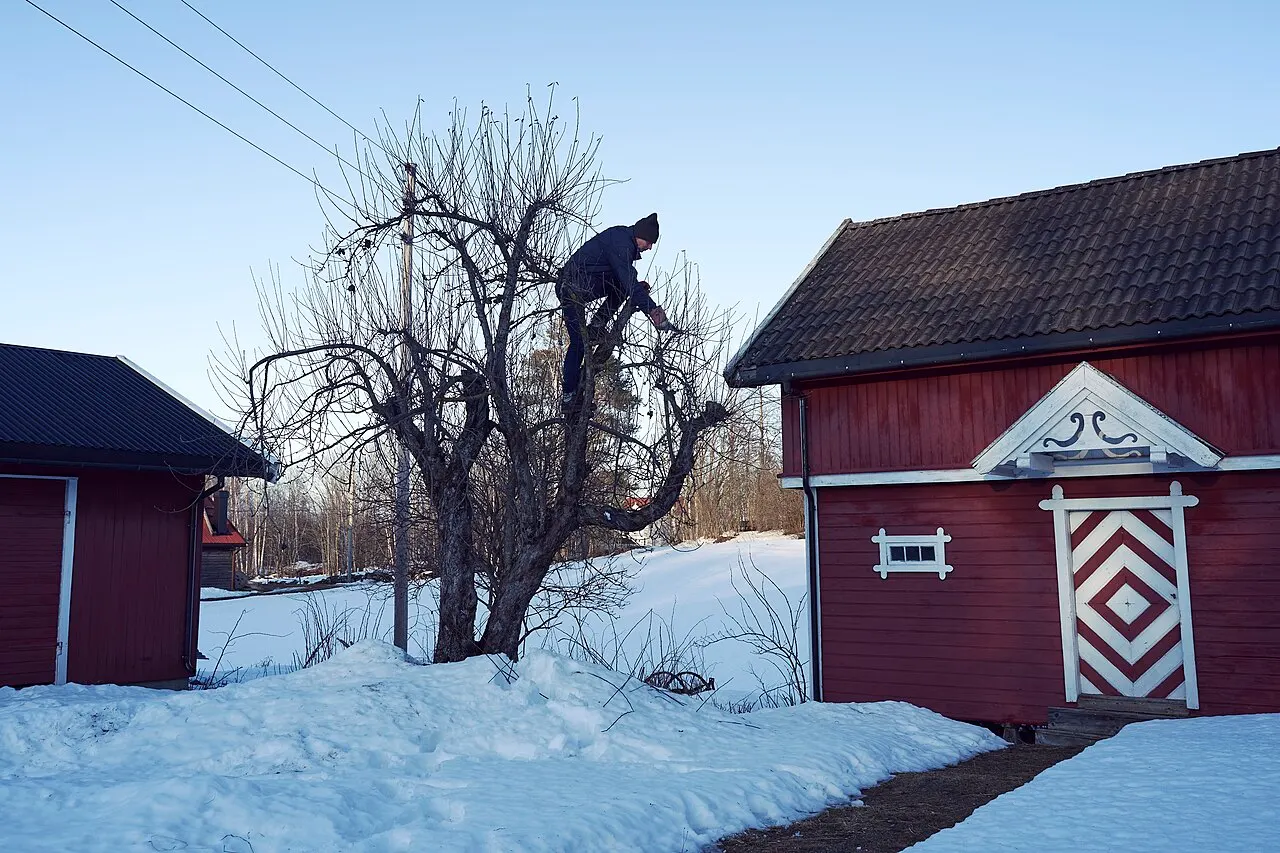
For a taller tree, use a sturdy ladder, ideally a stable tripod ladder. Models with adjustable legs suit sloping ground.
Take your time, the RHS says. Most cuts will be on branches 1–5 cm thick. Think twice before cutting a branch more than 10–12 cm across, and look for a narrower fork to cut instead.
Pruning a newly planted tree

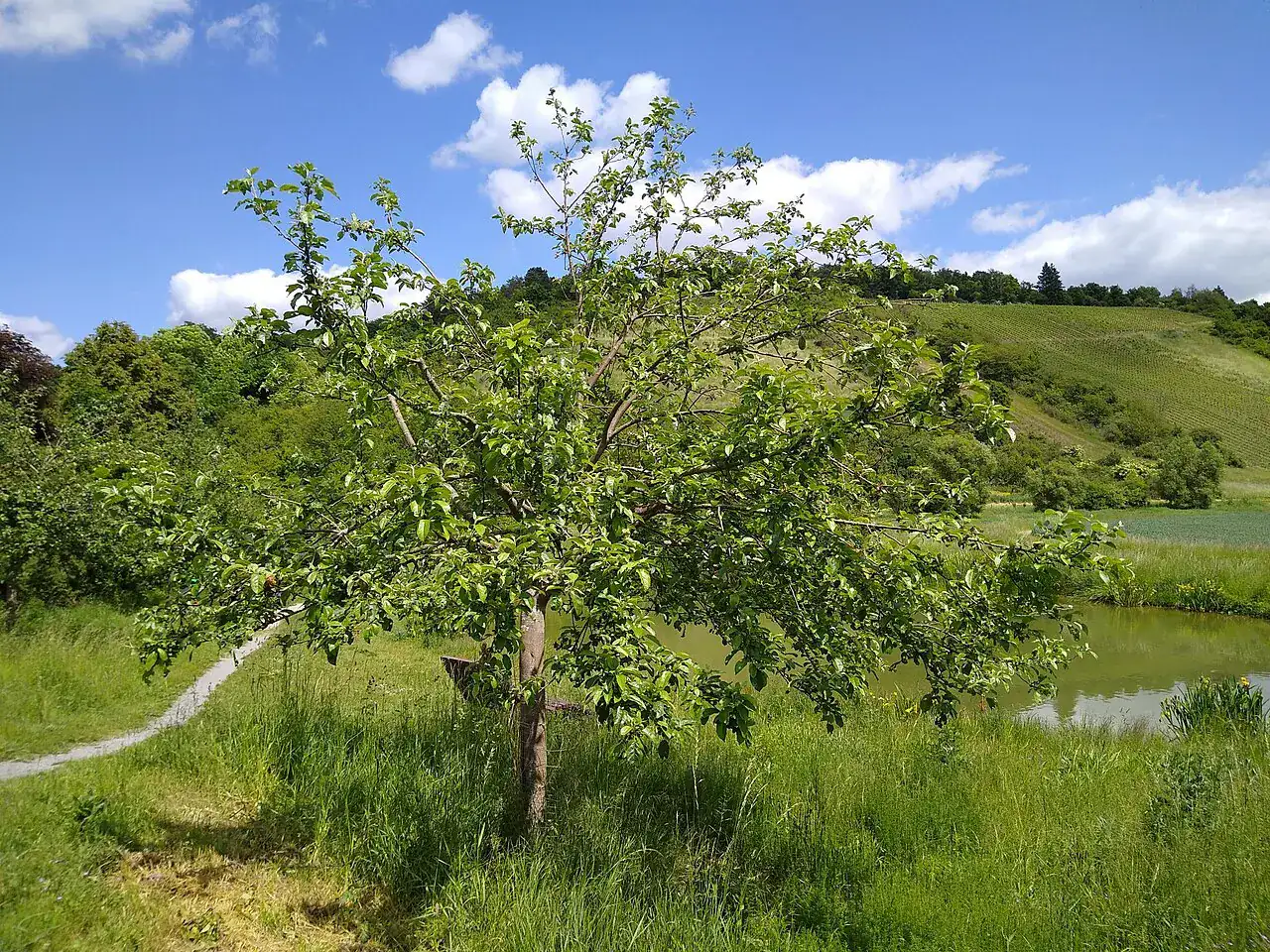
A young tree needs formative pruning for its first three years, the RHS says. Prune straight after planting, while the tree is dormant. Container-grown trees planted in late spring or summer wait until the following winter.
Year 1. On a one-year-old tree with a single bare stem (an unfeathered maiden), cut the stem to about 75 cm above the ground, leaving three or four healthy buds below the cut. On trees grafted on the M27 rootstock, cut at 60 cm. On a tree that already has side-shoots (a feathered maiden), cut just above the topmost side-shoot you want to keep, at about the same height. Keep three or four strong, evenly spaced, wide-angled side-shoots and shorten them by half to two-thirds.
Year 2. Choose eight to ten side-shoots as the permanent framework and shorten them by a third to a half. Remove any strong upright shoot in the middle. The aim is a goblet-shaped crown with an open centre.
From year 4 the tree moves on to regular winter pruning. The RHS admits that this first pruning removes a lot of growth you paid for. Without it, the tree develops long, lax branches or fruits only at the tips.
Pruning an established tree, step by step

The RHS works in this order:
1. Remove dead, diseased and damaged shoots and branches. 2. Remove crossing shoots that rub. Keep the better placed, outward facing one unless it is badly damaged. 3. Remove strong shoots growing into the centre of the tree. Weaker shoots up to 20 cm long can stay. 4. Remove low, downward growing branches that get little light or are in the way. Cut back to an upward growing branch or to the trunk. 5. Shorten the previous year's growth on the main branches by a quarter to a third, cutting just above an outward facing bud. 6. Leave young side-shoots to form fruit buds in their second year. Remove only those that cross or are closer than 10–15 cm at the base.
The RHS pruning guide adds that most fruiting wood should be one to four years old. Remove a little old wood each winter to encourage new growth, and open up the centre to let in light and air.
Spur-bearers and tip-bearers
The RHS sorts apple varieties into three groups by where their fruit buds form: spur-bearers, tip-bearers and partial tip-bearers.
The RHS says current advice is similar for all three groups. It no longer recommends routine, hard shortening of young growth on spur-bearers. On these, thin overcrowded spurs so they sit about 10–15 cm apart.
Take care with tip-bearers, because overpruning can remove most of the fruiting wood. The RHS names Blenheim Orange, Bramley's Seedling, Discovery, Lord Lambourne and Worcester Pearmain among them. Reduce long branches that have fruited by up to a quarter, cutting back to a strong younger side-shoot nearer the trunk.
How much to cut, and watershoots
Routine winter pruning should remove about 10–20% of the canopy, the RHS says. On large, mature trees you can shorten branches by up to a third to reduce height or crowding.
Pruning too hard backfires. The tree answers with strong, upright shoots called watershoots, which crowd the crown. The RHS says pruning too hard results in a mass of them. It also warns against a "haircut" approach that removes just the top growth, and shows an unproductive Bramley pruned that way.
Some watershoots are normal. Where one fills a useful gap, the RHS pruning guide shortens it by about a third to make it branch. Its regulated pruning guide shortens useful strong ones by about a quarter. Remove the rest where they start. Large branches should be removed completely or cut back to a side branch about a third of their diameter, so no bare stub is left.
Old and overgrown trees
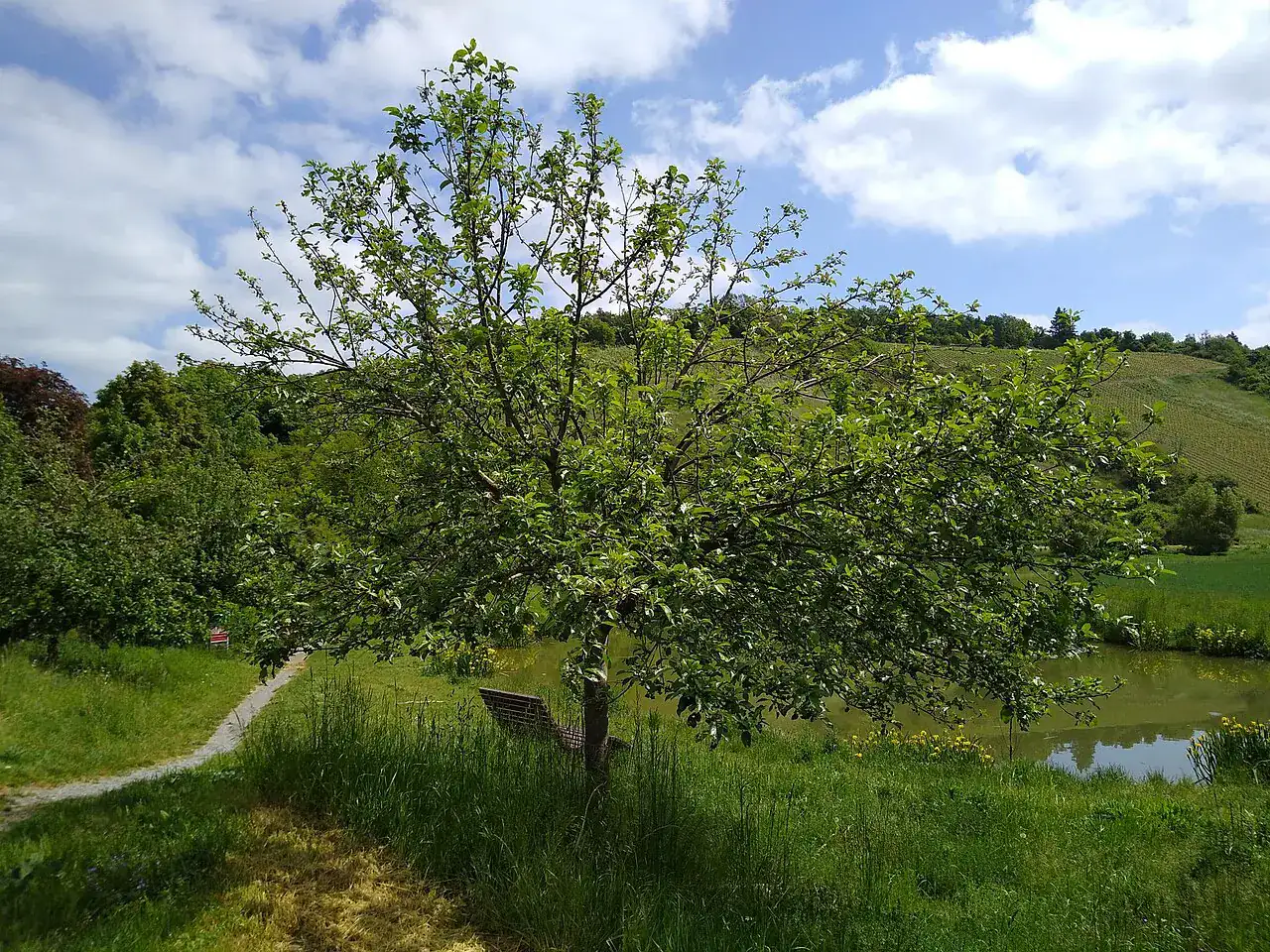

An old, neglected tree cannot be put right in one winter. The RHS says renovation may need to be spread over several winters, to limit regrowth and watershoots. It does not give a fixed number of years or a fixed amount per year, so stick to the 10–20% limit each winter.
Once a tree has reached the size its rootstock allows, usually when it is at least seven to ten years old, the RHS uses regulated pruning to keep it there. Each winter it removes or replaces parts of the branch framework, no more than 10–20% of the canopy, and leaves the season's new shoots unpruned, because unpruned shoots grow less strongly and often form fruit buds. Even this cannot keep a naturally vigorous variety such as Bramley's Seedling small.
Canker, wound paint and other problems
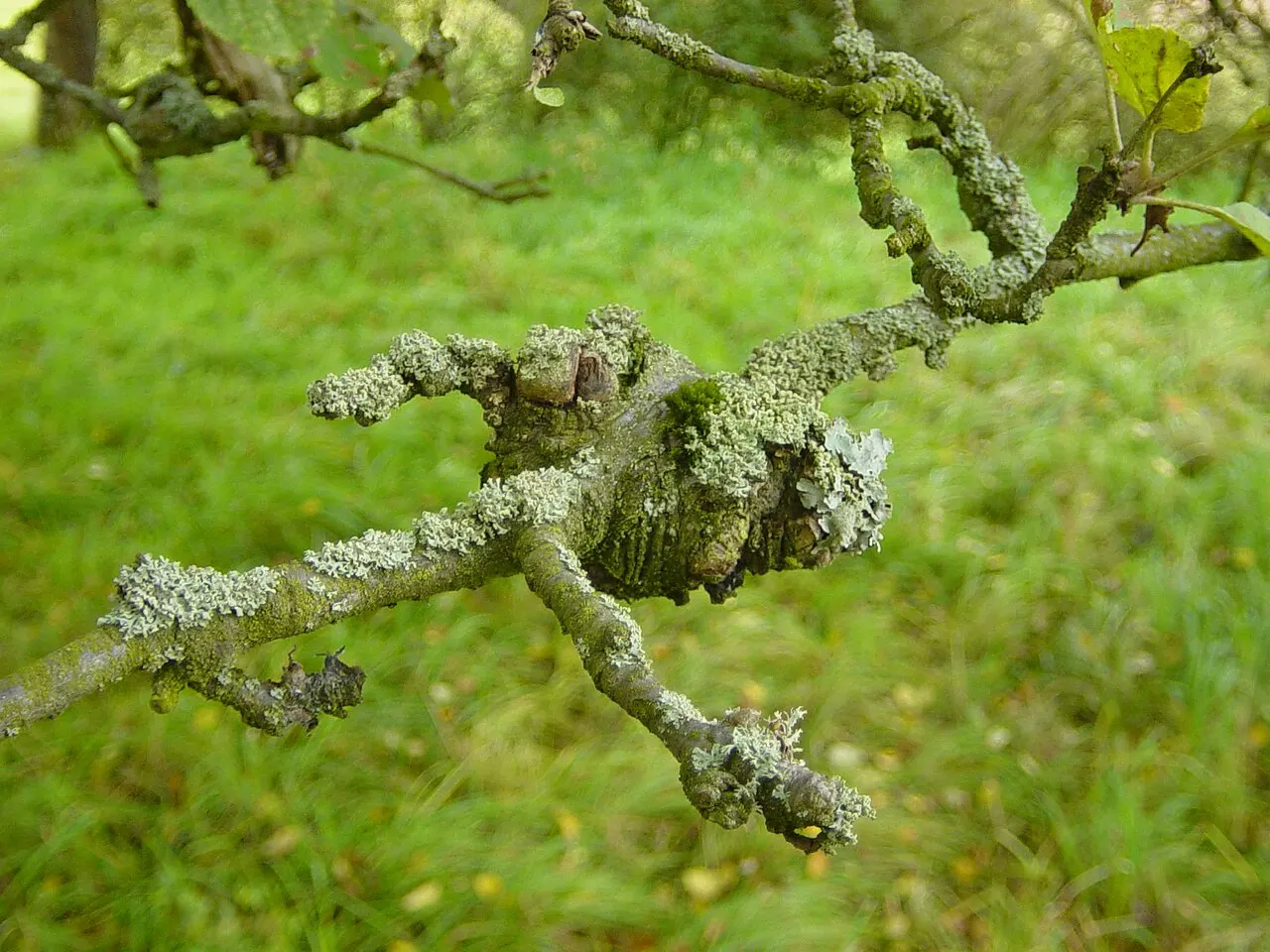

Apple canker. The RHS cuts out affected growth where possible, as part of removing diseased wood.
Wound paint. The RHS says there is no need to use a pruning paint on apple trees. It is sometimes used on plums and cherries, which are more likely to be infected through pruning cuts.
Lichens. Lichens and similar growths on the bark are harmless, the RHS says. On shoot tips, though, they can be a sign of poor vigour.
Uneven crops. A heavy crop one year and a poor one the next is called biennial bearing. Late spring frost can also damage flowers and young fruit.
What to cut and how
| What | What to do |
|---|---|
| Dead, diseased and damaged wood | Remove first |
| Crossing shoots that rub | Keep the better placed, outward facing one, remove the other |
| Strong shoots growing into the centre | Remove; weaker ones up to 20 cm can stay |
| Low, downward growing branches | Cut back to an upward growing branch or to the trunk |
| Last year's growth on main branches | Shorten by a quarter to a third, just above an outward facing bud |
| Young side-shoots | Leave to form fruit buds; remove only crossing ones or those closer than 10–15 cm |
| Crowded spurs | Thin so they sit about 10–15 cm apart |
| Whole canopy | No more than 10–20% in one winter |
| Large branches | Remove completely or cut to a side branch about a third of its diameter, leave no stub |
How to do it
- Wait until the leaves have fallen. Finish before the buds burst, usually by early March.
- Use sharp secateurs, loppers or a pruning saw to suit the thickness of the shoot, and wear gloves and eye protection.
- Remove dead, diseased and damaged shoots and branches first.
- Take out crossing shoots that rub, strong shoots growing into the centre and low branches that hang down.
- Shorten last year's growth on the main branches by a quarter to a third, just above an outward facing bud.
- Stop at about 10–20% of the canopy. If the pile of prunings looks large, leave the rest for next winter.
Common questions
Can I prune apple trees in autumn?
Yes, once the leaves have fallen. The RHS winter pruning window runs from leaf fall to bud burst, usually November to early March.
Is March too late to prune apple trees?
Early March is still within the RHS window. Prune before the buds burst.
How much can I cut off an apple tree?
About 10–20% of the canopy in one winter, the RHS says. Pruning too hard results in a mass of vigorous, upright watershoots.
Do I need to seal pruning cuts on an apple tree?
No. The RHS says there is no need to use a pruning paint on apple or pear trees.
How do I prune an old, overgrown apple tree?
Spread the work over several winters, the RHS says, so the tree does not respond with a flush of watershoots. Keep to about 10–20% of the canopy each winter.
Should I prune apple trees in summer too?
Only very vigorous free-standing trees, the RHS says. From mid August to mid September, shorten side-shoots longer than 30 cm to 15 cm. Trained forms such as cordons and espaliers are pruned mainly in summer.
Sources
We wrote this page using the sources below.
- Apples and pears: winter pruning, Royal Horticultural Society (RHS)
- Apples and pears: pruning new trees, Royal Horticultural Society (RHS)
- Apples and pears: pruning made easy, Royal Horticultural Society (RHS)
- Apples and pears: winter regulated pruning, Royal Horticultural Society (RHS)