
 Apple trees When to sow and plant
When to plant apple trees
An apple tree goes in once and crops for years. The RHS says the best time is while it is dormant, and the right site matters just as much.
In short
The RHS says the best time to plant an apple tree is while it is dormant, from autumn to spring. Its fruit calendar plants fruit trees from November to February, unless the ground is frozen or waterlogged. Container-grown trees can go in at other times, though winter is preferable.

Apple trees: what to do and when
Under cover and outdoors, for UK conditions. The weather differs from year to year and from north to south, so check your local conditions too.
When to plant apple trees
The RHS apple guide says the best time to plant is while the tree is dormant, from autumn to spring. It also says to avoid planting in hot, dry weather.
The RHS fruit gardening calendar puts months on it. It plants fruit trees and bushes any time from November to February, unless the ground is frozen or waterlogged. These dates are for fruit trees and bushes in general, not only apples.
The RHS planting guide for all trees and shrubs gives a wider window, saying planting is best done between October and April. It also says to avoid waterlogged soil and frozen soil that is too hard to get the spade in.
November falls inside all three RHS windows.
Garden Organic starts earlier. Its October advice is to plant new fruit trees and bushes in October, because the soil is still warm and the roots can start to grow before winter. The RHS calendar only begins planting in November, so the two sources differ by a month.
Bare-root or container-grown?
Bare-root trees are lifted and sold while dormant. The RHS says they are only available from late autumn to early spring. That is when you can buy them. Garden Organic's October advice says bare-root plants usually cost less than pot-grown ones.
Container-grown trees are available all year round. The RHS says they can be planted at any time, though winter is preferable, and that they may not settle in as readily when planted at other times.
The RHS planting guide for trees and shrubs says bare-root plants should be planted immediately. If that is not possible, they can be heeled in.
Where to plant
Apple trees like full sun and a warm, sheltered site that is not prone to late frosts, the RHS says.
Choose a site with fertile soil that drains freely and does not become waterlogged. No soil preparation is generally needed. If your soil is poor, the RHS digs in a bucketful of organic matter.
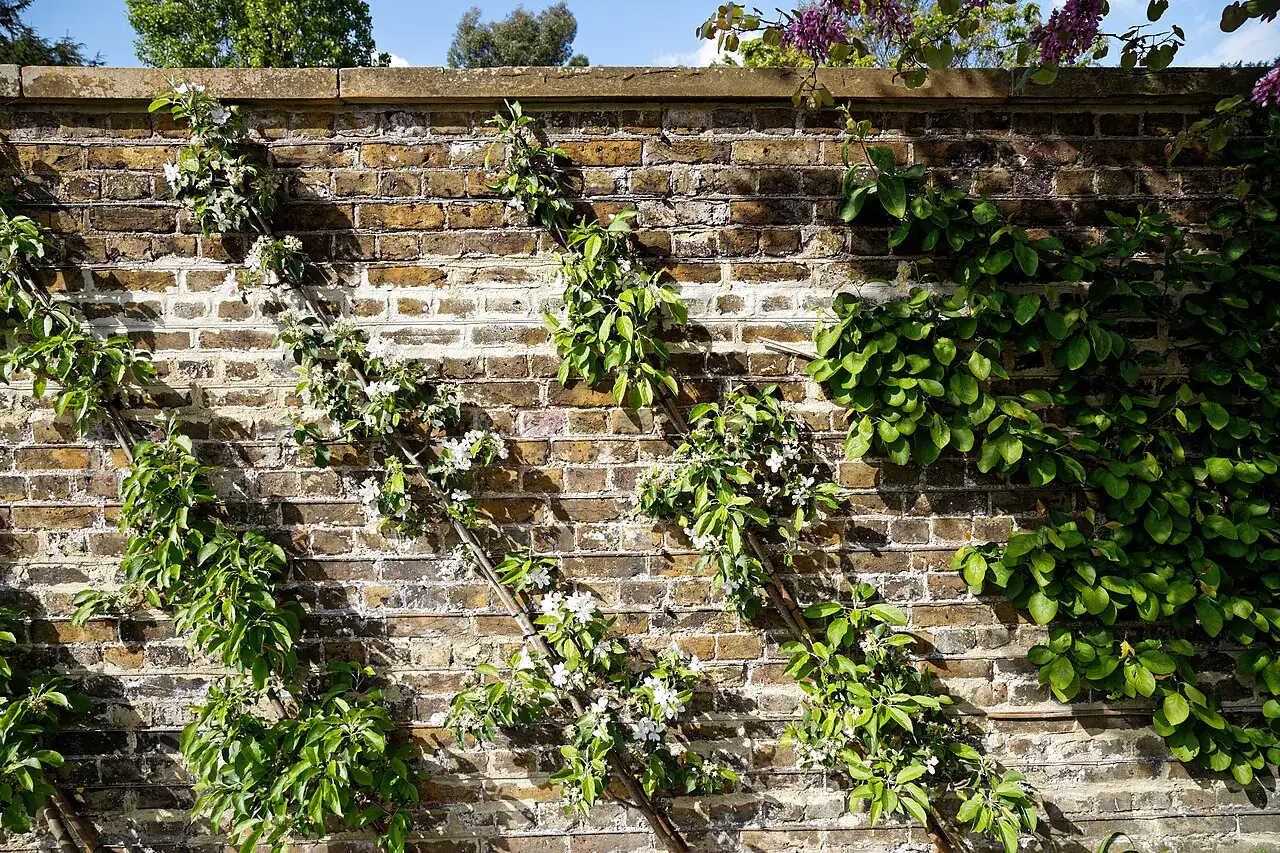
For a trained tree, the RHS attaches horizontal wires before planting and plants the tree about 30 cm away from the base. Trained trees must be on dwarfing rootstocks (see below).
If you plant in a lawn, remove a circle or square of grass at least 1 m across around the tree.
Rootstocks, size and spacing
The rootstock sets the size of the tree. The RHS says dwarfing rootstocks such as M9 or M26 are best for small gardens and pots. Semi-dwarfing rootstocks such as MM106 produce larger trees, up to 4 m tall. Trained trees must be grown on dwarfing rootstocks.
The RHS apple guide does not give planting distances. It says to make sure your trees have plenty of space to grow to their ultimate size and spread.
One tree or two?

Unless the variety is self-fertile, the RHS says you need another tree of a different variety nearby, which flowers at the same time. Alternatively, choose a self-fertile variety that will set fruit on its own.
The RHS fruit calendar lists protecting apple blossom from frost as a job for April.
How to plant
Before planting, the RHS gives a container-grown tree a good watering. A bare-root tree stands in a bucket of water for half an hour.
The RHS apple guide does not give a hole size or depth. Its planting guide for all trees and shrubs says to dig a hole no deeper than the roots, ideally at least three times the diameter of the root system. Position the tree so the first flare of roots is level with the soil surface when planting is complete. Deep planting stops air reaching the roots, and the guide calls planting too deep a common cause of tree death.
Staking. The RHS apple guide supports free-standing apple trees with tree stakes, put in place at planting time. The general trees and shrubs guide says that after two growing seasons a staked tree should have made enough root growth to anchor itself, and the stake can be removed.
After planting: water, mulch, feed
Water. Newly planted apple trees should be watered regularly during dry spells for the first couple of years, the RHS says. Water early in the morning or late in the evening. Established trees in the ground should not need watering.
Mulch. The RHS apple guide mulches apple trees growing in the ground each spring, with a thick layer of mulch such as home-made garden compost. The RHS fruit calendar mulches around fruit trees and bushes in February and March. Garden Organic's January advice is to clear weeds and grass from around fruit trees, especially newly planted and young ones.
Feed. Apple trees in regularly mulched soil should not need any extra feeding, the RHS says. If harvests are poor, it applies a granular fertiliser in early spring.
Fruit. The RHS removes any developing fruits from young trees in the year after planting, and lets just a couple remain in the second year.
Pruning. If you have bought a young tree, the RHS starts with formative pruning to set the shape. See our guide to pruning apple trees.
Apple trees in pots
For a pot, the RHS chooses a tree on a dwarfing M9 or M26 rootstock, in a container at least 45 cm in diameter, filled with a good quality, loam-based compost. Position it in a warm, sunny, sheltered spot, such as a south or west-facing patio.
Repot into a larger container every few years. The RHS says this is best done in spring. Apples in containers benefit from regular feeding.
Cheat sheet: planting an apple tree
| What | Advice |
|---|---|
| When | While dormant, from autumn to spring (RHS apple guide). November to February, unless the ground is frozen or waterlogged (RHS fruit calendar) |
| Container-grown trees | Can be planted at any time, though winter is preferable. May not settle in as readily (RHS) |
| Bare-root trees | Only available from late autumn to early spring, while dormant (RHS) |
| Avoid | Hot, dry weather (RHS) |
| Site | Full sun, warm and sheltered, not prone to late frosts (RHS) |
| Soil | Fertile, drains freely, does not become waterlogged (RHS) |
| Rootstock | M9 or M26 for small gardens and pots. MM106 for larger trees up to 4 m (RHS) |
| Pollination | Another variety nearby that flowers at the same time, or a self-fertile variety (RHS) |
| Stake | Free-standing trees, put in at planting time (RHS) |
| Watering | Regularly in dry spells for the first couple of years (RHS) |
How to do it
- Plan the planting for the dormant season. The RHS fruit calendar plants fruit trees from November to February, unless the ground is frozen or waterlogged. Avoid hot, dry weather.
- Pick a spot in full sun that is warm, sheltered and not prone to late frosts, with fertile soil that drains freely.
- Leave room. The RHS says trees need plenty of space to grow to their ultimate size and spread, which depends on the rootstock.
- Water a container-grown tree well before planting. Stand a bare-root tree in a bucket of water for half an hour.
- In a lawn, remove a circle or square of grass at least 1 m across.
- On poor soil, dig in a bucketful of organic matter. The RHS says no soil preparation is generally needed otherwise.
- Dig a hole no deeper than the roots and plant so the first flare of roots is level with the soil surface. This is the RHS rule for all trees and shrubs.
- Put a stake in at planting time to support a free-standing tree.
- Water regularly during dry spells for the first couple of years.
Common questions
When is the best time to plant an apple tree in the UK?
While it is dormant, from autumn to spring, the RHS says. Its fruit calendar plants fruit trees from November to February, unless the ground is frozen or waterlogged. Avoid hot, dry weather.
Can I plant an apple tree in summer?
Only a container-grown one. The RHS says these can be planted at any time, though winter is preferable, and they may not settle in as readily at other times. Water regularly in dry spells.
Can I plant an apple tree in frozen ground?
No. The RHS fruit calendar plants fruit trees from November to February unless the ground is frozen or waterlogged. The RHS tree planting guide also says to avoid frozen soil that is too hard to get the spade in.
Do I need two apple trees?
Unless you choose a self-fertile variety, yes. The RHS says you need another variety nearby that flowers at the same time. Or choose a self-fertile variety, which will set fruit on its own.
How deep should I plant an apple tree?
The RHS planting guide for trees and shrubs says dig no deeper than the roots and set the first flare of roots level with the soil surface. It calls planting too deep a common cause of tree death.
Should I stake a new apple tree?
The RHS supports free-standing apple trees with a stake put in at planting time. Its general tree planting guide says the stake can usually come out after two growing seasons.
Sources
We wrote this page using the sources below.
- How to grow apples, Royal Horticultural Society (RHS)
- Fruit gardening calendar, Royal Horticultural Society (RHS), School Gardening
- Trees and shrubs: planting guide, Royal Horticultural Society (RHS)
- Your organic garden in October, Garden Organic
- Your organic garden in January, Garden Organic