
 Carrots When to sow and plant
When to sow carrots
Carrots are sown where they will grow, a little at a time. Get the timing right and you can dodge the worst of the carrot fly as well.
In short
Sow carrots outdoors from April to early July, straight into the ground where they will grow. Early varieties can go in from February or March under cloches or fleece. Sow a short row every three to four weeks, and sow after mid May to miss the first carrot fly generation.

Carrots: what to do and when
Under cover and outdoors, for UK conditions. The weather differs from year to year and from north to south, so check your local conditions too.
The sowing window in the UK
Carrots are one of the easiest crops to time, because the window is long. The RHS gives the main outdoor sowing season as April to early July. Early varieties can go in earlier, in February or March, if you cover them with cloches or fleece to keep the soil a little warmer.
Garden Organic gives a slightly different window: sow outdoors from February to June. So the two sources agree on spring and early summer, but the RHS keeps going into early July and protects the first sowings, while Garden Organic stops at the end of June. If your soil is cold and wet in February, the RHS approach of waiting for April or covering the row is the safer one.
Neither source gives a soil temperature for sowing. What both make clear is that carrots are sown directly where they will grow. The RHS explains that moving carrot seedlings can give you forked or twisted roots, so they are not raised in modules like many other vegetables.
Sow little and often
A single long row sown in April gives you a glut in summer and nothing after. The RHS suggests sowing small batches every three to four weeks instead. That way one row is ready to pull as the next is still growing.
Match the variety to the date. The RHS recommends early varieties for sowings in early spring and main season varieties for late spring to mid summer. Early types are quicker. Garden Organic gives an average of 10 weeks to harvest for early varieties and 16 weeks for maincrop.
The last sowings in early July are worth doing. Main season carrots can be pulled from summer into early autumn, and the RHS says carrots can be left in the ground over winter under straw or cardboard, so a July row can feed you well into the colder months.
Depth, spacing and thinning
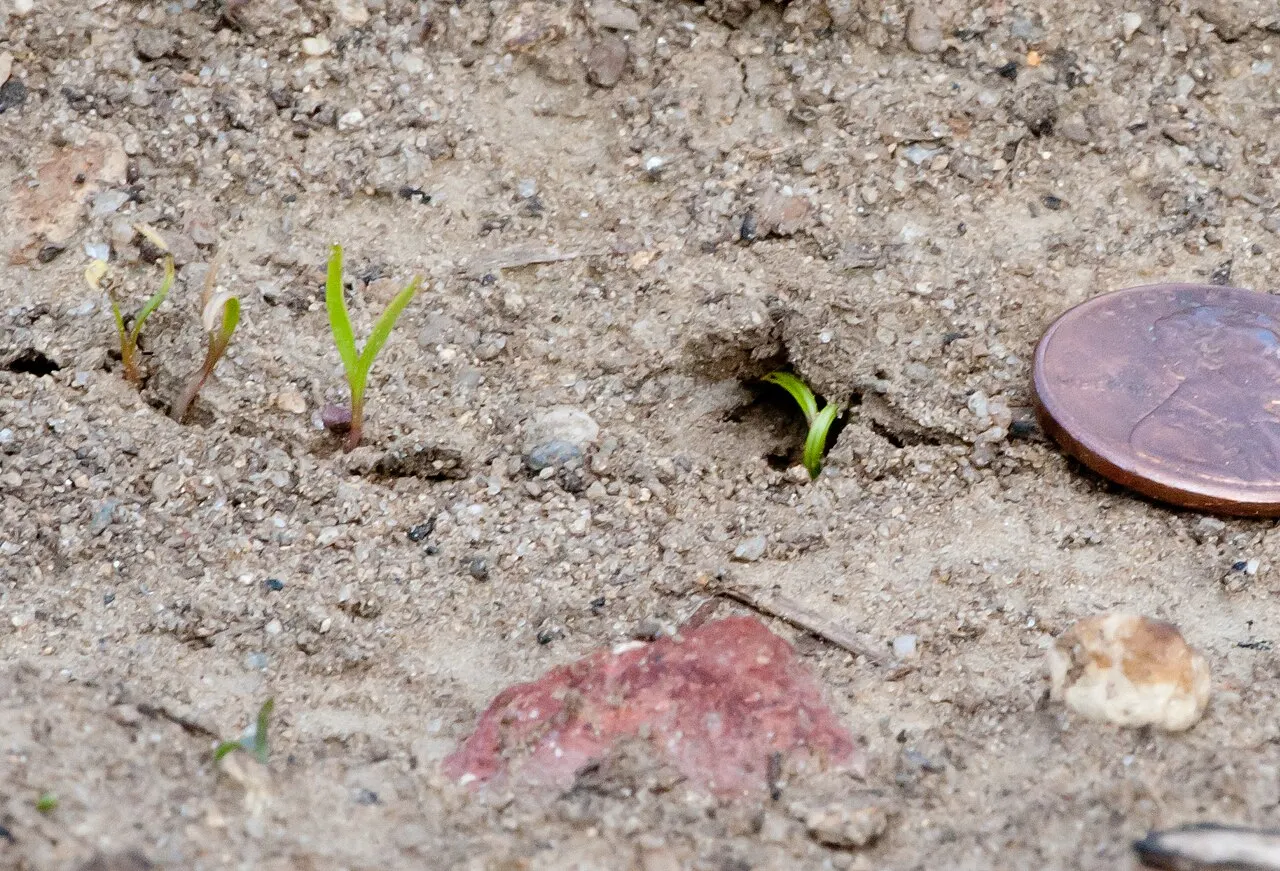
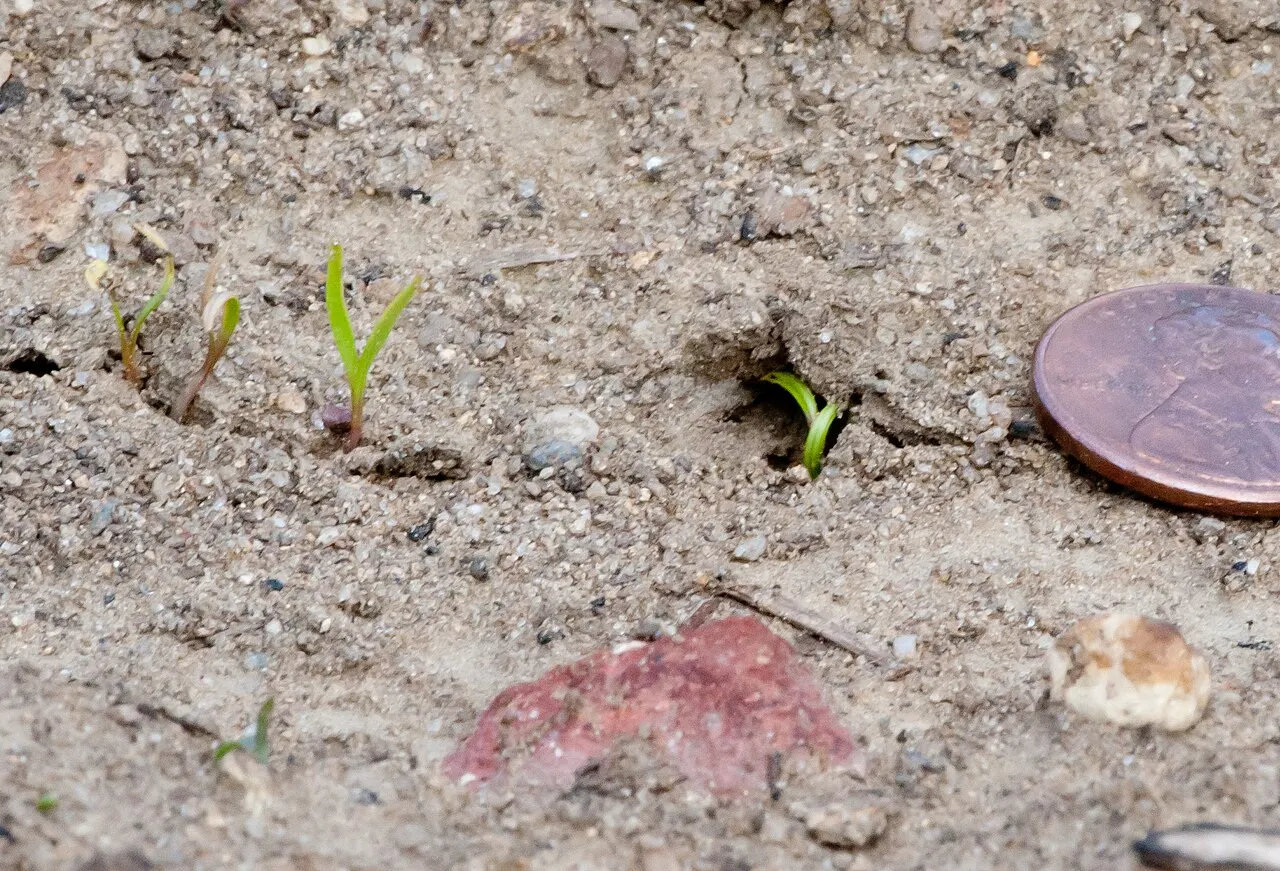
Sow carrot seed about 1 cm deep, along a shallow drill, as thinly as you can. The RHS spaces extra rows 15–30 cm apart. Garden Organic sows a little closer, with rows 10–15 cm apart.
Once the seedlings are up, thin them. The RHS thins to 5–7.5 cm apart, and Garden Organic to 7 cm. Thinning gives each root room to swell. If you sowed very thinly, you may only need to thin once.
Be patient after sowing. The RHS describes germination as slow, and Garden Organic gives a germination time of about 17 days. The RHS waters along the bottom of the drill before sowing. Hoe between the rows, but weed by hand close to the seedlings.
Soil: the key to straight roots
Carrots like a fine, loose soil. The RHS advises weeding thoroughly, forking the soil, taking out stones and raking it to a fine texture before you sow. Stones and lumps are what make roots fork.
Your soil also decides which type to grow. The RHS says stony, shallow or heavy clay soil can make long rooted carrots misshapen, so short rooted types are the better choice there. Long rooted types suit deep, sandy soil. Garden Organic also recommends deep sandy soil for long, straight roots.
On a no-dig bed, the RHS lays a mulch at least 5 cm thick between November and February and sows a short growing variety straight into it. If you are planning next year's carrot bed now, that is a good job for this winter.
Carrots in pots
No suitable bed? Carrots grow well in containers. The RHS fills pots with peat-free multi-purpose compost and covers the seed with about 1 cm of compost. Small, round rooted varieties suit most pots. Long rooted carrots need deep containers, while shallow pots are fine for baby carrots.
Pots have a second advantage. Garden Organic says that growing carrots in containers lifts the crop above the ground, away from the routes the carrot fly uses. Containers dry out faster, so the RHS says to water them regularly.
Carrot fly: time your sowing to dodge it
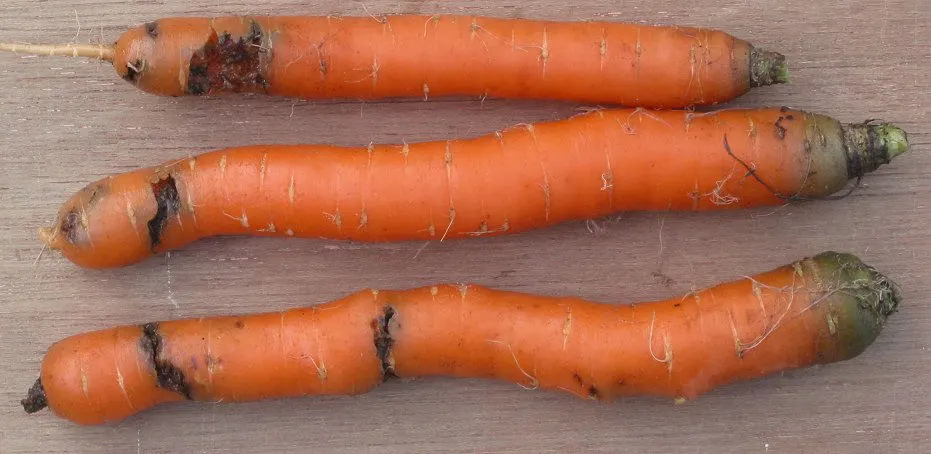

Carrot fly is the pest every carrot grower meets sooner or later. The RHS says its larvae leave rusty brown scars around the roots, with tunnels and creamy yellow maggots up to 9 mm long inside. Damaged roots are inedible and open to rots.
Timing helps a lot. The RHS says eggs are laid in late May to June and again in August to September, and that two or three generations can develop between late spring and autumn. Its advice is to sow after mid May to avoid the first generation and to lift the crop before late August to avoid the second. Garden Organic gives the same advice in short: sow after May and harvest before August.
Notice the conflict here. Both sources start sowing in February or April, yet both say late sowing avoids the fly. The answer is to choose. If carrot fly has never troubled you, sow from spring. If it has, sow from late May and cover the row.
Mesh, rotation and less tasty varieties
The RHS says its research found that the most effective protection is to cover the whole crop with insect-proof mesh. Its pest guide puts it plainly: a complete covering works better than a barrier around the edge. When you weed, try not to touch the leaves, because the RHS says the smell attracts carrot fly.
Rotate your crops too. The RHS advises against sowing where carrots grew recently, as eggs may still be in the soil. Some varieties are less susceptible, though not resistant. The RHS names 'Flyaway' among them. Garden Organic suggests sowing companion plants such as parsley nearby to mask the smell of the carrots.
The RHS pest guide does not recommend any chemical treatment. It describes a biological control using nematodes watered into the soil, and notes that they also affect other insects in the soil. If you use any product, use only products authorised in the UK, used as the label says.
When will they be ready?
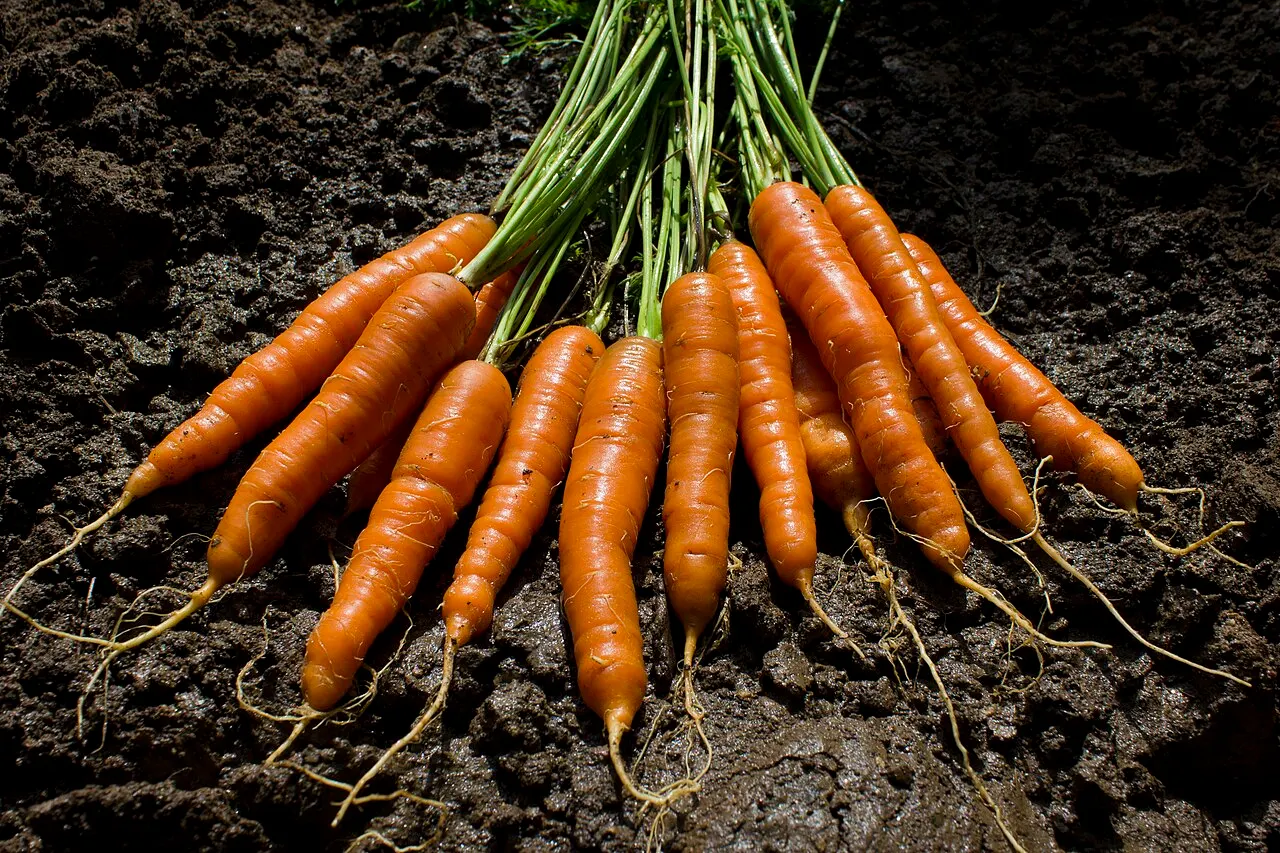

Baby carrots are ready in about four to six weeks, the RHS says, and larger carrots in 12–16 weeks. Garden Organic starts lifting 12–16 weeks after sowing, while the roots are still small, for the sweetest flavour. Its harvest runs from June to November.
Twist off the leaves rather than cutting them, Garden Organic advises. To keep carrots in the ground over winter, the RHS removes the leaves in late autumn and covers the row with straw or cardboard. If the soil becomes waterlogged, lift the roots and store them instead.
Water matters while the roots are growing. The RHS says carrots are fairly drought resistant, but in long dry spells give them a good soak every fortnight. Garden Organic warns that dry soil followed by heavy rain or sudden watering can split the roots.
Growing garlic this winter as well? Our guide to when to plant garlic covers the other easy crop that goes in at the other end of the year.
Cheat sheet: sowing carrots
| Job | When or how |
|---|---|
| Sow outdoors | April to early July (Garden Organic: February to June) |
| Early sowings | February or March under cloches or fleece |
| Repeat sowings | Every three to four weeks |
| Depth | About 1 cm |
| Rows | 15–30 cm apart (Garden Organic: 10–15 cm) |
| Thin to | 5–7.5 cm apart (Garden Organic: 7 cm) |
| Germination | Slow, Garden Organic gives 17 days |
| Ready to lift | Baby carrots in about 4–6 weeks, full size in 12–16 weeks |
How to do it
- Pick a sunny bed with deep, stone-free soil. Weed it, fork it over, take out stones and rake it to a fine finish.
- Make a shallow drill about 1 cm deep and water along the bottom of it. On a no-dig bed, sow a short variety straight into the mulch.
- Sow as thinly as you can along the drill, so you have fewer seedlings to pull out later.
- Cover the seed lightly and be patient. Germination is slow, about 17 days in the Garden Organic guide.
- Cover the row with insect-proof mesh straight away if carrot fly is a problem where you live.
- Thin the seedlings to 5–7.5 cm apart, take the thinnings away and sow the next short row three or four weeks later.
Common questions
Is it too late to sow carrots in July?
Not in early July. The RHS sows outdoors until early July. Garden Organic stops at the end of June. For a late row, choose a main season variety, which the RHS recommends for sowing up to mid summer.
Can I sow carrots in February?
Yes, early varieties, if you cover them with cloches or fleece, says the RHS. Garden Organic sows outdoors from February.
How long do carrot seeds take to germinate?
The RHS calls germination slow, and Garden Organic gives about 17 days. Be patient, and weed by hand close to the row.
When should I sow carrots to avoid carrot fly?
After mid May, says the RHS, to miss the first generation, and lift them before late August to miss the second. Covering the crop with insect-proof mesh works best.
Can I start carrots in modules and transplant them?
The RHS advises sowing carrots directly where they will grow, because transplanting can cause forked or distorted roots.
Sources
We wrote this page using the sources below.
- How to grow carrots, Royal Horticultural Society (RHS)
- Carrot fly, Royal Horticultural Society (RHS)
- Testing barrier methods for the protection of carrots from the carrot fly, Royal Horticultural Society (RHS), 2016
- How to grow carrot (growing guide), Garden Organic