
 Apple trees Diseases and pests
Apple tree diseases and pests
Scabby fruit, white powder on the leaves or sunken bark on the branches? Compare the signs and find out what the RHS advises.
In short
Common apple tree problems include scab, powdery mildew, brown rot and canker, with aphids, codling moth and apple sawfly among the pests. The RHS relies on resistant cultivars, clearing fallen leaves and rotten fruit, and pruning out infected wood. It recommends that you don't use fungicides.
What problem can you see?

Start with the cultivar and the clear-up

For most apple diseases, the RHS relies on three things: choosing a resistant cultivar, clearing infected material and pruning. It recommends that you don't use fungicides. For scab it adds that no fungicides are currently being produced for home gardeners for trees whose fruit will be eaten, and that most gardeners could not spray a large old tree properly anyway.
Problems often come in chains. Scab cracks on twigs let in the canker fungus. Scab and codling moth wounds on fruit let in brown rot. Frost-split woolly aphid swellings let in canker too. Breaking one link helps with the others.
How to plant a new tree in a good spot is on our page when to plant apple trees.
Scab and mildew: choose resistant cultivars
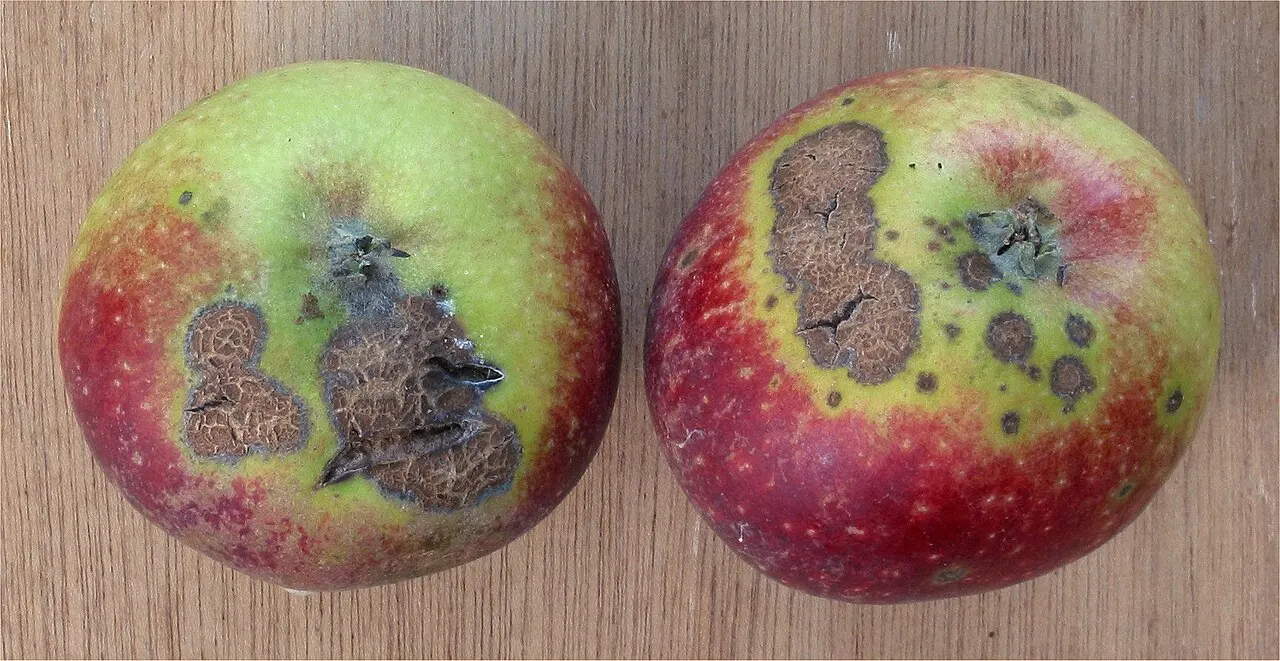
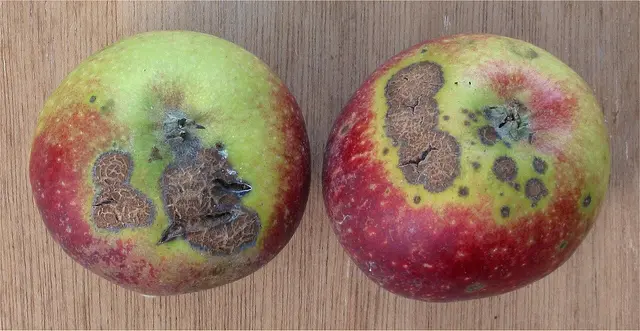
Apple scab shows as olive-green blotches on the leaves from mid-spring until leaf fall, and as brown or black scabby patches on the fruit. The fungus overwinters on fallen leaves and unpruned twigs.
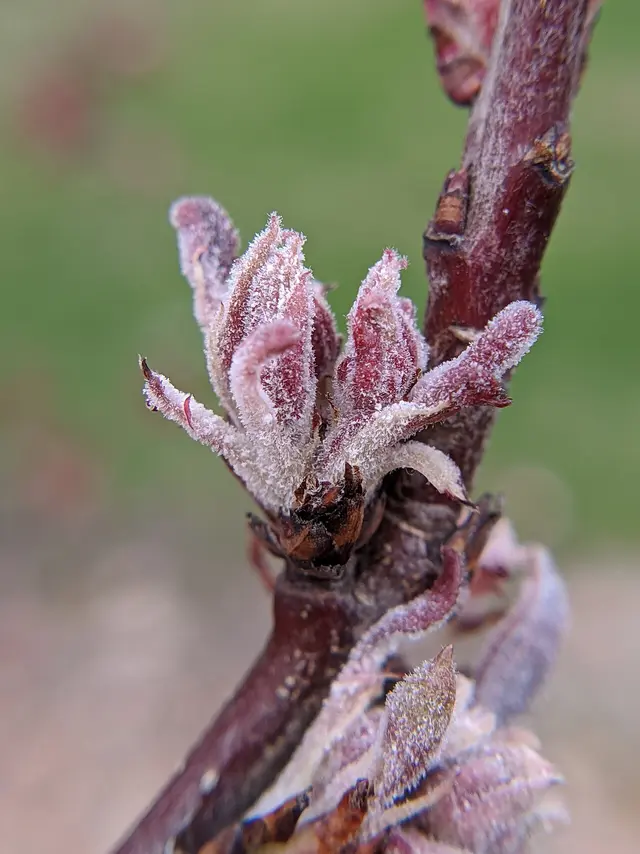
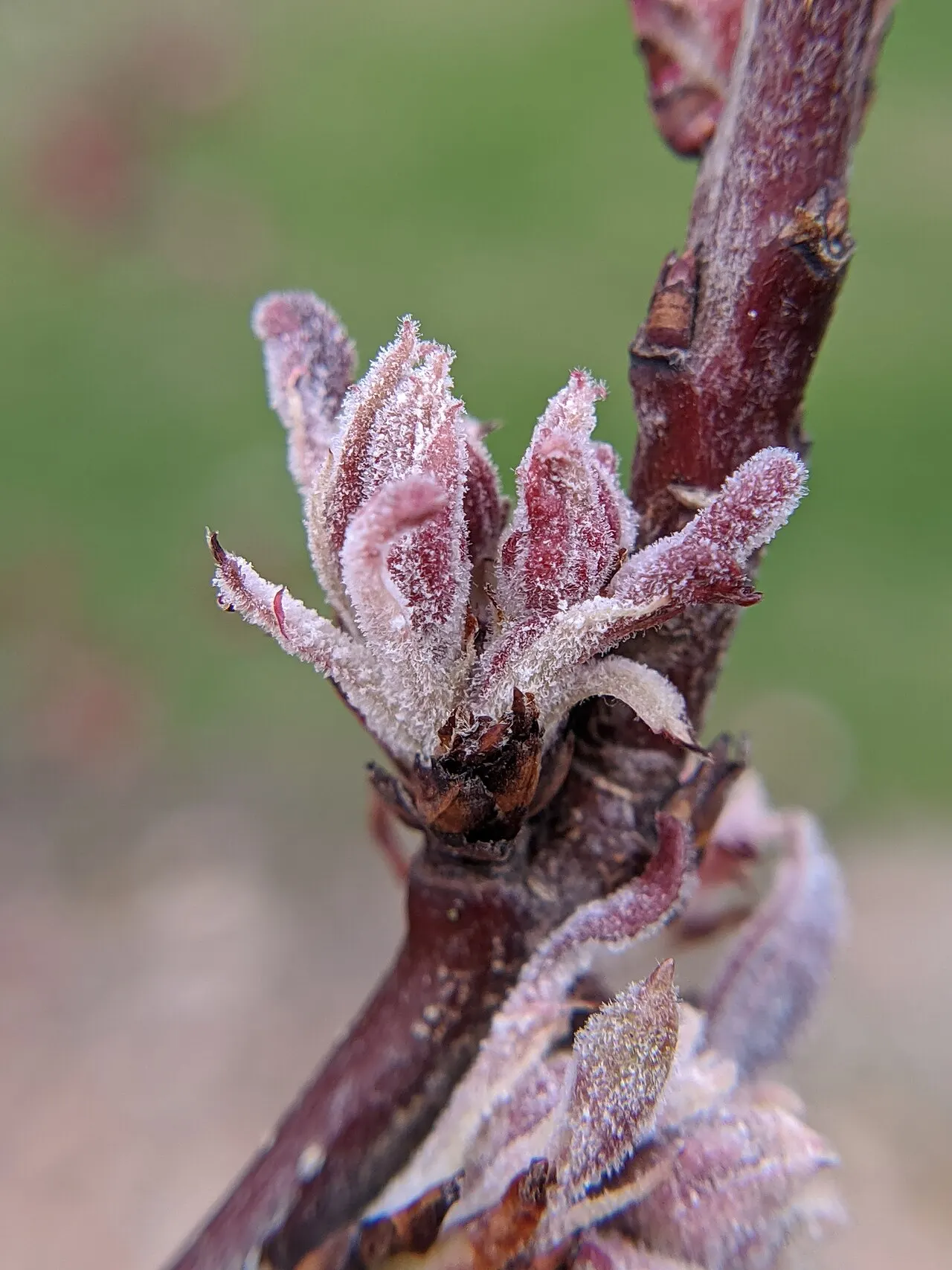
Powdery mildew overwinters inside buds. In spring those buds grow into stunted shoots covered in white powder, and the fungus spreads from them. The RHS removes these shoots promptly and bags them, ideally in damp, drizzly weather, which suppresses spore release.
The RHS lists cultivars for both diseases. Some appear on both resistant lists:
| Cultivar | Scab | Powdery mildew |
|---|---|---|
| 'Discovery' | Resistant | Resistant |
| 'Lord Derby' | Resistant | Resistant |
| 'Topaz' | Resistant | Resistant |
| 'Grenadier' | Resistant | Resistant |
| 'Newton Wonder' | Resistant | Resistant |
| 'Lane's Prince Albert' | Resistant | Susceptible |
| 'Merton Russet' | Resistant | Susceptible |
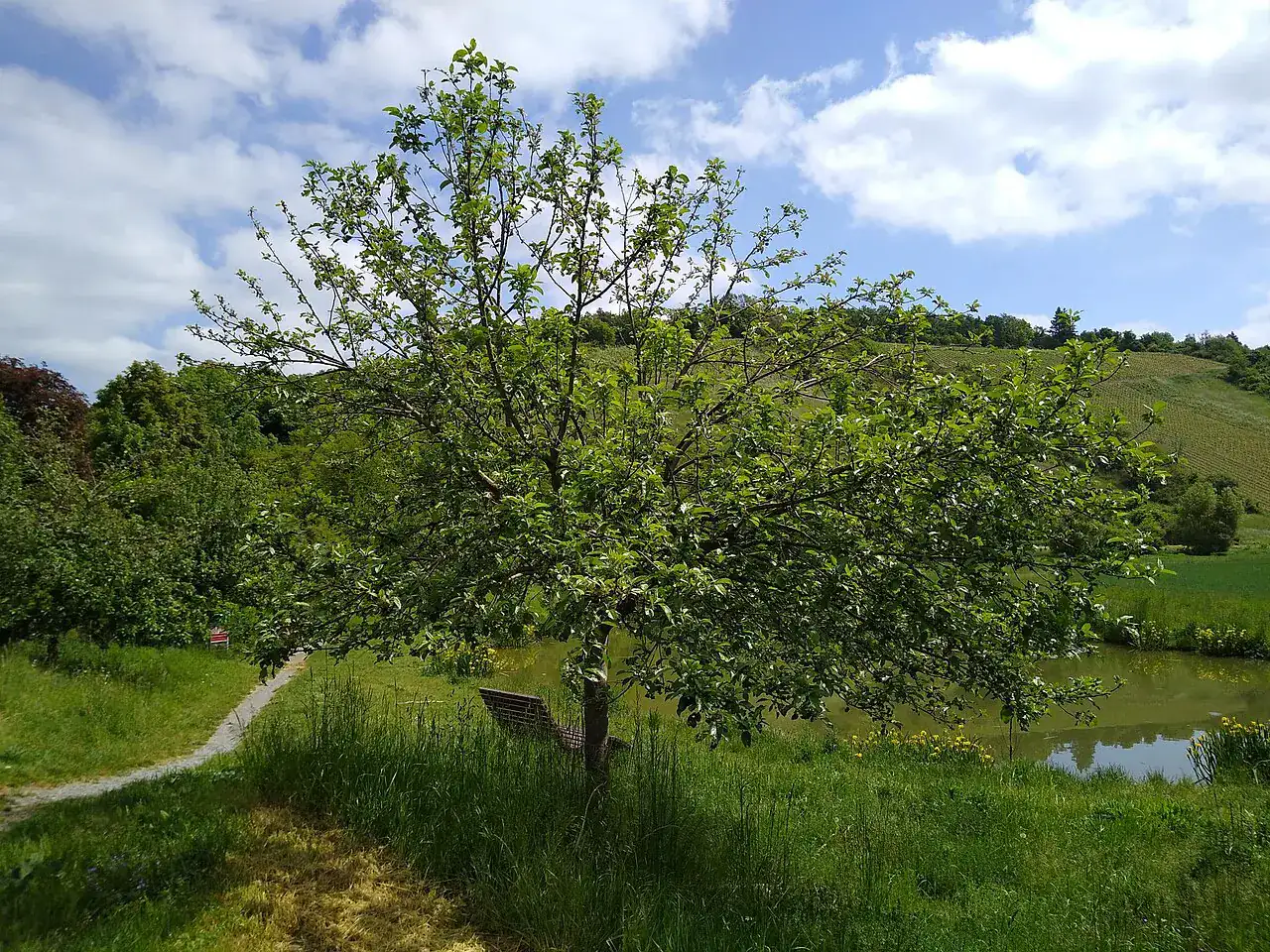
'Cox's Orange Pippin' is on the RHS susceptible lists for powdery mildew, canker and bitter pit. Our page how to prune apple trees explains how to open the crown. The RHS mildew guide recommends an open-centred crown with well-spaced branches to improve airflow.
Canker and fireblight: cut back to healthy wood
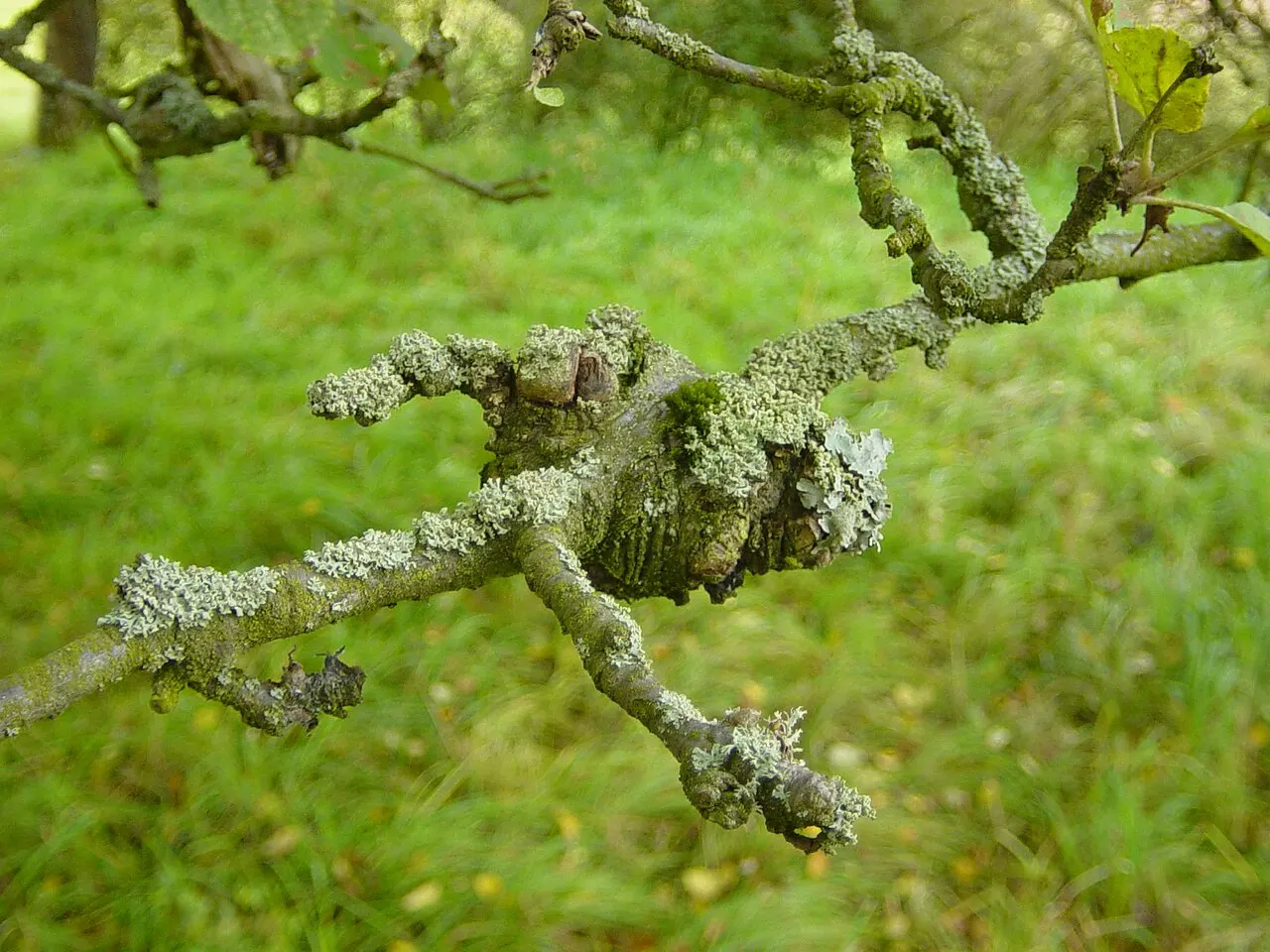

Apple canker makes round or oval patches of dead, sunken bark. On spurs and small branches, remove the whole branch. On larger branches, the RHS cuts back to fresh green tissue, removing all brown, infected bark and wood. Its canker guide then applies a protective wound paint straight away to prevent reinfection. Apart from wound paints, no products are available to gardeners for canker.
This is advice for canker wounds only. For ordinary pruning cuts, the RHS pruning guide says there is no need to use a pruning paint on apple or pear trees, which is what our pruning page follows.
Canker is worse on wet, heavy or acidic soils, the RHS says, so check the drainage and lime if needed.
Fireblight is rarer in gardens because most UK springs are too cold at blossom time. If blossom wilts and shoots shrivel as if scorched, peel back the bark and look for reddish-brown staining. Cut about 30 cm below the infection on small branches and about 60 cm on larger ones, and disinfect your tools between cuts. The RHS names methylated spirit for this. Fireblight is no longer notifiable in mainland Britain, but it is not established on the Isle of Man or the Channel Islands, so report suspected cases there.
Rotten fruit and bitter pit
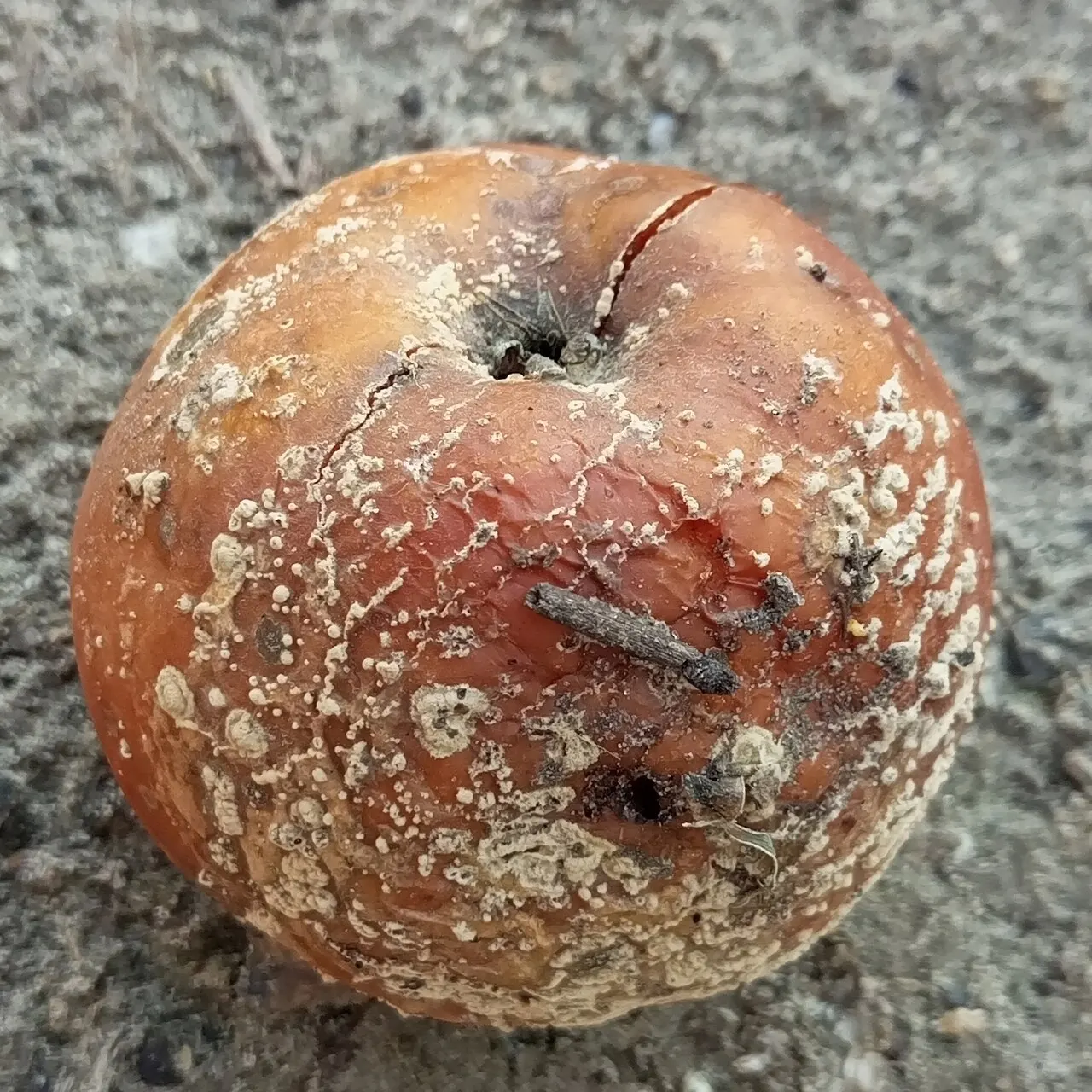

Brown rot starts in wounds and spreads between touching fruit. Rotten apples either fall or hang on as hard mummies, which release spores the following spring. The RHS removes all rotten fruit promptly and buries it at least 30 cm deep or uses the council green waste collection. Some councils will not take large amounts of rotting fruit, so check first.
Bitter pit is not a disease. The RHS calls it a disorder caused by too little calcium in the fruit, usually after an irregular water supply, and more common after hot, dry summers. The fix is steady growth: a balanced general fertiliser, irrigation in dry spells and a mulch. Avoid heavy nitrogen or potash feeds and heavy pruning.
The RHS bitter pit guide also describes foliar calcium nitrate sprays from mid-June to mid-September, with conditions. Spray only in the evening and only below 21 °C to avoid russeting. The RHS suggests 10 g of calcium nitrate per litre of water, sprayed until the leaves are wet but not running off, with a wetting agent or a few drops of detergent added. Do not mix it with other fertilisers, fungicides or insecticides. Some cultivars are sensitive, so use half strength, or test one branch and wait five days before treating the tree.
Pests through the year

October to April. Wingless winter moth females climb the trunks. Where they have been a problem before, the RHS fits a sticky band in October and keeps it sticky until mid-April.
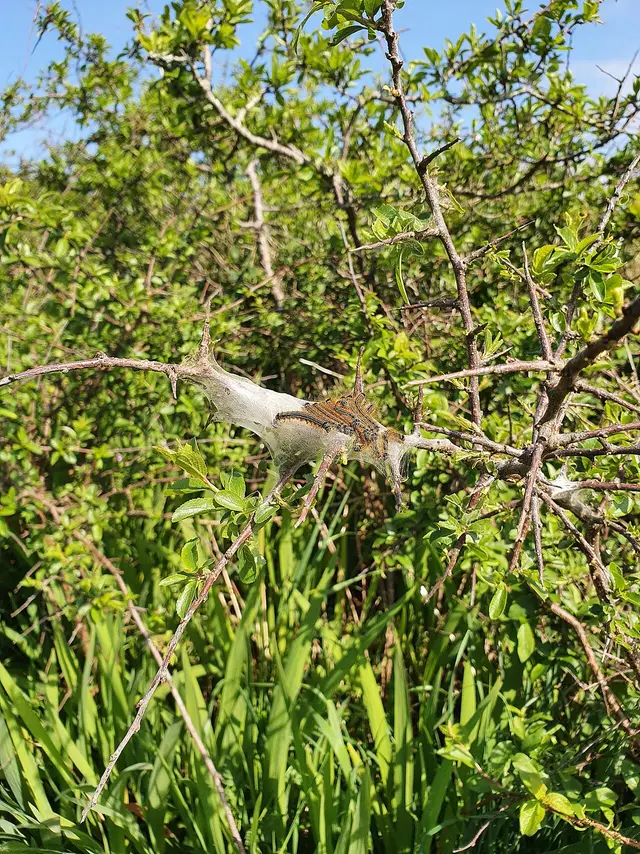
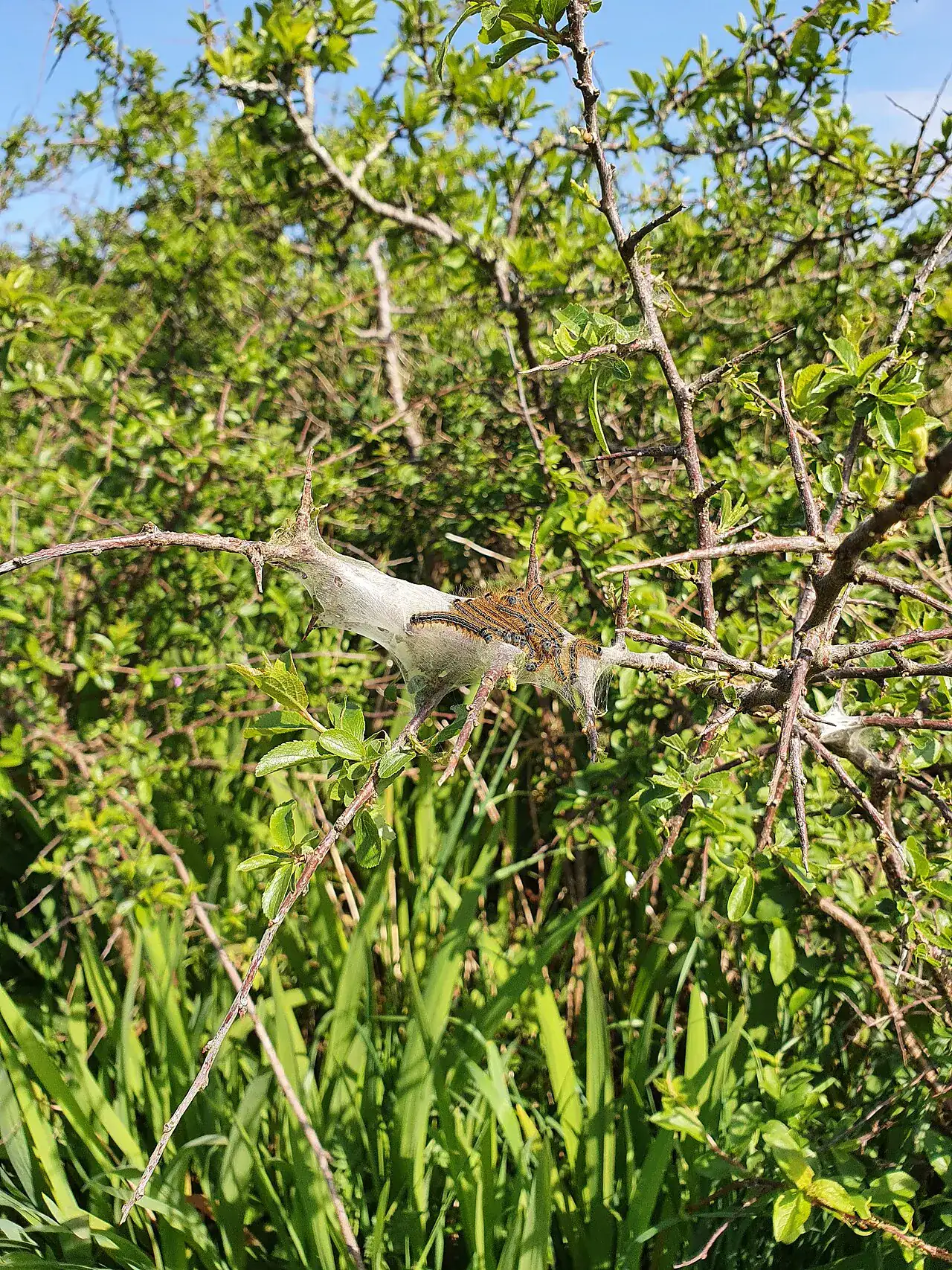
Spring. Winter moth caterpillars eat young leaves and blossom from bud burst to early June. Rosy apple aphid colonies curl leaves at the shoot tips and stunt fruitlets. Lackey moth caterpillars feed under silk webbing from April to July.
Late April to June. Apple sawfly larvae tunnel into fruitlets, which then drop in the June drop. The RHS says a large drop in mid-summer is usually the natural June drop, a thinning process, so do not blame pests for all of it.
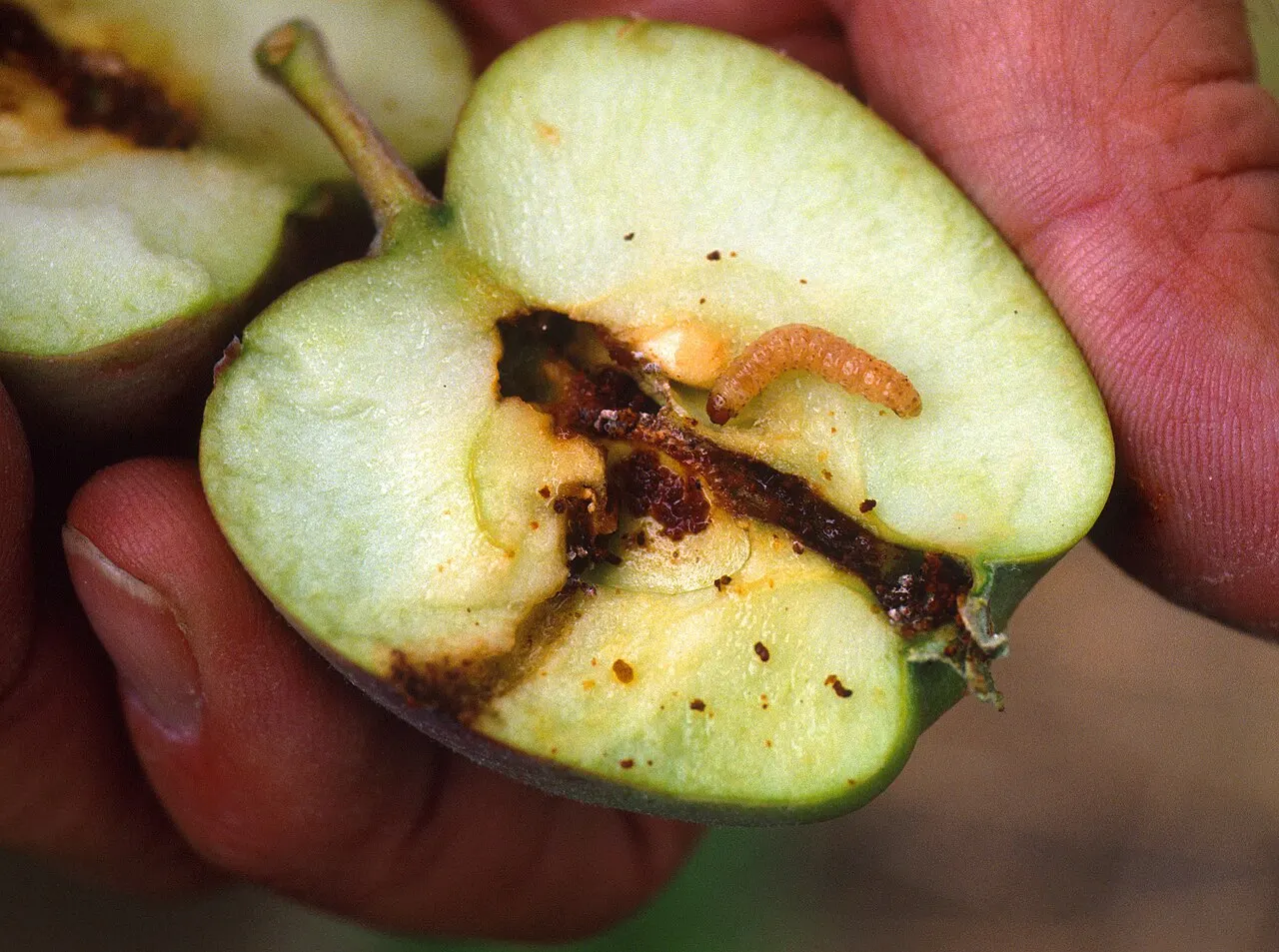
June to September. Codling moth caterpillars feed in the core. Hang a pheromone trap in early May to see when the moths fly.
The RHS asks you to tolerate many of these where possible. Across its pest pages it names birds, wasps, ground beetles, hedgehogs and earwigs among their natural enemies, and says tits rely on winter moth caterpillars to feed their chicks in spring.
What about sprays?
The RHS says it doesn't support the use of pesticides. On its scab and powdery mildew pages it recommends that you don't use fungicides, because they may reduce biodiversity and affect soil health.
If chemical controls are used, the RHS says they should be a last resort, used in a minimal, highly targeted way. Only pesticides approved for home gardeners are legal to buy, and following the label is a legal requirement.
For several problems there is nothing to spray anyway. The RHS says there are no fungicides available to amateur gardeners for brown rot, no chemical controls for fireblight, and apart from wound paints no products for canker.
Quick check by symptom (RHS)
| What you see | Likely cause |
|---|---|
| Olive-green velvety blotches on leaves, brown or black scabby patches on fruit | Apple scab |
| Stunted shoots and leaves covered in white powdery growth | Powdery mildew |
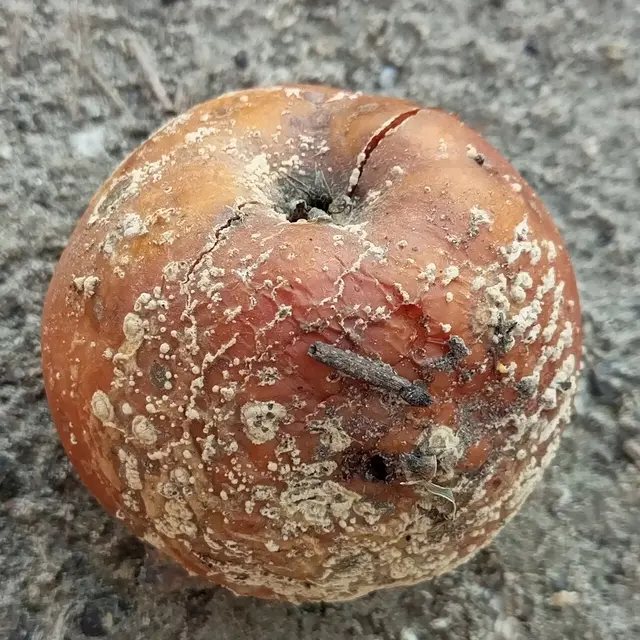
| Brown rotten fruit with buff pustules in rings | Brown rot |
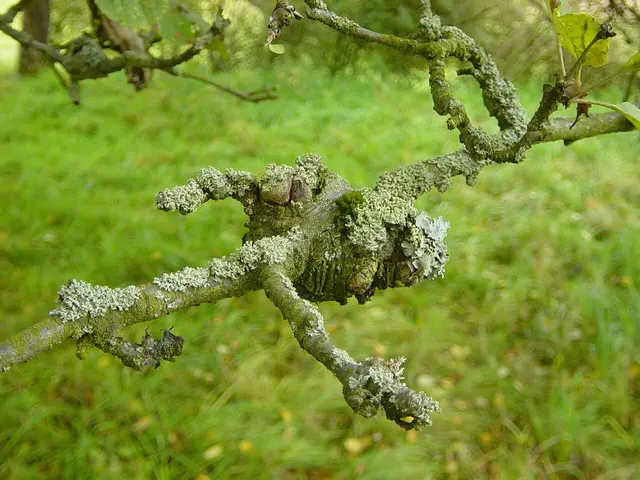
| Round or oval patches of dead, sunken bark on branches | Apple canker |
| Blossom wilts at flowering, shoots die back, white ooze in wet weather | Fireblight |
| Small sunken pits, brown specks in the flesh, bitter taste | Bitter pit |
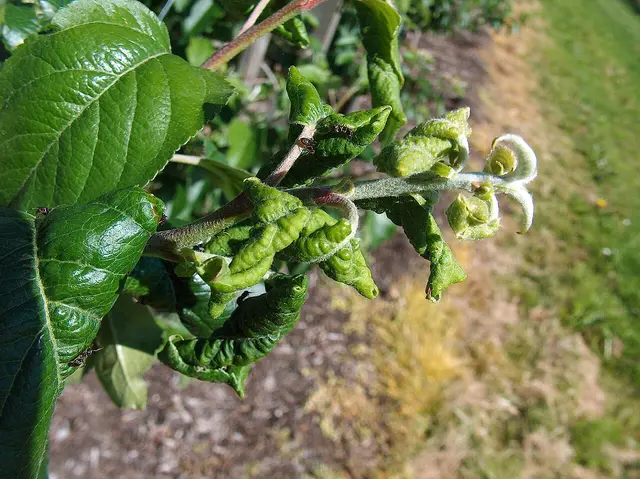
| Curled yellowish leaves at shoot tips, small fruit pinched at the eye end | Rosy apple aphid |
| White fluffy wax on lumpy bark | Woolly aphid |
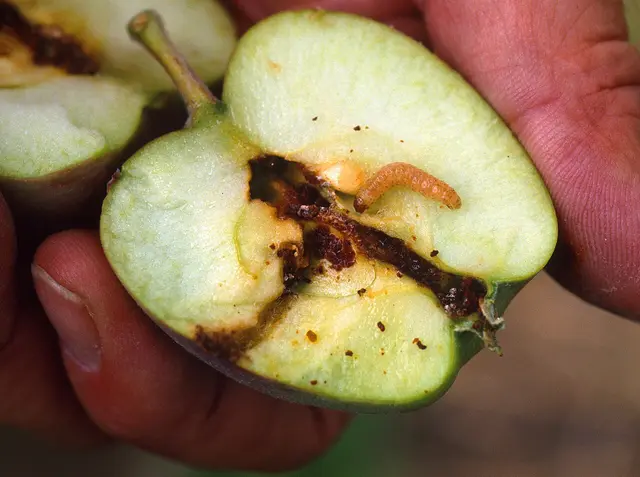
| Exit hole in ripe fruit, tunnels and droppings in the core | Codling moth |
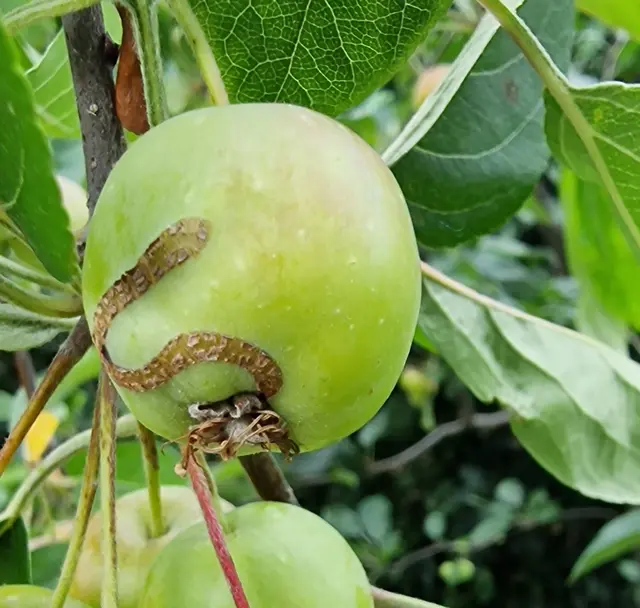
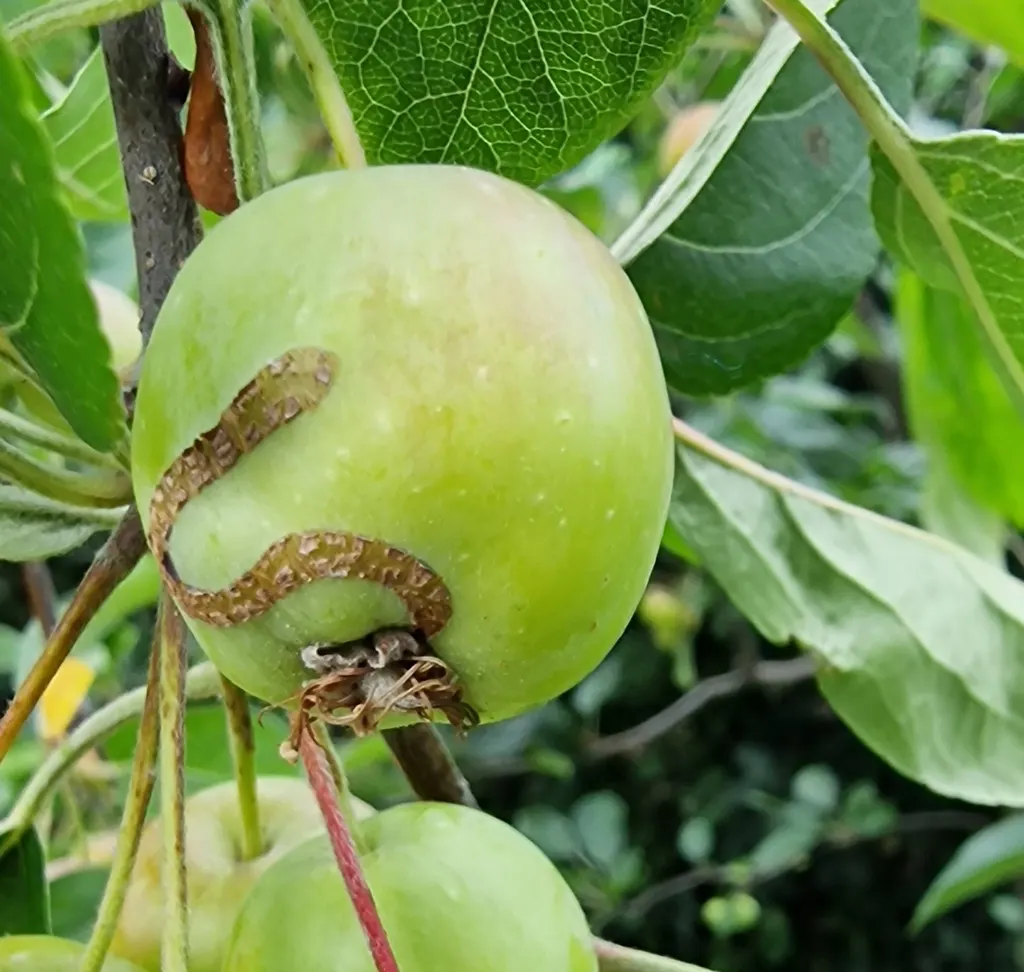
| Fruitlets drop in June, or a ribbon-like scar on the skin | Apple sawfly |
| Holes in young leaves, damaged blossom and fruitlets in spring | Winter moth caterpillars |
| Groups of hairy striped caterpillars under silk webbing | Lackey moth |
Apple scab
- How to spot it
- Olive-green spots or blotches on the leaves, velvety at first, then darker. Leaves often fall early. Fruit gets brown or black scabby blotches, can be distorted and may crack. Twigs blister and crack.
- What causes it
- The fungus Venturia inaequalis. Spores travel on the air and in rain splash. It overwinters on fallen leaves and on infected twigs that have not been pruned out.
- What to do
- Prune out blistered twigs. Dispose of fallen leaves and infected fruit. The RHS says no fungicides are currently produced for home gardeners for trees whose fruit will be eaten.
- How to prevent it
- Plant resistant cultivars. The RHS list includes 'Discovery', 'Charles Ross', 'Lord Derby', 'Topaz', 'Rajka' and 'Winston'. Clearing leaves is of limited value unless your tree is isolated, because spores travel long distances.
Is it serious? Light attacks mostly blemish the skin, but cracked fruit is prone to rots and stores poorly. Scab cracks also let canker and brown rot in.
↑ Back to the listApple powdery mildew

- How to spot it
- In spring, infected shoots are usually stunted and covered in white powdery growth. Flower buds may be distorted, with pale green or yellow petals. In summer, leaves curl with white growth mainly underneath. Some cultivars get russeted fruit.
- What causes it
- The fungus Podosphaera leucotricha. It overwinters inside buds infected the summer before, and infected twigs look silvery in winter, especially at the tips.
- What to do
- Remove infected shoots as they appear in spring and bag them carefully. Where you can recognise the silvery twigs, prune them out in winter. The RHS says doing nothing is also a valid choice, as heavily infected trees usually still fruit.
- How to prevent it
- Prune free-standing trees to an open centre. Feed and water as needed, but avoid too much nitrogen. Resistant cultivars include 'Discovery', 'Grenadier', 'Lord Derby', 'Topaz' and 'Worcester Pearmain'. 'Cox's Orange Pippin', 'Gala' and 'Golden Delicious' are susceptible.
Brown rot
- How to spot it
- Brown rot spreads out from a wound in the fruit. Buff pustules appear on the surface, often in rings. Rotten fruit falls or stays on the tree, dried and mummified.
- What causes it
- The fungi Monilinia fructigena and Monilinia laxa. They infect through wounds, especially those made by birds, codling moth and scab. Mummified fruit left on the tree releases spores in spring.
- What to do
- Remove all rotten fruit promptly. Bury it at least 30 cm deep or use the council green waste collection, checking first that they accept it. Do not leave rotten fruit on the tree. The RHS says no fungicides are available to amateur gardeners.
- How to prevent it
- Net trees where practical to reduce bird damage. Prune out infected spurs and blossom if practical.
Apple canker
- How to spot it
- Round or oval patches of dead, sunken bark, often starting at a wound or bud. Small branches and spurs can be girdled and killed in one season. On larger branches cankers last for years and develop raised edges.
- What causes it
- The fungus Neonectria ditissima. Spores enter through wounds, pruning cuts, leaf scars, frost damage, scab and woolly aphid damage. The RHS says canker is more serious on wet, heavy or acidic soils.
- What to do
- Remove affected small branches and spurs completely. On larger branches, cut back to fresh green tissue and remove all brown bark and wood. The canker guide then applies a protective wound paint. Apart from wound paints, the RHS says no products are available to gardeners.
- How to prevent it
- Check the drainage and, if needed, raise the soil pH by liming. No cultivar is fully resistant, but 'Lord Derby', 'Newton Wonder' and 'Winston' show some resistance. 'Cox's Orange Pippin', 'James Grieve' and 'Spartan' are susceptible.
Fireblight
- How to spot it
- Blossoms wilt and die at flowering. Shoots shrivel as the infection moves down the inner bark, which turns a reddish brown under the bark. Slimy white ooze can appear in wet weather. Badly affected trees look scorched by fire.
- What causes it
- The bacterium Erwinia amylovora, spread by wind-driven rain and insects. The RHS says most UK years are too cold at blossom time for infection, so it is usually a minor disease.
- What to do
- Cut out infections promptly, about 30 cm below the infection on small branches and about 60 cm on larger ones. Disinfect pruning tools between cuts. The RHS says there are no chemical controls.
- How to prevent it
- Remove late, secondary blossoms before they open. The RHS says fireblight is no longer notifiable in mainland Britain.
Bitter pit
- How to spot it
- Small sunken pits on the skin with dry, discoloured flesh beneath. In bad cases brown specks run through the flesh and the apple tastes bitter. Symptoms can appear from about halfway through fruit development, but often not until the fruit has been stored.
- What causes it
- Not a disease but a disorder: too little calcium in the fruit. The RHS says soil rarely lacks calcium. An irregular water supply is the usual trigger, and too much nitrogen, potassium or magnesium fertiliser makes it worse.
- What to do
- Leave fruit on the tree until fully ripe. Peel away brown patches near the skin and cook affected fruit soon after picking. On trees with a recurring problem, freeze fruit rather than store it.
- How to prevent it
- Keep growth steady with a balanced fertiliser, irrigation in dry spells and mulch. 'Bramley's Seedling' and 'Cox's Orange Pippin' are susceptible, while 'Gala' and 'Jonagold' appear unaffected.
Rosy apple aphid

- How to spot it
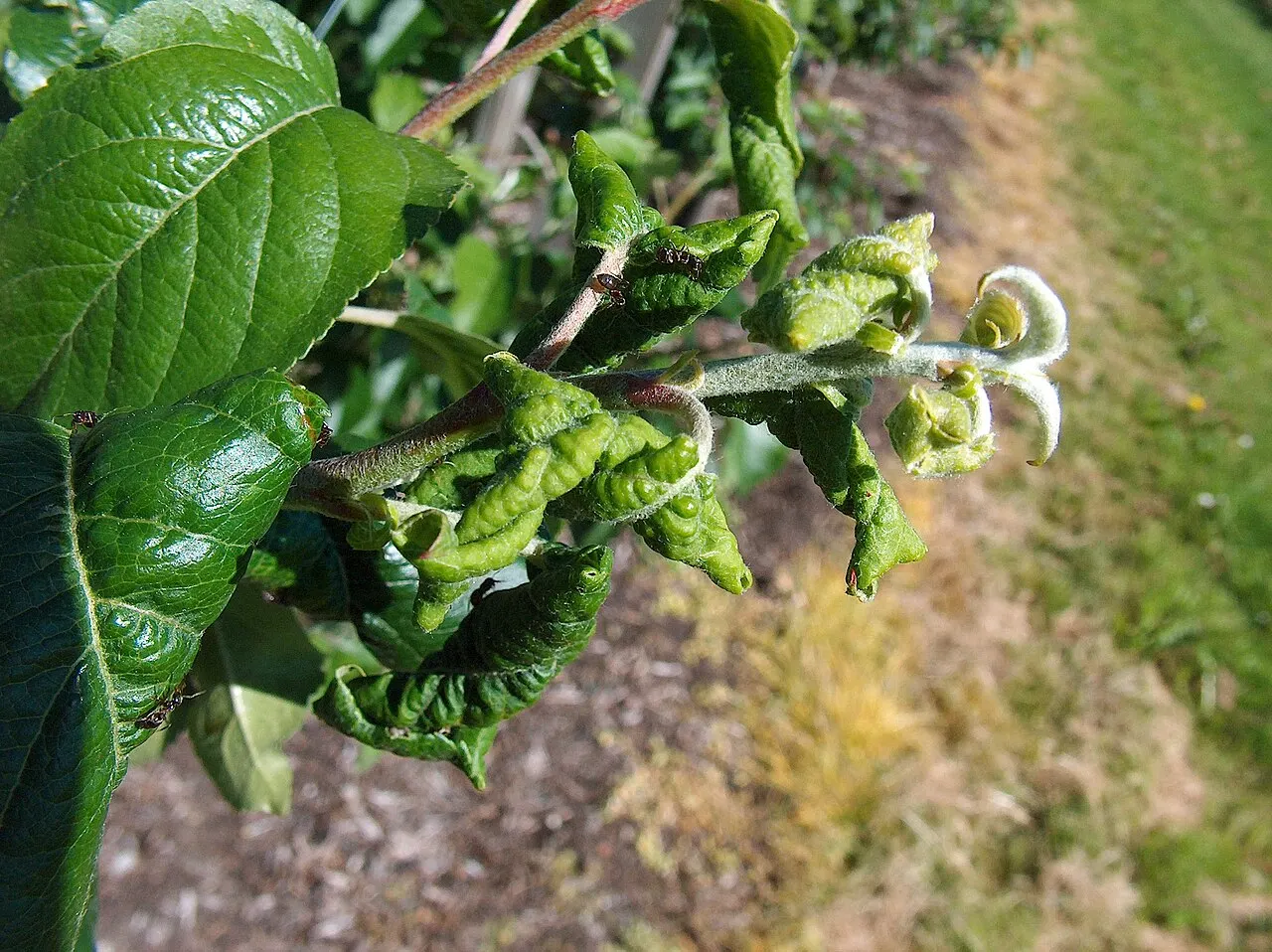
- Dull pinkish or purple-grey aphids form colonies under the leaves in spring and early summer. Leaves at shoot tips curl and turn yellowish. Fruitlets stay small and misshapen, pinched around the eye end.
- What causes it
- Dysaphis plantaginea, about 2.5 mm long. In June and July it moves to plantains and returns to apple in autumn to lay eggs.
- What to do
- Check trees often from spring and squash colonies by hand where practical.
- How to prevent it
- Encourage ladybirds, hoverflies, ground beetles, parasitoid wasps and earwigs. On tall trees the RHS says control is impractical and unnecessary.
Woolly aphid
- How to spot it
- Colonies covered in white fluff on the bark, often mistaken for fungal growth. Shoots develop soft, lumpy swellings, easiest to see at winter pruning.
- What causes it
- Eriosoma lanigerum, active from April to October. Frost can split the swellings and let in the canker fungus.
- What to do
- Squash colonies with finger and thumb where practical.
- How to prevent it
- Encourage predators. The RHS suggests earwig shelters, such as flower pots stuffed with hay, in the trees. It advises tolerating the aphids where possible.
Codling moth
- How to spot it
- An exit hole in the side or eye end of ripe fruit. Inside are tunnels and droppings in the core, sometimes with a small white caterpillar with a brown head. Damaged fruit ripens and drops early.
- What causes it
- Cydia pomonella. Eggs are laid on or near fruit from June to mid-July. Each caterpillar feeds in the core for about four weeks, then overwinters in leaf litter or under loose bark.
- What to do
- Accept some loss where possible, as often only a small share of fruit is affected. Nematodes sprayed on the trunk, branches and soil in September to October can infect the caterpillars. The RHS says they give no protection next year against moths from nearby gardens, and should be used with care, only for a specific problem.
- How to prevent it
- Hang a pheromone trap in early May. The RHS says traps alone rarely control the moth, but they help you monitor it and time other measures.
Apple sawfly
- How to spot it
- Larvae tunnel under the skin of fruitlets, then into the core. Blackish-brown droppings spill from holes. Most affected fruitlets drop in the June drop. Fruit that survives has a ribbon-like scar about 4 mm wide.
- What causes it
- Hoplocampa testudinea. Each larva can damage three to five fruitlets, then overwinters in the soil.
- What to do
- Pick off damaged fruitlets so larvae cannot move on or pupate in the soil. Scarred fruit is usually still edible.
- How to prevent it
- Check apples once the fruit has set. Thin fruit in years of heavy set. The RHS says losses are often light and should be tolerated.
Winter moth caterpillars
- How to spot it
- Pale green looper caterpillars up to 25 mm long eat holes in young leaves in spring. Blossom and fruitlets can be damaged, leaving a deep cleft in the side of the apple by late summer.
- What causes it
- Operophtera brumata. Wingless females climb the trunk to lay eggs between November and April. Caterpillars feed from bud burst to early June.
- What to do
- Trees largely stripped in spring should grow new leaves in summer, the RHS says. On fruit trees, though, heavy damage can affect crop yield and quality, and severe attacks can weaken young trees.
- How to prevent it
- Where winter moth has been a problem before, put a sticky band or barrier glue around the trunk and stake in October and keep it sticky until mid-April. Use them sparingly, as they catch other insects too.
Lackey moth

- How to spot it
- Hairy brown caterpillars with orange, white and blue stripes, up to 50 mm long, feed in groups under obvious silk webbing and can strip a lot of foliage.
- What causes it
- Malacosoma neustria. Eggs are laid in bands that encircle stems. Caterpillars are active from April to July.
- What to do
- If you spot eggs or caterpillars early on a small tree, the RHS says you can move them to a larger deciduous tree, preferably of the same kind.
- How to prevent it
- The RHS says defoliation should not affect the long-term health of the tree, and the caterpillars should be encouraged or tolerated.
Protection calendar
What to do and when, so you get fewer diseases and pests. Use only plant protection products authorised in the UK, as the label says.
- October to mid-AprilWhere winter moth has been a problem, keep a sticky band around the trunk and stake.
- Winter pruningPrune out scab-blistered twigs, and silvery mildew twigs if you can recognise them. Look for woolly aphid swellings.
- SpringRemove white, mildewed shoots as they appear. Check for aphids and squash colonies.
- Early MayHang a codling moth pheromone trap to monitor the moths.
- After fruit setCheck for apple sawfly and pick off damaged fruitlets.
- From mid-summerRemove brown-rotted fruit promptly, from the tree and the ground.
- September to OctoberIf codling moth is a specific problem, nematodes can be sprayed on trunk, branches and soil. They may not be worthwhile where apples and pears are widely grown nearby.
- AutumnDispose of fallen leaves and infected fruit to reduce scab next year.
Home remedies: what works
The internet is full of folk remedies. Here is what the sources say about them.
- Prevention onlyPheromone traps for codling moth
The RHS says traps alone rarely control codling moth. They help you monitor it and time other measures. On isolated trees they may catch enough males to reduce mating.
- WorksGrease bands for winter moth
The RHS bands the trunk and stake in October and keeps them sticky until mid-April to catch wingless females. Use them only where winter moth has been a problem, because they catch other creatures too.
- Prevention onlyRaking up leaves against scab
The RHS says disposing of fallen leaves reduces the fungus for next season, but is of limited value unless the tree is isolated, because spores can travel long distances.
- Not studiedHousehold products as sprays
The RHS says it is not advisable to use household products, such as bleach, vinegar or washing-up liquid, as pesticides. Gardeners who mix their own solutions often damage plants, soil and soil organisms.
Common questions
Why are my apples maggoty?
Usually codling moth. The RHS says the caterpillar feeds in the core for about four weeks, leaving tunnels, droppings and an exit hole. Damaged fruit ripens and drops early. Often only a small share of the crop is affected.
What can I spray on an apple tree for scab?
The RHS recommends that you don't use fungicides, and says none are currently produced for home gardeners for trees whose fruit will be eaten. Prune out blistered twigs, dispose of fallen leaves and infected fruit, and plant resistant cultivars.
Why are my apples rotting on the tree?
Probably brown rot, which the RHS says enters through wounds made by birds, codling moth and scab. Remove all rotten fruit promptly and do not leave mummified fruit hanging on the tree.
Can apple canker be cured?
The RHS removes affected small branches completely and cuts larger ones back to fresh green tissue, then applies a protective wound paint. Apart from wound paints, no products are available to gardeners. Improve drainage, as canker is worse on wet, heavy soils.
Why are lots of my apples falling in June?
The RHS says this is usually the June drop, a natural thinning process that can also happen in July. Apple sawfly also makes fruitlets drop, so look for holes with blackish-brown droppings.
What is the white fluff on my apple tree branches?
Woolly aphid, the RHS says. The aphids secrete white wax that is often mistaken for fungal growth. Squash colonies where practical and tolerate them where possible.
Why do my apples have brown spots inside and taste bitter?
That is bitter pit, a calcium disorder in the fruit, usually after an irregular water supply. The RHS keeps growth steady with balanced feeding, watering in dry spells and mulch.
Should I report fireblight?
Not in mainland Britain, where the RHS says it is no longer notifiable. It is not established on the Isle of Man or the Channel Islands, so report suspected cases there to the plant health authority.
Sources
We wrote this page using the sources below.
- Apple tree problems: frequently asked questions, Royal Horticultural Society (RHS)
- Apple and pear scab, Royal Horticultural Society (RHS)
- Apple powdery mildew, Royal Horticultural Society (RHS)
- Brown rot, Royal Horticultural Society (RHS)
- Apple canker, Royal Horticultural Society (RHS)
- Fireblight, Royal Horticultural Society (RHS)
- Bitter pit in apples, Royal Horticultural Society (RHS)
- Rosy apple aphid, Royal Horticultural Society (RHS)
- Woolly aphid, Royal Horticultural Society (RHS)
- Codling moth, Royal Horticultural Society (RHS)
- Apple sawfly, Royal Horticultural Society (RHS)
- Winter moth caterpillars, Royal Horticultural Society (RHS)
- Lackey moth, Royal Horticultural Society (RHS)
- Understanding and avoiding chemical use, Royal Horticultural Society (RHS)
- Apples and pears: pruning made easy, Royal Horticultural Society (RHS)