
 Potatoes Diseases and pests
Potato diseases and pests
Leaves rotting fast in wet weather, scabby skins or tubers going soft in store? Compare the signs and find out what the RHS advises.
In short
Blight is most serious in wet summers, the RHS says. Leaves rot fast, collapse and turn brown, and tubers get a reddish-brown rot. Other common problems are scab, blackleg, black scurf, tuber rots in store, potato cyst nematodes and wireworms.
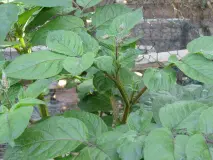
What problem can you see?
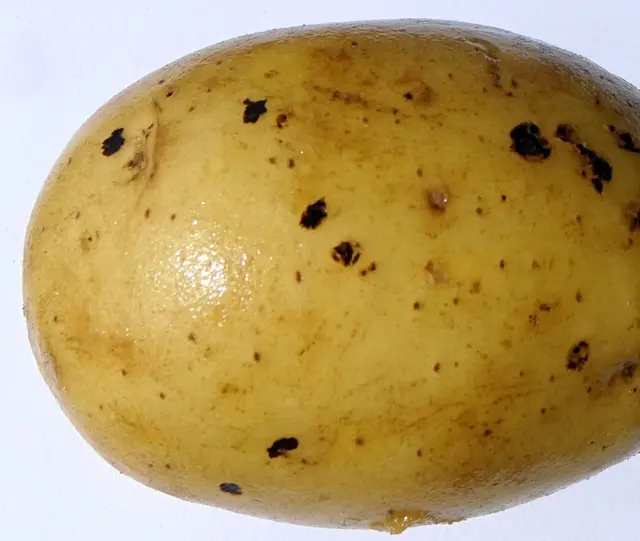

Blight: the one to watch
Blight, caused by *Phytophthora infestans*, is the same disease that attacks tomatoes. The RHS says outbreaks in the UK may occur from June onwards, usually earliest in the South West. It needs several hours of wet leaves to infect, so it is most serious in wet summers.
Most blight in gardens blows in on the wind from other gardens, allotments and commercial crops. It also overwinters in potatoes left in the ground, which is why the RHS destroys all leftover tubers and storage waste before the next spring.
Timing matters. Late-summer attacks can strip the leaves, but the RHS says if the tubers are already mature and lifted, little is lost. Early attacks can be devastating. First earlies are more likely to escape, though they are still susceptible. The RHS also points to the AHDB BlightSpy service for local forecasts and confirmed cases.
When it strikes. When about 25% of the leaves are affected or stem lesions appear, cut the foliage at soil level and rake up the debris. Lift the tubers about two weeks later, once the skins have hardened, and not much later, or slugs move in. Use tubers from a blighted crop as soon as possible and avoid storing them, because many infected tubers rot in store.
Disposal. The RHS buries infected material below cultivation depth, sends it to the council green waste or burns it. It does not compost it.
Blight-resistant cultivars
Resistance changes as blight changes. The RHS blight guide sorts cultivars like this:
| Group | Cultivars |
|---|---|
| Currently thought to show good resistance | 'Athlete', 'Alouette', 'Carolus' and the Sarpo cultivars, such as 'Sarpo Axona' and 'Sarpo Mira' |
| Once partly resistant, now ineffective | 'Cara', 'Kondor', 'Orla', 'Markies', 'Valor' |
| Very susceptible | 'Arran Pilot', 'King Edward', 'Majestic', 'Sharpe's Express' |
Even the resistant ones are not immune, the RHS says. They can still blight in long spells of favourable weather, though less severely. The AHDB British Potato Variety Database rates disease resistance on a scale of one to nine.
How to plant and earth up potatoes is on our pages when to plant potatoes and how to grow potatoes.
Scab: dry soil or wet soil?
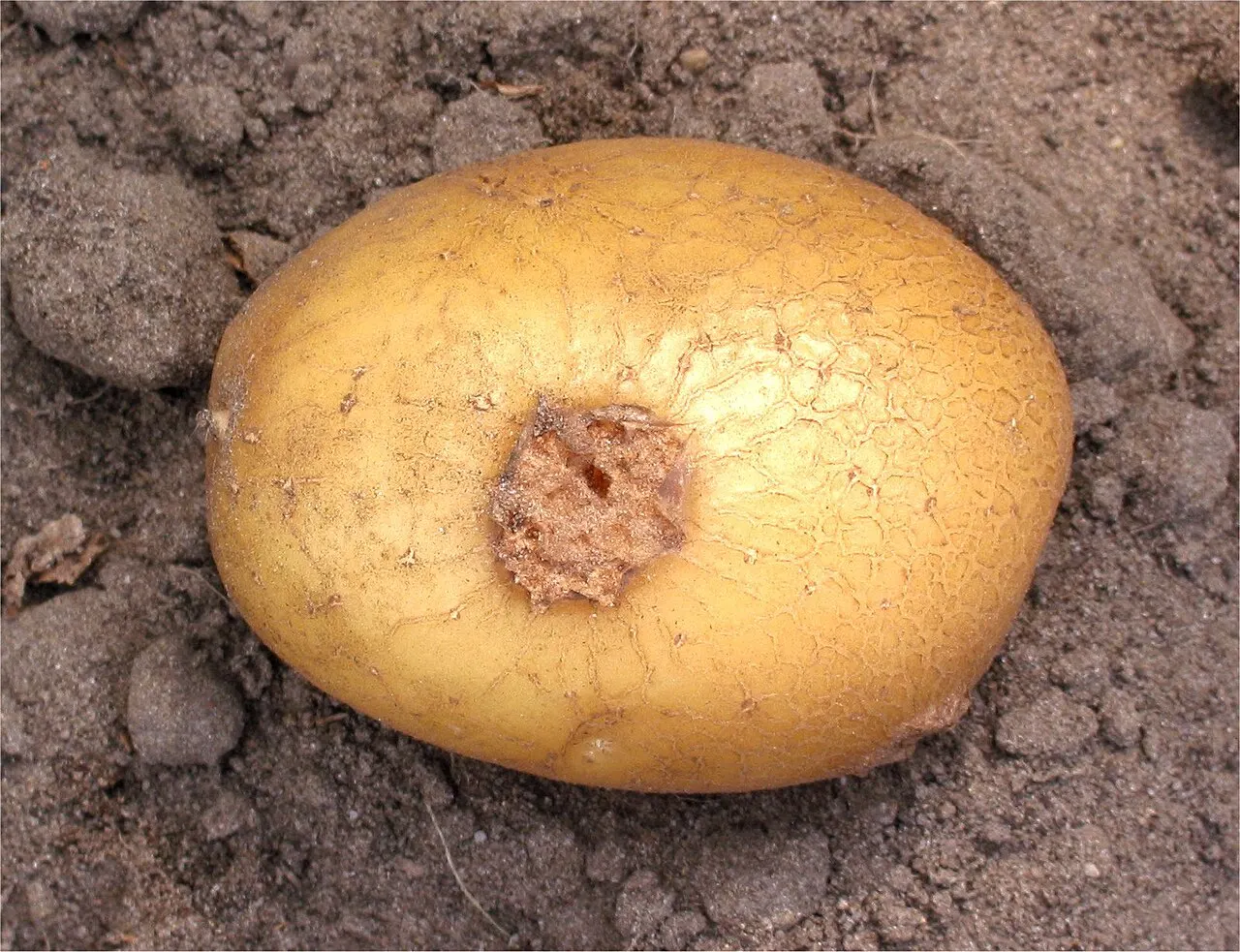

The two scabs need opposite weather, the RHS says.
| Common scab | Powdery scab | |
|---|---|---|
| Cause | *Streptomyces* bacteria | *Spongospora subterranea* |
| What you see | Raised, rough patches | Brown patches or pits with papery edges and dusty brown spores |
| Worse when | Soil is dry as tubers form, alkaline soil above pH 7 | Conditions are wet |
| Some resistance | 'Accent', 'Arran Pilot', 'Juliette', 'Golden Wonder', 'King Edward', 'Pentland Crown', 'Pentland Javelin' | 'Desiree', 'Hermes', 'King Edward', 'Pixie', 'Sante' |
For common scab, do not let the soil dry out while tubers develop. If needed, the RHS waters from two to three weeks after the plants emerge, for about four weeks, at 20 litres per square metre. Add organic matter to hold water. Liming for clubroot in brassicas can make common scab more likely, so lime after the potato stage of a rotation.
The RHS says there are no chemical controls available to gardeners for either scab.
Blackleg, black scurf and rots in store
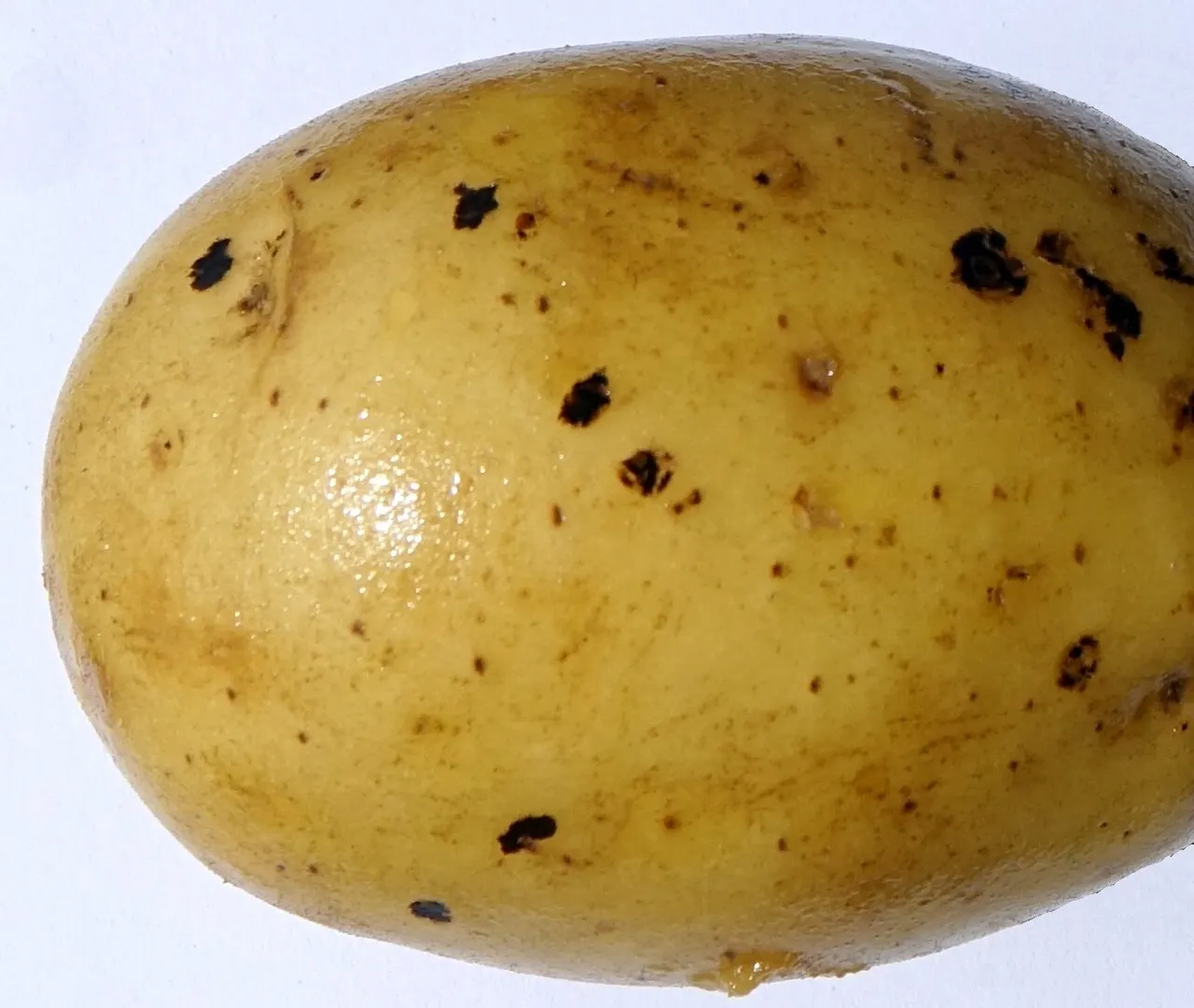

Blackleg is one of the earliest potato diseases, showing from June, especially in wet years. Gardens usually get it from infected seed potatoes that look healthy. The most important step, the RHS says, is to remove and destroy affected plants as soon as you see them.
Black scurf leaves hard black patches that rub off. It looks bad, but the RHS says the fungus does not feed on the tubers and stored tubers with scurf will not decay. The same fungus causes stem canker on young shoots, worst when cold, dry weather slows them. Chitting, not planting too early and lifting early all help.
Tuber rots such as dry rot and gangrene can take weeks or months in store to show. Damage at lifting lets them in. Lift from soil that is neither wet nor very dry and hard, handle tubers gently and let the skins dry for two to three hours before storing them dry and cool. Check stored potatoes regularly. The RHS notes that brown rot and ring rot are notifiable bacterial diseases, but unlikely in garden crops.
Nematodes and wireworms
Potato cyst nematodes build up in soil where potatoes, tomatoes and aubergines grow again and again. Their eggs can survive for up to ten years in some soils. If you have them, the RHS rotates for at least five to six years, lifts potatoes as soon as they are ready and removes volunteer plants in early summer. Never use soil that grew potatoes for greenhouse tomatoes.
The RHS lists cultivars resistant to the golden nematode, among them 'Accent', 'Rocket', 'Kestrel', 'Nadine', 'Cara', 'Maris Piper' and 'Valor'. Against the white nematode, 'Harmony', 'Kestrel', 'Lady Balfour', 'Maxine', 'Sante' and 'Valor' are tolerant rather than resistant.
Wireworms are click beetle larvae. They are worst in newly dug grassland, because the beetles lay eggs in grassy ground. Numbers usually fall within two years of cultivation. Wireworms tunnel straight through a tuber without leaving a cavity, while slug damage has small openings leading to cavities, the RHS says. For slugs, see how to get rid of slugs.
What about sprays?
For most potato diseases there is nothing to spray. The RHS says there are currently no fungicides available to gardeners against blight, and no chemical controls available to gardeners for scab, blackleg, black scurf or tuber rots.
More generally, the RHS says it doesn't support the use of pesticides. If chemical controls are used, they should be a last resort, used in a minimal, highly targeted way, and only products approved for home gardeners are legal. Following the label is a legal requirement.
Quick check by symptom (RHS)
| What you see | Likely cause |
|---|---|
| Leaves rot fast, collapse and turn brown, white growth underneath in wet weather | Blight |
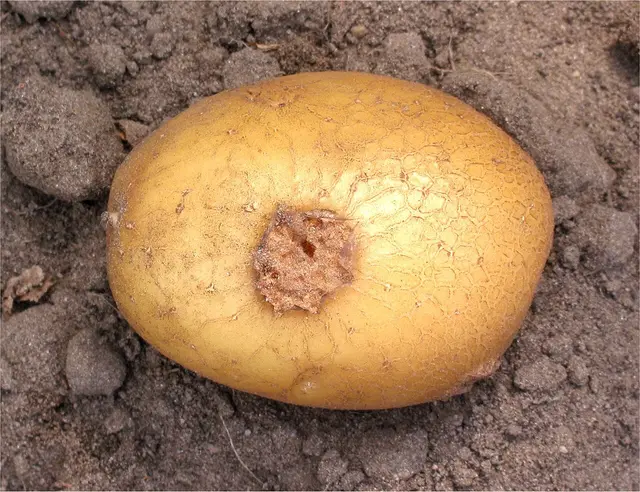
| Reddish-brown rot just under the tuber skin | Blight in the tubers |
| Raised, rough patches on the skin | Common scab |
| Brown raised patches or pits with papery edges and dusty brown spores | Powdery scab |
| Stunted, yellowing stems, black rot at the stem base | Blackleg |
| Hard black patches on the skin that rub off | Black scurf |
| Brown, sunken patches on stems below the soil | Stem canker |
| Shrivelled tubers in store with cavities inside | Dry rot |
| Sunken thumb-mark patches on stored tubers | Gangrene |
| Patches of poor, yellowing plants, pinhead-sized cysts on the roots | Potato cyst nematodes |
| Narrow tunnels straight through the tuber | Wireworms |
Potato blight
- How to spot it
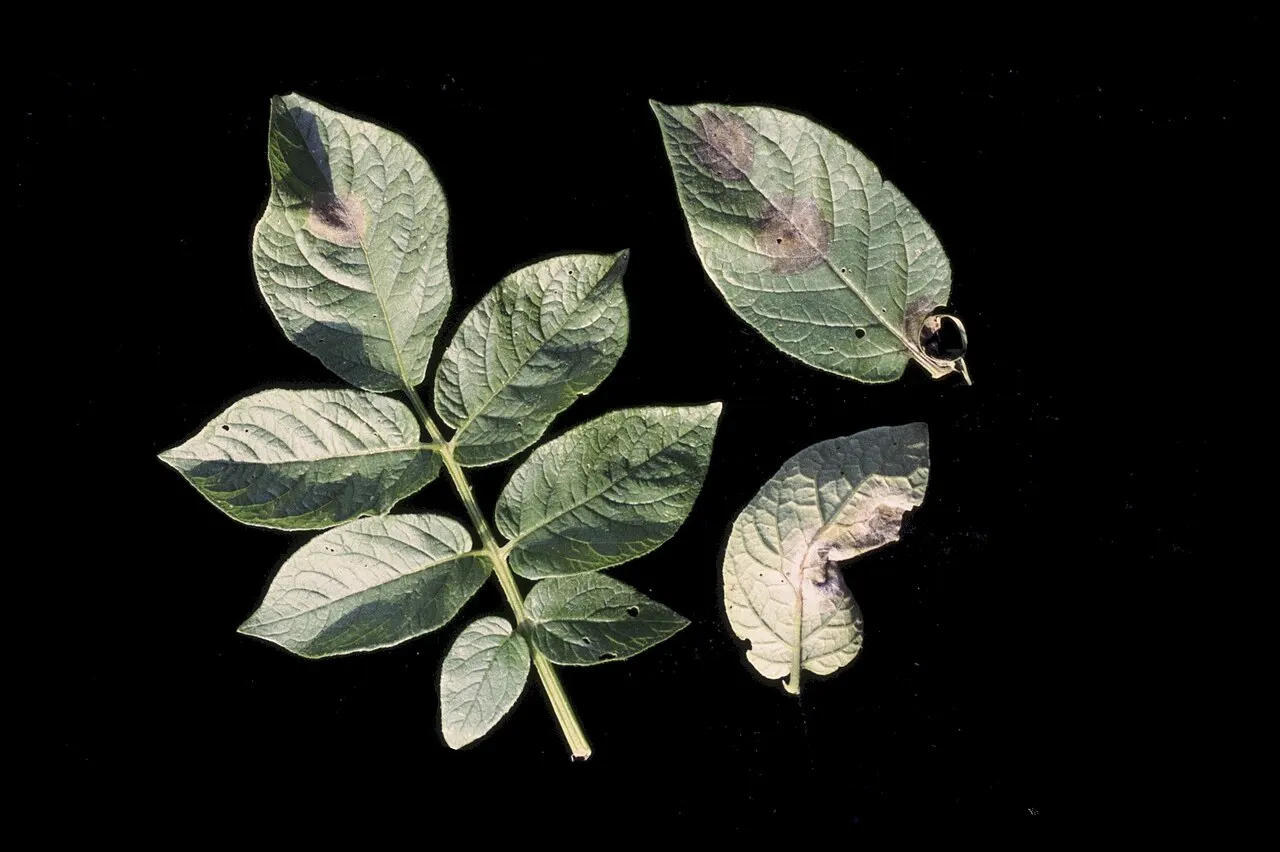
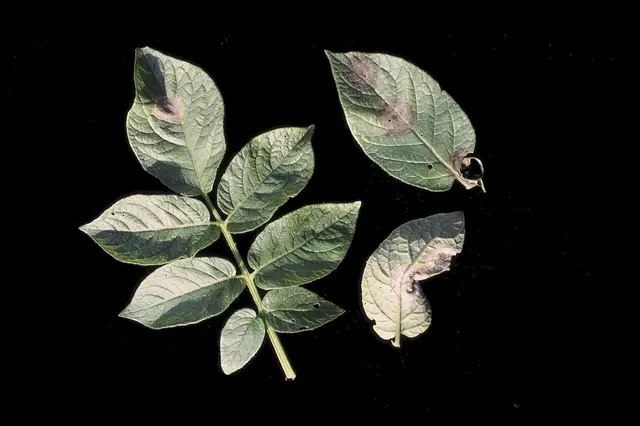
- A rapidly spreading, watery rot of the leaves, which collapse, shrivel and turn brown. In wet or humid weather a whitish growth can appear under the leaves. Stems get brown lesions. Tubers develop a reddish-brown rot under the skin, often turning soft as bacteria move in.
- What causes it
- Phytophthora infestans, a fungus-like organism that also causes tomato blight. Infection needs several hours of wet leaves, so it is most serious in wet summers. Most garden infections come on the wind from other gardens, allotments and farms.
- What to do
- When about a quarter of the leaves are affected or stem lesions appear, cut the foliage at soil level and rake it up. Lift the tubers about two weeks later, once the skins have hardened. The RHS says there are currently no fungicides available to gardeners against blight.
- How to prevent it
- Grow first earlies, which are more likely to escape, or cultivars thought to have good resistance, such as Sarpo cultivars. Earth up well. Rotate for at least four years and do not grow tomatoes in that soil meanwhile.
Is it serious? Serious. Early attacks can be devastating, and many infected tubers rot in store.
↑ Back to the listCommon scab
- How to spot it
- Raised, rough patches on the skin of the tuber. Light attacks are only superficial.
- What causes it
- Several Streptomyces species, filamentous bacteria. Worse when the soil is dry as tubers form, and on alkaline soil with a pH above 7.
- What to do
- There is no cure for affected tubers. The RHS says light attacks do little to affect eating quality.
- How to prevent it
- Do not let the soil dry out while tubers develop. Water if needed from two to three weeks after the plants emerge, for about four weeks, at 20 litres per square metre. Add organic matter and lime only after the potato stage of a rotation.
Powdery scab
- How to spot it
- Irregular brown raised patches or pits on the tuber, often with papery edges, holding masses of dusty brown spores. Bad attacks can distort tubers.
- What causes it
- Spongospora subterranea. Unlike common scab, it is worse in wet conditions, because its spores need water to infect.
- What to do
- The RHS says there are no chemical controls available to gardeners for either scab.
- How to prevent it
- Do not plant seed potatoes with visible scab. 'Desiree', 'King Edward', 'Pixie' and 'Sante' have some resistance.
Blackleg
- How to spot it
- Stems are stunted and pale green or yellow from as early as June, with small, stiff top leaves curled in at the edges. At ground level the stems look black and rotted. Tubers can rot from the heel end.
- What causes it
- Mostly the bacterium Pectobacterium atrosepticum. It usually arrives in infected seed potatoes and thrives in warm, damp conditions and on poorly drained sites.
- What to do
- Remove and destroy infected plants as soon as you see symptoms, before the disease spreads. The RHS says there are no chemical controls available to gardeners.
- How to prevent it
- Use commercially produced seed, which the RHS says usually has very low (but not zero) infection levels. Store seed and eating potatoes dry, improve drainage, lift in dry weather and rotate, which also reduces the risk from infected volunteer potatoes. 'Charlotte', 'Pixie', 'Saxon' and 'Vales Sovereign' are cited as resistant.
Black scurf and stem canker
- How to spot it
- Raised, hard, black patches on the tuber skin that rub or scrape off. Stem canker makes rough, brown, sunken patches on stems below soil level and can kill sprout tips.
- What causes it
- The fungus Rhizoctonia solani. Sprout attacks are worst when cold, dry weather slows growth through the soil. More common on lighter soils.
- What to do
- The fungus does not feed on the tubers, and the RHS says stored tubers with black scurf will not decay. Peeling and scrubbing remove the marks.
- How to prevent it
- Use seed free of heavy infection, rotate, do not plant too early, chit the seed, water in dry spells and lift early.
Dry rot, gangrene and other tuber rots
- How to spot it
- Dry rot gives brown, wrinkled patches over cavities lined with white, pink or bluish growth, and tubers can shrivel. Gangrene gives sunken thumb-mark patches. Pink rot is rubbery, smells of vinegar and turns pink in air. Bacterial soft rot is soft and often smelly.
- What causes it
- Fungi such as Fusarium and Boeremia foveata, Phytophthora erythroseptica, and bacteria. Damage at lifting and wet soil make infection more likely.
- What to do
- Dispose of rotting tubers and use the rest soon rather than storing them long term. The RHS says no products are available to gardeners for tuber rots.
- How to prevent it
- Use certified seed. Avoid lifting from wet or very dry, hard soil, handle tubers gently and leave them on the surface for two to three hours to dry. Store dry and cool and check regularly.
Potato cyst nematodes
- How to spot it
- Patches of poor growth with yellowing and wilting. Plants die early and give small tubers. Pinhead-sized cysts, white, yellow or brown and under 1 mm across, show on the roots.
- What causes it
- Globodera rostochiensis and Globodera pallida. They also attack tomatoes and aubergines. Eggs can survive for up to ten years in some soils.
- What to do
- Lift as soon as the tubers are ready, to limit the build-up. Dig out roots and unwanted plants from affected plots.
- How to prevent it
- Rotate for at least five to six years if you have nematodes. Remove volunteer potatoes in early summer. Against the golden nematode, grow a resistant cultivar such as 'Rocket' or 'Maris Piper'.
Wireworms
- How to spot it
- Thin, yellowish-brown larvae up to 25 mm long, with three pairs of small legs, tunnel straight through the tubers without leaving a cavity.
- What causes it
- Click beetle larvae. They are most common in newly dug grassland, because the adults lay eggs in grassy ground. The larval stage can last up to four years.
- What to do
- Remove larvae when you find them. Cultivation exposes them to birds.
- How to prevent it
- Numbers usually fall within two years of cultivating new ground. The nematode Heterorhabditis bacteriophora is sold as a biological control, watered into moist soil at 12–20 °C. The RHS advises using it in a targeted way, as it may affect other soil insects.
Protection calendar
What to do and when, so you get fewer diseases and pests. Use only plant protection products authorised in the UK, as the label says.
- Buying seedUse certified seed potatoes and do not plant tubers with visible scab or rot.
- PlantingRotate for at least four years against blight, longer where nematodes are a problem. Do not plant too early.
- As tubers formKeep the soil moist against common scab: water from two to three weeks after emergence for about four weeks.
- From JunePull out blackleg plants at once and watch for blight, especially in warm, wet weather.
- Early summerRemove volunteer potatoes.
- Blight appearsCut the foliage when about 25% of the leaves are affected, then lift about two weeks later.
- LiftingLift in dry weather, handle tubers gently and let the skins dry on the surface for two to three hours.
- Before next springDestroy all potatoes left in the soil and any storage waste.
Home remedies: what works
The internet is full of folk remedies. Here is what the sources say about them.
- Does not workPicking off blighted leaves
The RHS says picking off affected leaves when only a few are infected slows the spread slightly, but will not get rid of the problem.
- WorksWatering against common scab
The RHS waters if needed from two to three weeks after the plants emerge, for about four weeks, at 20 litres per square metre, because dry soil as tubers form makes scab worse.
- Does not workComposting blighted foliage
The RHS says to bury infected material deeply, take it to the council green waste or burn it, and not to compost it.
- Not studiedHousehold sprays
The RHS advises against using household products such as vinegar or washing-up liquid as pesticides. Homemade mixes often damage plants, soil and soil life.
Common questions
What does potato blight look like?
The RHS describes a rapidly spreading, watery rot of the leaves, which collapse, shrivel and turn brown, with whitish growth underneath in wet weather. Stems get brown lesions, and tubers a reddish-brown rot under the skin.
What can I spray on potatoes for blight?
Nothing. The RHS says there are currently no fungicides available to gardeners against blight. Grow first earlies or resistant cultivars, earth up well and cut the foliage when about a quarter of the leaves are affected.
Can I store potatoes from a blighted crop?
The RHS advises using them as soon as possible and avoiding storage, because many infected tubers rot in store. If you do store some, check them regularly.
Can I compost blighted potato leaves?
The RHS says no. Bury infected material below cultivation depth, take it to the council green waste or burn it.
Are potatoes with scab safe to eat?
The RHS says light attacks of scab are only superficial and do little to affect eating quality. Severe attacks can crack the skin and lead to rotting.
What is early blight?
A different disease, caused by Alternaria species. The RHS says it is uncommon in British gardens.
How long should I wait before growing potatoes in the same place?
The RHS rotates for at least four years against blight, and at least five to six years where potato cyst nematodes are a problem.
Sources
We wrote this page using the sources below.
- Potato blight, Royal Horticultural Society (RHS)
- Potato scabs, Royal Horticultural Society (RHS)
- Potato blackleg, Royal Horticultural Society (RHS)
- Potato black scurf and stem canker, Royal Horticultural Society (RHS)
- Potato tuber rots, Royal Horticultural Society (RHS)
- Potato cyst nematodes, Royal Horticultural Society (RHS)
- Wireworms, Royal Horticultural Society (RHS)
- Understanding and avoiding chemical use, Royal Horticultural Society (RHS)