
 Hydrangeas Pruning
Pruning hydrangeas
Cut the wrong hydrangea hard and you lose a summer of flowers. Cut the right one hard and the flower heads get bigger. It all depends on which type you have.
In short
Leave the old flower heads on mophead hydrangeas over winter, then cut them off in spring, just above the first strong pair of buds. Prune Hydrangea paniculata and H. arborescens harder in early spring, to a low framework. Prune climbing hydrangeas in summer, straight after flowering.

Hydrangeas: what to do and when
Under cover and outdoors, for UK conditions. The weather differs from year to year and from north to south, so check your local conditions too.
First, which hydrangea do you have?
Hydrangeas are not all pruned alike, so start by naming yours. The RHS pruning guide sorts them like this.
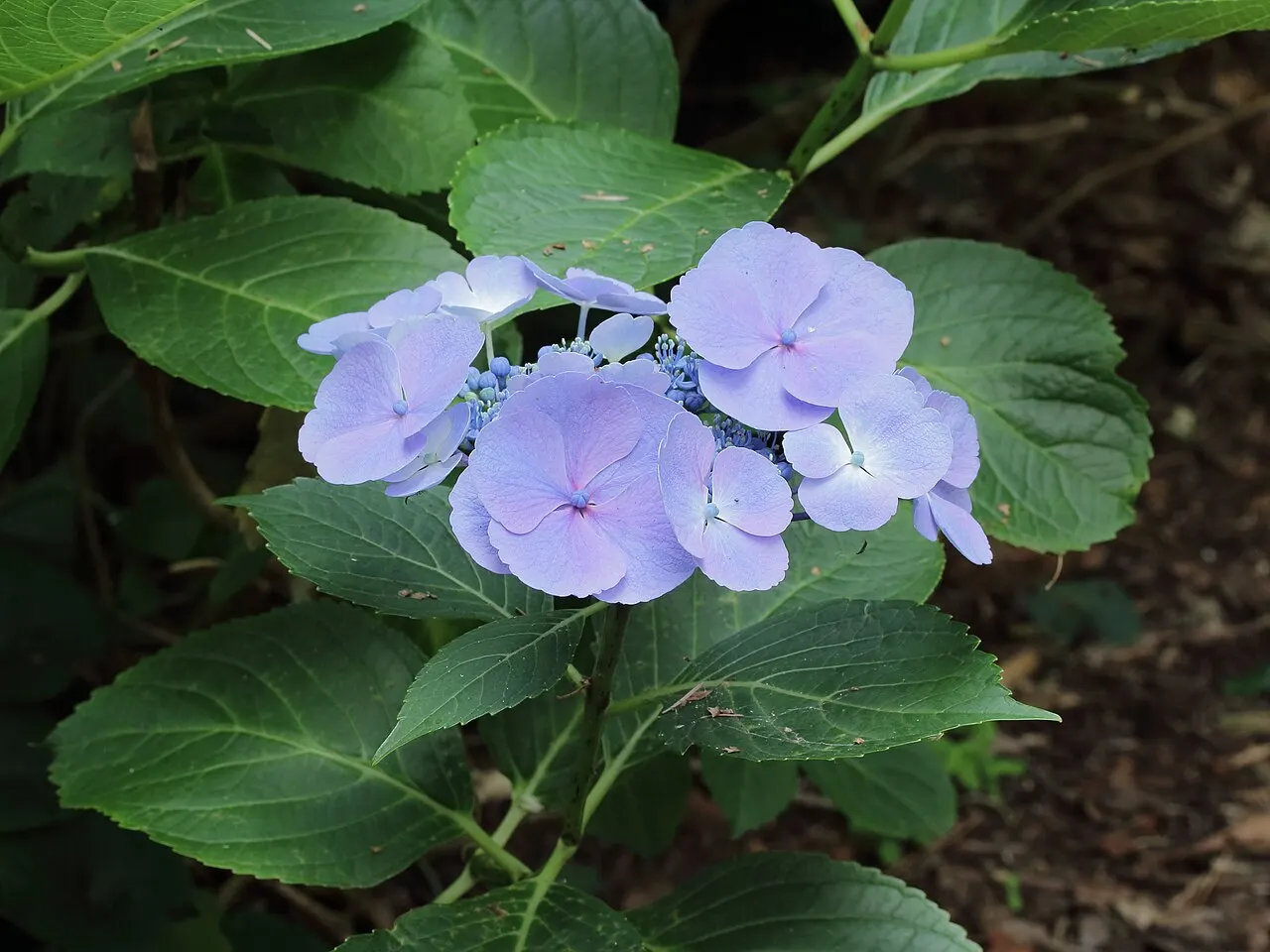
Mopheads and lacecaps (*Hydrangea macrophylla*). Mopheads carry rounded, ball-shaped heads packed with large florets. Lacecaps are flatter, with a centre of tiny flowers ringed by larger, showy ones. *Hydrangea serrata* is pruned the same way.
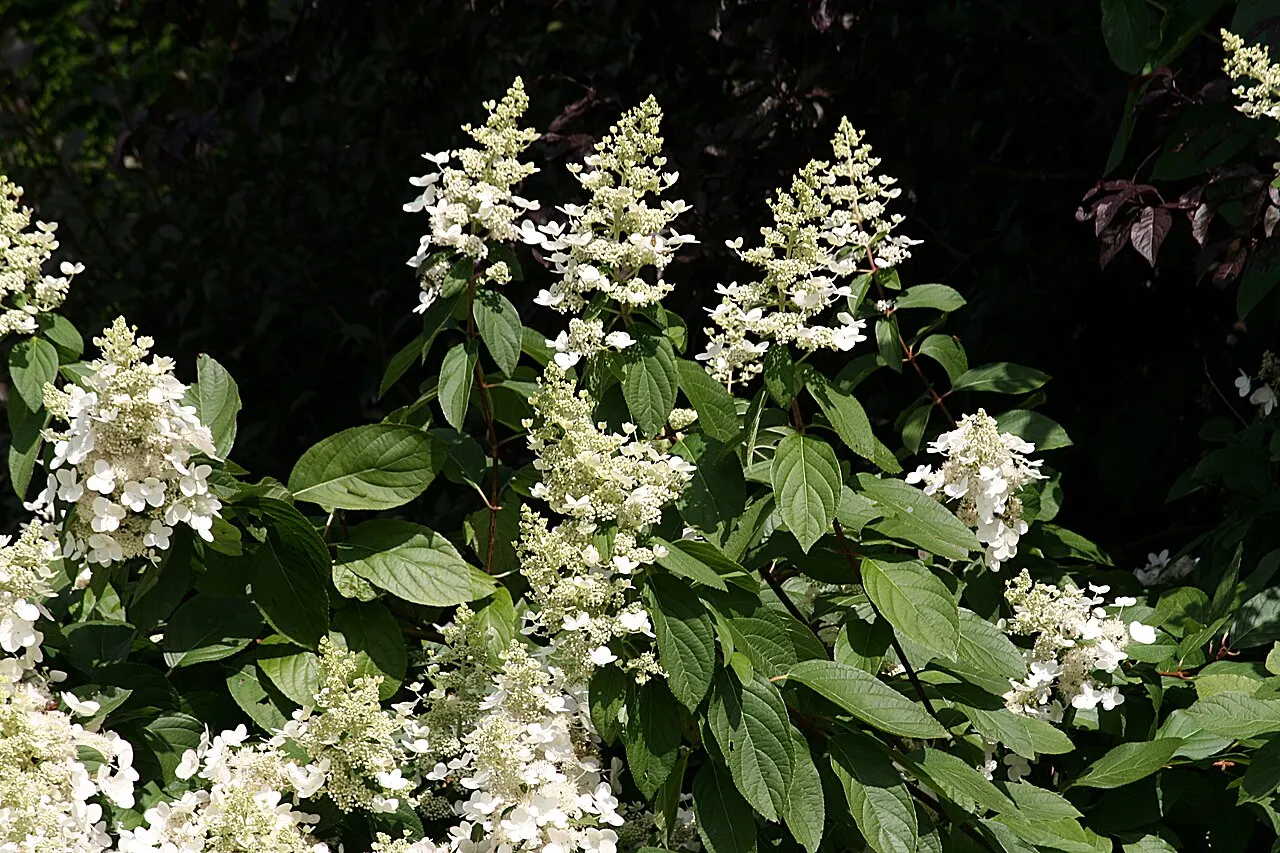
*Hydrangea paniculata* and *Hydrangea arborescens*. These are the ones that take, and reward, harder pruning.
Most other species, including the oak-leaved *H. quercifolia* and *H. aspera*. These need very little.
Climbing hydrangea (*Hydrangea anomala* subsp. *petiolaris*). This one is pruned in summer, not spring.
If you are not sure which you have, go lightly. Gardeners' World suggests simply deadheading it and watching: if it flowers on this year's growth, you can prune it harder next year. The RHS says mopheads and lacecaps bloom satisfactorily with little attention, and that regular pruning is not essential for *H. paniculata* and *H. arborescens* either.
When to prune hydrangeas
The RHS pruning guide sums up the timing as usually late winter or early spring, but sometimes late summer. Most pruning is done at the end of winter. Climbing hydrangeas are the exception: they are pruned after flowering, in summer.
The RHS pages do not quite agree on mopheads. The pruning guide removes the dead flower heads in early spring. The RHS growing guide for shrubby hydrangeas says to wait until mid-spring before cutting back the stems. The growing guide gives the reason for waiting: new spring shoots are prone to frost damage, and the old heads help to protect them.
For *H. paniculata* and *H. arborescens*, the growing guide says early spring, before the shrubs start actively growing.
Gardeners' World names the months. It says most hydrangeas are pruned in spring, between March and April, and it removes the old heads from mopheads and lacecaps in April. That sits at the later end of the RHS range. For *H. paniculata* and *H. arborescens* it says mid spring, where the RHS says early spring. Gardeners' World gives its own reason for not pruning mopheads in autumn or winter: the buds are then exposed to the worst of the winter weather and can freeze, which kills the stems and their buds.
The RHS gives no separate dates for the south of England and for Scotland. What it does say is that late frosts are the danger, and it advises planting away from frost pockets and exposed spots. So in a cold garden it makes sense to lean towards the later date for mopheads.
Mopheads: deadheading and the spring cut
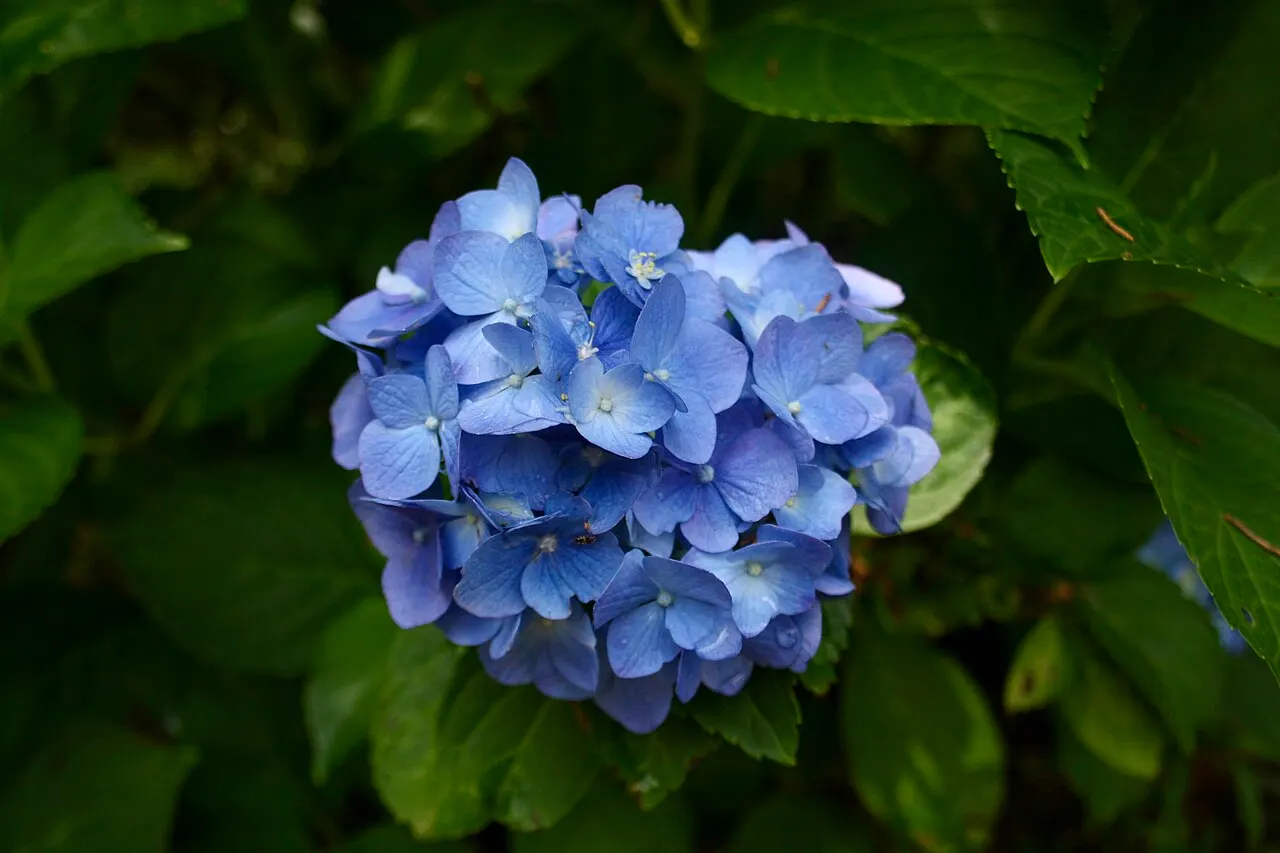

Leave the heads on over winter. In mild areas, the RHS says, mophead blooms can be removed once they have faded. Everywhere else it is best to leave them on the plant over winter, because they give some frost protection to the growth below. The growing guide adds that the faded heads can offer interest well into the winter.
Then cut in spring. Remove the dead flower heads, cutting each stem back to the first strong, healthy pair of buds down from the faded bloom. The growing guide allows the first or second pair. Gardeners' World gives the same cut, just above a pair of strong emerging buds, and adds a practical point: use the tips of your secateurs, because the buds are easily knocked off.
Do not cut hard. The growing guide says to prune lightly, but regularly. The flowers form on new shoots that grow from last year's stems, so heavy pruning means a loss of flowers.
Take out a little old wood. On an established plant, the RHS cuts one or two of the oldest stems right out at the base. This encourages new stems that flower more freely. Remove weak, straggly stems too, and any that trail on the ground.
Lacecaps and Hydrangea serrata
Lacecaps are hardier than mopheads, the RHS says. Their faded heads can be cut off after flowering, back to the second pair of leaves below the head. This stops the plant putting its energy into seed. Gardeners' World adds a deadline: deadhead lacecaps no later than August, so that new growth has time to harden before the frost.
After that, treat a lacecap like a mophead: light pruning in spring, and one or two of the oldest stems out at the base.
*Hydrangea serrata* is pruned in the same way as mopheads and lacecaps, the RHS says.
Hydrangea paniculata and Hydrangea arborescens
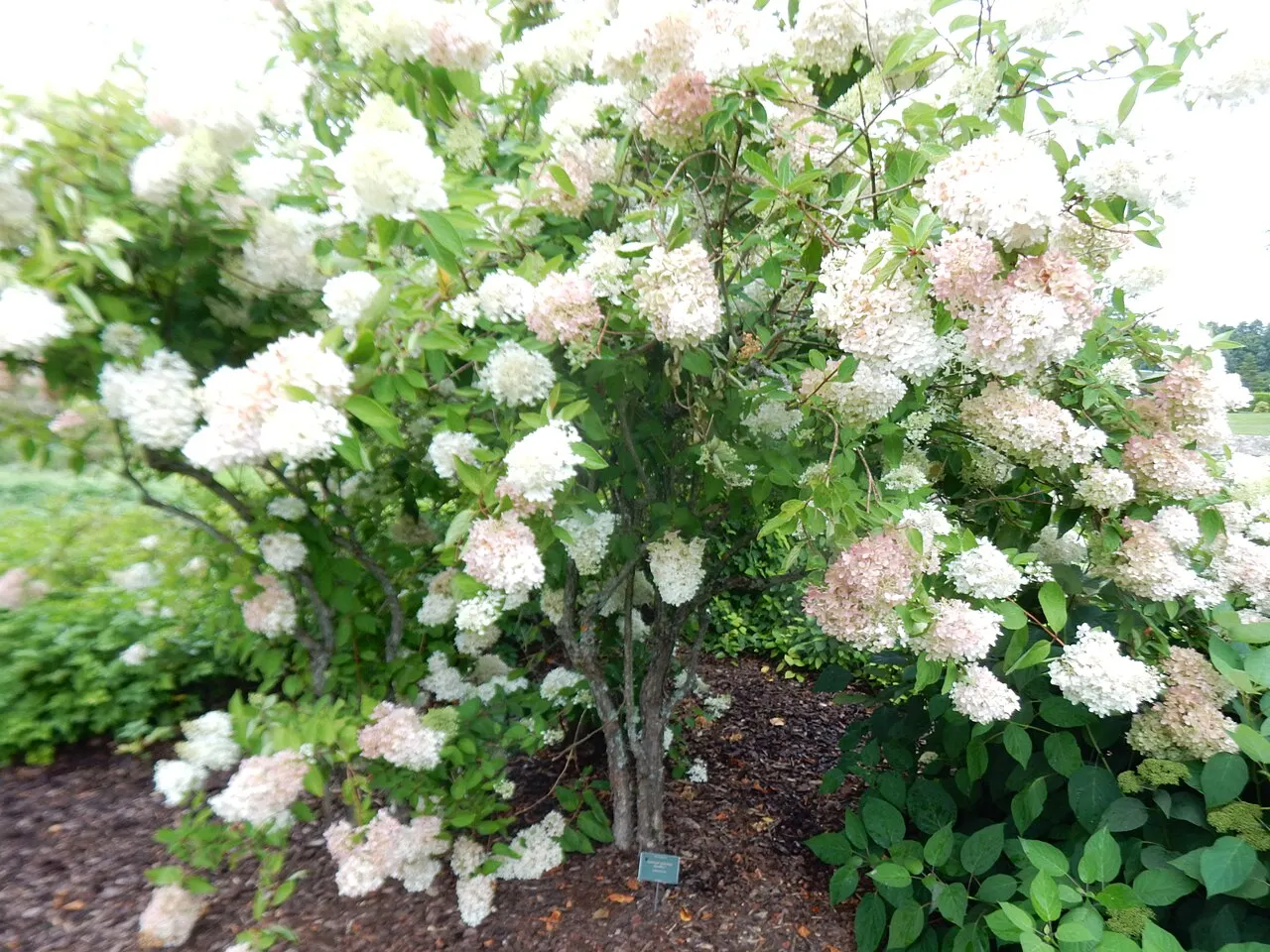

These two are the easy ones. The only essential job, the RHS says, is to remove dead wood in spring. Regular pruning is not essential.
Pruning every year does pay, though. The growing guide says cutting back last year's growth encourages more prolific and larger flowers.
The standard cut. Each spring, cut last year's stems back to a pair of healthy buds, keeping a permanent woody framework.
The hard cut. For bigger flower heads on strong, upright branches, prune hard, to the lowest pair of healthy buds. This usually leaves a framework no more than 25 cm high. If you want more height in the border, cut to about 60 cm instead.
Gardeners' World gives a slightly different framework. It reduces last year's growth to a healthy framework 30 cm to 60 cm high, where the RHS hard cut leaves no more than 25 cm. The two agree on the choice you are making. Cut to the lowest healthy buds for big flowers, or cut less hard for a taller, more natural plant. Gardeners' World explains why these two species can take it: they flower on new wood, so a hard cut does not cost you this year's flowers. Left unpruned, they grow taller with the flowers mostly at the top.
Neglected plants generally respond well to harder pruning, the growing guide says, so an old, leggy plant can be brought back to a framework.
Oak-leaved and other species
Most other hydrangea species, including *Hydrangea quercifolia* and *H. aspera*, need only minimal pruning, the RHS says. In spring, remove dead stems and shorten any that are over-long. That is all.
Climbing hydrangeas
The climbing hydrangea flowers on last year's shoots, so the RHS prunes it in summer, straight after flowering.
Cut back the shoots that have flowered and shorten any over-long new growth. Go gently at the top. The RHS says most flowers form towards the top of the plant, so leave as much of that unpruned as possible, or just trim it lightly. Gardeners' World gives the same advice, and names August or September as the time.
If it has outgrown its space. A plant that has been in place for two or three years will tolerate hard pruning in spring, the RHS says. But a drastic cut in one go is likely to reduce flowering for the next couple of summers. The RHS advice is to spread hard pruning over three or four years.
If it is not flowering. The RHS lists heavy summer pruning, or pruning later in the season, as a cause. Be patient with a young plant: it can take three to five years to start flowering.
Tie in new shoots until they form the aerial roots that hold them to the wall. Mature plants are heavy, the RHS warns, so give them a sturdy support from the start.
Frost damage in spring
New spring shoots are prone to frost damage, the RHS says.
If shoots are badly damaged, cut them back to just above the first undamaged pair of buds on live, healthy wood. On a climbing hydrangea, lightly trim back any badly damaged shoots in spring.
Prevention starts with the site. The RHS plants hydrangeas away from frost pockets and exposed spots. Hydrangeas in containers can be moved to a sheltered place when late frost threatens the young buds.
For more on siting and planting, see when to plant hydrangeas.
Renovating an overgrown hydrangea

Mopheads and lacecaps. The gentle way is to remove one or two of the oldest stems each year. For a plant that is badly overgrown or a poor shape, the RHS cuts all the stems off at the base. Be clear about the cost. That removes all the flowers for the coming summer, and the new stems will not bloom until the following year. Gardeners' World describes the same two routes. After a full cut to the base it mulches the plant, then prunes and thins the new stems the following spring.
*H. paniculata* and *H. arborescens*. Cut back hard to restore a low framework. These respond well.
Climbers. Spread the work over three or four years, as above.
Why your hydrangea did not flower after pruning
The RHS guides point to a few causes.
- Pruning too hard. On mopheads, lacecaps and *H. serrata*, heavy pruning removes the stems that would have carried flowers. - A full renovation. Stems cut to the base will not bloom until the following year. - Pruning a climber too much or too late. Its flowers form on last year's growth. - Too much fertiliser. The RHS says this encourages soft, leafy growth, and plants are then less likely to develop flower buds. - Frost. Late frost can damage the young buds. - Youth. Hydrangeas raised from cuttings take two to three years to start flowering, and young climbers three to five.
Safety when pruning
Wear gloves. The RHS says contact with hydrangea foliage may aggravate skin allergies.
The RHS also notes that all parts may cause a mild stomach upset if eaten.
Which hydrangea, which cut
| Type | When | How |
|---|---|---|
| Mophead (H. macrophylla) | Early to mid-spring | Remove old flower heads to the first strong pair of buds; take out one or two of the oldest stems at the base |
| Lacecap (H. macrophylla) | After flowering, or in spring | Faded heads to the second pair of leaves below the head |
| H. serrata | As mophead and lacecap | Light, regular pruning |
| H. paniculata, H. arborescens | Early spring (RHS); mid spring (Gardeners' World) | Last year's stems to a pair of healthy buds; hard pruning leaves a framework no more than 25 cm high (RHS) or 30–60 cm (Gardeners' World) |
| H. quercifolia, H. aspera and most other species | Spring | Minimal: dead and over-long stems only |
| Climbing hydrangea | Summer, straight after flowering | Shorten over-long shoots, leave the top as unpruned as possible |
| Frost-damaged shoots, any type | Spring | Back to just above the first undamaged pair of buds |
How to do it
- Work out which hydrangea you have. The shape of the flower head tells you most of what you need.
- Mophead: leave the faded heads on over winter. In spring, cut each one off just above the first strong, healthy pair of buds below it.
- On an established mophead or lacecap, also cut one or two of the oldest stems right out at the base.
- Paniculata or arborescens: in early spring, cut last year's stems back to a pair of healthy buds on a permanent framework.
- Climbing hydrangea: wait until it has flowered, then shorten the over-long shoots.
- On any type, cut frost-damaged shoots back to just above the first undamaged pair of buds.
- Wear gloves. The RHS says contact with the foliage may aggravate skin allergies.
Common questions
When should I prune hydrangeas?
Most in late winter or early spring, the RHS says. Gardeners' World says between March and April. Paniculata and arborescens are cut in early to mid spring, mopheads and lacecaps by April, and climbing hydrangeas in summer, straight after flowering.
Should I cut off the dead flowers on my hydrangea?
On mopheads, not until spring, except in mild areas. The RHS leaves them on over winter for frost protection. Lacecaps are hardier and can be deadheaded after flowering.
How far back can I cut a mophead hydrangea?
Only to the first strong, healthy pair of buds below the old flower head, the RHS says. Heavy pruning results in a loss of flowers, because they form on shoots from last year's stems.
Can I cut a hydrangea right back to the ground?
The RHS cuts all the stems of an overgrown mophead or lacecap at the base to renovate it, but the new stems will not bloom until the following year. Paniculata and arborescens can be cut to a low framework every spring.
How do I prune Hydrangea paniculata?
In early spring, cut last year's stems back to a pair of healthy buds. For larger flower heads, the RHS prunes to the lowest pair of healthy buds, leaving a framework no more than 25 cm high.
When do I prune a climbing hydrangea?
In summer, straight after flowering, the RHS says. Shorten over-long shoots and leave the top of the plant as unpruned as possible, because most flowers form there.
Sources
We wrote this page using the sources below.
- Hydrangea pruning, Royal Horticultural Society (RHS)
- How to grow shrubby hydrangeas, Royal Horticultural Society (RHS)
- How to grow climbing hydrangeas, Royal Horticultural Society (RHS)
- Prune your hydrangeas now for bigger and better blooms, BBC Gardeners' World Magazine