
 Roses Pruning
How to prune roses
A rose that is cut back at the right moment answers with strong new shoots and more flowers. The cut itself is simple. What changes from rose to rose is how much you take off.
In short
Prune most roses in late winter, as growth restarts: mid-February in the south, March in northern and colder areas, the RHS says. Remove dead, diseased and crossing stems, then cut no more than 5 mm above an outward-facing bud. Rambling roses are pruned in late summer, after flowering.
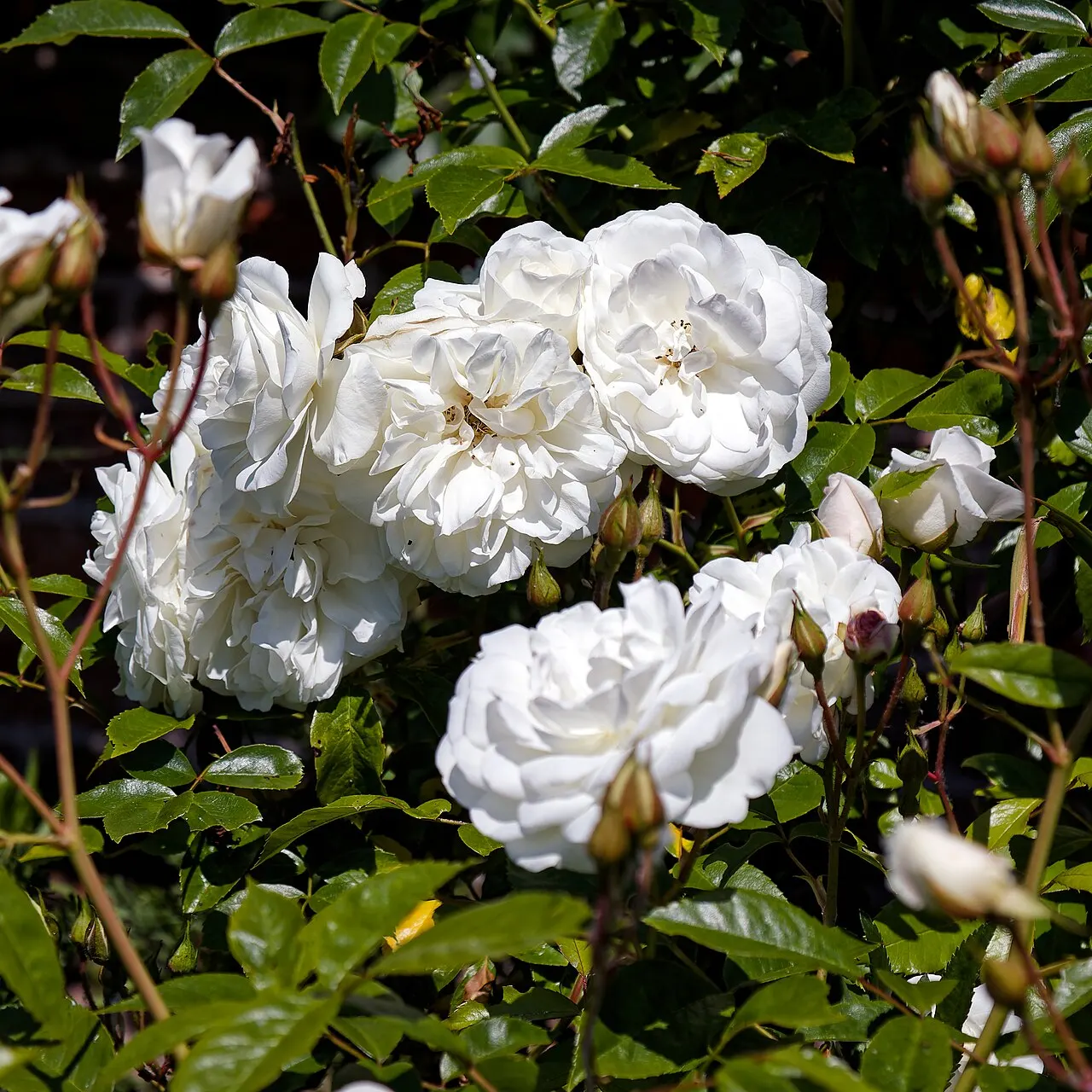

Roses: what to do and when
Under cover and outdoors, for UK conditions. The weather differs from year to year and from north to south, so check your local conditions too.
Why roses are pruned
Gardeners' World puts it simply: pruning supports the health, vitality and appearance of a rose. It also explains a rule that surprises many new gardeners. Hard pruning encourages the strongest regrowth. Light pruning produces weaker regrowth.
So the gardener who snips a little off the top, for fear of hurting the plant, gets the opposite of what was hoped for. A firm cut in late winter is what brings strong shoots.
The RHS adds the second aim: well-spaced stems that allow good air flow.
This page covers when to prune, how to make the cut, and how much to remove from each main type of rose. For everything else, from watering to feeding, see how to grow roses.
When to prune roses
Late winter is the main season. The RHS says roses can be pruned during late winter, when growth is just resuming. It gives mid-February in the south, and advises waiting until March in northern and colder areas. Its quick guide for shrub roses lists February to March.
Gardeners' World gives a wider window. It prunes bush roses, modern shrub roses and English roses from January to March, and describes the moment as late winter to early spring, just as new growth begins. It notes how much that moment moves. In southern England growth may start in January. Further north, new leaves may not appear until April.
The two sources do not contradict each other so much as measure differently. The RHS names a month. Gardeners' World points to the plant. If you garden somewhere cold, the later dates are the safer ones.
The exceptions are roses that flower once.
- Rambling roses are pruned in late summer, after the flowers and hips have finished, the RHS says. Gardeners' World gives August to September. - Once-flowering shrub roses are pruned in late summer too, once flowering is finished.
Not sure what you have? For an unknown rose, the RHS says to prune in February or March.
Tools, gloves and the right cut
Tools. The RHS asks for sharp secateurs, so that the cuts are clean. Use loppers or a pruning saw for larger stems. And wear gloves. The RHS reminds you of that when handling thorny roses.
Where to cut. Cuts should be no more than 5 mm above a bud, the RHS says.
The angle. Slope each cut downwards, away from the bud, so that water does not collect on it. The RHS applies the same rule to removing dead wood, deadheading and the yearly prune.
Which bud. Cut to an outward-facing bud. The new shoot then grows away from the middle of the plant and the centre stays open. Gardeners' World gives the same advice. There is one exception in the RHS guide. On roses with a spreading habit, cut some stems to inward-facing buds to encourage more upright growth.
No bud in sight? On old wood you may not find one. The RHS says to cut to the appropriate height anyway. It notes that dormant buds, even those at or below soil level, can grow again.
The clear-out that every rose gets
Before you think about type, do the jobs that are the same for all roses. The RHS and Gardeners' World lists match closely.
1. Dead, diseased and damaged wood. Cut it out. Where a stem has died back, the RHS prunes it to healthy white pith. 2. Crossing and rubbing stems. Remove one of each pair. 3. Spindly, twiggy growth. Gardeners' World says thin, twiggy stems rarely produce useful flowering growth. 4. Old stubs. The RHS saws off old stubs that have failed to produce new shoots. Gardeners' World calls them snags and removes them as well. 5. Tired old stems. On established roses, the RHS cuts out old wood that flowers poorly. Gardeners' World removes older main stems that are losing vigour, so that fresh growth forms lower down.
Suckers. These are shoots from the roots, not from the rose you bought. The RHS says to trace them back to the roots they grow from and pull them away.
Often this clear-out is half the work. What remains is to shorten the stems you have kept.
Hybrid teas and floribundas
These are the bush roses of most front gardens. The RHS tells them apart like this. Hybrid teas usually carry one flower per stem and bloom in flushes from summer to late autumn. Floribundas carry many flowers per stem and repeat more continuously.
Gardeners' World explains why they can take a hard cut. They flower on strong new growth made in the current season, so they can be cut down hard every year to stay compact. It adds a condition: this works only if they are mulched and fed every year.
Hybrid teas. After the clear-out, the RHS cuts the strongest shoots back to four to six buds, 10–15 cm from the base, to where last year's growth began. Less vigorous shoots are cut back harder, to two to four buds, 5–10 cm from the base.
Floribundas. Cut the strongest shoots down to within 25–30 cm of soil level. Prune less vigorous shoots more severely. Now and then, cut an older stem to a few inches above the soil to encourage strong growth from the base. Floribunda stems are left longer, the RHS says, because more buds give the mass of flowers these roses are grown for.
If the bush is crowded, remove some old shoots completely to keep the centre open.
Patio roses. Gardeners' World describes them as shorter forms of bush roses, pruned the same way. On miniature roses it removes thin, unproductive twigs entirely.
Newly planted bush roses. The RHS hard-prunes newly planted roses to encourage vigorous shoots. Climbing and shrub roses are the exception.
Shrub roses and English roses
Here the advice turns round. The RHS says shrub roses generally flower on older wood, so pruning should be light but regular. Gardeners' World agrees. These roses need a framework of branching stems to carry the summer's flowering shoots, and cutting back harder produces more leafy growth and fewer blooms.
Repeat-flowering shrub roses. Each late winter, the RHS reduces strong new growth by up to one-third. Strong sideshoots are shortened to two or three buds. On a mature plant, cut some of the older main stems back to the base. This renewal pruning brings vigorous shoots that flower the following summer.
English roses. The RHS gives its own figure for these: cut the previous season's growths back by 30 to 50 per cent of their length.
Once-flowering shrub roses. This group includes species roses, rugosas and old garden roses such as albas, damasks and gallicas. They need very little. Remove dead, diseased or damaged wood, crossing branches and spindly growth. If the centre is crowded, take out one or two older branches. If the plant is leggy and bare at the base, cut one or two stems back to near ground level.
One warning from the RHS. Many old garden roses have an arching habit and need space. Shortening the stems just to limit their spread spoils their shape.
Climbers and ramblers
First, tell them apart. The RHS says flowering time is the easiest way. Ramblers usually flower once, normally around June. Climbers repeat-flower through most of the summer.
Climbing roses. Gardeners' World prunes them in winter. Once the main framework is trained on its support, cut the side shoots back close to that framework to encourage flowering.
Rambling roses. The RHS prunes them in late summer. Once the supports are covered, remove one in three of the oldest stems entirely. Where space is tight, remove all the stems that have flowered and tie in new ones to replace them. Shorten side shoots by about two-thirds.
Gardeners' World adds that ramblers can also be pruned in autumn or winter, once the leaves have dropped. The ripe stems snap less easily then and are easier to see.
A neglected rambler. The RHS renovates it between late autumn and late winter, when the rose is out of leaf. Remove dead, diseased and weak shoots. Cut some old woody branches to the ground and keep no more than six young, vigorous stems. Saw off dead stumps at the base, because they collect rain and rot.
A new rambler. After planting, the RHS cuts the stems back to 40 cm, then fans out the shoots and ties new stems in horizontally.
A rose you cannot name
Many of us inherit roses with a garden. The RHS has a method for them, used in February or March.
If it looks like a climber or rambler, with long arching stems or a need for support:
- One thick old stem reaching the ground? Shorten it by a third to a half. Do not cut it hard, because it may not regrow. - Several stems? Remove one or two of the oldest, the ones with grey, flaky bark, as close to the base as you can.
Then watch. Many strong shoots that do not flower in the next season suggest a rambler. Less vigorous growth that flowers suggests a climber.
If it is a shrub or bush:
- Remove one or two stems near ground level. - Shorten the remaining stems by a third to a half.
Vigorous regrowth that flowers well suggests a floribunda or hybrid tea, the RHS says. Otherwise it is more likely a shrub rose.
After pruning: feed, mulch and watch

Feed and mulch. The RHS feeds pruned roses in spring with a general-purpose or rose fertiliser, then mulches with garden compost or manure. Gardeners' World says the same about bush roses: hard pruning needs yearly mulching and feeding behind it.
Deadhead in summer. Deadheading means removing spent flowers. The RHS says it encourages more blooms and stops the plant putting its energy into seed. The same rules apply to the cut: just above a bud, sloping away. On ramblers you can deadhead at any time after the flowers fade, unless you want the hips.
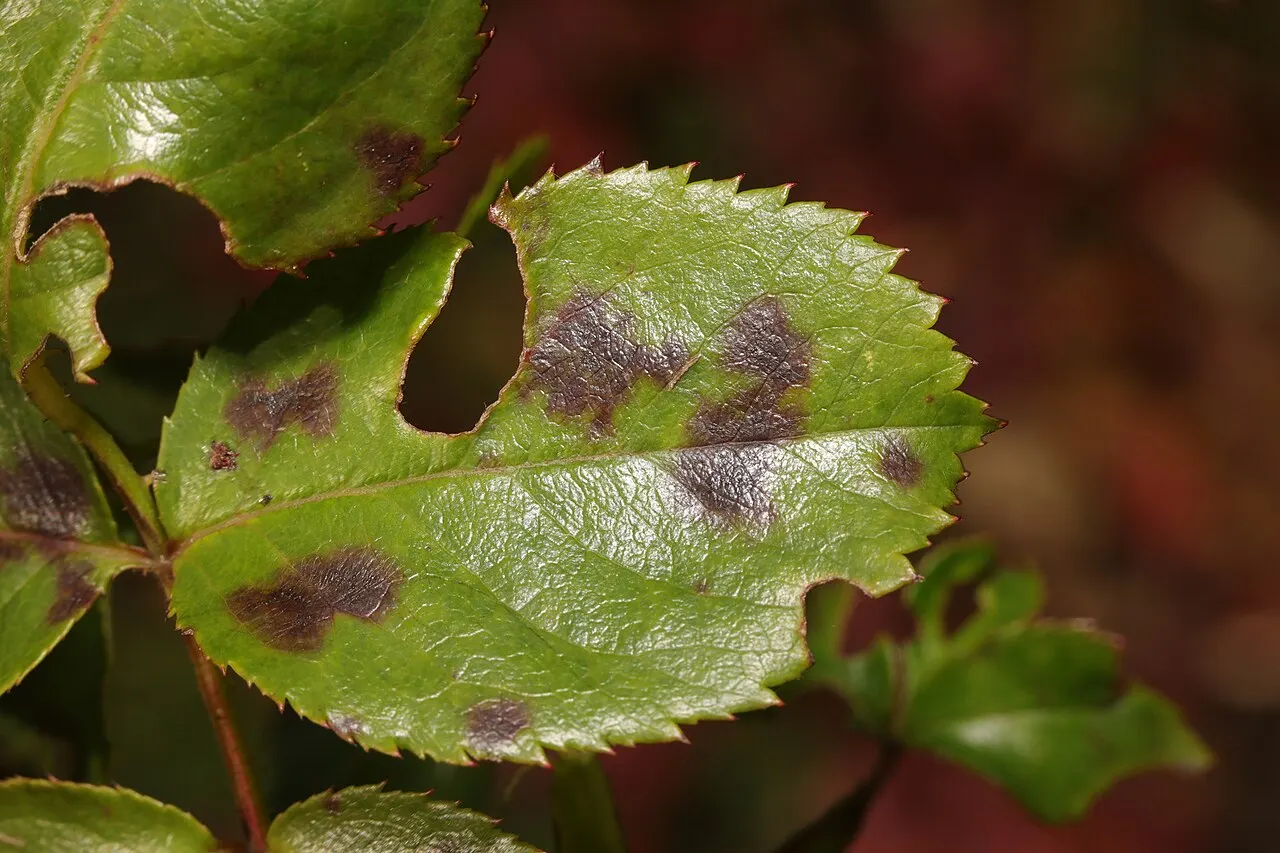
Look for trouble while you are there. The RHS suggests using pruning time to check for problems. Its list for bush roses includes rose aphids, sawflies, black spot, dieback, powdery mildew and rust. You will find them described in rose diseases.
No flowers? The RHS calls this blindness. In its rambler guide it names incorrect pruning and unsuitable growing conditions as possible causes.
Planning to add a rose this winter? See when to plant roses.
Which rose, which cut
| Rose | When | How much |
|---|---|---|
| Hybrid tea | Late winter | Strongest shoots to four to six buds, 10–15 cm from the base; weaker shoots to two to four buds, 5–10 cm |
| Floribunda | Late winter | Strongest shoots to within 25–30 cm of soil level; weaker shoots harder |
| Repeat-flowering shrub rose | Late winter | Strong new growth by up to one-third; strong sideshoots to two or three buds |
| English roses | Late winter | Last season's growth by 30 to 50 per cent of its length |
| Once-flowering shrub rose | Late summer, once flowering is finished | Light: dead, damaged, crossing and spindly growth, plus one or two old branches if crowded |
| Rambler | Late summer, after flowers and hips | One in three of the oldest stems out; side shoots by about two-thirds |
| Climber | Winter | Side shoots back close to the trained framework |
| A rose you cannot name | February or March | One or two stems out near the ground, the rest by a third to a half |
How to do it
- Wait for late winter, when growth is just resuming. Put on gloves and sharpen your secateurs.
- Cut out dead, diseased and damaged stems. Prune dieback back to healthy white pith.
- Remove stems that cross or rub, and thin, spindly growth.
- If the bush is crowded, take one or two of the oldest stems right out to open the centre.
- Shorten what is left by the amount that suits your type of rose.
- Make each cut no more than 5 mm above a bud, sloping down and away from it. Choose an outward-facing bud.
- Feed in spring with a general-purpose or rose fertiliser, then mulch with garden compost or manure.
Common questions
When should I prune roses in the UK?
The RHS says late winter, when growth is just resuming: mid-February in the south, March in northern and colder areas. Gardeners' World gives January to March for bush and shrub roses. Ramblers are pruned in late summer, after flowering.
How far back should I cut my roses?
It depends on the type. The RHS cuts strong hybrid tea shoots to 10–15 cm from the base and floribundas to 25–30 cm from the soil. Shrub roses are pruned lightly, with strong new growth reduced by up to one-third.
Where exactly do I cut a rose stem?
No more than 5 mm above a bud, the RHS says, with the cut sloping downwards and away from the bud so that water does not collect on it. Choose an outward-facing bud for an open-centred bush.
Can I prune roses in autumn or winter?
The RHS waits for late winter, when growth resumes. Gardeners' World says ramblers can be pruned in autumn or winter once the leaves have dropped, and the RHS renovates neglected ramblers between late autumn and late winter.
Can I cut a rose back hard?
Bush roses, yes. Gardeners' World says hybrid teas and floribundas flower on the current season's growth and can be cut down hard every year, if they are mulched and fed. Shrub roses cut hard give more leaves and fewer blooms.
What happens if I do not prune my roses?
Gardeners' World says light pruning produces weaker regrowth, and that old flowered stems left on ramblers build into a tangle of unproductive wood. The RHS removes old wood because it flowers poorly.
Sources
We wrote this page using the sources below.
- Rose pruning: general tips, Royal Horticultural Society (RHS)
- Rose pruning: floribunda and hybrid tea roses, Royal Horticultural Society (RHS)
- Rose pruning: shrub roses, Royal Horticultural Society (RHS)
- Rose pruning: rambling roses, Royal Horticultural Society (RHS)
- How to prune roses, BBC Gardeners' World Magazine