
 Roses Growing and care
How to grow roses
Roses are hungry, deep-rooted plants that last for many years. In a border, the RHS gives them sun, a weekly soak in dry spells, two feeds a year and a winter mulch.
In short
Grow roses where they get at least four hours of sun a day, in soil that drains freely but does not dry out. The RHS feeds border roses in March or April and again after the first flush, mulches from November to February and deadheads about once a week.
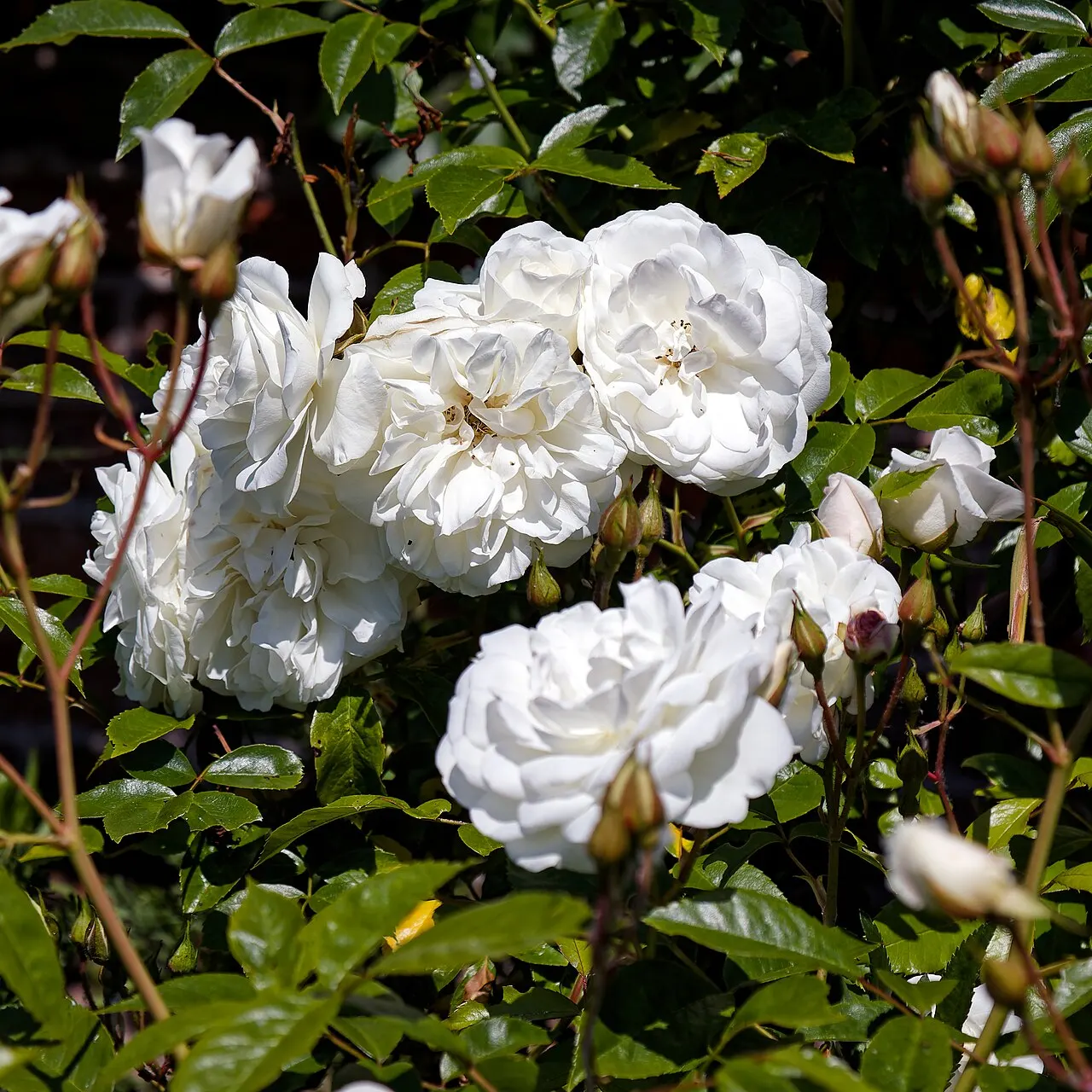

Roses at a glance
- Position
- Sun, at least four hours a day; some tolerate light shade
- Soil
- Rich, moist but well-drained; should not dry out completely
- Spacing
- 60 cm apart in the row, about 60 cm around each plant (RHS)
- Watering
- Established border roses: up to once a week in dry spells, 5–10 litres each
Roses: what to do and when
Under cover and outdoors, for UK conditions. The weather differs from year to year and from north to south, so check your local conditions too.
Choosing and buying a rose
Roses flower in summer, and many repeat-flowering types carry on into autumn, the RHS says. The plants last for many years. Sizes run from compact patio roses to huge vigorous ramblers that can grow up through trees. The RHS suggests smelling roses in bloom before you buy, because scents range from fruity to musk or tea.
Roses are sold in three forms, according to the RHS growing guide:
| Form | When | Notes |
|---|---|---|
| Bare-root | November to March | Good value. Plant promptly unless the soil is frozen or waterlogged |
| Containerised (bare-root plants potted into compost) | Best bought November to March | Check plant health if buying at other times |
| Container-grown | All year | Somewhat more expensive |
Standard roses are grafted at the top of the stem, so the RHS says not to plant them too deeply or bury the stem. Ramblers and Ground Cover roses are also sold as weeping standards. Stake standards at planting, 45–60 cm deep, with two ties and spacers so the stem does not rub. Check the ties every year.
When and how to plant each form is on our page when to plant roses.
Site and soil
The RHS growing guide asks for a sunny spot with at least four hours of sunlight a day, though some roses tolerate light shade. Avoid very exposed, windy sites.
Roses prefer rich, moist but well-drained soil. Choose a free-draining spot that does not dry out completely, especially in summer. Allow about 60 cm around each plant.
If you are replacing an old rose, the RHS says to take extra steps against replant disease. Our planting page explains them.
Watering
Established roses are deep-rooted, the RHS says, so in a border they usually need extra water only in hot, dry spells or on dry, sandy soil. Then water up to once a week, with 5–10 litres per plant, about one large watering can. Water at once if blooms or leaves wilt.
New roses are different. Water them regularly, especially in summer, until they are established. Roses in containers need much more water, possibly every day in hot weather. Keep the compost from drying out, but do not let it become waterlogged.
Whatever the rose, aim the water at the soil around the base, not the leaves or flowers. The RHS says this helps to deter fungal disease.
Feeding and mulching
Roses are hungry plants, the RHS says. A mulch of well-rotted manure helps. A general-purpose granular fertiliser can help if the soil is poor or growth and flowering are weak.
Roses in borders. Feed twice a year: in March or April before flowering, and in mid-summer after the first flush, which matters most for repeat-flowering types. Use a general-purpose or rose fertiliser at 70 g per square metre, then mulch.
Roses in containers. Feed about once a fortnight from mid-spring to late summer. Use a general-purpose liquid feed until the flower buds form, then switch to a high-potash feed such as tomato feed. Follow the packet instructions.
Mulch. Lay a mulch at least 5 cm thick from late autumn to late winter, November to February. Use well-rotted manure or garden compost and leave a 10 cm gap around the stems. The RHS says mulch gives frost protection, adds nutrients, holds moisture and suppresses weeds. A thick mulch in spring also deters annual weeds.
The RHS black spot guide gives the same winter mulch another job: it buries fallen leaves that carry the disease over winter.
Deadheading and weeding
Snip off fading flowers about once a week to encourage more blooms. If you do not, the RHS says many roses form hips and produce fewer flowers.
The exception is roses grown for their decorative hips. Stop deadheading them in mid-summer so the hips can form. The RHS says hips are winter food for birds such as thrushes and blackbirds.
Weed by hand rather than with a hoe. Rose roots are shallow and near the surface. Mind the thorns.
Pruning: timing depends on the type
The RHS prunes roses to remove dead, diseased and damaged shoots and to open the centre, so air moves freely and fungal disease is deterred. Methods differ between groups, so check which type you have.
When. The RHS general pruning guide says late winter, February or March, is often a good time, but timing differs by type. If you do not know what your rose is, prune in February or March.
Hybrid teas and floribundas (bush roses) are pruned in late winter, when growth is just resuming: usually mid-February in the south and March in northern and colder areas. The RHS cuts the strongest hybrid tea shoots to four to six buds, 10–15 cm from the base, and the strongest floribunda shoots to within 25–30 cm of soil level.
Rules for every rose. Cut no more than 5 mm above a bud, sloping away from it. Cut to an outward-facing bud for an open shape. Prune dieback to healthy white pith. Remove dead, diseased, spindly and crossing stems. Trace suckers back to the root and pull them away.
Newly planted roses are pruned hard to encourage vigorous shoots, except climbing and shrub roses, the RHS says.
After pruning, feed with a general-purpose or rose fertiliser in spring.
Taking cuttings
The RHS describes two easy ways to make new plants.
Softwood cuttings. Take stem-tip cuttings from this year's shoots in early to mid spring. They should root in about two months. Pinch out the tips to make a bushy plant, transplant after a year and expect flowers in two to three years.
Hardwood cuttings. Take them from mid-autumn to late winter. They callus over winter and usually root in spring.
Grafted roses may not grow like the parent plant from cuttings. Some roses are protected by Plant Breeders' Rights, so do not propagate them for sale. Other methods of propagation are possible, but the RHS says they are not usually used by home gardeners for roses.
Common problems
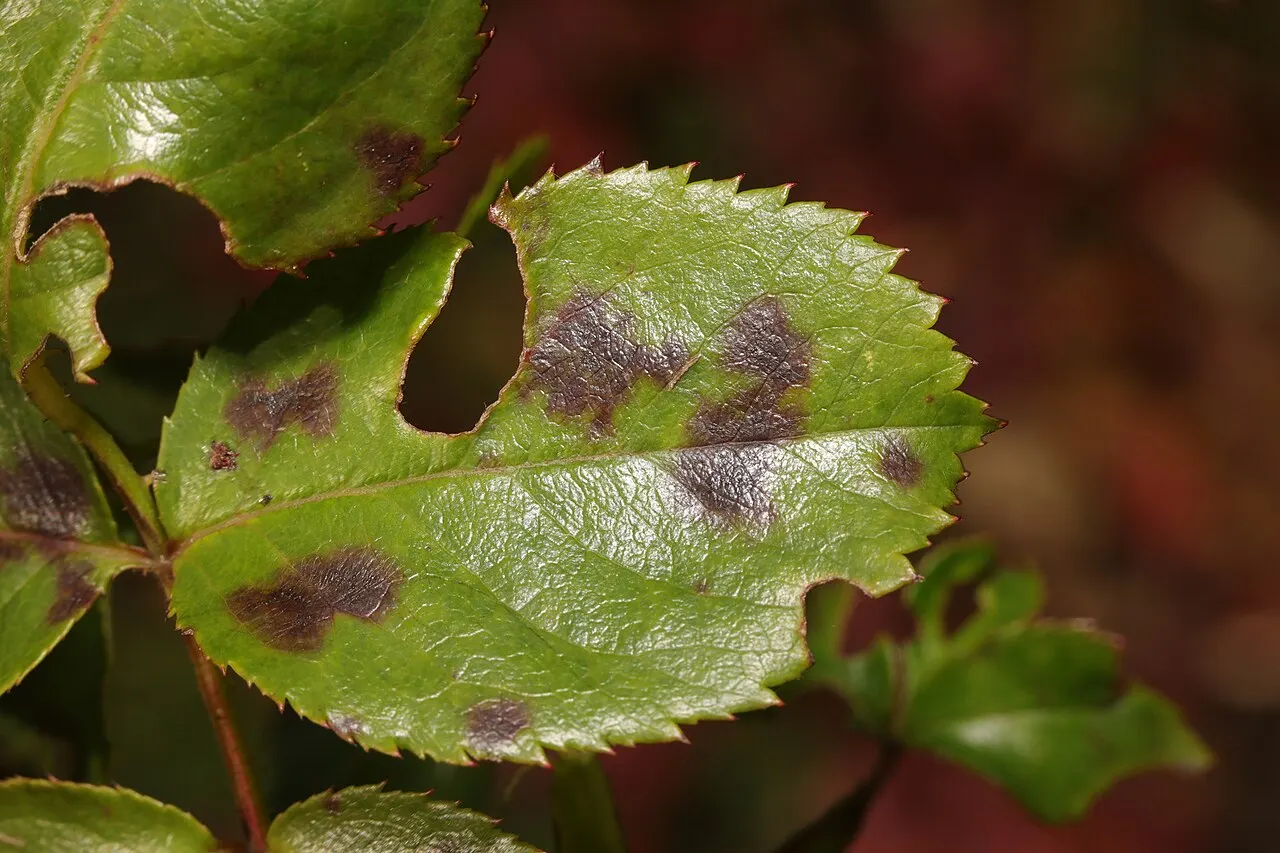

The RHS growing guide lists aphids, black spot, powdery mildew, rose dieback, leaf-rolling sawfly and flower balling as the common problems. Flower balling, when double flowers brown and fail to open, is usually caused by cool, wet weather, says the RHS rose FAQ.
Pruning to an open centre, watering the soil rather than the leaves and clearing diseased material all help. The RHS black spot guide recommends that you don't use fungicides. If you use any product, use only one approved for home gardeners in the UK and follow the label.
Border roses and roses in containers (RHS)
| In a border | In a container | |
|---|---|---|
| Watering | Established roses only in hot, dry spells or on dry, sandy soil, up to once a week, 5–10 litres per plant | Much more often, possibly daily in hot weather. Do not let the compost dry out or become waterlogged |
| Feeding | Twice a year: March or April, and mid-summer after the first flush | About once a fortnight from mid-spring to late summer |
| What to feed | General-purpose or rose fertiliser at 70 g per square metre, then mulch | General-purpose liquid feed until buds form, then a high-potash feed such as tomato feed |
| Mulch | At least 5 cm from November to February, 10 cm gap around the stems | Not covered in the RHS guide |
| Which roses | Match the rose to the conditions, such as shade, frost or drying soil | Patio and miniature roses |
How to do it
- Choose a spot with at least four hours of sunlight a day, away from very exposed, windy sites.
- Plant in free-draining soil that does not dry out completely in summer, leaving about 60 cm around each plant.
- Water new roses regularly until established. Water established border roses in hot, dry spells, up to once a week, with 5–10 litres each.
- Aim the water at the soil around the base, not at the leaves or flowers.
- Feed border roses in March or April and again in mid-summer after the first flush, at 70 g per square metre.
- Snip off fading flowers about once a week, unless you grow the rose for its hips.
- Mulch at least 5 cm deep between November and February, leaving a 10 cm gap around the stems.
- Prune each year according to the type of rose. Hybrid teas and floribundas are usually pruned in mid-February in the south and in March further north.
In pots and on a balcony
The RHS says patio and miniature roses can be grown in containers. Roses in pots need much more water than those in borders and regular liquid feeding.
- Keep the compost from drying out, but do not let it become waterlogged. In hot weather you may need to water daily.
- Water the compost around the base, not the leaves or flowers.
- Feed about once a fortnight from mid-spring to late summer: a general-purpose liquid feed until buds form, then a high-potash feed such as tomato feed.
Common questions
How often should I water roses?
Established border roses need extra water only in hot, dry spells or on dry, sandy soil. Then the RHS waters up to once a week with 5–10 litres per plant. New roses need regular watering until established, and roses in pots may need water daily in hot weather.
When should I feed roses?
The RHS feeds border roses twice a year, in March or April before flowering and in mid-summer after the first flush, with 70 g of general-purpose or rose fertiliser per square metre. Roses in containers get a liquid feed about once a fortnight from mid-spring to late summer.
When should I prune roses?
It depends on the type. The RHS says February or March is often a good time and suits roses you cannot identify. Hybrid teas and floribundas are usually pruned in mid-February in the south and in March in northern and colder areas.
Should I deadhead roses?
Yes, about once a week, says the RHS, or many roses form hips and flower less. For roses with decorative hips, stop in mid-summer so the hips can form for birds in winter.
When should I mulch roses?
The RHS growing guide mulches at least 5 cm deep from late autumn to late winter, November to February, with well-rotted manure or garden compost, leaving a 10 cm gap around the stems.
Can I grow roses in pots?
Yes. The RHS says patio and miniature roses can be grown in containers. They need much more water than border roses and a liquid feed about once a fortnight from mid-spring to late summer.
How do I take rose cuttings?
Take softwood stem-tip cuttings in early to mid spring, which should root in about two months, or hardwood cuttings from mid-autumn to late winter, which root in spring, the RHS says.
Sources
We wrote this page using the sources below.
- How to grow roses, Royal Horticultural Society (RHS)
- Rose pruning: general tips, Royal Horticultural Society (RHS)
- Rose pruning: floribunda and hybrid tea roses, Royal Horticultural Society (RHS)
- Rose problems: frequently asked questions, Royal Horticultural Society (RHS)
- Rose black spot, Royal Horticultural Society (RHS)