
 Tomatoes Growing and care
How to grow tomatoes
Most tomato problems come down to three things: warmth, steady watering and a firm hand with the side shoots. Here is how to get all three right.
In short
Plant tomatoes deeply in a warm, sunny spot once the frost has passed, 45–60 cm apart. Tie cordons to a cane or string and pinch out side shoots every week. Keep the soil evenly moist and feed every 10–14 days with a high potash feed once the first fruits swell.

Tomatoes at a glance
Solanum lycopersicum · Solanaceae (with potatoes and aubergines)
- Position
- Warm, sunny and sheltered
- Spacing
- 45–60 cm apart in the ground (RHS)
- Sow
- Indoors, late February to early April
- Plant
- After the last frost, usually in May
- Harvest
- July to October
- Watering
- Evenly moist, daily in pots in hot weather
- Height
- 30–150 cm, cordons up to 2 m
- Difficulty
- Easy
Tomatoes: what to do and when
Under cover and outdoors, for UK conditions. The weather differs from year to year and from north to south, so check your local conditions too.
Cordon or bush: know what you are growing
Check the seed packet first, because the two types are grown in different ways.
Cordon tomatoes (also called indeterminate) are tall and vigorous. The RHS grows them on a single main stem with tall supports. BBC Gardeners' World says they reach 1.5–2 m and need string tied to an overhead frame, canes, trellis or wires.
Bush tomatoes (determinate) are compact. They suit small spaces, pots and hanging baskets. Their side shoots are left to grow, and BBC Gardeners' World calls them the easiest type for beginners, because they need no staking or pinching out. Heavily laden stems may still need some support.
All types grow well in the ground, in growing bags or in pots. Garden Organic gives a height range of 30 to 150 cm across varieties.
Where and how to plant
Outdoors, the RHS recommends a warm, sunny, sheltered spot. BBC Gardeners' World adds plenty of well-rotted garden compost. Plant only once the frost has passed, usually some time in May, and harden plants off over a couple of weeks first. For sowing dates and frost, see When to sow tomato seeds.
Plant deeply. The RHS sets plants so the first set of leaves is just above the soil, because the buried stem grows extra roots.
Spacing. The RHS spaces plants 45–60 cm apart, depending on their final size. Garden Organic plants outdoor tomatoes 30–45 cm apart. In containers, the RHS uses one plant in a 30–45 cm pot or two in a standard growing bag. BBC Gardeners' World suggests pots at least 30 cm wide and deep, or two or three plants in a deep growing bag.
Rotation. The RHS advises against growing tomatoes in the same bed two years running. BBC Gardeners' World keeps potatoes away from tomatoes, because both suffer from late blight.
Supports and side shoots
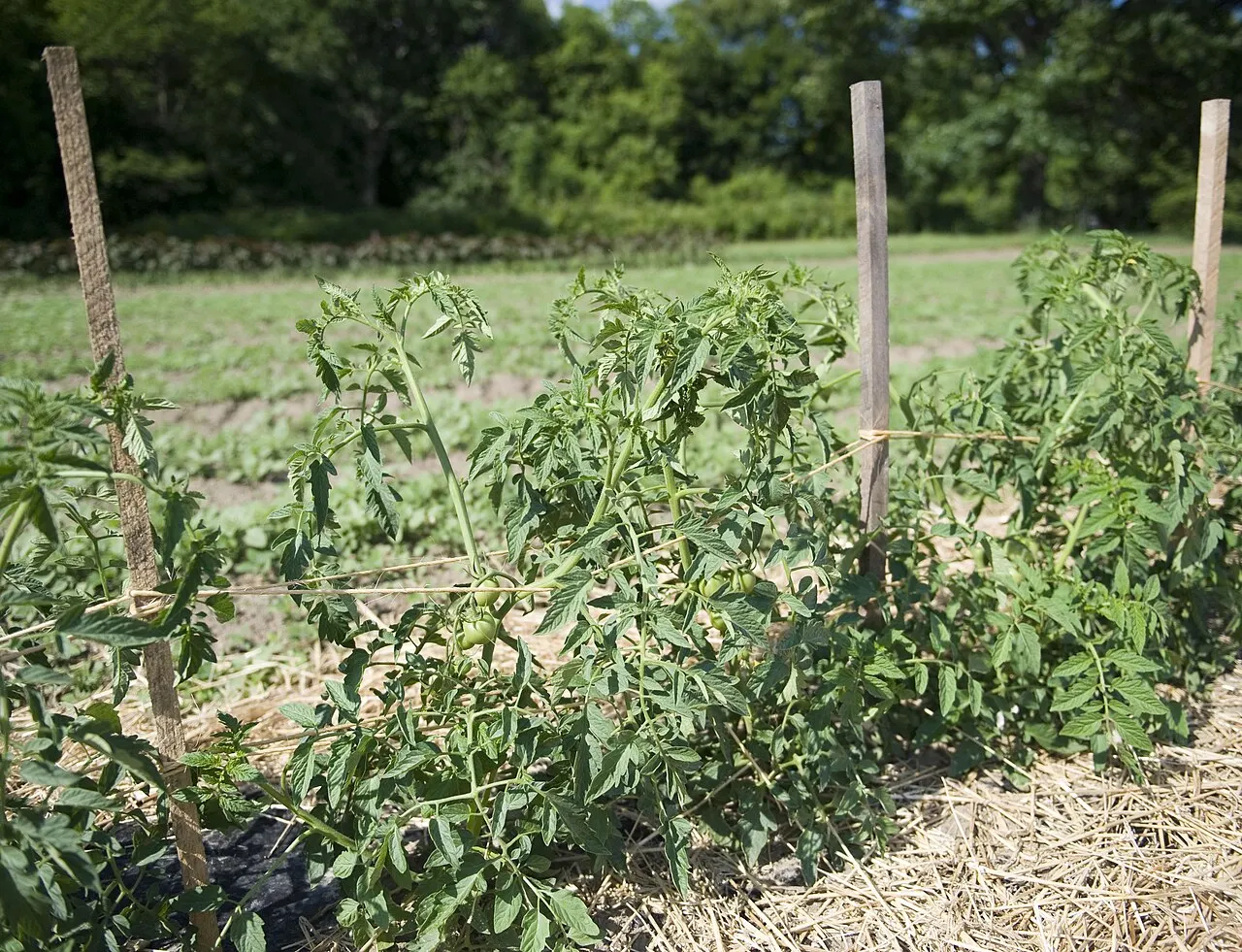

Tomatoes do not climb by themselves. The RHS ties the stem in by hand as it grows, either to a tall, sturdy cane or to a vertical string tied to an overhead support and anchored under the rootball at planting. With string, gently wind it around the top of the main stem.
On cordons, side shoots grow from the joints between the main stem and the leaves. The RHS checks for them at each watering and pinches or snaps them off. BBC Gardeners' World does this at least once a week, with finger and thumb. Bush and trailing types need no pruning.
Stopping the plant. When a cordon reaches the top of its support, or has set seven trusses indoors or four outdoors, the RHS removes the growing point two leaves above the top truss. Garden Organic gives the same seven and four. BBC Gardeners' World suggests four to five trusses outdoors or six indoors. Late in the season, take off lower leaves that are yellow or shade the fruit, so light and air can reach it.
Watering: steady is what counts
All three sources agree that tomatoes need evenly moist soil. The RHS warns that fluctuating moisture can cause splitting and blossom end rot. Pots may need watering every day in hot weather, and Garden Organic says watering at least daily will be necessary in hot conditions. Curling leaves can be a sign of thirst, according to the RHS.
Blossom end rot is not an infection. Garden Organic explains that it is caused by too little calcium reaching the developing fruit, usually because of irregular or inadequate watering. It is most common when the first trusses form. BBC Gardeners' World describes it as hard black patches linked to poor calcium uptake when the soil is too dry. Water regularly, mulch, and pick off affected fruit.
Mulch helps. Garden Organic uses grass clippings, straw or hay around plants to stop them drying out.
Feeding
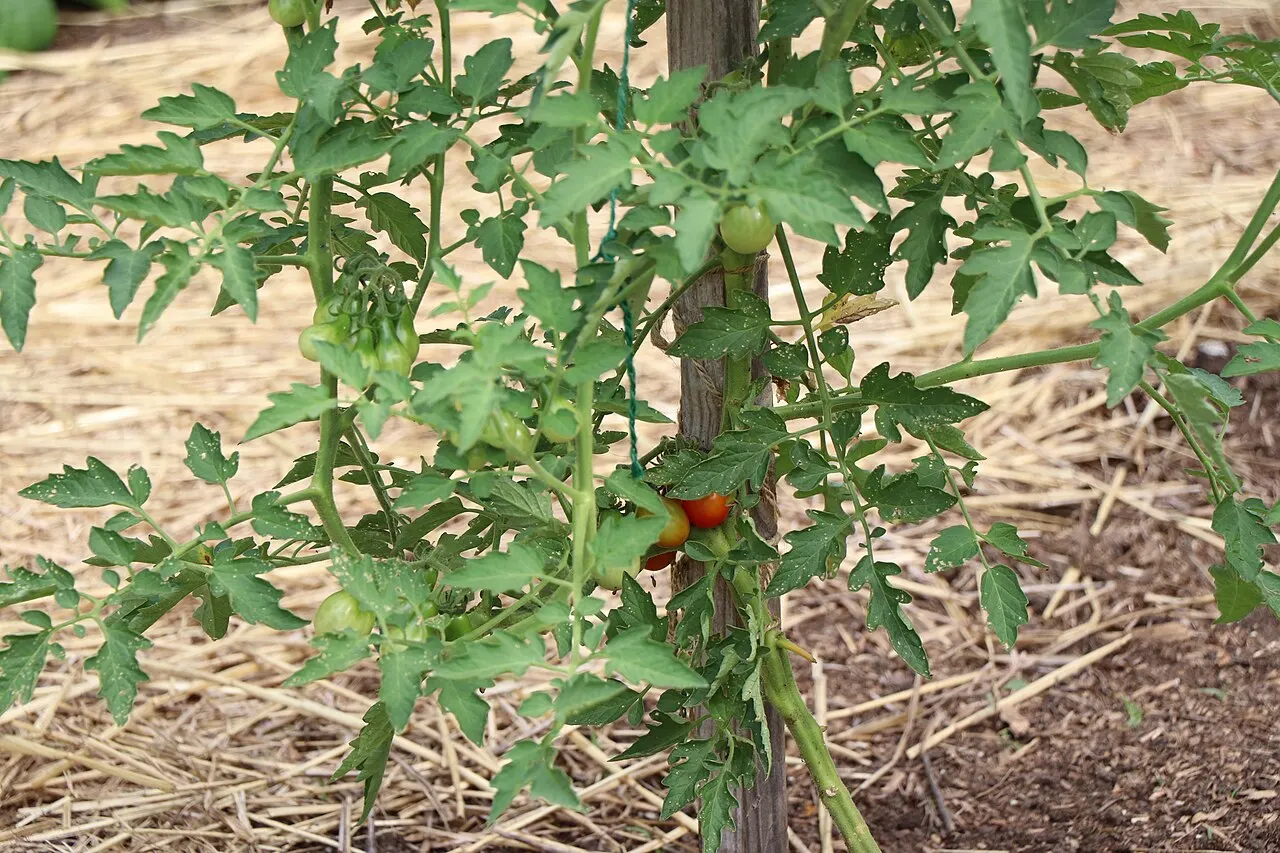

Container plants rely on you for food. The RHS feeds them every 10–14 days with an organic high potash liquid feed, starting once the first fruits begin to swell. BBC Gardeners' World feeds weekly with liquid tomato food once flowers appear. Garden Organic suggests a tomato feed or a homemade organic feed such as comfrey.
Plants in rich, well-prepared ground may not need extra feed, says the RHS, but a feed every fortnight can increase the crop.
In the greenhouse, help pollination. The RHS opens vents regularly, taps fully open flowers and mists them with water. Too much heat is also a problem: BBC Gardeners' World says it can cause tough skins and blotchy ripening, and suggests blinds, shade paint or shading fabric.
Blight and other problems
Late blight attacks leaves and fruit. The RHS says it is most common in warm, wet weather and that tomatoes outdoors are susceptible, while those in a greenhouse rarely are. BBC Gardeners' World adds that greenhouse crops can be affected too, especially if doors and vents are left open, and that resistant varieties help in damp areas.
Grey mould causes soft decay and fuzzy growth. BBC Gardeners' World sees it on fruit in cool, damp weather. Remove affected fruit, ventilate and thin dense foliage.
Glasshouse whitefly is a sap-feeding insect that leaves sticky honeydew. BBC Gardeners' World mentions the biological control Encarsia under cover.
Splitting happens in late summer and, like blossom end rot, comes from uneven watering, according to the RHS. If you use any plant protection product, use only one authorised in the UK and follow the label.
Harvesting and the last green tomatoes
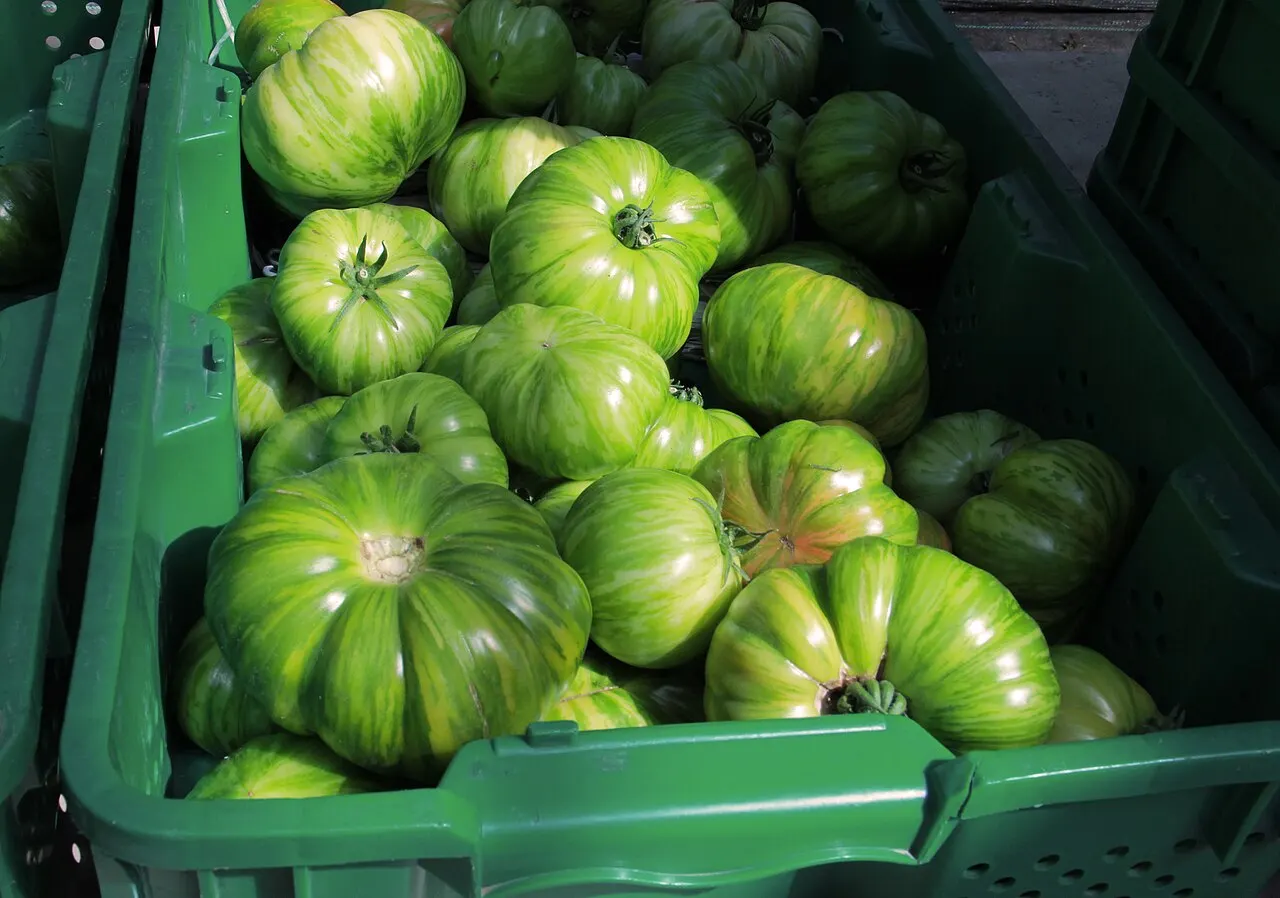

Garden Organic gives a harvest from July to October. The RHS checks plants every few days and picks fruit with the stalk attached once it is ripe and fully coloured. Greenhouse plants usually crop earlier and carry on well into autumn.
BBC Gardeners' World says tomatoes are best eaten fresh and kept at room temperature for about a week. The fridge gives them a mushy texture.
When cold weather arrives, pick the remaining trusses. The RHS lays whole outdoor plants on straw under cloches, or ripens the fruit somewhere warm and dark. A drawer with a ripe banana speeds things up. Garden Organic adds that green tomatoes make good chutney.
Saving seed. Garden Organic calls tomatoes easy for seed saving, because most varieties do not cross. BBC Gardeners' World notes that F1 varieties will not come true from home-collected seed.
Cheat sheet: growing tomatoes
| What | Advice |
|---|---|
| Spacing in the ground | 45–60 cm apart (Garden Organic: 30–45 cm outdoors) |
| Pots and bags | One plant in a 30–45 cm pot, or two in a growing bag |
| Planting depth | First set of leaves just above the soil |
| Side shoots (cordons) | Remove at least once a week |
| Stop the plant | Seven trusses indoors, four outdoors |
| Feeding in pots | Every 10–14 days with high potash feed once fruit swells |
| Watering | Evenly moist, daily in hot weather in pots |
| Harvest | July to October |
How to do it
- Harden plants off, then plant them deeply so the first set of leaves sits just above the soil.
- Push in a tall cane, or tie a string to an overhead support and anchor it under the rootball.
- Tie the main stem in as it grows. Tomatoes do not climb on their own.
- On cordon tomatoes, snap off the side shoots in the leaf joints at least once a week.
- Keep the soil evenly moist. Feed every 10–14 days with a high potash feed once the first fruits start to swell.
- Stop cordons at the top of their support, or after seven trusses under glass and four outdoors.
- Pick fruit when fully coloured. At the end of the season ripen green fruit indoors.
Common questions
How often should I water tomatoes?
Often enough to keep the soil evenly moist. In pots that can mean every day in hot weather. Irregular watering causes splitting and blossom end rot.
How many trusses should I leave on a tomato plant?
The RHS and Garden Organic stop cordons after seven trusses under glass and four outdoors. BBC Gardeners' World suggests six indoors and four to five outdoors.
Do bush tomatoes need side shoots removing?
No. Bush and trailing types are left unpruned. Only cordon tomatoes have their side shoots removed.
When should I start feeding tomatoes?
The RHS starts once the first fruits begin to swell and feeds every 10–14 days. BBC Gardeners' World starts weekly feeding once the flowers appear.
Why do my tomatoes have black bottoms?
That is blossom end rot. It comes from too little calcium reaching the fruit, usually because of irregular or inadequate watering. Water regularly and mulch.
Sources
We wrote this page using the sources below.
- How to grow tomatoes, Royal Horticultural Society (RHS)
- How to grow tomatoes, BBC Gardeners' World Magazine, 2025
- Tomatoes (growing guide), Garden Organic