
 Plums Pruning
When to prune plum trees
A plum is not pruned like an apple. The saw comes out in spring and summer, when the tree can close its wounds before silver leaf arrives.
In short
Prune plum trees in spring or summer, not in winter. The RHS gives April for young trees and July for established ones. Winter cuts raise the risk of silver leaf, a fungal disease whose spores are active from September to May, and of bacterial canker. Prune on a dry day.

The short answer: April or July, not winter
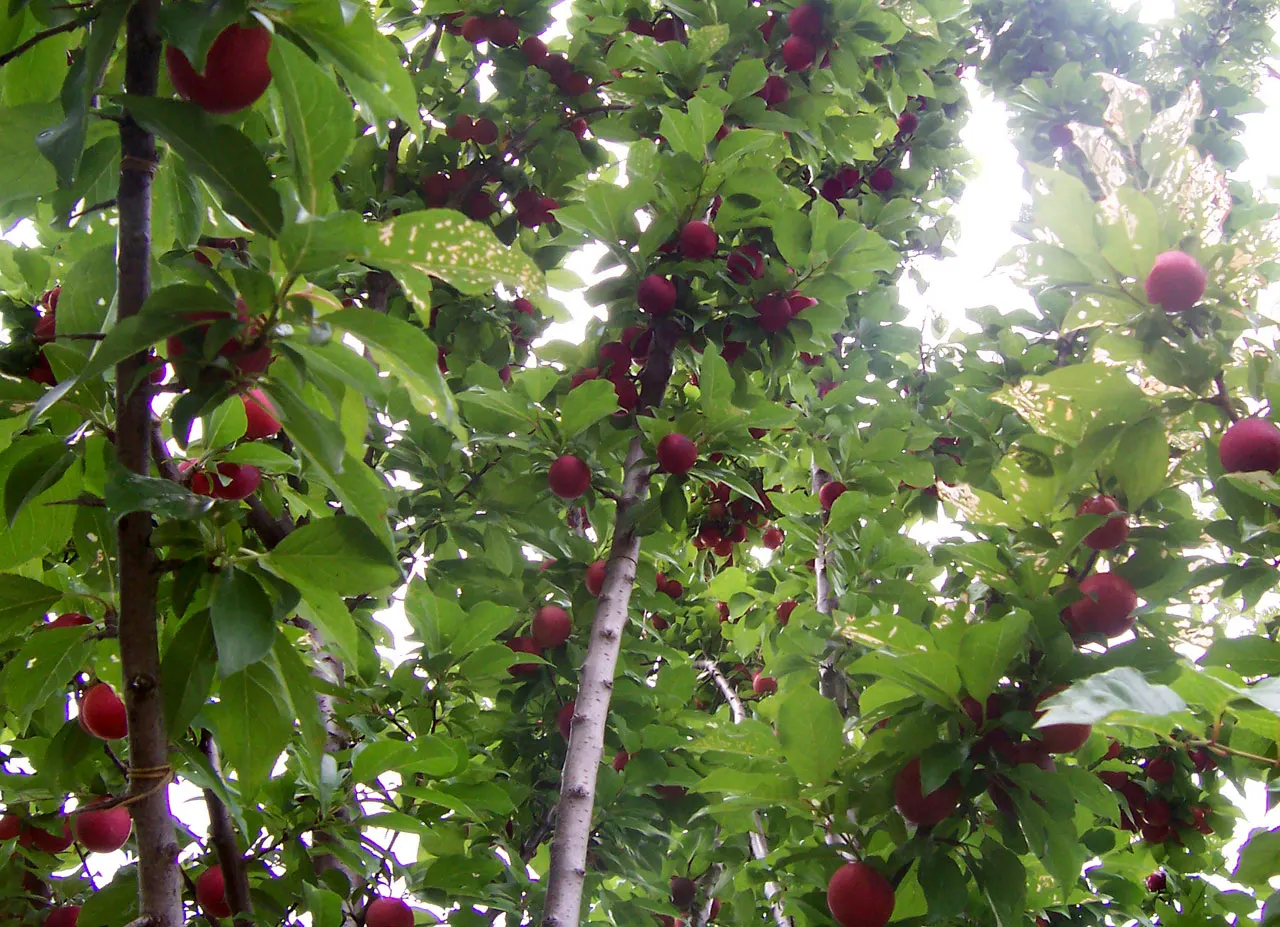
Plums are pruned in early spring or in mid-summer. The RHS pruning guide puts it in two months: April or July. It adds a rule of thumb: spring is usually best for young trees and mid-summer for established ones.
The RHS says it plainly: avoid pruning plums in winter, because it increases the risk of infection by silver leaf disease. For a new pyramid tree it repeats the point. The pruning is the same as for apples and pears, but carried out in April, not winter. Its growing guide widens the warning. Avoid the dormant season and mid to late autumn, to keep down the risk of both silver leaf and bacterial canker.
Two more points from the RHS before you start:
- Prune every year. The growing guide says plum trees should be pruned annually to keep them in good shape, healthy and productive. - Do not fuss. The pruning guide says plums do not need pruning as precise as apples and pears, but still benefit from initial training.
The RHS rates the job as moderate in difficulty. It describes gages as a particular type of plum and damsons as a close relative. Our reading: the same calendar serves all three.
Plums: what to do and when
Under cover and outdoors, for UK conditions. The weather differs from year to year and from north to south, so check your local conditions too.
Why not winter: silver leaf and bacterial canker

Two diseases decide the plum calendar. Both get in through wounds.
Silver leaf. This is a fungal disease caused by *Chondrostereum purpureum*. The RHS says the fungus enters through wounds, mainly pruning cuts. Its spores are released mostly in autumn and winter, in damp conditions, and the RHS gives the active period as September to May. Summer is the safer time to cut because fewer spores are about and wounds heal faster.
What it looks like, according to the RHS:
- Leaves develop a silvery sheen, most noticeable on plums. The affected branches then die. - A cut across an affected branch shows an irregular dark stain in the centre. - Older dead branches carry bracket-shaped fungi, whitish and woolly on top, purple-brown underneath.
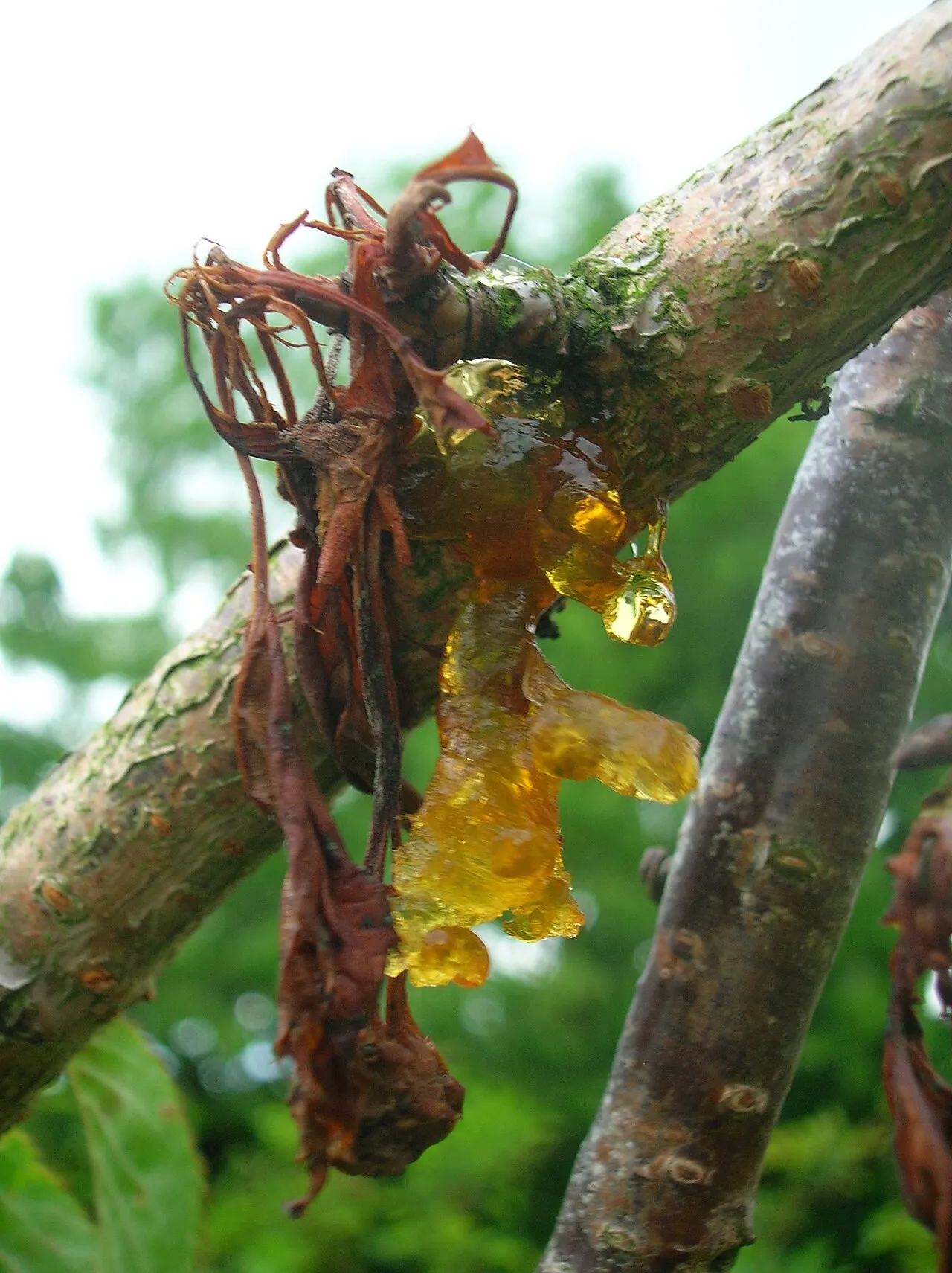
Bacterial canker. This is a disease of the stems and leaves of *Prunus*, especially plums and cherries, caused by two closely related bacteria. The RHS describes sunken, dead areas of bark, often with gum oozing out, and small brown leaf spots that fall out and leave holes, known as shothole. Cankers begin to form in mid-spring. The bacteria get in through wounds or through leaf scars at leaf fall. The RHS prunes in July or August, when the tissues are most resistant.
Do not panic at the sight of gum alone. The RHS notes that gum from the bark of *Prunus* is quite common and is not proof of canker.
Our reading: the two RHS disease pages point to the same months from different sides. Silver leaf spores are active from September to May, and canker resistance peaks in July and August. July and August suit both, which is where the main prune of an established tree sits.
Young or established: which timing is mine?
| Your tree | When | What the pruning is for | Source |
|---|---|---|---|
| Newly planted or still being shaped | Early spring, after the buds open. April in the RHS pruning guide | Building the framework | RHS |
| Up to three years old | Spring, when the buds are just bursting or the tree is starting to flower | A light prune towards an open goblet | Gardeners' World |
| Established bush tree | Mid-summer: July | Removing crossing, weak, vertical and diseased growth | RHS |
| More than three years old | Summer, from mid-June onwards | The same, plus keeping the goblet shape | Gardeners' World |
| Pyramid | April, late June and the third week of July | Keeping the height and the cone shape | RHS |
| Fan on a wall or fence | June, then late July or early August | Short fruiting spurs | RHS |
| Cordon | July to August | Short fruiting spurs | RHS |
| Old and neglected | Summer, over several years | Opening the centre | RHS |
Where the sources differ. Both put young trees in spring and established trees in summer. They differ on the start of the summer window. The RHS names July. BBC Gardeners' World Magazine says from mid-June onwards, and it draws the line between young and established at three years, which the RHS does not.
Not sure how old the tree is? Our reading: if the main branches are already in place and the tree is cropping, treat it as established and prune in July.
Formative pruning of a young tree

The RHS describes the bush form as an open-centred tree on a clear stem of 75 cm. Its growing guide adds three or four branches radiating out from the top of the trunk, in a goblet shape.
The RHS does not write out separate steps for plums. Its pruning guide says the bush form begins with the same formative pruning as apples and pears, carried out in early spring. So the four steps below are borrowed from the RHS page for new apple and pear trees. They are not written for plums:
1. A maiden whip (a single stem with no side shoots): cut it back to just above a bud about 75 cm from the ground. 2. A feathered maiden, year one: choose three or four strong, evenly spaced, wide-angled side shoots that grow outwards. Shorten them by a half to two-thirds, to an outward-facing bud. 3. Year two: choose eight to ten side shoots as the permanent framework. Shorten them by a third to a half, above a healthy outward-facing bud. 4. Year three: on the main branches, cut back last year's new growth by a quarter.
Again, that page is about apples and pears, which are pruned in winter. For a plum, keep the steps and move the date to early spring, as the RHS plum guide asks.
Pyramid plums. A pyramid keeps its central stem, with branches that get shorter towards the top. The RHS routine after the first spring:
- Third week of July, first summer: shorten new branches to 20 cm, above a bud that points down or outwards. Cut side branches to a bud at 15 cm. Tie the central leader to the stake. - April, following years: shorten the central leader by two-thirds. Repeat until the tree reaches 2.4 m on 'St. Julien A' rootstock, or 1.8 m on 'Pixy'. - May, once the height is reached: shorten the leader to 2.5 cm or less each year. - Late June: remove vertical shoots at the top that compete with the leader.
How big will it get? The two RHS pages do not give the same figures. The pruning guide says a bush reaches 3 m on 'Pixy' and 3.6–4.5 m on 'St. Julien A'. The growing guide says 3–4 m on 'Pixy' and 4.5–5 m on the same 'St Julian A' (it spells the name differently). Check the rootstock on the label before you plant near a fence.
Pruning an established tree in summer
Once the framework is built, the yearly prune is light. The RHS list for an established bush tree is short:
- Rub off buds that appear low on the trunk. - Pull away suckers growing from the rootstock, with care. - Remove crossing, weak, vertical and diseased growth. The RHS says pruning is mostly limited to this. - If the tree is still crowded, thin further in July.
Plums fruit on one- and two-year-old wood and on older shoots, the RHS growing guide says. Our reading: that is why there is no spur-by-spur routine as there is for apples. You are keeping the tree open and healthy, not rebuilding fruiting wood.
Gardeners' World cuts more. It shortens the branches by about a third and the side shoots by half, then removes shoots growing into the centre and anything dead, damaged or crossing. It cuts just above a bud, with the cut sloping away from it. Our reading: the RHS routine takes out unwanted shoots and does not ask for general shortening, so if you follow the RHS you will cut less.
Fans and cordons. A fan-trained plum is pruned in stages, in the RHS guide to trained stone fruit. Tie in the shoots you need first, and remove any growing towards the wall. Then pinch shoots with seven or eight leaves back to six, often in June. Pinch regrowth to one leaf. In late July or early August shorten each shoot to three leaves. Cordons follow a similar pattern in July to August. The RHS growing guide sums up fan pruning differently: twice a year, in early summer and straight after fruiting. The RHS warns that cordons are less successful with plums than with apples and pears, and that plums are not suitable as espaliers.
Too vigorous? The RHS suggests festooning: tying young, flexible branches down to the horizontal in summer. The ties stay until the branch holds its new position, usually the following spring.
Thinning the fruit
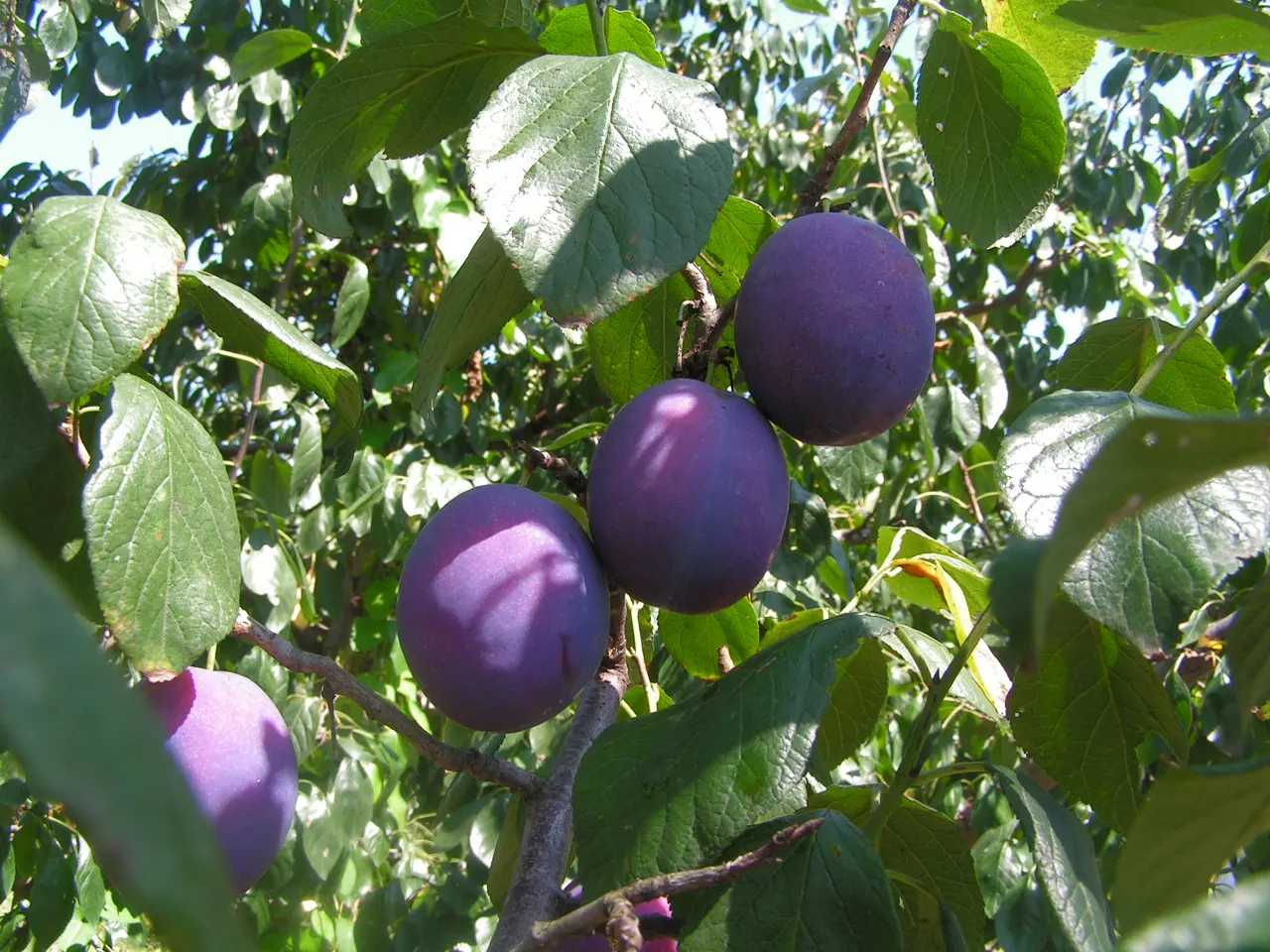

Thinning is part of looking after a plum's branches. The RHS says plums are particularly prone to overcropping and calls thinning vital. Heavily laden branches can break under the weight of the fruit.
When. The tree thins itself first. Many trees shed some immature fruit in early summer, the June drop. The RHS advises beginners to wait for it and to thin straight afterwards. Its general rule for fruit thinning is to finish by mid-July.
How much. Leave one fruit every 5–8 cm, or a pair every 15 cm.
What you gain. The RHS gives the main purpose as better fruit size and quality. Thinning also lets light and air into the branches and lowers the demand on the tree.
Even after thinning, a heavy crop may need help. The RHS growing guide says to be ready to prop up the branches in mid and late summer. Its thinning page suggests stakes or ties.
If a branch has already broken, prune it back into undamaged wood. The RHS pruning guide prefers a cut to a natural fork, so that no stub is left. Our reading: a snapped branch is a wound whatever the month, so tidy it at once and do not wait for the pruning season.
Thinning is easiest on small trained trees. The RHS still thinks it worth doing on larger trees wherever you can reach the branches safely.
Renovating an old, neglected plum
The RHS stages this over several years, and its growing guide says several summers. The aim is a balanced tree with an open centre that lets the light in.
Expect a reaction. A plum answers large cuts by sending up a mass of new shoots. Thin those in summer to just one or two.
Bare branches. In spring, the RHS prunes back to just above the bare section to wake dormant buds. On a large branch it removes a small section of bark just above a dormant bud before growth starts. The technique is called notching.
If you find silver leaf. The RHS removes the affected branch as soon as possible, and certainly before the brackets appear. Cut 10–15 cm beyond the point where the stain in the wood ends. Disinfect the tools regularly and dispose of the wood straight away.
Wound paint: two RHS answers. The silver leaf page says the RHS no longer recommends painting pruning cuts as standard practice. It makes an exception where silver leaf keeps coming back, and names *Prunus* among the trees where wound paint may be worthwhile. The bacterial canker page is firmer: after cutting out cankers, paint the wound promptly to protect it from re-infection. Our reading: leave routine summer cuts on a healthy tree unpainted, and paint where you have cut out canker.
Common mistakes
Pruning in winter with the apples. This is the big one. Silver leaf spores are active from September to May, and the RHS tells gardeners to avoid winter pruning of plums.
Pruning in the rain. The RHS asks for a dry day and two more dry days to follow.
Taking too much at once. Large cuts bring a thicket of new shoots. The RHS spreads the renovation of an old tree over several years.
Leaving stubs. Cut broken branches back to a natural fork.
Skipping the thinning. A plum that overcrops can snap its own branches, and a break is a wound you did not choose.
Mistaking a hard spring for disease. The RHS describes false silver leaf, a similar silvering caused by cold, drought or other stress. Cut a twig across. If there is no stain in the wood, it is not the disease.
Reading gum as canker. Gum alone is common on *Prunus*. Look for sunken, dead bark as well.
Pruning other fruit this year? Apples and pears have their own calendar: see pruning apple trees and pruning pear trees. For every fruit tree on one page, see pruning fruit trees.
Pruning plum trees month by month
| When | Job | How much |
|---|---|---|
| April (early spring, after the buds open) | Formative pruning of young trees | Bush: same steps as for apples and pears, moved to early spring. Pyramid: shorten the central leader by two-thirds |
| Spring, buds just bursting or first flowers | Light prune of trees up to three years old | Light pruning towards an open, goblet-shaped bush |
| Spring | Bare lengths of branch | Prune back to just above the bare section, or notch the bark above a dormant bud on a large branch |
| May | Pyramid at full height; cordon at full length | Pyramid leader to 2.5 cm or less. Cordon leader to about 1.5 cm |
| June | Fan-trained plums, first stage | Shoots with seven or eight leaves pinched back to six |
| Early summer, after the June drop, done by mid-July | Thinning the fruit | One fruit every 5–8 cm, or a pair every 15 cm |
| Late June | Pyramid plums | Remove vertical shoots at the top that compete with the leader |
| July (Gardeners' World: from mid-June) | Main prune of established trees | Crossing, weak, vertical and diseased growth. Thin further in July if still crowded |
| Third week of July | Pyramid plums | Branch leaders to 20 cm, side branches to a bud at 15 cm |
| July to August | Cordons; cutting out bacterial canker | Laterals stopped at six leaves. Cankered wood cut back to healthy wood |
| Late July or early August | Fan-trained plums, last stage | Each shoot back to three leaves |
| Summer | Festooning; thinning regrowth after big cuts | Tie young branches down to the horizontal. Thin new shoots to one or two |
| September to May | Silver leaf spores are active | Avoid pruning in winter and in mid to late autumn |
How to do it
- Wait for July, and for a dry day with dry weather forecast for at least the next two days.
- Rub off buds that appear low on the trunk and pull away suckers growing from the rootstock.
- Cut out diseased growth first, back to healthy wood.
- Remove crossing, weak and vertical shoots.
- Stand back. If the tree is still crowded, thin a little more, keeping the centre open.
- Cut broken branches back into undamaged wood, ideally to a natural fork, so that no stub is left.
- If a branch shows silver leaf, cut 10–15 cm beyond the end of the stain in the wood and disinfect your tools.
Common questions
When should I prune plum trees in the UK?
In early spring or mid-summer. The RHS names April for young trees and July for established ones. Gardeners' World prunes established trees from mid-June onwards. Both say to avoid winter.
Can I prune a plum tree in winter?
The RHS says to avoid it. Winter pruning increases the risk of silver leaf, whose spores are active from September to May. Its growing guide also rules out mid to late autumn, because of silver leaf and bacterial canker.
Can I prune plum trees in August or September?
August is inside the window the RHS gives for avoiding bacterial canker (July or August), and cordons are pruned in July to August. September is the month from which the RHS says silver leaf spores are active again. Our reading: finish before then.
How much can I cut off a plum tree?
On an established tree the RHS mostly limits pruning to crossing, weak, vertical and diseased growth. Gardeners' World shortens branches by about a third. An old, neglected tree is renovated in stages over several years, because large cuts produce a mass of new shoots.
How do I prune a young plum tree?
In early spring. The RHS says a bush plum starts with the same formative pruning as apples and pears. On its apple and pear page that means three or four well-spaced side shoots shortened by a half to two-thirds in the first year, then eight to ten framework shoots shortened by a third to a half in the second.
Should I thin plums, and when?
Yes. The RHS calls thinning vital because plums overcrop and branches can break. Thin after the June drop and finish by mid-July, leaving one fruit every 5–8 cm or a pair every 15 cm.
Should I paint the cuts on a plum tree?
Not as routine. The RHS no longer recommends painting pruning cuts as standard practice. It says wound paint may be worthwhile on Prunus where silver leaf keeps recurring, and it does advise painting after cankered wood has been cut out.
Sources
We wrote this page using the sources below.
- Plums: pruning, Royal Horticultural Society (RHS)
- How to grow plums, Royal Horticultural Society (RHS)
- Silver leaf, Royal Horticultural Society (RHS)
- Bacterial canker, Royal Horticultural Society (RHS)
- Fruit thinning, Royal Horticultural Society (RHS)
- Apples and pears: pruning new trees, Royal Horticultural Society (RHS)
- How to summer prune trained stone fruit trees, Royal Horticultural Society (RHS)
- Plums: growing and training as cordons, Royal Horticultural Society (RHS)
- How to prune a plum tree, BBC Gardeners' World Magazine