
 Cherries Pruning
When to prune cherry trees
The cherry calendar is short and simple: shape young trees as the buds break, prune established ones once the fruit is picked, and keep the saw away in winter.
In short
Prune cherry trees once a year, as soon as the harvest is finished, usually late July or August, the RHS says. Young trees can have formative pruning in early spring. Do not prune in winter: silver leaf spores are active from September to May, and canker gets in through wounds.

The short answer: after the harvest
Prune cherry trees in summer, as soon as you have picked the fruit. The RHS growing guide puts it plainly: pruning should be carried out every year, as soon as harvesting is finished, usually in late July or August. At that time the risk of silver leaf and bacterial canker is lower.
Young trees are the exception. The RHS says some formative pruning of young trees can be done in early spring. Which? says the same in its own words: shape young trees in spring, just as the buds are breaking, and leave other pruning for summer.
Never in winter. BBC Gardeners' World Magazine calls it the golden rule for every type of cherry: never prune in winter, because it puts the tree at risk of silver leaf or canker. Which? adds that silver leaf disease is most widespread in winter, and that all cherry pruning should be done in the growing season.
Pick the day as well as the month. The RHS asks for a dry day, with dry weather forecast for at least the next two days.
Why so strict? Cherries belong to the stone fruit, like plums, and the RHS tells gardeners to prune cherries in the same way as plums. If you grow both, the two trees share one calendar. See when to prune plum trees.
Cherries: what to do and when
Under cover and outdoors, for UK conditions. The weather differs from year to year and from north to south, so check your local conditions too.
Why not winter: silver leaf and bacterial canker

Both diseases enter through wounds, and a pruning cut is a wound.
Silver leaf. The RHS describes it as a fungal disease of the wood and leaves, caused by *Chondrostereum purpureum*. It infects mainly through pruning wounds. The trees it names as most commonly affected include plums, apples, apricots, almonds and cherries. The key date for the calendar: infectious spores are active from September to May, with most released in autumn and winter, when it is damp.
What to look for, according to the RHS:
- Leaves with a silvery sheen, followed by branches dying back. - An irregular dark stain in the centre of a cut branch. - On older dead branches, bracket-shaped fungi.
Not every silvery leaf is the disease. The RHS describes false silver leaf, caused by cold, drought or other stress. It leaves no stain in the wood.
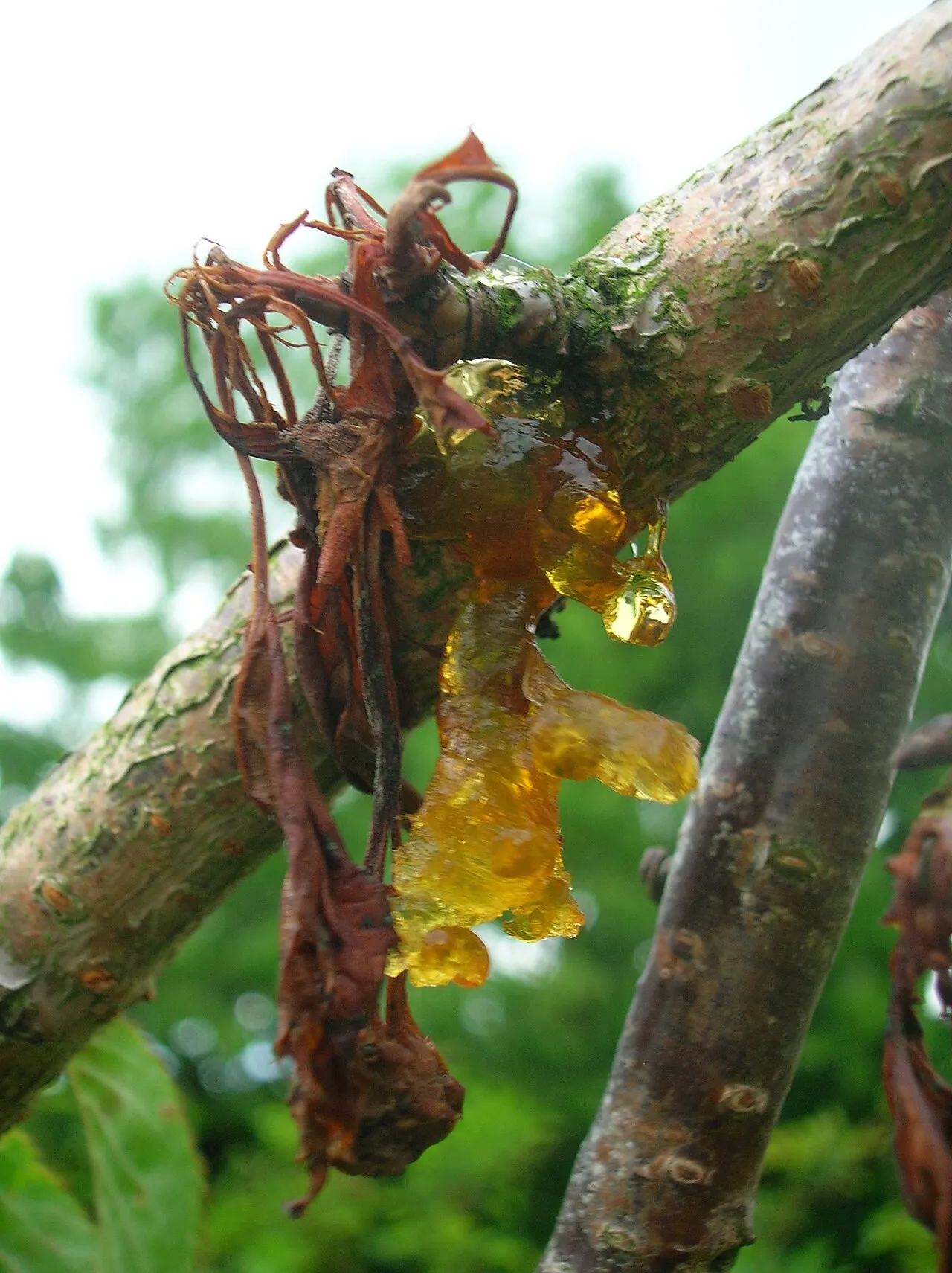
Bacterial canker. The RHS calls it a disease of the stems and leaves of *Prunus*, especially plums and cherries. It shows as sunken, dead bark, often with a gummy ooze, and as small holes in the leaves, known as shothole. Cankers begin to form in mid-spring. The bacteria get in through wounds, or through leaf scars at leaf fall. The RHS prunes in July or August, when the tissues are most resistant, which also lowers the risk of silver leaf.
Do not read gum alone as canker. The RHS notes that gum is common on *Prunus* and can have other causes. Look for the sunken, dead bark as well.
Our reading: the two disease pages and the growing guide all land on the same weeks. Late July and August, straight after the harvest, is the window that suits both problems.
Sweet or acid: why it changes how much you cut

The month is the same for both. The amount you remove is not, because the two kinds carry their fruit on different wood.
| Sweet cherries | Acid cherries ('Morello') | |
|---|---|---|
| Where the fruit forms | On one- and two-year-old wood and on spurs of older wood (Which?) | Almost all on the previous year's shoots (RHS) |
| Pruning once established | Light (Which?) | Much heavier than for sweet cherries (Which?) |
| Main aim | Keep the tree open and balanced | Keep a steady supply of young shoots |
| Duke cherries | Pruned like sweet cherries (Which?) |
The RHS spells out what happens if an acid cherry is left alone: it fruits only at the ends of overlong branches. Gardeners' World says the same in its own words: sweet cherries fruit on wood made the previous season or earlier, while Morello cherries fruit on one-year-old wood.
Our reading: with a sweet cherry, most of the wood you leave keeps cropping, so you cut little. With an acid cherry, the shoots that fruited this year will not do it again in the same way, so you cut some out each year to make room for new ones.
Pruning an established sweet cherry
Wait until the fruit is picked. Which? sets out three steps for a bush tree:
1. Clear out the problems. Remove dead, damaged or diseased branches, and any that are very weak, badly placed, growing through the centre of the tree or rubbing against others. 2. Shorten the branch tips. Cut back the tips of the remaining branches by about a third of their new growth, to encourage fruit buds. 3. Sort the side-shoots. Cut out side-shoots longer than 30 cm and thin very crowded ones. Leave side-shoots under 15 cm alone. Cut the others back to five or six buds.
That is all. Which? says sweet cherries need only light pruning once they are established, and Gardeners' World says established trees should be pruned in summer if needed.
How big will it get? The RHS gives the size by rootstock. On Gisela 5 a tree grows 3–4 m tall. On Colt it reaches 6–8 m. Check the label before you plan the ladder work: on a tall tree, most of the pruning is out of reach.
Pruning an established acid cherry
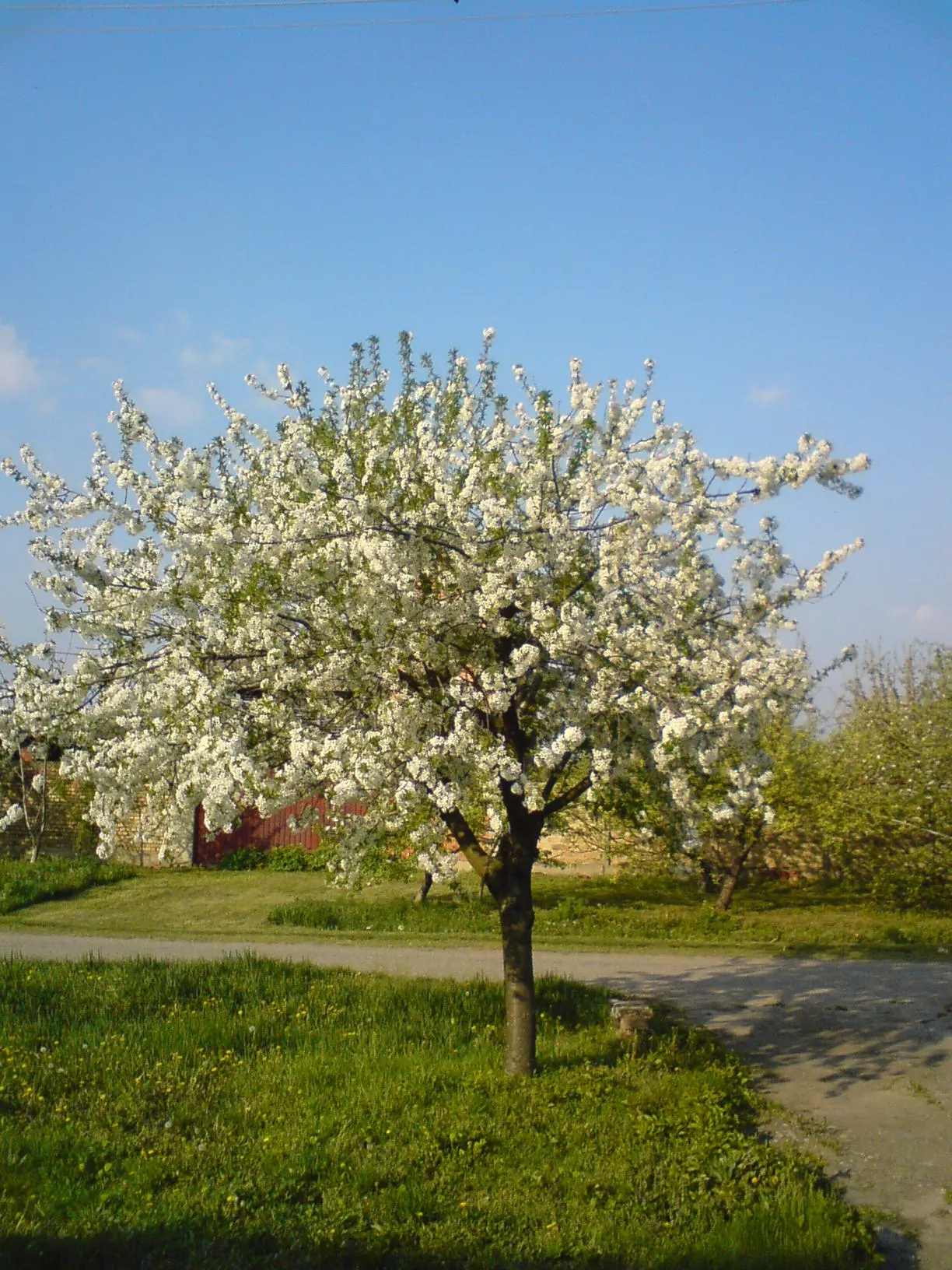

Acid cherries, Morello among them, are pruned after the harvest too, but harder. Which? gives these steps for a bush tree:
1. Clear out the problems, as for a sweet cherry: dead, damaged, diseased, weak, badly placed, crossing and rubbing branches. 2. Renew the wood. Remove about a quarter of the remaining older wood. Cut back to a main branch or to a younger side-shoot. 3. Leave the young shoots. Shoots under 30 cm stay unpruned. Longer shoots, and vigorous new growth on the main branches, are cut back by about a third to encourage branching.
Our reading: the aim is a tree that is always partly new. Each summer some of the old fruited wood goes, and the young shoots that replace it carry next year's cherries.
Acid cherries are smaller trees. The RHS gives about 3.5 m on Colt rootstock. Gardeners' World says Morello varieties tolerate some shade and can be grown against a north-facing wall.
Shaping a young tree: the first three springs
The RHS lists the forms cherries are usually grown in: small open-centred trees known as bush trees, larger pyramid trees, or fans against a wall or fence. It adds that cherries are too vigorous to be trained as espaliers or cordons.
Which? describes the first three years of a bush tree. Do the work in spring, just as the buds are breaking.
- Year one. Choose four evenly spaced side branches. The lowest should be at least 50 cm above the ground. Remove all branches below them, cut the main shoot back to just above the top chosen branch, and shorten the four branches by two-thirds, to buds facing the way you want them to grow. - Year two. Remove shoots growing into the centre and any shoots below the lowest main branch. Shorten the main branches by about a third. Keep one or two side-shoots on each main branch, shortened by about a third. Cut the rest back to about four buds, and remove spindly or badly placed ones. - Year three. Shorten the new growth on the main shoots by about two-thirds. Remove spindly, badly placed or damaged shoots. Leave shoots of 23 cm or less, and cut longer ones back to about four buds.
After that the tree is established and moves to the summer routine above.
Where the sources differ. The RHS says "early spring" for formative pruning. Which? says spring as the buds are breaking, and Gardeners' World says spring, when new growth appears. Our reading: these describe the same moment in a cherry's year. Watch the buds, not the calendar.
Fan-trained cherries on a wall
A fan is pruned in two stages, says the RHS guide to established fan-trained trees. It puts sweet cherries with apricots and plums, which fruit on both last season's shoots and older wood. Acid cherries go with peaches, which fruit mainly on the previous season's shoots.
Sweet cherry fan.
- June: tie shoots into the framework where there is space. Pinch the remaining new shoots back to six leaves. - August, after fruiting: shorten those shoots further, to three leaves, to form fruiting spurs.
Which? gives the same pattern with one difference in wording: five or six leaves in early summer, then three leaves after harvest, or one leaf at the top of the fan.
Acid cherry fan.
- Early summer: work along each rib of the fan and cut out crowded and crossing shoots, so that the rest are 5–10 cm apart (Which?). Keep the new shoots that grow from the base of shoots carrying this year's fruit. - After harvesting: cut older, fruited wood back to a vigorous new shoot and tie the young shoot in, the RHS says. It should ripen and fruit next year. Shorten to two leaves any shoot that cannot be tied in.
The same RHS fan guide asks for stone fruit pruning to be finished by late August, to reduce the risk of fungal disease such as silver leaf. If a large limb has to come out of a fan, it gives April for stone fruit.
Ornamental cherries
Flowering cherries grown for blossom, not fruit, need much less. The RHS entry for the flowering cherry *Prunus* 'Shirofugen' puts it in pruning group 1, with one line of advice: prune in mid-summer if silver leaf is a problem. The same entry lists the tree as possibly susceptible to silver leaf and bacterial canker, among other problems.
Our reading: treat an ornamental cherry like its fruiting cousins. Cut only what must go, such as dead, broken or crossing branches, and do it in summer.
Common mistakes
Pruning with the apples in winter. This is the big one. Silver leaf spores are active from September to May. Apples and pears have their own winter calendar: see pruning apple trees.
Pruning on a wet day. The RHS wants a dry day with two more dry days forecast.
Pruning an acid cherry like a sweet one. A light trim leaves the fruit at the tips of long, bare branches. Renew about a quarter of the older wood each year.
Pruning a sweet cherry like an acid one. Which? says sweet cherries also fruit on spurs of older wood and need only light pruning. Our reading: heavy cuts take that fruiting wood away.
Leaving cankers in. The RHS cuts cankered wood back to healthy tissue and seals that wound promptly with a wound paint. For silver leaf, it cuts 10–15 cm beyond the point where the stain in the wood ends, disinfects the tools and disposes of the wood. It no longer advises painting routine pruning cuts.
Forgetting the birds. Pruning is only half the crop. The RHS says to net the tree before the fruit colours.
Pruning cherry trees through the year
| When | Tree | Job |
|---|---|---|
| Early spring, as the buds break | Young bush trees, years 1 to 3 | Formative pruning: pick the main branches and shorten them |
| April | Fan-trained stone fruit | Removing a large limb from the fan |
| June | Fan-trained sweet cherry | Tie in new shoots where there is space; pinch the rest to six leaves |
| Early summer | Fan-trained acid cherry | Thin crowded and crossing shoots so the rest are 5–10 cm apart |
| Straight after harvest, usually late July or August | Established bush, sweet or acid | Main yearly prune |
| August, after fruiting | Fan-trained sweet cherry | Shorten the pinched shoots to three leaves |
| After harvest | Fan-trained acid cherry | Cut fruited shoots back to a new shoot and tie it in |
| Mid-summer, if silver leaf is a problem | Ornamental cherry | Any pruning that is needed |
| By late August | Fan-trained stone fruit | Finish pruning |
| September to May | All cherries | Silver leaf spores are active: do not prune |
How to do it
- Wait until the cherries are picked, and for a dry day with at least two more dry days forecast.
- Cut out dead, damaged and diseased wood first, then branches that are weak, badly placed, growing through the centre or rubbing.
- Sweet cherry bush: shorten the tips of the remaining branches by about a third of their new growth. Leave side-shoots under 15 cm and cut the others back to five or six buds.
- Acid cherry bush: take out about a quarter of the older wood, back to a main branch or a younger side-shoot. Leave shoots under 30 cm and cut longer ones back by about a third.
- Stand back and look. Stop there: a sweet cherry needs only light pruning once established.
- If you find a canker, cut back to healthy wood and seal that wound promptly, as the RHS advises.
Common questions
When should I prune cherry trees in the UK?
Straight after the harvest, usually in late July or August, says the RHS. Young trees can have formative pruning in early spring. Avoid winter.
Can I prune a cherry tree in winter?
No. Gardeners' World calls it the golden rule for all cherries, because winter pruning risks silver leaf and canker. The RHS says silver leaf spores are active from September to May.
Can I prune a cherry tree in September or October?
The RHS guide to fan-trained trees asks for stone fruit pruning to be finished by late August, and its silver leaf page says the spores are active from September to May. Our reading: if you missed August, wait until next summer.
How much should I cut off a cherry tree?
Sweet cherries need only light pruning: Which? shortens branch tips by about a third of their new growth. Acid cherries are pruned harder: Which? removes about a quarter of the older wood each year.
Are sweet and acid cherries pruned at the same time?
Yes, after harvest. What differs is how much you cut, because acid cherries fruit almost only on last year's shoots (RHS), while sweet cherries also fruit on spurs of older wood (Which?).
When should I prune an ornamental cherry?
The RHS entry for Prunus 'Shirofugen' says to prune in mid-summer if silver leaf is a problem. It puts the tree in pruning group 1.
Should I paint the cuts?
Not routine cuts. The RHS no longer advises painting or wrapping pruning wounds. The exception is after cutting out bacterial canker, when it seals the wound promptly with wound paint. Where silver leaf keeps coming back, the RHS says painting wounds on susceptible trees may be the lesser evil.
Sources
We wrote this page using the sources below.
- How to grow cherries, Royal Horticultural Society (RHS)
- Fan-trained trees: pruning established fans, Royal Horticultural Society (RHS)
- Silver leaf, Royal Horticultural Society (RHS)
- Bacterial canker, Royal Horticultural Society (RHS)
- Prunus 'Shirofugen', Royal Horticultural Society (RHS)
- How to prune a cherry tree, Which?
- How to grow cherries, BBC Gardeners' World Magazine