
 Clematis Pruning
Pruning clematis
You do not need to know the name of your clematis to prune it well. You need to know one thing: the month it flowers.
In short
Clematis are pruned by flowering time. Spring-flowering kinds (group 1) need no regular pruning. Large-flowered kinds that bloom in May and June (group 2) are tidied in February. Late-summer kinds (group 3) are cut to 15–30 cm above the soil in February or March, the RHS says.

The idea behind the three groups
The British Clematis Society says that when and how to prune is probably the question it is asked most often about clematis. The answer is shorter than you might expect.
Clematis are sorted into three pruning groups, and the groups are based on flowering time. That is how the RHS puts it. Flowering time matters because it tells you which stems carry the flowers.
- Group 1 flowers early, on shoots the plant made last year. - Group 2 flowers in May to June on short shoots that grow from last year's stems. Some flower again in late summer on new growth. - Group 3 flowers from mid to late summer on this year's growth. The RHS is precise: on the last 60 cm or so of the current year's shoots.
Our reading of why the rules differ: if the flowers come on old stems, a winter cut removes them. If they come on new stems, a hard cut in late winter does not.
Why prune at all? The RHS says regular pruning encourages strong growth and flowering and keeps the plant in check. Left unpruned, a clematis can turn into a mass of tangled stems with a bare base and flowers well above eye level.
The British Clematis Society has a one-line version to remember: "if it flowers before June, don't prune."
Clematis: what to do and when
Under cover and outdoors, for UK conditions. The weather differs from year to year and from north to south, so check your local conditions too.
How to tell which group you have
If you have the label, look the name up. The table above lists the plants the RHS and the British Clematis Society give as examples for each group.
If you do not, watch the plant for one season and write down when the first flowers open.
- January to April. The RHS beginner's guide puts these in group 1. The British Clematis Society draws the line a little later, at the end of May. Winter-flowering clematis are usually group 1 as well, the society says. - May to June, big flowers. Group 2. The society's wording is clematis that begin flowering between the end of May and the end of June. - Late summer. Group 3. The society counts everything that flowers from June onwards.
The two bodies do not use exactly the same dates, so a plant that opens in late May or June can sit on the border. The RHS has a safe rule for those cases:
- Flowers before early summer (June): do not prune. - Flowers from late June onwards: prune in late winter, in February.
Some clematis fit two groups. The RHS lists mid- to late-summer varieties that can be pruned as group 2 or group 3, among them 'Jackmanii', 'Perle d'Azur', 'Gipsy Queen', 'Comtesse de Bouchaud' and 'Hagley Hybrid'.
Group 1: spring flowers, hardly any pruning
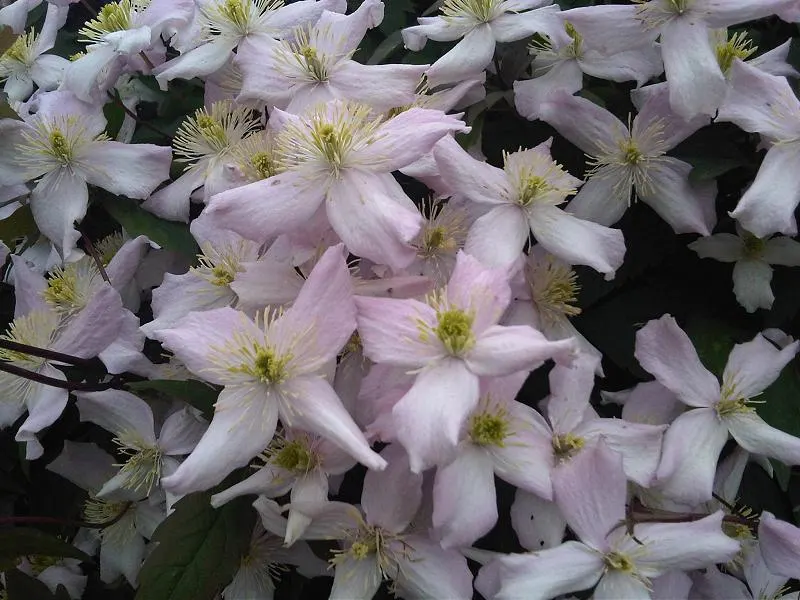
Who is in it. The RHS list includes Clematis alpina, C. macropetala, C. montana, C. armandii and C. cirrhosa, with varieties such as 'Frances Rivis', 'Markham's Pink' and 'Freckles'.
When. The RHS says no regular pruning is required for this group. If you do need to cut, do it immediately after flowering, in mid- to late spring, when the danger of frost has passed. The British Clematis Society says the same in its own words: these clematis should not be pruned before they flower.
How.
- Trim overlong branches. - Cut dead or winter-damaged shoots back to a pair of healthy buds. - A vigorous kind such as C. montana can simply be sheared over after flowering to keep it tidy.
An overgrown plant. The RHS says old, congested plants can be thinned, but that it is usually easier to renovate. Cut all the stems back almost to the base, just after flowering. Its main clematis guide gives the height as 15 cm from the base. Then feed, mulch and water in dry spells. The response is generally good, it says. There are two conditions. The cut will affect flowering, and you should leave at least three years before pruning hard again.
The exception is Clematis armandii. The RHS says it does not usually respond well to renovation. Keep it within its space, and in spring remove any leaves damaged by wind scorch.
Group 2: big flowers in May and June
Who is in it. The large-flowered hybrids. The RHS list includes 'Nelly Moser', 'The President', 'Marie Boisselot', 'Doctor Ruppel', 'Bees' Jubilee' and 'Duchess of Edinburgh'.
When. Twice. In late winter or early spring, which the RHS gives as February, and again after the first flush of flowers in early summer. The British Clematis Society says February or March for the first cut.
The February cut is a tidy, not a haircut.
1. Remove dead or weak stems before growth starts. 2. Start at the top of each remaining stem and work down until you reach a pair of healthy buds. The society calls them plump. 3. Cut just above them. Stop there.
The RHS warning is short: avoid heavy pruning or flowers will be lost. The society explains what happens. If you prune further down, you cut off the stems that produce the early flowers.
The summer cut is for a second show. As soon as the first flowers are over, cut some stems back to large buds or a strong side shoot immediately below the blooms. The RHS says this encourages a second flush later in the season.
You may also do almost nothing. The RHS allows group 2 plants to be left unpruned apart from removing dead shoot ends in spring.
A top-heavy plant. There are three sourced ways out.
- Gradually. Over two or three seasons, prune harder after the first flush. The RHS says such plants are unlikely to give a second flush that year but should flower again the following year. - Now and then. Leave the plant unpruned, then hard prune it to 30–90 cm from the base every three or four years in late winter. In the first year afterwards it will flower only once. - By half. The British Clematis Society prunes the whole plant by at least half its height after the first flush of flowers.
Group 3: late-summer flowers, the easy one
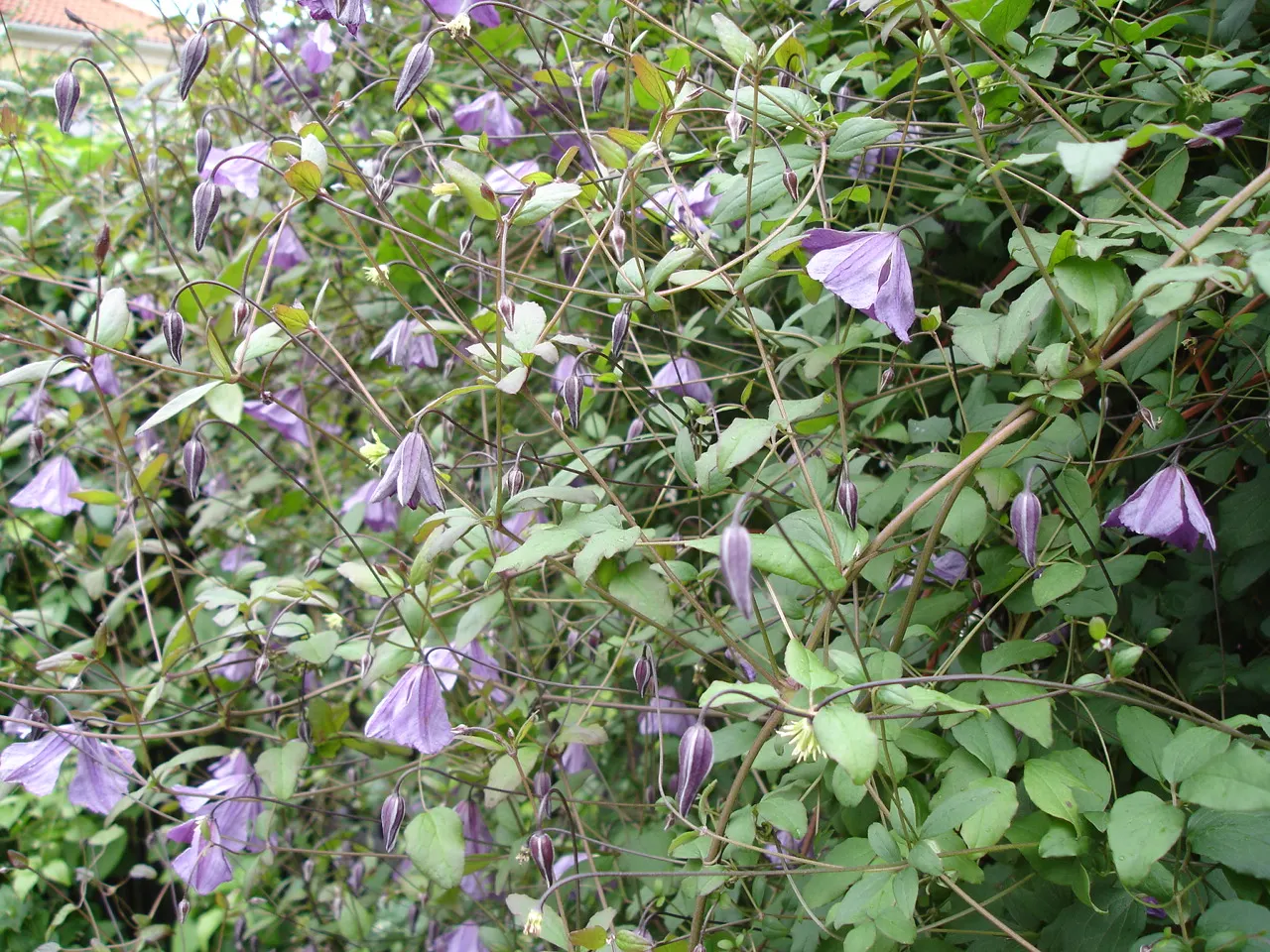

Who is in it. Clematis that flower in late summer on growth made in that season. The RHS list includes Clematis viticella, 'Polish Spirit', 'Princess Diana', 'Ville de Lyon', 'Abundance' and 'Ernest Markham'.
When. The RHS says late winter or early spring, when the buds show signs of growth, typically in February. Its method gives February or March. The British Clematis Society stretches that for colder gardens: February, March or even April, depending on how northerly your garden is. It also warns against hard pruning too early, because new shoots can fall prey to frost and hard weather.
How. Cut back all the old stems to the lowest pair of healthy buds, 15–30 cm above soil level. That is the RHS instruction.
Other sources count the buds slightly differently.
- The British Clematis Society starts at the bottom and cuts just above the second pair of live buds. - BBC Gardeners' World Magazine cuts all stems to 30 cm above the ground, back to a second or third pair of buds, with the cut 3–5 mm above them.
All three leave a short stump with a few buds on it. That is the point to hold on to.
A tip from the society. When the new growth has reached 30 cm, pinch out the growing tips just above the top leaf joint.
Making the job easier. Gardeners' World works in stages. Untangle last year's growth from the support and cut the ties. Chop the top growth roughly first, leaving stems about 50 cm long, and take care not to damage the developing buds. Then make the final cuts.
Exceptions.
- Kinds grown for their seedheads, such as 'Bill MacKenzie' and C. tangutica, can just be thinned and trimmed back to the main framework, the RHS says, so that the seedheads can be enjoyed. - Over a pergola with plenty of room, group 3 clematis can be left unpruned to scramble. - Herbaceous clematis, such as C. heracleifolia, C. integrifolia and C. recta, are cut to near ground level in late autumn or early spring.
If you skip it. The RHS describes the result: a top-heavy plant, flowering well above eye level, with a bare base.
The first spring after planting
The RHS advice is to cut every newly planted clematis back hard in its first spring. The only exception is a plant that already has three or four healthy stems growing from the base.
How. Cut back to just above a strong pair of leaf buds, about 30 cm above soil level.
Why. The RHS beginner's guide says it encourages multiple stems. Its group 2 guide describes the alternative. Young clematis left unpruned tend to produce very long single stems, with the flowers only at the very top.
Then. Through spring and summer, tie in the new growth and space the stems evenly on the support.
The clematis year, month by month
- February. Group 3: hard prune. Group 2: light tidy from the top down. - The first spring after planting. Any group: cut to about 30 cm, unless the plant already has three or four healthy stems from the base. - March. Group 3 if not yet done. Group 2 tidy, on the British Clematis Society's dates. - April. Group 3 in northerly gardens, the society says. Tie in new shoots. Gardeners' World notes that growth is rapid once the soil warms. - Mid- to late spring. Group 1, straight after flowering and after the danger of frost: tidy, shear over a montana, or renovate. - Early summer. Group 2, after the first flush: cut some stems back below the faded blooms. - Late autumn or early spring. Herbaceous clematis: cut to near ground level.
The RHS sums the calendar up in one line. The main pruning season is late winter to early spring.
What happens if you get it wrong
Less than you fear. None of the sources on this page describes a clematis dying from a mistimed prune. What they describe is lost flowers, and for how long.
You cut a group 1 plant in winter. This group flowers on shoots made the previous season, and the British Clematis Society says it should not be pruned before it flowers. When the RHS cuts a group 1 plant hard on purpose, it says the operation will affect flowering.
You cut a group 2 plant hard in February. The RHS says flowers will be lost. The British Clematis Society says you have removed the stems that give the early flowers. Some group 2 plants also flower in late summer on new growth, the RHS notes.
You never prune a group 3 plant. It becomes top heavy, with a bare base and flowers above eye level. Gardeners' World adds a tangled mess of old and new growth, with flowers on only part of the plant.
You pruned group 3 too early in a cold spell. The society warns that new shoots can be caught by frost.
You never pruned a new plant. Expect long single stems with flowers at the top.
You cut into very old wood. The society warns that thick, old stems may not easily produce new growth. Its alternative is the half-and-half method in the tip on this page.
A pruned stem oozes and does not reshoot. The RHS lists slime flux among clematis problems. It can make pruned stems fail to reshoot and ooze a sticky substance.
More pruning guides: how to prune roses, how to prune hydrangeas and how to prune lavender.
Which group is my clematis?
| When it flowers | Typical plants | Group | What to do |
|---|---|---|---|
| Winter and spring: January to April (RHS), March to the end of May (British Clematis Society) | C. alpina, C. macropetala, C. montana, C. armandii, C. cirrhosa | Group 1 | No regular pruning. If it has outgrown its space, prune straight after flowering |
| May and June, with large flowers. Sometimes again in late summer | 'Nelly Moser', 'The President', 'Marie Boisselot', 'Doctor Ruppel' | Group 2 | February: work down each stem to the first pair of healthy buds and cut there. After the first flush: cut some stems back below the faded blooms |
| Mid to late summer, at the ends of this year's shoots | C. viticella, 'Ville de Lyon', 'Polish Spirit', 'Princess Diana' | Group 3 | February or March: cut every stem to the lowest pair of healthy buds, 15–30 cm above the soil |
| Mid to late summer (some varieties) | 'Jackmanii', 'Perle d'Azur', 'Gipsy Queen', 'Hagley Hybrid' | Group 2 or 3 | Either method. Or mix them: keep a framework and cut the other stems to the base |
| Herbaceous clematis | C. heracleifolia, C. integrifolia, C. recta | Pruned with group 3 | Cut to near ground level in late autumn or early spring |
| You do not know the plant, but it flowers before June | Any | Treat as group 1 | Do not prune |
| You do not know the plant, but it flowers from late June onwards | Any | Treat as group 3 | Prune in late winter (February) |
How to do it
- Note the month your clematis starts to flower. That decides the group.
- Flowers before June: leave it alone, or tidy it straight after flowering.
- Large flowers in May and June: in February, work down from the top of each stem to a pair of healthy buds and cut just above them.
- Flowers from late June onwards: in February or March, cut all the old stems to the lowest pair of healthy buds, 15–30 cm above the soil.
- Make each cut just above a pair of buds. Gardeners' World cuts 3–5 mm above them.
- Tie in the new shoots as they grow and space them evenly on the support.
Common questions
When should I prune clematis in the UK?
It depends on the group. The RHS says the main season is late winter to early spring. Group 3 is cut hard in February or March and group 2 is tidied in February. Group 1 needs no regular pruning, and is tidied straight after flowering in mid- to late spring if needed.
How do I know which pruning group my clematis is in?
Go by flowering time. The RHS rule for an unknown plant: if it flowers before early summer (June), do not prune. If it flowers from late June onwards, prune in late winter (February). Large flowers in May and June point to group 2.
How far back do I cut a group 3 clematis?
The RHS cuts all the old stems to the lowest pair of healthy buds, 15–30 cm above soil level. Gardeners' World cuts to 30 cm. The British Clematis Society cuts just above the second pair of live buds from the bottom.
What if I pruned my clematis at the wrong time?
You are most likely to lose flowers, not the plant. The RHS says heavy pruning of group 2 loses flowers, and that hard pruning of group 1 affects flowering. None of the sources used here describes a plant dying from it.
Should I prune a newly planted clematis?
Yes. The RHS cuts every newly planted clematis back hard in its first spring, to just above a strong pair of leaf buds about 30 cm above the soil, unless the plant already has three or four healthy stems from the base.
Can I cut an old clematis right back?
Group 1: almost to the base just after flowering, then not again for at least three years. Clematis armandii does not usually respond well. Group 2: to 30–90 cm in late winter every three or four years. Group 3 is cut hard every year anyway. These are RHS figures.
Sources
We wrote this page using the sources below.
- Clematis: pruning, Royal Horticultural Society (RHS)
- Clematis pruning: group one, Royal Horticultural Society (RHS)
- Clematis pruning: group two, Royal Horticultural Society (RHS)
- Clematis pruning: group three, Royal Horticultural Society (RHS)
- Pruning clematis (beginner's guide), Royal Horticultural Society (RHS)
- Pruning, British Clematis Society
- How to winter prune clematis, BBC Gardeners' World Magazine