
 Hedges Pruning
When to prune a laurel hedge
Cherry laurel grows fast, takes a hard cut and comes back green. Time the trims around its flowers and the birds, and use the right tool, and the hedge stays dense without a single torn leaf.
In short
Trim an established cherry laurel hedge twice during the growing season, the RHS says. Make the first cut straight after flowering, in late spring or early summer. Check for nesting birds first. An overgrown laurel can be cut hard, even to near ground level, in mid-spring.
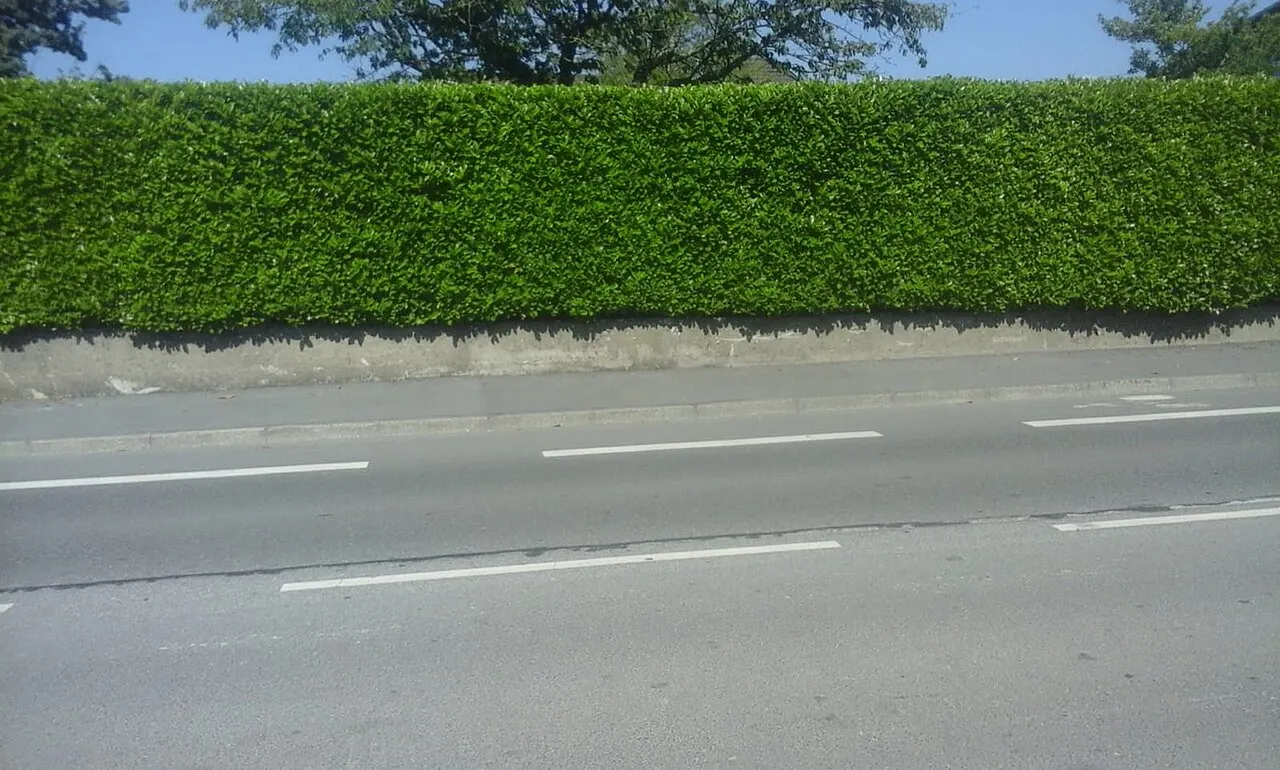

The short answer: twice a year, starting after flowering
Trim an established cherry laurel hedge twice during the growing season. That is the timing the RHS gives in its guide to pruning hedges. Box and privet, by comparison, get two or three trims.
Make the first cut straight after flowering. Cherry laurel (*Prunus laurocerasus*) carries fragrant white flowers in spring. The RHS guide to pruning evergreen shrubs puts laurels in a group that is pruned "immediately after flowering", and the RHS plant entry places that in late spring or early summer.
Make the second cut later in the growing season, once new growth has made the hedge look shaggy again. The RHS does not give a month for it.
Hard pruning has its own date. If the hedge has grown far too big, the RHS says laurels can be cut back severely just as growth begins in mid-spring.
What about Portugal laurel? The RHS evergreen guide treats *Prunus lusitanica* exactly like cherry laurel: same pruning group, same timing, and the same tolerance of hard cuts. Bay (*Laurus nobilis*), the culinary laurel, is a different plant and is not covered here.
Hedges: what to do and when
Under cover and outdoors, for UK conditions. The weather differs from year to year and from north to south, so check your local conditions too.
Why one RHS page says spring and another says summer
The three RHS pages read differently at first glance, but they describe the same year:
| RHS page | What it says for laurel |
|---|---|
| Pruning hedges | Twice during the growing season |
| Pruning evergreen shrubs | Immediately after flowering; severe pruning in mid-spring |
| Plant entry for *Prunus laurocerasus* | Late spring or early summer |
Our reading: the flowers set the date of the first trim. Cut too early in spring and you take the flower buds off; cut after flowering and you also stop the berries forming. The second trim tidies the summer growth.
Why not in autumn or winter? The RHS evergreen guide says most evergreens are pruned just before growth starts in mid-spring, after the risk of frost has passed, because pruning then "will avoid frost damage to new shoots". A cut that pushes out soft new growth just before winter works against that.
How tough is the plant? Very. The RHS rates cherry laurel H5, hardy in most places in the UK even in severe winters of −10 to −15 °C. It grows in full sun or partial shade, facing any direction, on chalk, clay, loam or sand. Left alone it reaches 4–8 m tall and spreads wider than 8 m over 20 to 50 years, which is why a hedge of it needs regular cuts.
Nesting birds come first
A dense laurel hedge is a favourite nesting site, and the trimming season overlaps the breeding season.
The law. The RHS points out that under the Wildlife & Countryside Act 1981 it is an offence to damage or destroy the nest of any wild bird while it is in use or being built.
The season. The RHS hedge guide gives the nesting season as usually March to August, adding that it can run longer.
What to do in practice:
- Before you start, stand still for a few minutes and watch for birds flying in and out. - Part the outer leaves and look into the hedge at several points along its length. - If you find an active nest, leave that stretch of hedge until the young have flown.
Our reading: both laurel trims fall inside the nesting season, so this check is part of every cut, not an occasional extra.
Secateurs or hedge trimmer?
Cherry laurel has big, glossy leaves, up to 15 cm long according to the North Wales Wildlife Trust. That changes how you cut it.
The RHS advice. For cherry laurel and other large-leaved hedges, prune individual stems with secateurs or loppers if you have the time. Hand shears and hedge trimmers cut through the leaves, and the cut leaf surfaces look unsightly.
When the hedge is long. The RHS frames secateurs as the choice "if you have the time". On a long hedge that may not be realistic. Our reading: use the trimmer for the face of the hedge, then go back with secateurs to the most visible stretch, such as the side facing the house.
Stay safe. The RHS gives a short checklist:
- Wear safety goggles and thick gloves, and clear obstacles from the ground first. - Do not use powered tools above shoulder height. - Work from a sturdy, stable tripod ladder, step ladder or platform. - Plug electric trimmers into a residual current device (RCD), keep the cable over your shoulder, and do not use them in damp conditions.
A very tall hedge can be difficult and unsafe to tackle yourself. The RHS suggests calling in a professional.
Getting the shape right
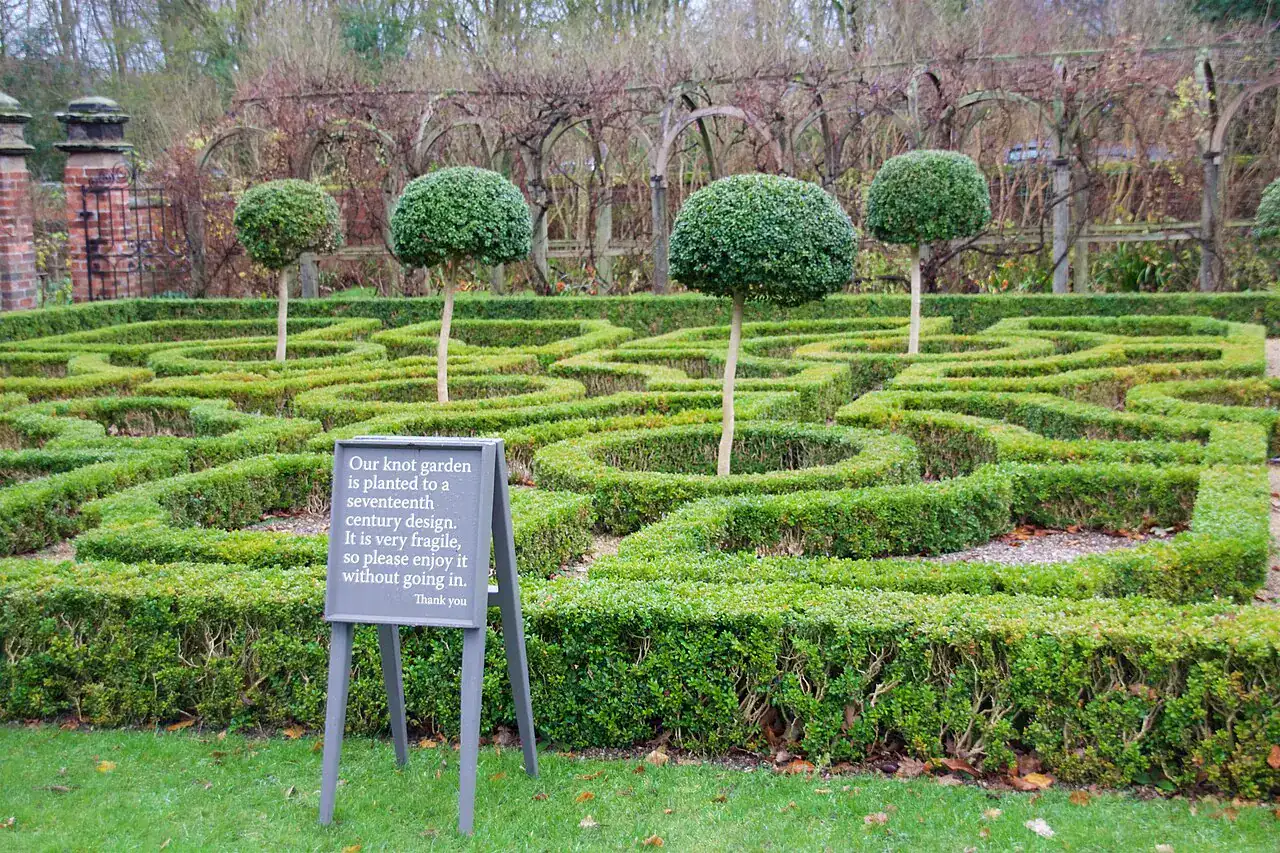

Wider at the bottom. The RHS says a formal hedge should taper slightly, so the base is wider than the top. This slope, called the batter, lets light reach the bottom of the hedge. Our reading: a top wider than the base shades the lower branches, which is how hedges go thin at the bottom.
A chamfered top. For a softer outline, the RHS describes a chamfer: the top of each side is cut at a 45° angle to meet the flat top.
Keep it narrow. A regularly trimmed vigorous hedge needs to be no more than 60 cm wide, the RHS says. Laurel spreads wider than 8 m when left alone, so the width needs as much attention as the height.
Formal or informal? The RHS says established informal hedges are usually trimmed once a year, and formal ones once, twice or three times. For informal hedges it again recommends secateurs or loppers, which give a looser, more natural finish. Our reading: a loose laurel screen at the end of the garden can get one trim after flowering; a crisp boundary hedge by the house needs the two trims the RHS gives for cherry laurel.
A new laurel hedge: the first two years
Young evergreen hedges are shaped differently from established ones. The RHS hedge guide gives the method:
1. Leave the leading shoot alone. Do not cut the main upright shoot of each plant until the hedge has reached the height you want. 2. Trim straggly side shoots. For evergreens other than conifers, do this in spring, for the first two years. 3. Then switch to the routine. From the third year, trim twice in the growing season like an established hedge.
Our reading: these early side-shoot trims are what make a laurel hedge dense right down to the ground. Laurel grows fast, and it is tempting to let it race up. A hedge that is bushy at knee height in year two will still be bushy there in year ten.
Cutting back an overgrown laurel hedge
Laurel is one of the most forgiving hedges to rescue. The RHS evergreen guide lists laurels, both *Prunus laurocerasus* and *P. lusitanica*, among the shrubs that tolerate severe pruning to near ground level, and says they can be cut back hard just as growth begins in mid-spring.
Why mid-spring? The RHS hedge renovation guide says evergreen hedges respond better when they are in active growth and the risk of frost has passed.
If you would rather go gently, the RHS renovation guide gives a three-year plan for hedges:
- Year one: cut the width back on one side only, to at least 15 cm less than the width you want, with a batter. Trim the other side as usual and leave the height. - Year two: cut the other side back the same way. - Year three: cut the height to at least 15 cm below the height you want.
The same guide says hedges that respond well can be reduced by as much as 50% in height and width in a single cut, and anything beyond that is better staged over two or three years. Its list of hedges that respond well names beech, box, hawthorn, holly, hornbeam, *Lonicera nitida* and yew, but not laurel. Laurel's tolerance of hard cuts comes from the RHS evergreen guide.
Aftercare. Allow a full growing season for recovery. The RHS evergreen guide recommends a general-purpose fertiliser and a mulch after renovation, and avoiding drought stress the following season. The hedge renovation guide says to feed only if regrowth is poor, to mulch with garden compost at least 5 cm thick between late autumn and late winter (November to February), and to water in long dry spells during the first growing season.
Before any hard cut, check again for nests. Mid-spring is well inside the nesting season.
For a small-leaved evergreen hedge, see when to prune honeysuckle, which covers *Lonicera nitida* hedges. For mulching in general, see mulching.
Clippings, berries and safety
Handle with gloves. The RHS plant entry says the seed kernels of cherry laurel are harmful if eaten, and advises gloves and other protective equipment when handling the plant. It also lists cherry laurel as harmful to dogs, rabbits and rodents if eaten. Keep clippings away from pets and from rabbit or guinea pig runs.
The berries. After the white flowers come glossy red fruits that turn black in autumn, the RHS says. A hedge trimmed straight after flowering produces few of them.
Why it matters beyond your garden. The GB Non-Native Species Secretariat says cherry laurel comes from south-eastern Europe, the Caucasus and western Asia, and that birds eat the fruit and spread the seeds in their droppings. It also spreads by layering, rooting where branches touch the ground. In woodland its dense shade crowds out other plants and stops trees regenerating.
Clippings. The North Wales Wildlife Trust advises against composting laurel berries or leaves at home. Take them to the council garden waste service instead.
Plant health. The RHS lists vine weevil and leaf-mining moths among laurel pests, powdery mildews among its diseases, and names cherry laurel as a high-risk host plant for the bacterium *Xylella fastidiosa*.
Common mistakes
Trimming before it flowers. You cut off the flowers and get berries from the rest. The RHS says to prune immediately after flowering.
Skipping the nest check. Both trims fall in the nesting season, which the RHS gives as usually March to August.
A hedge trimmer on show leaves. Shears and trimmers slice the big leaves, which then look unsightly. The RHS prefers secateurs or loppers.
A top wider than the base. Light no longer reaches the bottom of the hedge. Give the sides a batter, as the RHS advises.
Letting the width run away. The RHS keeps a regularly trimmed vigorous hedge to 60 cm wide.
Composting the clippings with berries on. Use the council green waste service, as the North Wales Wildlife Trust advises.
A laurel hedge through the year
| When | Job |
|---|---|
| Mid-spring, as growth begins | Hard renovation of an overgrown hedge |
| Spring, first two years | Young hedge: trim straggly side shoots, leave the leading shoot |
| Straight after flowering (late spring or early summer) | First trim of the year |
| Later in the growing season | Second trim |
| Usually March to August | Nesting season: check before every cut |
| Late autumn to late winter (Nov to Feb) | Mulch a renovated hedge at least 5 cm deep |
How to do it
- Wait until the white flower spikes have faded.
- Look carefully into the hedge for active nests. If you find one, stop and come back later.
- Put on gloves and safety goggles, and clear the ground at the foot of the hedge.
- Cut stem by stem with secateurs or loppers if you have the time. Shears and trimmers slice through the big leaves.
- Keep the base a little wider than the top, so light reaches the bottom.
- Bag the clippings for the council garden waste collection rather than the home compost heap.
Common questions
When is the best time to cut a laurel hedge in the UK?
Straight after it flowers, in late spring or early summer, then once more later in the growing season. The RHS gives cherry laurel two trims a year. Check for nesting birds before each one.
Can I cut a laurel hedge in winter?
The RHS times laurel pruning after flowering, and hard renovation in mid-spring once frost risk has passed. It advises pruning evergreens then to avoid frost damage to new shoots, so winter is not the time.
Can you cut laurel back hard?
Yes. The RHS lists cherry laurel and Portugal laurel among the shrubs that tolerate severe pruning to near ground level. Do it in mid-spring, just as growth begins, then mulch and water through the next season.
Should I use a hedge trimmer on laurel?
The RHS prefers secateurs or loppers on cherry laurel, because shears and trimmers leave cut leaves that look unsightly. On a long hedge, a trimmer followed by a tidy-up with secateurs is a fair compromise.
Is it illegal to cut a hedge in nesting season?
Cutting a hedge is not banned, but damaging or destroying an active nest is an offence under the Wildlife & Countryside Act 1981, the RHS says. Check carefully before you cut, and wait if you find one.
Sources
We wrote this page using the sources below.
- Pruning hedges, Royal Horticultural Society (RHS)
- Shrubs: pruning evergreens, Royal Horticultural Society (RHS)
- Hedges: renovation, Royal Horticultural Society (RHS)
- Prunus laurocerasus (cherry laurel), Royal Horticultural Society (RHS)
- Cherry laurel, Prunus laurocerasus, GB Non-Native Species Secretariat
- Cherry laurel, North Wales Wildlife Trust