
 Garlic Growing and care
How to grow garlic
Garlic sits in the ground through the winter and asks for very little. Sun, drainage and a row kept clear of weeds are most of it.
In short
Grow garlic from cloves in a warm, sunny spot with well-drained soil. Plant from mid-autumn to early winter, 15 cm apart, with the tip 2.5 cm deep. Weed by hand, water in dry spells in spring and early summer, remove flower stems, and lift when the leaves turn yellow.

What garlic needs
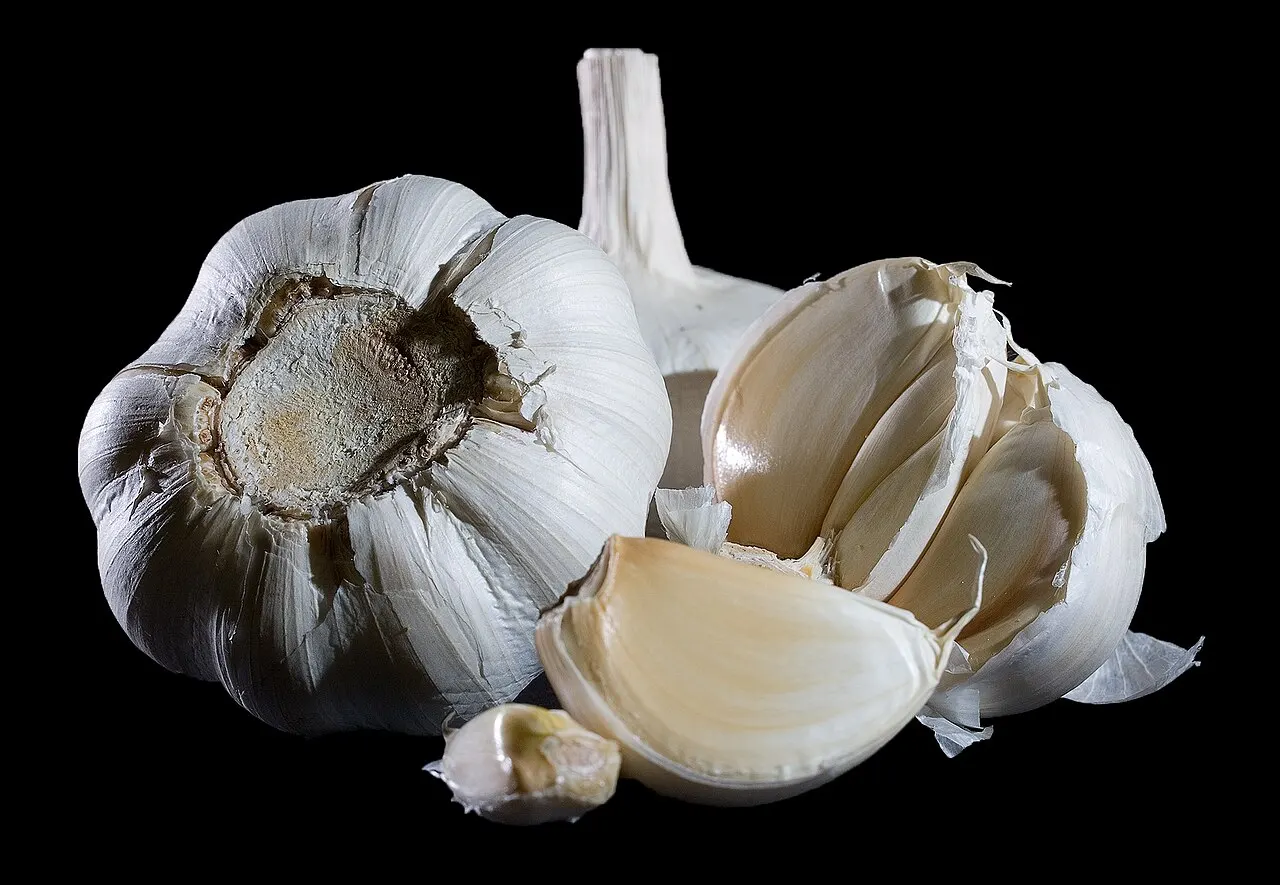
Garlic is grown from cloves, not seed. The RHS asks for a warm, sunny spot with well-drained soil. It is planted in autumn and harvested the following late spring or summer, and it needs a cold spell on the way to form a good bulb.
Garden Organic rates it as easy. Its guide asks for a sunny spot where the ground does not stay too wet, and lists one piece of equipment: an airy shed.
The plant is small. Garden Organic gives a mature size of about 30 cm tall and 5–10 cm wide.
When to plant, how deep and which type to choose are covered in when to plant garlic. This page is about everything around that: the soil, the months of care, the things that go wrong.
Garlic: what to do and when
Under cover and outdoors, for UK conditions. The weather differs from year to year and from north to south, so check your local conditions too.
Soil: drainage first
Wet soil is the main risk. The RHS says wet soil raises the risk of disease, especially for garlic planted in autumn. Garden Organic is blunter: garlic rots in wet soil.
If your soil is heavy and wet over winter, the RHS starts the cloves in modules instead. Plant one clove per module in peat-free compost in autumn, with about 2.5 cm of compost over the tip. Keep the tray in an unheated greenhouse, a cold frame or a sheltered spot outdoors. The RHS calls a well-ventilated cold frame ideal. Keep the compost slightly moist, not wet, and plant out in spring, 15 cm apart. Garden Organic does the same in a cool greenhouse and plants out when the weather improves.
Acidity. Garlic does not like very acid soil, the RHS says, which it gives as below pH 6. You can reduce acidity by applying lime in autumn or winter. Test the pH first to see whether it is needed.
Organic matter. The RHS removes the weeds, then applies about two bucketfuls of well-rotted manure or homemade garden compost per square metre. It stresses well-rotted, not fresh. Garden Organic also mixes in well-rotted organic matter before planting.
No-dig. The RHS mulches the soil with organic matter ahead of planting, and plants directly into the mulch. Its glossary note describes a mulch as a layer at least 5 cm thick.
Planting, in short

The RHS plants from mid-autumn to early winter. Most varieties need one to two months at 0–10 °C. Garden Organic plants from November to February and calls autumn the best time, since it tends to give higher yields.
Separate the bulb into cloves. Plant each one flat end down and pointed end up, with the tip about 2.5 cm below the surface. The RHS spaces the cloves 15 cm apart in rows 30 cm apart.
The sources differ on spacing and depth. Garden Organic plants closer, 10 cm apart in rows 20 cm apart. It plants 2.5 cm deep in heavy clay soil and up to 10 cm deep in sandy soil. The RHS agrees on the principle: in light soil, deeper planting can give larger bulbs, but avoid deep planting in heavy soil.
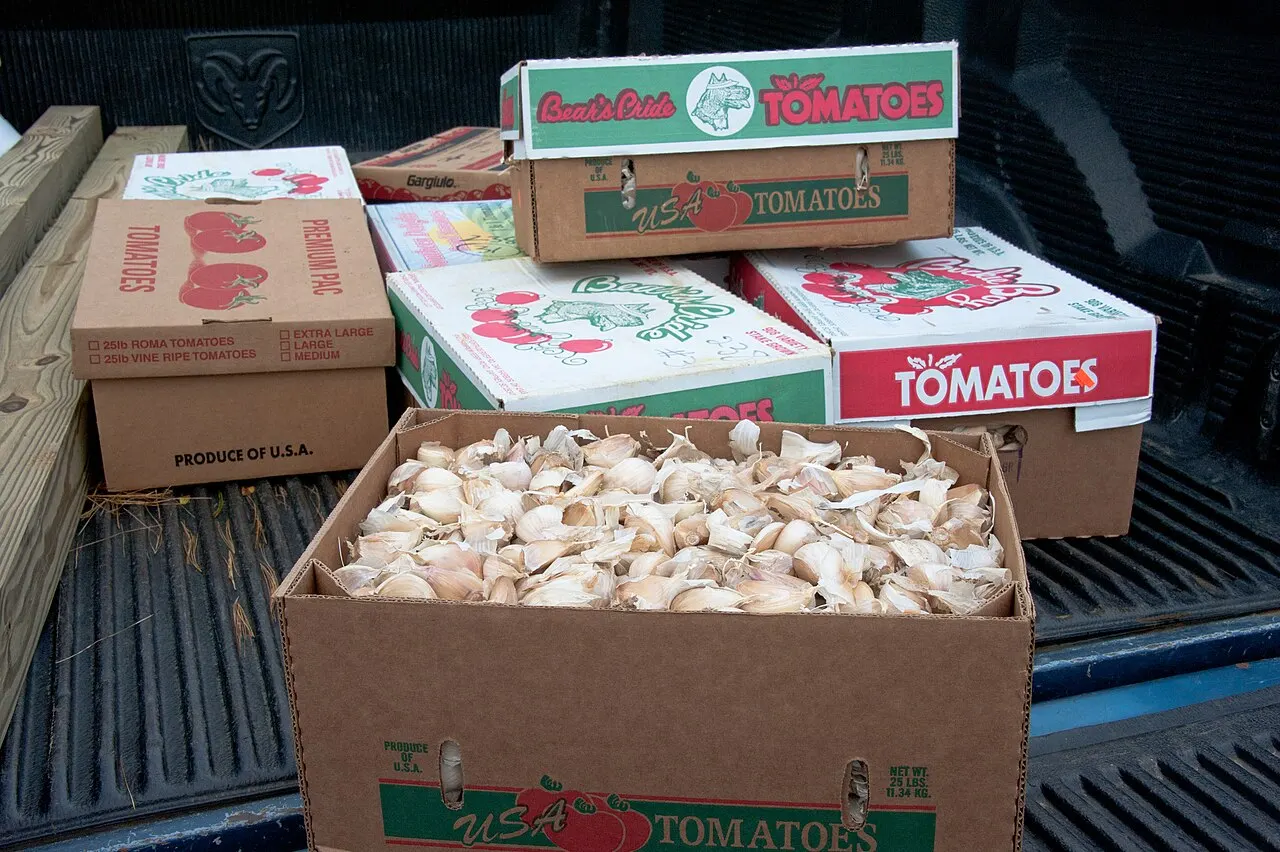
Buy proper planting garlic. The RHS says to buy named varieties from garden centres or mail-order suppliers and to avoid supermarket bulbs, which may not suit the British climate and carry a risk of disease. Garden Organic buys from trusted, organic suppliers and warns that supermarket garlic may have been treated with growth inhibitors.
Birds. Cover new plantings with netting or fleece, the RHS says, to stop birds pulling the cloves up. Leave it on until the roots have established.
Garlic: growing conditions
Allium sativum
- Position
- Warm and sunny
- Soil
- Well-drained, not very acid (below pH 6)
- Spacing
- 30 cm between rows, 15 cm apart in the row, RHS. Garden Organic: 10 cm apart in rows 20 cm apart
- Plant
- Mid-autumn to early winter
- Harvest
- May to August (Garden Organic)
- Watering
- In dry spells in spring and early summer
- Height
- About 30 cm (Garden Organic)
- Difficulty
- Easy
Weeding
The RHS says garlic needs little maintenance, apart from watering during prolonged dry spells and weeding to prevent overcrowding. Its guide to watering vegetables adds that onions, garlic and leeks do not cope well with competition from weeds.
By hand. The RHS weeds regularly to keep the plants in full sun, ideally by hand, since hoeing can damage the bulbs.
Or prevent the weeds. The RHS gives two ways to cut the work.
- Cover the soil with a biodegradable weed-suppressing membrane before planting, and plant the cloves through slits in it. - Lay a mulch, such as cardboard, between the rows.
Garden Organic simply says to keep the bed weed free.
Watering and feeding
When to water. To improve the size of the bulbs, the RHS waters garlic during dry spells in spring and early summer.
When to stop. Do not water once the bulbs are large and well formed, the RHS says, as this could encourage rotting. Yellowing foliage is the sign that the bulbs are reaching that stage. Garden Organic gives the same rule: avoid watering once the bulb has formed.
How. Try to avoid wetting the leaves when you water. The RHS says wet leaves can encourage fungal problems.
Feeding. Neither the RHS garlic guide nor the Garden Organic guide gives any feeding advice for garlic in the ground beyond the manure or compost dug in before planting. We have not added one.
There is a reason to be careful with fertiliser. The RHS guide to leek rust says infection is worse on nitrogen-rich soils with low potassium.
Flower stems, leaves and other extras
Flower stems. Hardneck garlic readily produces flower stems, the RHS says. Softneck garlic does so only occasionally, due to poor growing conditions such as high temperatures or drought.
Remove any flower stems as soon as they start to form. The RHS notes that a bulb left to flower will not store well. The stems, called scapes, are a crop in themselves if picked young while the flower is still in bud.
Green leaves. While the bulbs are still growing, the RHS says you can harvest a few of the green leaves to use as a garnish or in salads.
Top sets. Sometimes cloves form on the stalk. The RHS calls these top sets and puts them down to changeable weather in spring. They can be used in the normal way.
Garlic in pots
The RHS suggests containers if your soil does not drain well, or if you are short of space.
- Use peat-free multi-purpose compost. - Choose pots at least 25 cm deep. Their width and length decide how many cloves you can plant. - Use the same spacing and depth as in the ground. - Check the watering regularly. Compost in containers can dry out quickly.
Leek rust on garlic
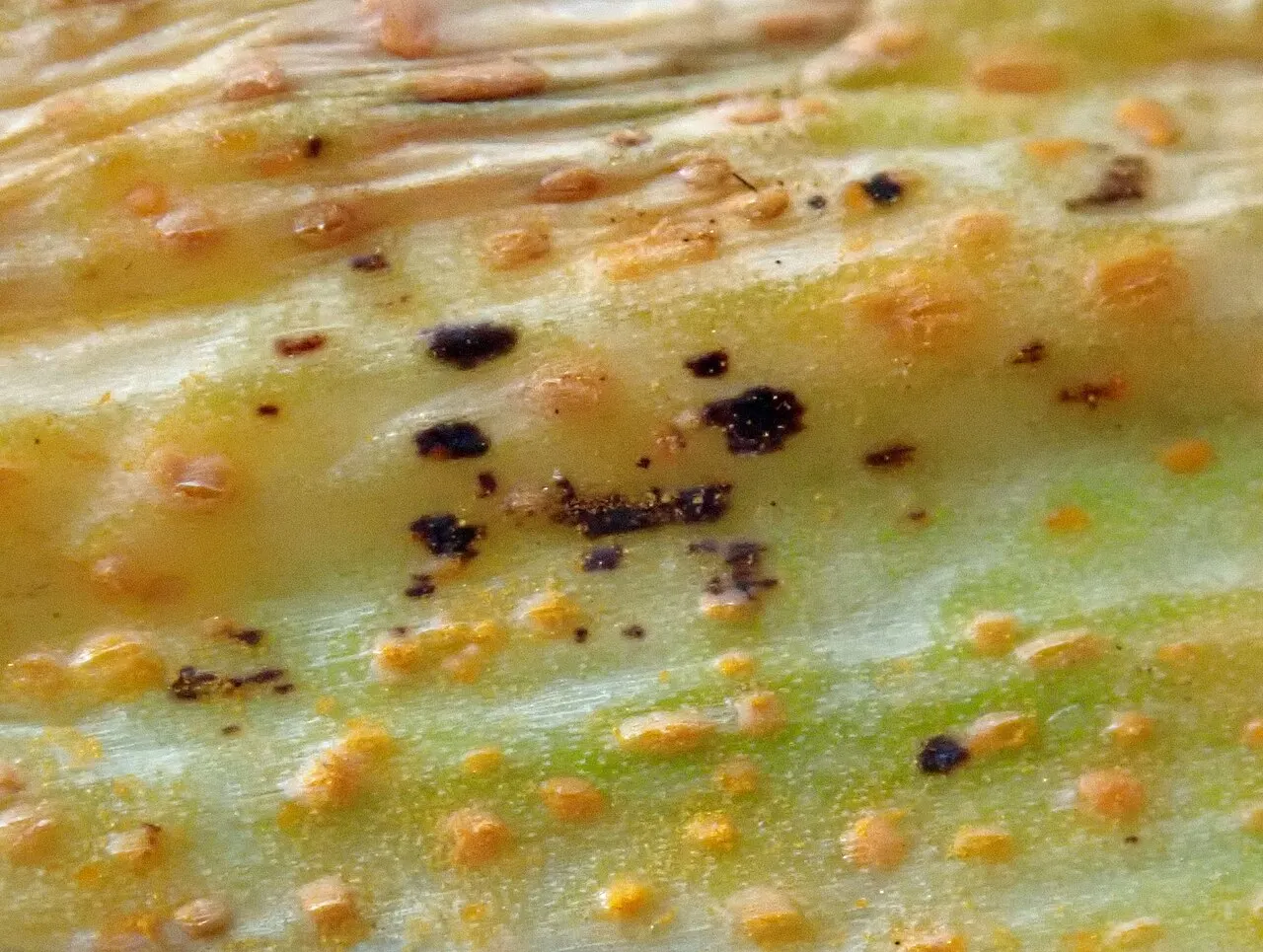

Leek rust is a fungal disease, and the RHS says it can be serious on leeks, garlic and chives in the UK. Garlic is susceptible to both the form that infects leeks and the form that infects chives.
What you see. Bright orange pustules on both sides of the leaves. They break open and release dusty, orange spores that travel on the air.
When. Most attacks occur from mid-summer until late autumn.
How bad. The RHS says rusts do not directly kill the tissue they infect. A severe attack can make the leaves shrivel early and reduce the vigour of the plant.
What helps.
- Do not crowd the plants. Crowding raises humidity and makes infection more likely. - Take care with fertiliser, because of the link with nitrogen-rich soil that is low in potassium. - Dispose of all plant debris at the end of cropping.
The RHS says no fungicides are approved for amateur gardeners against leek rust.
White rot and the other problems
Onion white rot is the serious one. The RHS says it affects onions, garlic, leeks and other alliums. The foliage yellows and wilts, especially in dry weather. Below ground the roots rot, and a white, fluffy growth forms at the base of the bulb, later covered in small, round, black structures. Look for it from mid-summer until early autumn.
The fungus can remain in the soil for at least 15 years, and the RHS says that once introduced it is effectively impossible to eliminate. It spreads in contaminated soil, on tools and muddy footwear, and allotments are a place where that happens easily. No chemical treatments are available to gardeners. The priority is not to bring it in.
Allium leaf miner. A fly whose maggots tunnel through the foliage, stems and bulbs of leeks, onions, chives, shallots and garlic. The first sign is lines of white dots on the leaves. The RHS covers plants with insect-proof mesh while the adult flies are active, in March to April and September to November, and rotates the crop.
Also on the RHS list for garlic: onion downy mildew, leek moth, whose caterpillars damage the plants, and onion fly, whose maggots damage roots and bulbs.
If you use any plant protection product, use only products approved in the UK, used as the label says.
Odd bulbs and what caused them
When you lift the crop you may find some surprises. The RHS explains each one.
- A bulb that has not divided into cloves. Usually the result of too little cold over winter. - Green cloves. Usually caused by shallow planting. They are edible but store poorly. - Split bulbs. Usually caused by harvesting late. - Elephant garlic with a single round bulb. Early planting reduces these solo bulbs. You can eat them, or replant them the following autumn.
Harvest
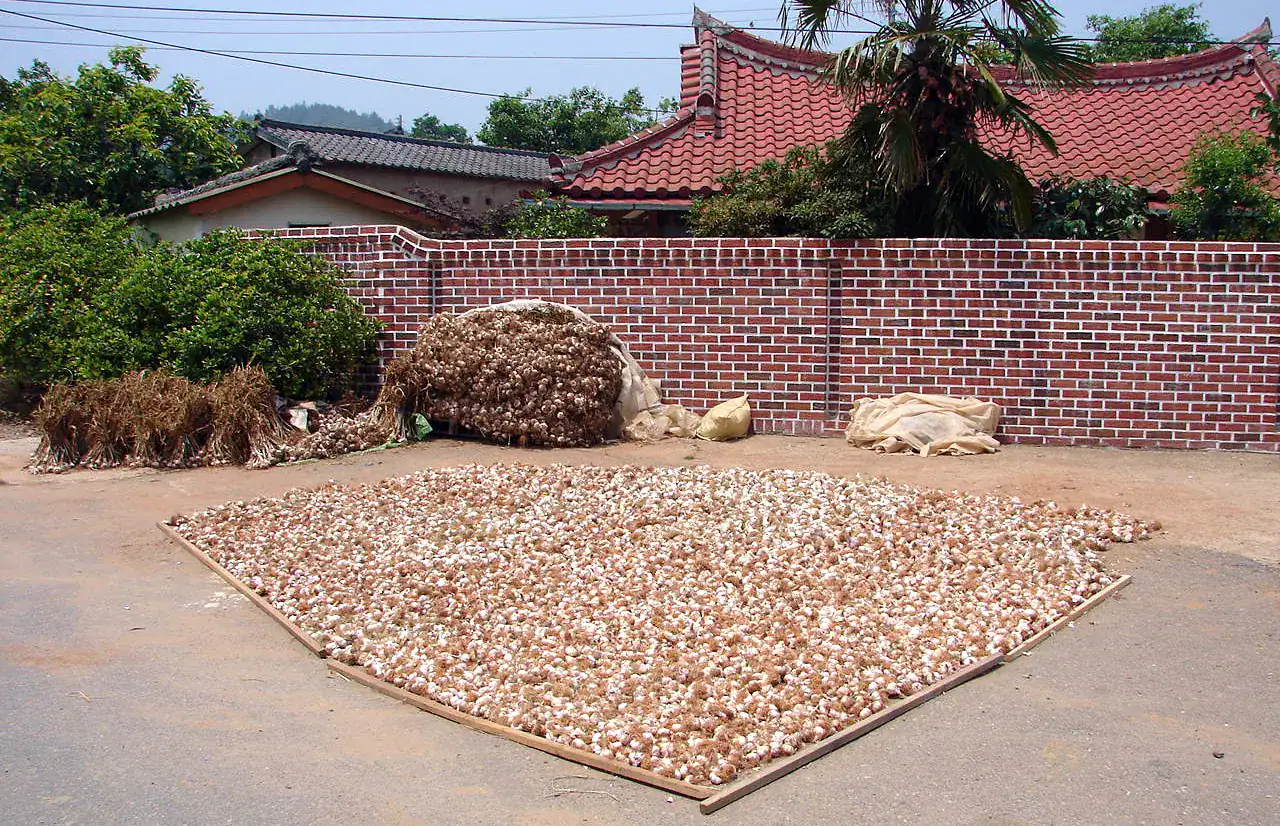

Garlic is ready when the leaves turn yellow, the RHS says. Autumn-planted garlic reaches that point from late spring to early summer, and spring-planted garlic from mid-summer to early autumn. Garden Organic gives a harvest of May to August and digs the bulbs when the first four to six leaves turn yellow. It puts the average time to harvest at 20 weeks.
Do not delay. The RHS says bulbs lifted late split and store poorly. Lift them with a fork and handle them gently to avoid bruising.
Then the bulbs need drying, for two to four weeks in the RHS guide. The signs, the lifting, the drying and the storing are covered step by step in when to harvest garlic.
Growing onions too? They share several pests and diseases. See when to plant onion sets.
Cheat sheet: growing garlic
| What | Advice |
|---|---|
| Site | Warm and sunny, with well-drained soil |
| Soil | Not very acid (below pH 6). About two bucketfuls of well-rotted manure or garden compost per square metre |
| Planting | Mid-autumn to early winter, tip about 2.5 cm deep, 15 cm apart, rows 30 cm apart |
| Closer spacing | 10 cm apart in rows 20 cm apart |
| Watering | In dry spells in spring and early summer. None once the bulbs are large and well formed |
| Weeding | Regularly, ideally by hand |
| Flower stems | Remove as soon as they start to form |
| Pots | At least 25 cm deep, peat-free multi-purpose compost |
| Harvest | When the leaves turn yellow |
How to do it
- Choose a warm, sunny site with free-draining soil. If the soil is very acid, lime it in autumn or winter.
- Remove the weeds and dig in about two bucketfuls of well-rotted manure or garden compost per square metre.
- From mid-autumn to early winter, split the bulb and plant each clove flat end down, tip about 2.5 cm below the surface, 15 cm apart.
- Cover the bed with netting or fleece until the cloves have rooted, so birds cannot pull them up.
- Weed regularly, by hand if you can.
- Water in dry spells in spring and early summer, without wetting the leaves.
- Remove any flower stems as soon as they start to form, and eat them.
- Stop watering once the bulbs are large and well formed.
- Lift the bulbs with a fork when the leaves turn yellow.
Common questions
Is garlic easy to grow?
Yes. Garden Organic rates it as easy, and the RHS says garlic needs little maintenance apart from watering in prolonged dry spells and weeding. The main needs are sun and soil that does not stay wet.
How often should I water garlic?
The RHS waters during dry spells in spring and early summer to improve bulb size, and stops once the bulbs are large and well formed, as more water could encourage rotting.
Does garlic need feeding?
The RHS digs in about two bucketfuls of well-rotted manure or garden compost per square metre before planting. Neither the RHS nor the Garden Organic garlic guide gives any feeding advice after that.
Should I cut the flower stems off garlic?
Yes. The RHS removes flower stems as soon as they start to form, and says a bulb left to flower will not store well. Picked young, the stems are good to eat.
Can I grow garlic in pots?
Yes. The RHS uses pots at least 25 cm deep filled with peat-free multi-purpose compost, with the same spacing and depth as in the ground. Check the watering regularly.
What are the orange spots on my garlic leaves?
Leek rust. The RHS describes bright orange pustules on both sides of the leaves, mostly from mid-summer until late autumn. Do not crowd plants, and take care with nitrogen-rich fertiliser.
Sources
We wrote this page using the sources below.
- How to grow garlic, Royal Horticultural Society (RHS)
- Garlic (growing guide), Garden Organic
- Leek rust, Royal Horticultural Society (RHS)
- Onion white rot, Royal Horticultural Society (RHS)
- Allium leaf miner, Royal Horticultural Society (RHS)
- Watering vegetables and fruit, Royal Horticultural Society (RHS)