
 Carrots Growing and care
How to grow carrots
Carrots ask for very little once they are up. Most of the work is done before you sow, in the soil, and most of the trouble comes from one small fly.
In short
Grow carrots in sun, in light, well-drained, stone-free soil. Sow thinly where they are to grow, thin to 5–7.5 cm, hoe between the rows and hand weed close to the plants. Water only in long dry spells. Lift them about 12–16 weeks after sowing.

What carrots need
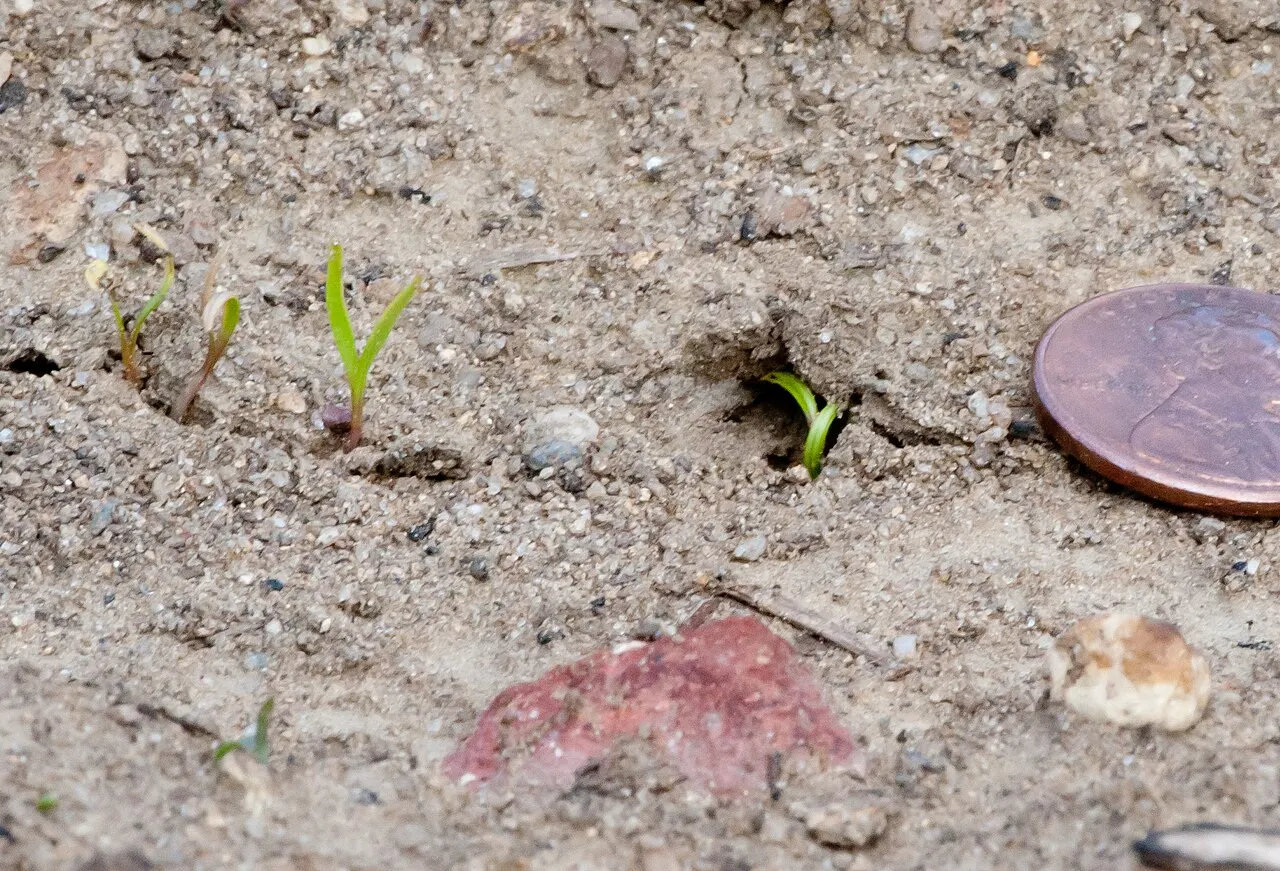
Carrots are an easy crop. The RHS says they are straightforward to grow from seed, take up little space and can be grown in containers. Its guide sums up their needs in one line: carrots like sun and light, well-drained soil, and are drought resistant.
Garden Organic says much the same in an answer to a member whose carrots never grew bigger than a thumb. Carrots do best in medium to light, stone-free soil in a sunny, open site, with a pH of 6.5 to 7.5. Heavy soil is poor for them.
So the list is short: sun, a loose soil without stones, and not too much richness. The rest of this page takes those one at a time, then the care through the season.
Sowing dates have a page of their own. See when to sow carrots for the calendar, depth and spacing.
Carrots: what to do and when
Under cover and outdoors, for UK conditions. The weather differs from year to year and from north to south, so check your local conditions too.
Getting the soil right
Most carrot problems start in the soil, so this is where the effort pays.
Break it up. The RHS weeds the ground thoroughly, then forks it over to break up any hard lumps. It removes any stones and rakes the bed to a fine texture. Stony ground, it says, can cause the roots to fork or become misshapen.
Match the carrot to the soil. Stony, shallow or heavy clay soil can cause long-rooted carrots to become misshapen, the RHS says. Short-rooted types should fare better in these conditions. Long-rooted varieties are suitable for deep, sandy soil. Garden Organic agrees: choose deep sandy soil for long, straight roots. Its answer on small carrots adds that some varieties only make short, stubby roots, and that these suit heavy soil better.
No-dig beds. The RHS mulches the surface and sows a short-growing variety directly into the mulch. Its glossary note describes a mulch as a layer at least 5 cm thick, put down in late autumn to late winter, which it gives as November to February.
Move the row each year. The RHS says to avoid sowing in ground that has recently been used for carrots. Its carrot fly guide calls crop rotation essential when you cover the crop with mesh, because adult flies may emerge from pupae that overwintered in the soil.
A wonky carrot is not a failure, by the way. The RHS says forked carrots are just as tasty, only harder to clean and slice.
Do carrots need feeding?
Very little. The RHS carrot guide gives no feeding advice at all for carrots in the ground.
Garden Organic explains why you can leave the fertiliser in the shed. Carrots are not heavy feeders, it says, and they often do well in soil that was manured for the previous year's crop.
Garden Organic also has one warning about what goes into the bed beforehand. A green manure that has been dug in recently can hurt germination.
Containers are different. For carrots in a pot, the RHS adds nutrients at the start. It mixes garden compost into the bottom half of the container, or adds a slow-release fertiliser to the compost.
Carrots: growing conditions
Daucus carota
- Position
- Sun
- Soil
- Light, well-drained, stone free
- Soil pH
- 6.5 to 7.5 (Garden Organic)
- Spacing
- 15 cm between rows, 5 cm apart in the row, rows 15–30 cm apart, plants thinned to 5–7.5 cm (RHS)
- Sow
- April to early July, early varieties from February under cloches
- Harvest
- June to November (Garden Organic)
- Watering
- Seldom. A good soak every fortnight in long dry spells
- Difficulty
- Easy
Thinning and weeding
Thinning. The RHS thins the seedlings if necessary, aiming for plants 5–7.5 cm apart. Garden Organic thins to 7 cm, and in its answer on small carrots gives about three inches for larger roots.
There is a catch. The RHS carrot fly guide says that removing surplus seedlings can attract egg-laying female flies, because they respond to the smell released. Its answer is to sow sparsely, so that there is little or nothing to thin. Garden Organic says to remove the thinnings so they do not attract carrot fly.
Weeding. The RHS says to hoe between the rows, but to hand weed close to the plants, so that you do not damage the top of the root. Garden Organic removes weeds by hand as well.
The smell matters here too. The RHS says to try to avoid touching the foliage when you weed, as the smell attracts carrot fly.
Slugs and snails. Carrot seedlings are vulnerable to slugs and snails, the RHS says. Protect the seedlings from them if possible.
Watering: less than you think
Carrots are one of the few vegetables that you can mostly leave alone with the watering can.
The RHS says carrots are drought resistant, so they seldom need watering. In long dry spells they will benefit from a good soaking every fortnight. Garden Organic gives the same rhythm: water fortnightly in dry weather for steady growth.
The RHS guide to watering vegetables puts carrots with beetroot and parsnips. These, it says, require watering before the soil becomes dry.
Steady is the word. Split roots are the price of uneven watering. The RHS says the roots can split if moisture levels vary a lot. Garden Organic describes how it happens: if carrots are left dry for too long, sudden watering or rain can cause the roots to split open. The RHS watering guide adds that too much water can cause root vegetables such as carrots to split.
So do not let the bed go bone dry for weeks and then flood it. A soak every two weeks through a dry spell keeps the growth even.
Carrots in containers are the exception. The RHS says they should be watered regularly, as containers dry out quickly.
Carrots in pots
If your soil is heavy or full of stones, a pot gets round the problem. The RHS says carrots grow well in containers filled with peat-free multi-purpose compost.
The container. In its guide to an edible container of baby carrots, the RHS uses containers that are ideally more than 20 cm deep, and gives a pot 25 cm in diameter as one option. The carrot guide adds that small, round-rooted varieties suit most containers. Long-rooted carrots need deep containers. Or grow them in a shallow pot and pull them young as baby carrots.
Sowing. Scatter the seed thinly and cover it. The carrot guide gives about 1 cm of compost and the container guide 1.5 cm. For baby carrots in a pot, the RHS aims for seedlings about 3 cm apart, much closer than in a bed.
Care. Put the pot in a sunny spot. As the plants grow they need more water, the RHS says, daily if the weather is dry.
Picking. Start harvesting as soon as the carrots are finger-thick. Pull some first, so that the ones left behind can grow larger.
For pots, the RHS suggests quick-maturing early selections and names 'Amsterdam Forcing', 'Mignon' and 'Ideal'.
Carrot fly, the one real enemy
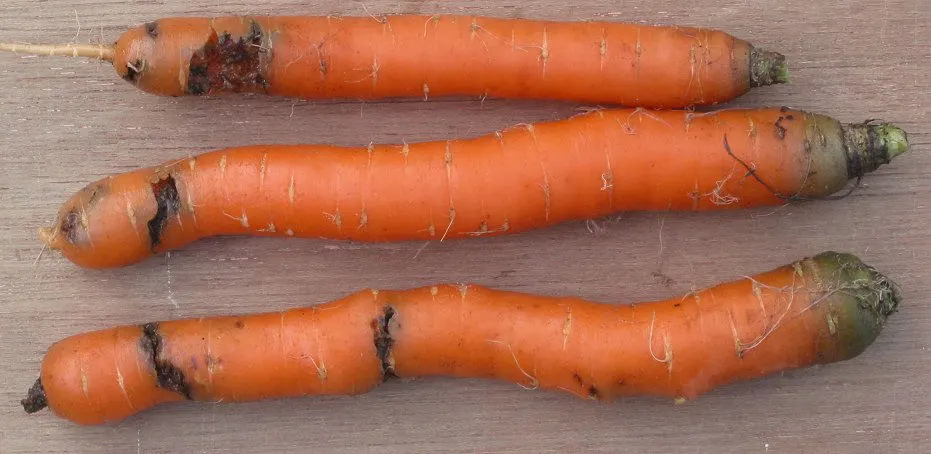

The RHS calls carrots generally easy and trouble free. Carrot fly is the exception. Its larvae, the RHS says, can make a large proportion of carrots and allied vegetable crops inedible.
What you see. Rusty brown scars that ring the tap root. Cut into the root and you find tunnels, often with slender, creamy-yellow maggots up to 9 mm long. The scarred roots are inedible and prone to rots.
When it strikes. Eggs are laid in late May to June and again in August to September, the RHS says. Two or three generations develop between late spring and autumn.
What works. The RHS gives these.
- Insect-proof mesh. Cover the crop entirely. RHS research found that a complete covering works better than a barrier around the edge. Rotate the crop as well, or flies may emerge under the cover. - Timing. Carrots sown after mid-May avoid the first generation. Carrots harvested before late August avoid the second. - Less susceptible varieties. The RHS names 'Fly Away', 'Maestro', 'Resistafly' and 'Sytan'. It calls them less susceptible, not fully resistant. - Nematodes. A mix of pathogenic nematodes can be watered into the soil to control young larvae. The RHS notes that these also affect other insects in the soil.
Garden Organic adds two more ideas: sow companion plants such as parsley to muffle the carrot aroma, and grow in containers so that the crop is raised above the ground. The RHS carrot fly guide does not mention companion planting, so that tip rests on Garden Organic alone.
If you do use any product, use only products approved in the UK, used as the label says.
Other things that go wrong
The RHS list of carrot problems is short.
Forked or misshapen roots. Stony ground is the cause it names. Remove the stones before sowing, or grow round-rooted types.
Split roots. Sometimes found at harvest, after moisture levels have varied a lot. See the watering section above.
Mice and voles. The RHS describes them as small rodents that sometimes damage garden plants, and lists them among carrot problems.
Wireworms. These are the larvae of click beetles. The RHS says some species live in the soil and feed on plant roots.
Tiny carrots. If the roots stay the size of a matchstick, go back to the Garden Organic checklist: light soil without stones, a sunny and open site, thin sowing, thinning, weeds kept down and water in dry weather.
Varieties the RHS recommends
Carrots come in many sizes and shapes, the RHS says, and in purple, white and yellow as well as orange. For reliability it points to varieties with its Award of Garden Merit (AGM). Its carrot guide lists six.
- 'Adelaide': an early variety that can be sown in February or March under cloches. - 'Sweet Candle': main season, popular and high yielding. - 'Sugarsnax 54': main season, very sweet, good as baby or full-size carrots. - 'Flyaway': main season, with good carrot fly resistance. - 'Deep Purple': main season, purple. - 'Marion': main season, also suited to year-round growing.
The RHS sows early varieties from early spring and main-season varieties from late spring to mid-summer. Carrot seed is cheap, it adds, and a packet holds plenty.
For long roots on good soil, Garden Organic suggests 'James Scarlet Intermediate' or 'Flakkee'.
Harvesting
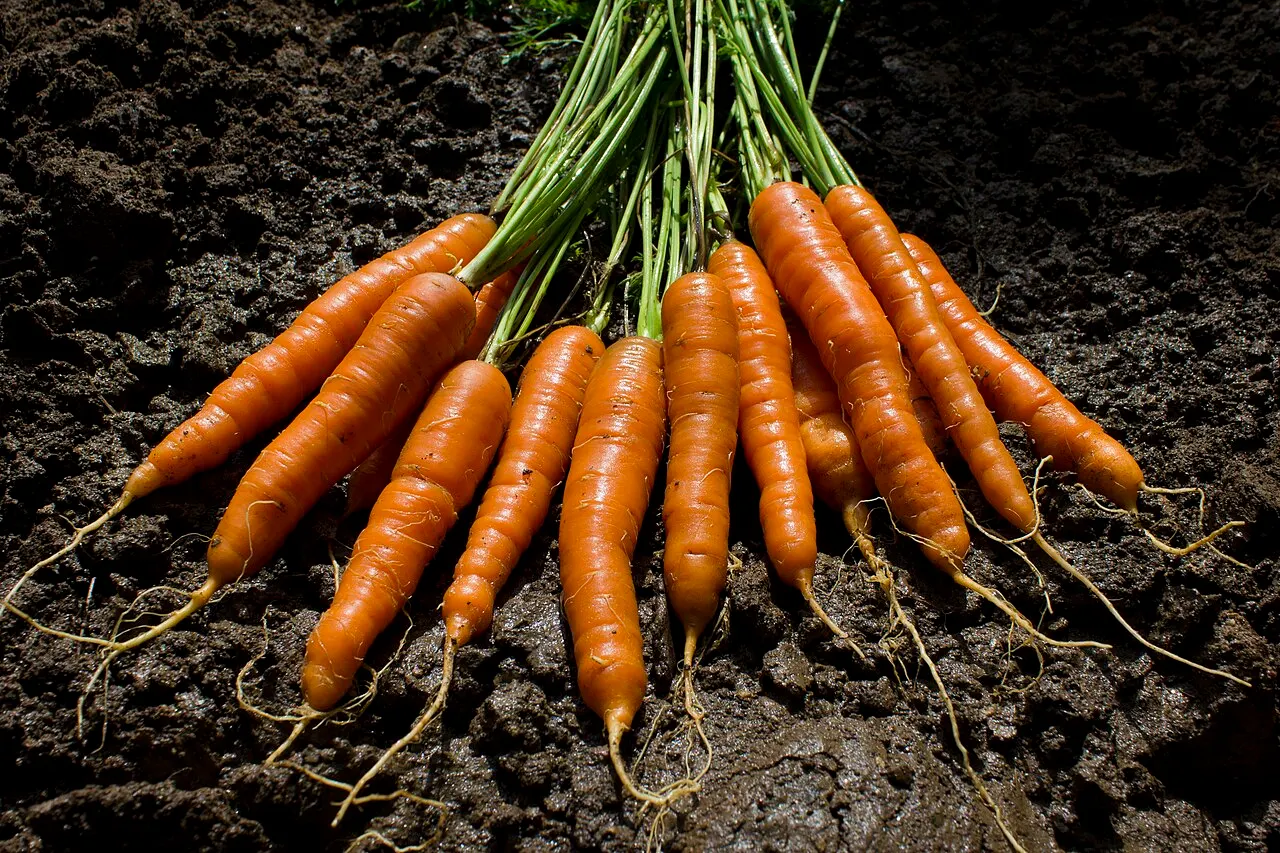

Carrots are ready about 12–16 weeks after sowing, the RHS says. Baby carrots take four to six weeks. Garden Organic starts lifting roots 12–16 weeks after sowing, when they are small, and gives a harvest season of June to November.
Do not wait for giants. The RHS says to harvest as soon as the roots are large enough to use, and not to aim for the biggest roots, as flavour tends to decline. Spring sowings are best young, sweet and crunchy.
Use a fork. Lift carrots carefully with a fork to avoid snapping them, the RHS says, especially if your soil is heavy. Garden Organic twists off the leaves rather than cutting them.
Main-season carrots can be harvested through summer into early autumn, or left in the ground into winter and lifted as needed. Leaving them under straw, boxing them in sand and building a clamp are all covered in how to store carrots.
Cheat sheet: growing carrots
| What | Advice |
|---|---|
| Site | Sun, and light, well-drained soil |
| Soil | Medium to light, stone free, pH 6.5 to 7.5 |
| Feeding | Not heavy feeders. Often do well in soil manured for the previous year's crop |
| Thin to | 5–7.5 cm apart (RHS), 7 cm (Garden Organic) |
| Watering | Seldom needed. A good soaking every fortnight in long dry spells |
| Weeding | Hoe between rows, hand weed close to the plants |
| Pots | Ideally more than 20 cm deep, watered daily in dry weather |
| Carrot fly | Cover the whole crop with insect-proof mesh |
| Ready | About 12–16 weeks after sowing |
How to do it
- Choose a sunny bed with light, well-drained soil. On stony, shallow or heavy clay soil, pick a short-rooted variety.
- Weed thoroughly, fork the bed over, take out the stones and rake it to a fine texture.
- Sow thinly in a drill about 1 cm deep, straight into the bed. Carrots are not transplanted.
- Cover the row with insect-proof mesh if carrot fly is a problem in your garden.
- Thin the seedlings to 5–7.5 cm apart and take the thinnings away.
- Hoe between the rows and weed by hand close to the plants. Try not to brush the leaves.
- In a long dry spell, give the row a good soaking every fortnight.
- Lift with a fork as soon as the roots are big enough to use, about 12–16 weeks after sowing.
Common questions
Are carrots easy to grow?
Yes. The RHS says carrots are straightforward to grow from seed, take up little space and are generally easy and trouble free, especially when harvested young. The two things to get right are a light, stone-free soil and protection from carrot fly.
How often should I water carrots?
Seldom. The RHS says carrots are drought resistant and, in long dry spells, benefit from a good soaking every fortnight. Carrots in containers need regular watering, daily in dry weather.
Do carrots need fertiliser?
The RHS carrot guide gives no feeding advice for carrots in the ground. Garden Organic says carrots are not heavy feeders and often do well in soil manured for the previous year's crop.
Why are my carrots forked?
The RHS says stony ground can cause the roots to fork or become misshapen. Remove stones before sowing, or grow short or round-rooted types on stony, shallow or heavy clay soil.
Why have my carrots split?
Uneven moisture. The RHS says roots can split if moisture levels vary a lot, and Garden Organic says sudden watering or rain after a long dry period can split them open.
Can I grow carrots in pots?
Yes. The RHS grows them in peat-free multi-purpose compost, ideally in containers more than 20 cm deep. Small, round-rooted varieties suit most pots, and long-rooted ones need deep containers.
Sources
We wrote this page using the sources below.
- How to grow carrots, Royal Horticultural Society (RHS)
- Carrot fly, Royal Horticultural Society (RHS)
- Grow your own baby carrots, beetroots and onions in a pot, Royal Horticultural Society (RHS)
- Watering vegetables and fruit, Royal Horticultural Society (RHS)
- How to grow carrot (growing guide), Garden Organic
- Small carrots (members' question), Garden Organic