 Peas Growing and care
How to grow peas
Peas are quick, pretty and generous, and they leave the soil better than they found it. Give them something to climb and a good drink at the right moment.
In short
Grow peas in a warm, sunny, sheltered spot with well-drained soil. Put in supports at planting time, mulch with garden compost, and water well when the plants start to flower and again two weeks later. Most soils need no fertiliser. Pick regularly, from the bottom of the plant upwards.

What peas need
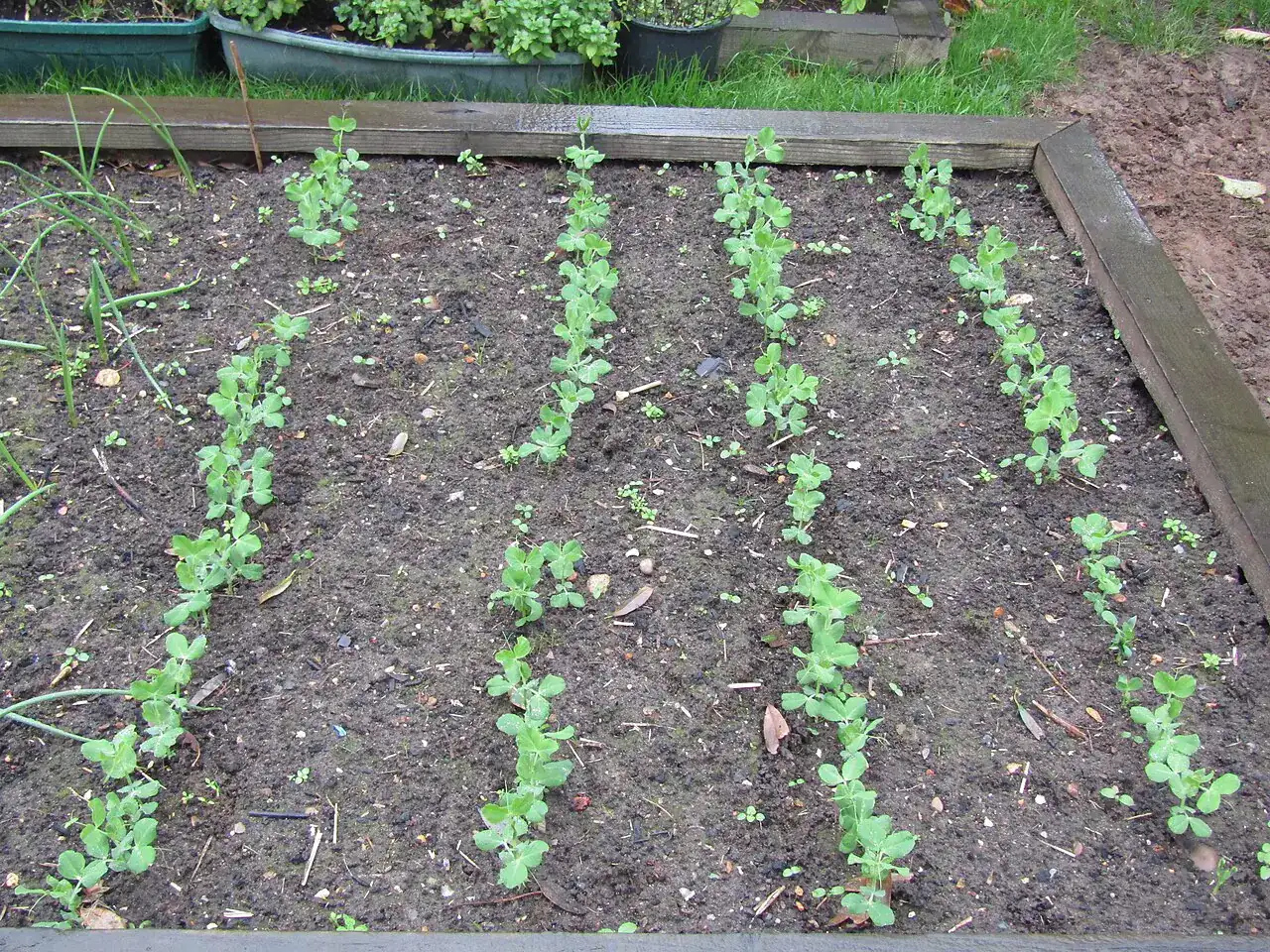
The RHS calls peas easy to grow, and says both climbing and dwarf types take up little ground space. They prefer cool weather.
The site. Choose a warm, sunny, sheltered spot with well-drained soil, the RHS says, and weed it thoroughly. Avoid very damp soil, where the seeds may rot.
The soil. A few weeks before sowing or planting, the RHS forks in plenty of garden compost, or at least two bucketfuls of well-rotted manure per square metre. On a no-dig bed it mulches the ground ahead of sowing instead. Its glossary note describes a mulch as a layer at least 5 cm thick, put down between November and February.
That is all the feeding most peas ever get. More on that below.
Sowing dates, depths and the choice between indoor and outdoor sowing are covered in when to sow peas. This page picks up from there: choosing a type, supporting the plants and looking after them until the last pod.
Peas: what to do and when
Under cover and outdoors, for UK conditions. The weather differs from year to year and from north to south, so check your local conditions too.
Which peas to grow
All garden peas are one species, *Pisum sativum*, but the RHS sorts them by how you eat them.
- Garden peas, or shelling peas. Smooth-seeded varieties are hardier and suit early sowings. Wrinkled varieties are sweeter and suit late spring or summer sowing. - Petit pois. Very small, sweet peas. - Marrowfat peas. Grown to full maturity and dried, for stews or mushy peas. - Mangetouts. Flat, stringless pods, picked before the peas mature. - Sugarsnaps. Fleshy, rounded pods. Like mangetouts, they are eaten pod and all.
The easiest. The RHS says mangetout and sugarsnap varieties are the easiest to grow, and tend to give larger crops.
Height matters as much as type. Tall varieties reach 1.8 m, the RHS says, and dwarf varieties just 45 cm. Garden Organic gives a typical plant as about 90 cm tall and 30 cm wide. The height decides what support you need and how far apart the rows go.
Named varieties. The RHS list of peas with its Award of Garden Merit includes 'Kelvedon Wonder', a first early that can also be grown as a maincrop, 'Hurst Green Shaft', a maincrop garden pea, 'Jaguar', a second early that resists powdery mildew, the mangetout 'Delikata' and the sugarsnaps 'Sugar Ann', 'Delikett' and 'Cascadia'.
Supports: put them in early
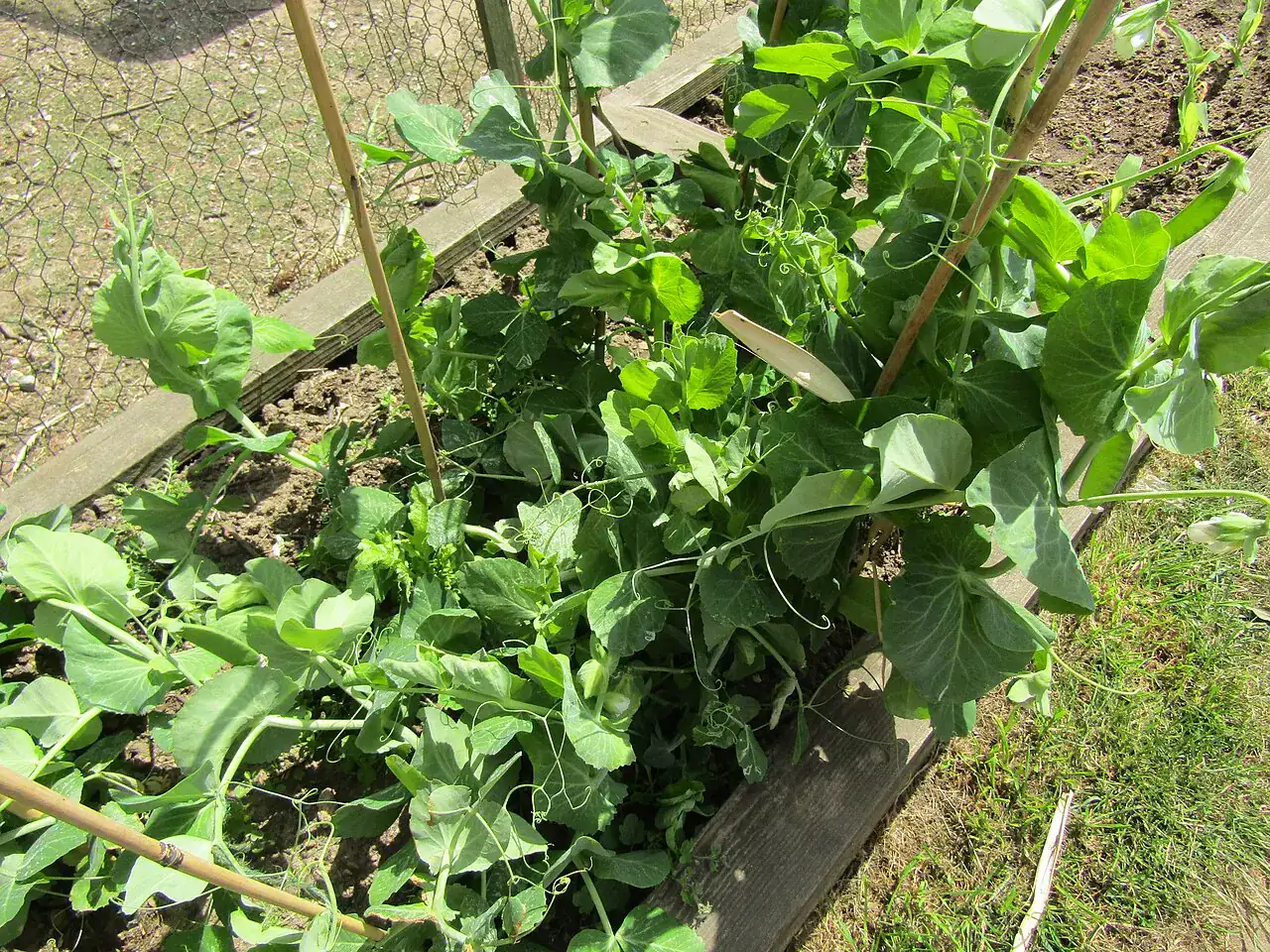
Most peas except dwarf varieties need support, the RHS says, and the time to put it in is at planting time.
Tall varieties. Use netting or chicken wire, fixed to posts or bamboo canes. Make it sturdy and tall enough, especially in a windy spot.
Smaller varieties. Push twiggy prunings, known as pea sticks, into the ground between the plants.
Garden Organic lists the same choice in three words: wire mesh, netting or sticks.
Row spacing. The RHS sows or plants peas about 7.5 cm apart. Where you have more than one row or set of rows, it leaves a gap between them equal to the height of the variety.
Peas: growing conditions
Pisum sativum
- Position
- Warm, sunny and sheltered
- Soil
- Well-drained, with garden compost or well-rotted manure forked in
- Spacing
- 7.5 cm apart in the row, rows a distance apart equal to the height of the variety (RHS)
- Sow
- Indoors February or March, outdoors March to June
- Harvest
- June to October (RHS)
- Watering
- Well at the start of flowering and again two weeks later
- Height
- 45 cm (dwarf) to 1.8 m (tall varieties)
- Difficulty
- Easy
Planting out peas raised indoors
Peas started indoors, or bought as young plants, go outside from March, once they are about 20 cm tall, the RHS says. Young plants are often sold in spring and early summer.
- Harden them off first. - Water thoroughly before and after planting. - Plant about 7.5 cm apart, without disturbing the roots. Firm them in gently. - If you sowed in guttering, dig a shallow trench of a similar size and slide the compost and plants into it.
Then protect the row. The RHS says seedlings need protecting from slugs, snails and pigeons.
Watering and mulching

Peas have one moment when water really counts, and it is flowering.
The RHS says established plants need little water except in dry spells. They generally benefit from a good watering once they start to flower, and again two weeks later, to help the pods swell. Its guide to watering vegetables says the same of peas and broad beans: they need plenty of water at flowering time for the pods to set.
Garden Organic waters established plants once flowering starts, too.
Before flowering, hold back. The RHS watering guide warns against too much water for young plants, as this can encourage leafy growth. Overwatered peas, it says, make more leafy growth but not proportionally more pods.
While cropping. Check the soil moisture at root level and water if it is needed, the RHS says. Water the soil, not the leaves, to avoid fungal disease.
Mulch. After planting, the RHS spreads a thick layer of garden compost around the plants, to help stop the soil drying out in summer and to deter weeds. Garden Organic mulches to conserve moisture as well.
Do peas need feeding?
In the ground, usually not. The RHS says peas usually grow well in most soils without any need for fertiliser.
Containers are the exception. For peas in pots, the RHS starts feeding when the first flowers appear, with a high potassium organic liquid fertiliser, such as a tomato feed, once a fortnight.
Peas also help to feed the bed themselves. The RHS explains that legumes, which are peas, beans and related plants, fix nitrogen from the air at their roots. There is more on how to use that at the end of this page.
Peas in pots
Dwarf and smaller varieties, especially mangetouts, can be grown in containers, the RHS says. It is honest about the result: harvests will be small.
- Use a container at least 45 cm wide, filled with peat-free multi-purpose compost. - Sow seeds 7.5 cm apart and 5 cm deep, or set plants 7.5 cm apart. - Add twiggy sticks, bamboo canes or chicken wire for support. - Keep the pot well watered. Compost in containers can dry out rapidly.
Regular watering does a second job in a pot. The RHS says you need to water regularly to keep powdery mildew at bay.
Pea shoots: a crop in three to four weeks
If you only have a windowsill, grow pea shoots. The RHS says any variety works, and you can sow indoors at any time.
- Sow in trays of peat-free compost, 2.5 cm deep and 2.5 cm apart. - Keep them well watered, in bright light. - Harvest when the shoots are 10–15 cm tall, about three to four weeks after sowing. - Cut the stems about 2.5 cm from the base. They may sprout again for a second harvest.
You can also pinch the tips from young plants in the garden. Do not take too many from each plant, the RHS warns, as it can hinder cropping.
Powdery mildew
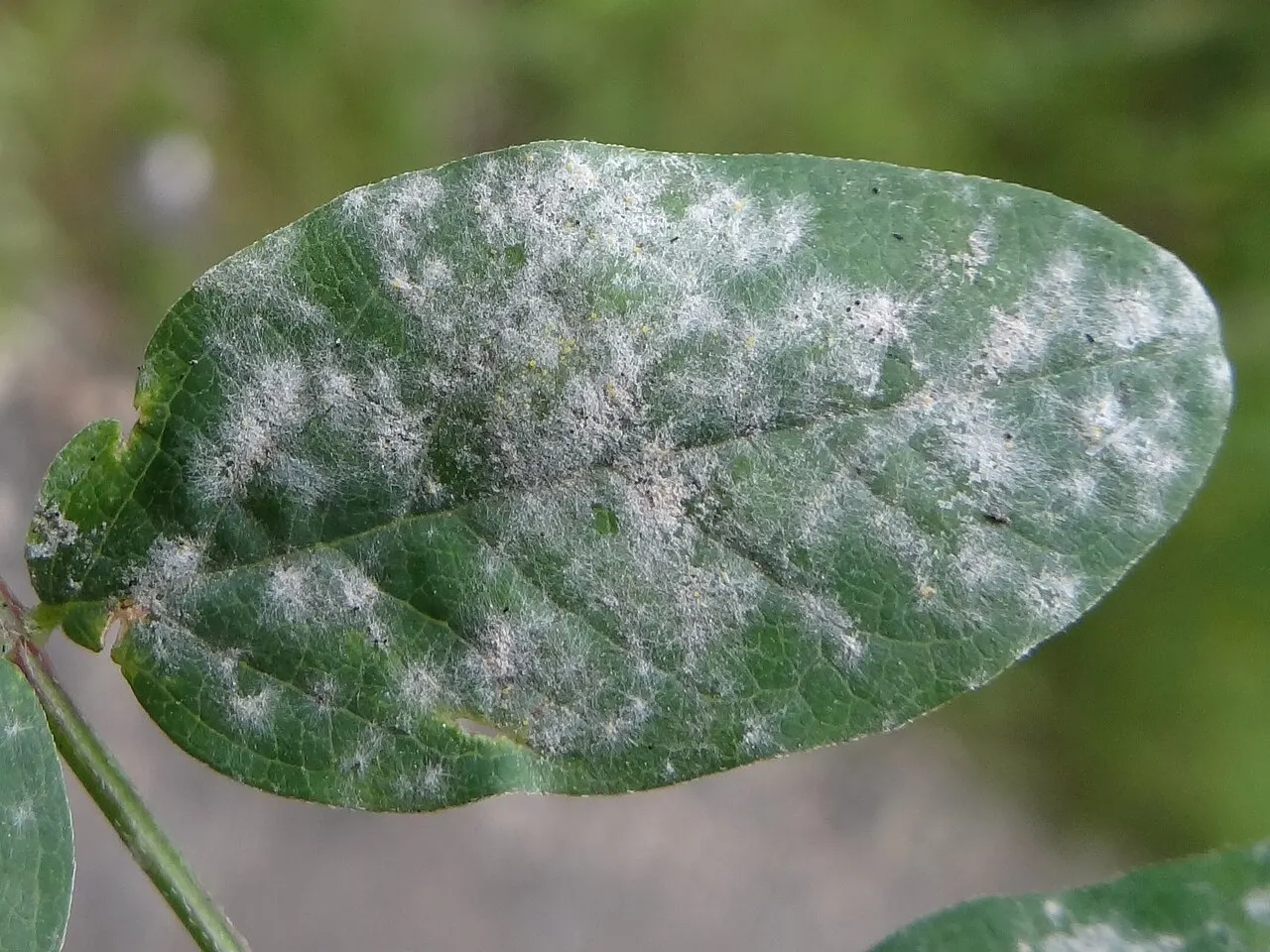

Powdery mildew shows as a white, dusty coating on leaves, stems and flowers. The RHS lists it among the common problems of peas, and says the mildew on peas is a different species from the one on apples. Powdery mildews usually have narrow host ranges, it explains.
What brings it on. The RHS guide to powdery mildews says plants that suffer regular but intermittent drought stress are more susceptible. So are plants given too much fertiliser, especially nitrogen, which produces succulent growth. Dense planting makes it worse by restricting the flow of air.
What helps.
- Water regularly in dry periods. A mulch may help the soil hold moisture. - Do not over-fertilise. - Space plants so that air can circulate. - Look for resistant varieties. The RHS describes 'Jaguar' as resistant to powdery mildew.
The RHS recommends against using fungicides for powdery mildew. If you do use any product, use only products approved in the UK, used as the label says.
Pests, from seed to pod
Mice. They take newly sown seeds. The RHS says sowing indoors helps.
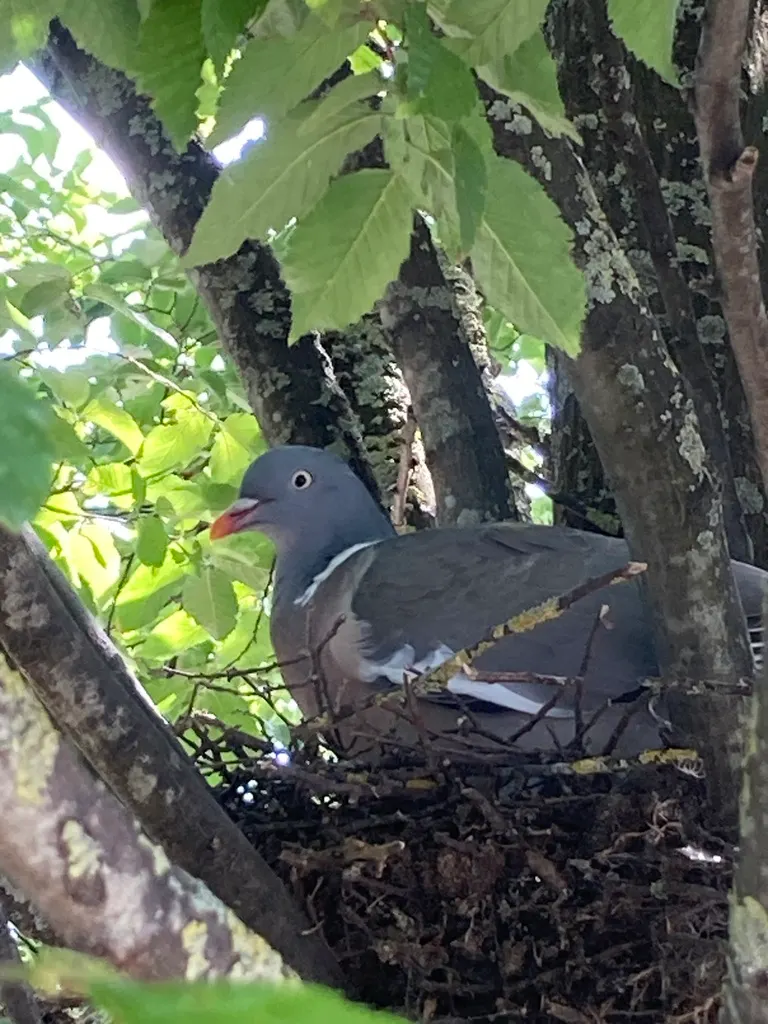
Pigeons. They tear the leaves, leaving the stalks and veins. The RHS says you may need a netting cage to keep them out. Garden Organic also protects pea seedlings from birds.
Slugs and snails. A threat to seedlings. The RHS says to protect seedlings from them.
Pea and bean weevil. A greyish brown beetle 4–5 mm long, active from April to July. You are more likely to see its work than the weevil itself: a row of U-shaped notches around the edges of the leaves. The RHS says it is usually not serious. Established plants tolerate the feeding, and control is usually unnecessary. Seedlings that are heavily eaten may suffer a check in growth, so keep them watered. Fleece or cloches can help young plants grow away from the damage.
Pea moth. Creamy white caterpillars, up to 14 mm long, feed on the peas inside the pod, and you often find them only when shelling. The moths emerge in June and July and lay eggs on peas in flower. Insect-proof mesh keeps them off, and the RHS says the crop does not suffer under cover, because peas pollinate themselves. Mangetouts should not be affected. The timing trick is explained in when to sow peas.
Also on the RHS list: plant viruses, which discolour and distort the leaves but are rarely fatal, and thrips, which can mottle the foliage and flowers.
Picking
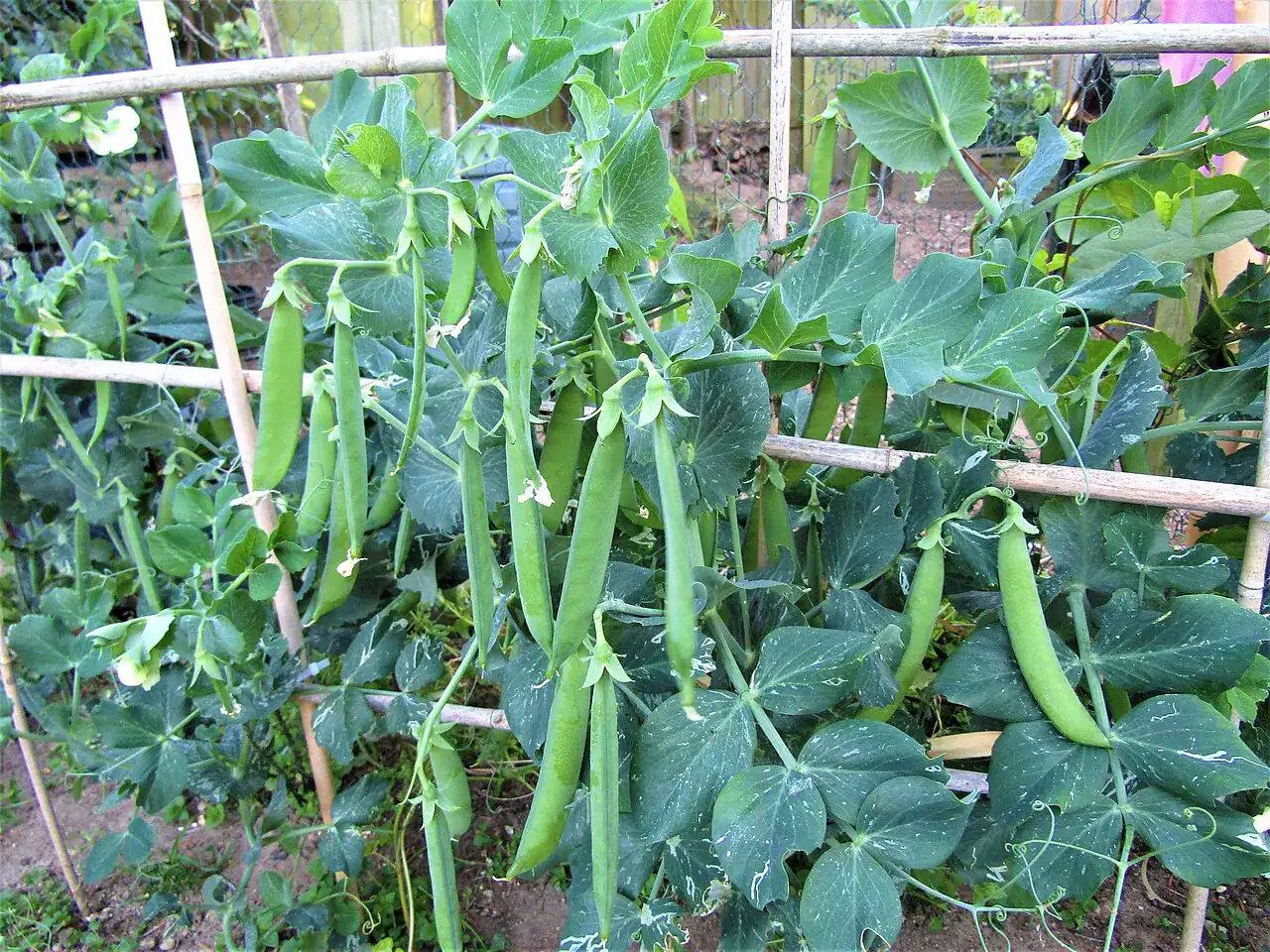

The RHS harvests peas from June to October, depending on the type and variety. Garden Organic gives mid-May to September, and an average time to harvest of 10–14 weeks.
When a pod is ready.
- Shelling peas: when the pods are well filled, the RHS says. Garden Organic picks when the peas can be felt through the pod. - Mangetouts and sugarsnaps: when the pods are about 7.5 cm long, as the peas start to develop. Garden Organic picks mangetout while the pods are still flat.
Start at the bottom. Pods form lower on the plant first, the RHS says, so pick from the bottom upwards. The plants crop for several weeks.
Pick often. Both sources say regular picking matters. Garden Organic gives the reason: it encourages more pods.
Eat them quickly. The RHS says to eat peas as soon as possible after picking, when they are at their peak sweetness. If you have a large crop, pick it all, do not leave pods on the plants, and freeze any excess.
After the last pod
When harvesting has finished, the RHS cuts the plants down to the base and composts them. The roots stay in the ground. Because legumes fix nitrogen from the air at their roots, leaving them boosts the nitrogen level of the soil.
Saving seed. Garden Organic rates peas as easy to save seed from. They are annual and self-pollinating.
Thinking about what to grow next year? When to plant potatoes covers the other crop that starts in early spring.
Cheat sheet: growing peas
| What | Advice |
|---|---|
| Site | Warm, sunny and sheltered, with well-drained soil |
| Before sowing | Plenty of garden compost, or at least two bucketfuls of well-rotted manure per square metre |
| Supports | At planting time. Netting or chicken wire for tall varieties, twiggy sticks for short ones |
| Mulch | A thick layer of garden compost around the plants after planting |
| Watering | Well at the start of flowering, and again two weeks later |
| Feeding | Not needed in most soils. In pots, a high potassium liquid feed once a fortnight from first flowers |
| Pots | At least 45 cm wide, dwarf varieties, plants 7.5 cm apart |
| Picking | Regularly, from the bottom of the plant upwards |
| After the crop | Cut the plants down and leave the roots in the ground |
How to do it
- Choose a warm, sunny, sheltered site with well-drained soil and weed it thoroughly.
- A few weeks before sowing or planting, fork in plenty of garden compost or well-rotted manure.
- Sow or plant about 7.5 cm apart, and put the supports in at the same time.
- Protect seedlings from slugs, snails and pigeons.
- Spread a thick layer of garden compost around the plants to hold moisture and deter weeds.
- Water well when the plants start to flower, and again two weeks later. Water the soil, not the leaves.
- Pick regularly, starting at the bottom of the plant.
- When the crop is over, cut the plants to the base and leave the roots in the soil.
Common questions
Are peas easy to grow?
Yes. The RHS and Garden Organic both call peas easy. The RHS says mangetout and sugarsnap varieties are the easiest of all and tend to give larger crops.
Do peas need a lot of water?
Not all the time. The RHS says established plants need little water except in dry spells. Water well when they start to flower, and again two weeks later, to help the pods swell.
Do peas need feeding?
The RHS says peas usually grow well in most soils without any fertiliser. Peas in containers get a high potassium organic liquid feed once a fortnight from the first flowers.
Do all peas need supports?
Most do. The RHS says most peas except dwarf varieties need support, put in at planting time: netting or chicken wire for tall varieties, twiggy pea sticks for smaller ones.
Can I grow peas in pots?
Yes, dwarf and smaller varieties, especially mangetouts, in a container at least 45 cm wide. The RHS warns that harvests will be small, and that regular watering is essential.
What do I do with pea plants after harvest?
The RHS cuts them down to the base and composts the tops, but leaves the roots in the ground to boost soil nitrogen levels.
Sources
We wrote this page using the sources below.
- How to grow peas, Royal Horticultural Society (RHS)
- Watering vegetables and fruit, Royal Horticultural Society (RHS)
- Powdery mildews, Royal Horticultural Society (RHS)
- Pea and bean weevil, Royal Horticultural Society (RHS)
- Pea moth, Royal Horticultural Society (RHS)
- How to grow peas (growing guide), Garden Organic