
 Cucumbers Growing and care
How to grow cucumbers
Cucumbers grow fast once they are warm. Pick the right type for your space, train it up a support and pick often, and one plant keeps you busy all summer.
In short
Sow cucumbers indoors at about 21 °C, from February in a heated greenhouse, in April for an unheated one and in late April for outdoor plants. Plant out once it stays above 12 °C. Train them up a support, keep the compost evenly moist and pick the fruit often.

Cucumbers at a glance
Cucumis sativus · Cucurbits (with pumpkins and squashes)
- Position
- Warm and sunny, sheltered outdoors
- Spacing
- 30 cm apart in the ground (RHS); 45–90 cm depending on type (BBC Gardeners' World)
- Sow
- Mid February to late April indoors, by type
- Plant
- Late May under glass, early June outdoors
- Harvest
- Mid summer to mid autumn
- Watering
- Evenly moist, in the morning, at the base
- Height
- About 2 m
- Difficulty
- Medium
Cucumbers: what to do and when
Under cover and outdoors, for UK conditions. The weather differs from year to year and from north to south, so check your local conditions too.
Greenhouse or outdoor cucumbers?
There are two main types, and they need different care.
Greenhouse cucumbers need plenty of heat, so they grow in a greenhouse or polytunnel. BBC Gardeners' World describes them as large plants with long, smooth fruit. They do not need pollinating. The RHS says greenhouse varieties crop for longer, from mid summer into autumn.
Outdoor, or ridge, cucumbers tolerate lower temperatures and grow in a sunny spot outside. Their fruit is shorter and fatter, with rough, ridged skin. Insects pollinate them, so they need both male and female flowers. The RHS says outdoor types start fruiting later and finish earlier, depending on the weather.
Garden Organic, which describes cucumbers as trickier to grow, gives an average plant size of 2 m tall with side shoots of about 60 cm.
When and how to sow
The RHS recommends sowing indoors, because plants start earlier and fruit sooner. Its dates depend on where the plants will grow:
| Where the plants will grow | When to sow |
|---|---|
| Heated greenhouse | Mid February to mid March |
| Unheated greenhouse, polytunnel or large cold frame | April |
| Outdoors, started indoors | Late April |
| Outdoors, sown direct | Late May or early June |
Sow seeds 1–2 cm deep, one per 10 cm pot, ideally on its side. The RHS germinates them at 21 °C in a heated propagator or under a clear bag on a warm, sunny windowsill. BBC Gardeners' World says germination needs at least 20 °C and takes 7 to 10 days. Garden Organic gives just 3 to 5 days and sows from mid March to mid April.
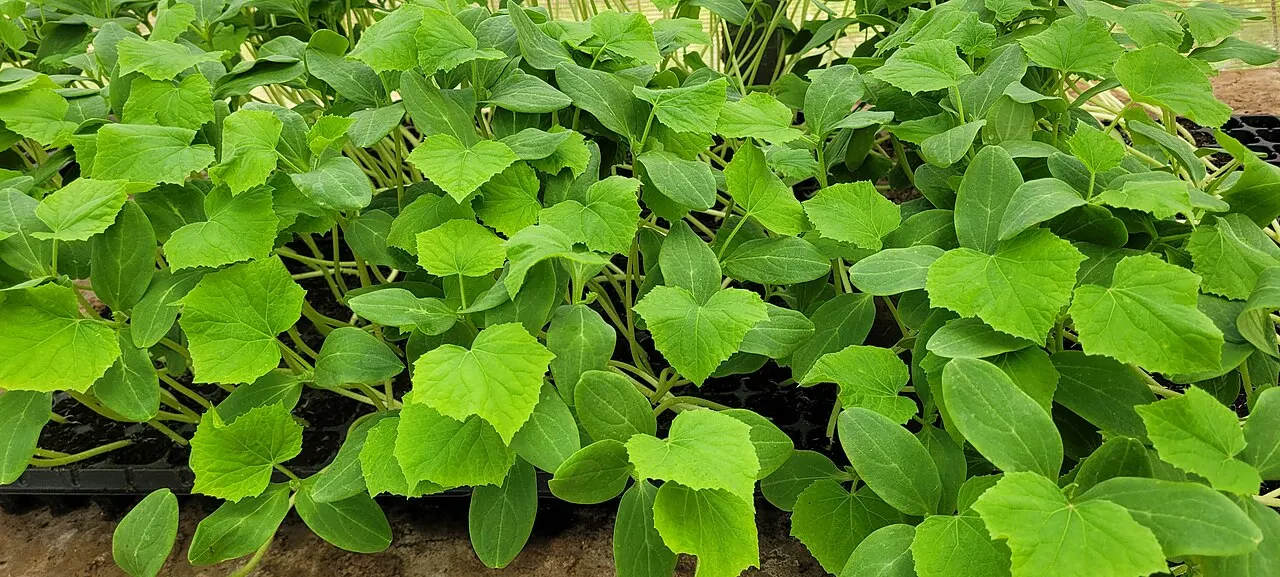
Move the young plants to their final spot after about a month, once they are growing strongly.
Planting out

In a greenhouse, the RHS plants from late May, once the inside temperature stays above 12 °C. In a heated greenhouse planting can start in late March. The ideal temperature for growth is 18–25 °C. Shade the glass in summer to prevent damaging heat.
Outdoors, harden plants off and plant them from early June, once temperatures are reliably above 12 °C. BBC Gardeners' World hardens them off for at least a week and does not plant out before early June, in a sheltered, sunny spot with well-rotted manure or compost.
Spacing. The RHS spaces plants 30 cm apart in the ground. BBC Gardeners' World plants greenhouse cucumbers 60 cm apart, sprawling outdoor plants 90 cm apart and outdoor plants trained up a support 45 cm apart. In containers the RHS uses pots at least 30 cm wide and deep, with one plant each, or two plants in a standard growing bag.
Training and pinching out
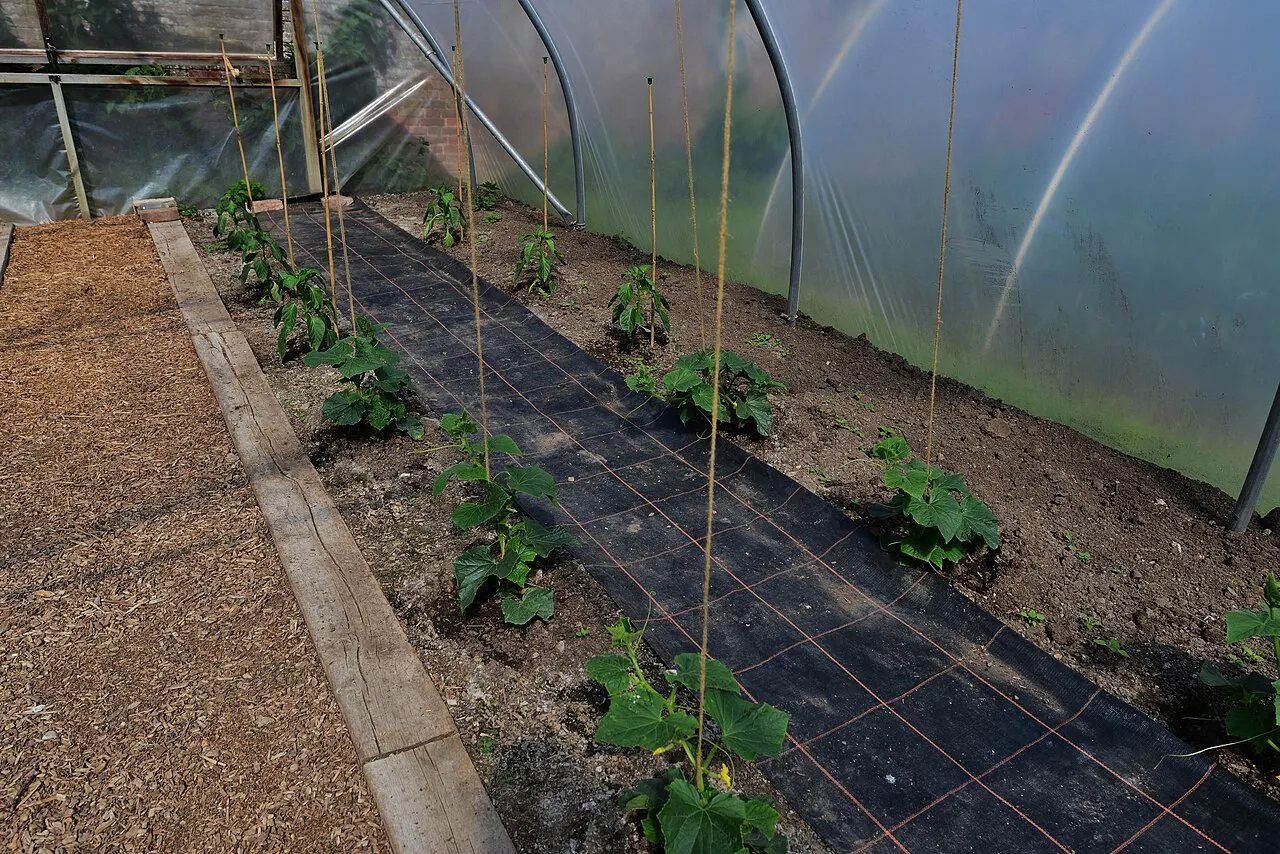
Greenhouse plants. The RHS ties the main stem to a tall, sturdy cane that reaches the roof, or to a vertical wire or string, and pinches out the growing point when it gets to the roof. Side shoots are pinched out two leaves beyond a female flower, and side shoots with no flowers are pinched out at 60 cm. Garden Organic also removes the growing tips two leaves beyond each fruit, so the plant puts its energy into the fruit.
Outdoor plants. The RHS pinches out the growing tip after seven leaves, and flowerless side shoots also after seven leaves. Train them up a wigwam, netting or wires against a wall or fence. BBC Gardeners' World says side shoots on outdoor plants can be trained or left to trail.
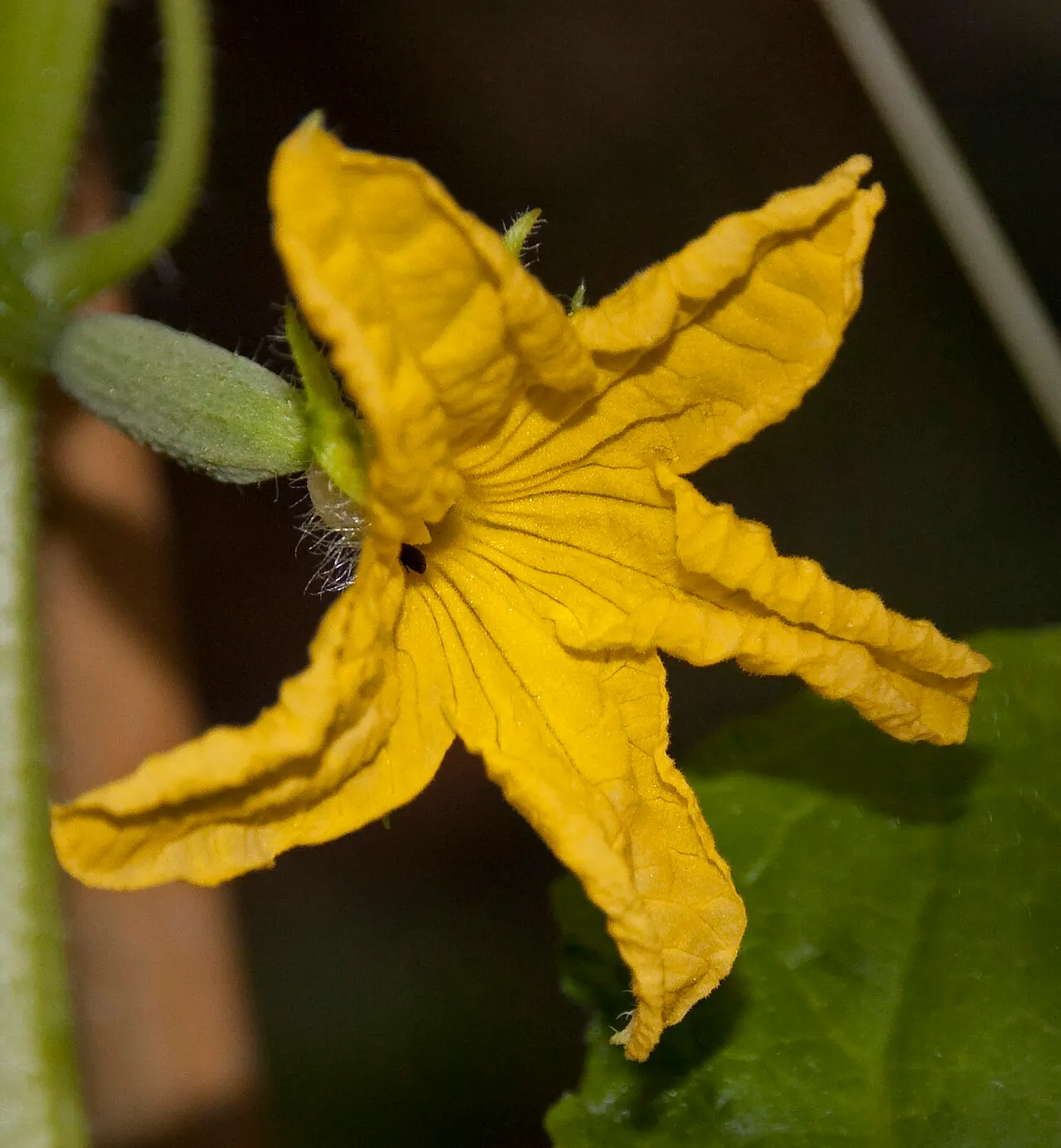
You can tell a female flower easily: BBC Gardeners' World points out that it has a small, immature fruit behind it.
Male and female flowers

This is where the two types differ most.
Greenhouse varieties are mostly all-female, says the RHS, so check the seed packet. Their female flowers must not be pollinated, or the fruit may be bitter. Remove any male flowers that appear.
Outdoor varieties have both male and female flowers. Do not remove the male flowers, because insects need them for pollination.
That is also why BBC Gardeners' World warns against growing ridge types in a greenhouse next to greenhouse types: cross pollination gives bitter, seed-filled fruit.
Watering, humidity and feeding
Cucumbers need steady moisture. The RHS waters greenhouse and container plants regularly, especially while fruit is forming, to keep the compost evenly moist. Pots may need watering every day in hot spells. Water at the base, keep the leaves dry, use rainwater where possible and water in the morning.
Humidity. In hot weather the RHS raises humidity in the greenhouse by pouring a full watering can over the floor or path. Garden Organic ventilates the greenhouse and sprays the floor with water to keep the air humid. Dry air encourages both powdery mildew and red spider mite, according to the RHS.
Feeding. Plants in the ground usually need no feed unless the soil is very poor, says the RHS. Feed container plants every 10–14 days with a general liquid fertiliser, then switch to a high potash feed, such as tomato feed, once flowering starts. BBC Gardeners' World feeds weekly with a high potash feed from flowering.
Picking cucumbers
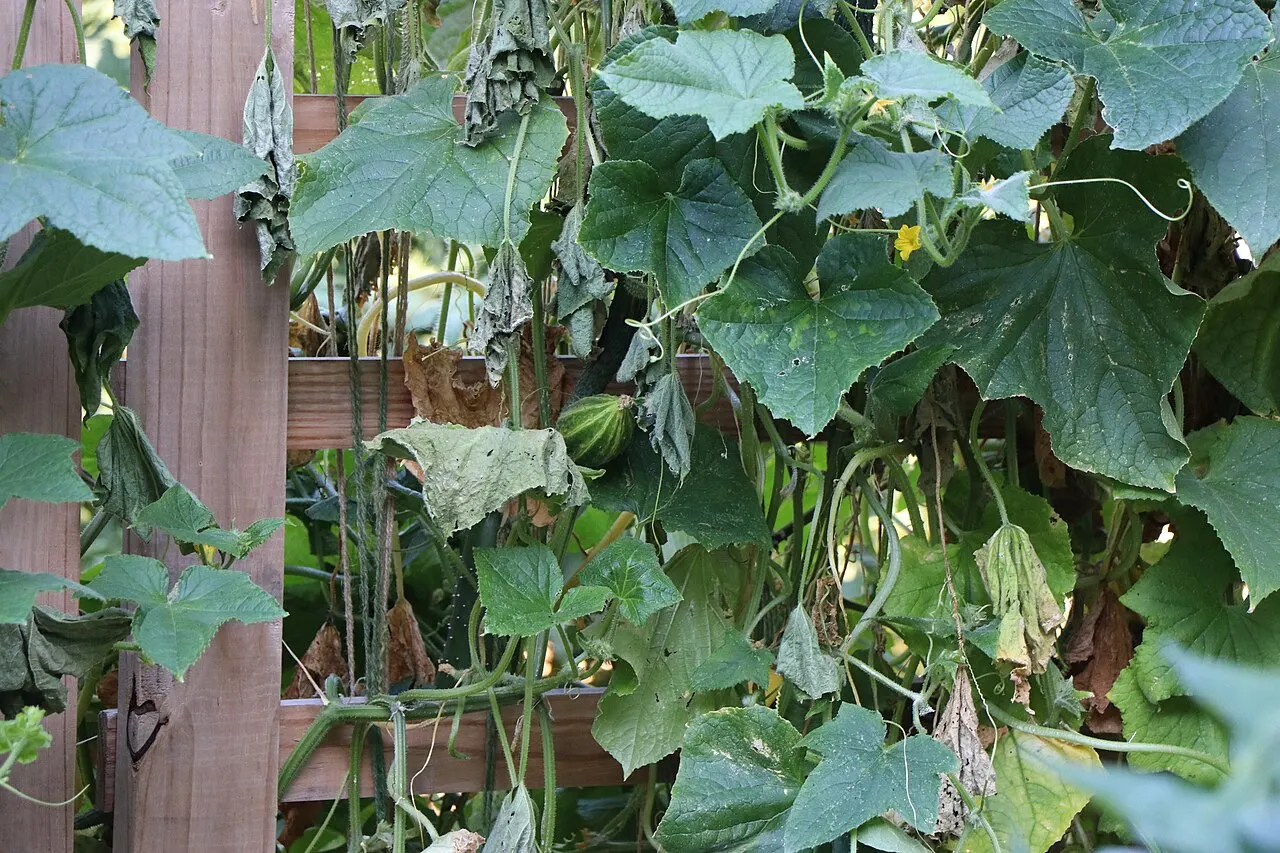

BBC Gardeners' World starts picking about 12 weeks after sowing, in midsummer. Greenhouse cucumbers ripen from mid summer to mid autumn, says the RHS, while the outdoor harvest is shorter and depends on the weather.
The RHS picks mini cucumbers at about 8 cm, small-fruited varieties at 15 cm and full-sized varieties at 20–25 cm. Check every few days, as the fruit grows quickly. Overripe fruit turns yellowish, bulbous or soft. Garden Organic picks when the sides have grown parallel.
Cut the stem cleanly rather than pulling. Regular picking encourages more fruit, and Garden Organic warns that leaving overripe fruit on the plant stops it producing more.
Common problems
Powdery mildew can weaken plants and is worse when the air is dry, says the RHS. BBC Gardeners' World links it to under-watering. Mildew-resistant varieties are available.
Cucumber mosaic virus causes yellow mottling, distorted leaves and stunted growth. BBC Gardeners' World says aphids spread it and there is no treatment. The RHS calls it a more serious problem and destroys affected plants.
Red spider mite and glasshouse whitefly are greenhouse pests. The RHS says dry air encourages red spider mite, and BBC Gardeners' World says biological controls are available. Slugs and snails go for young seedlings, especially in damp weather. If you use any plant protection product, use only one authorised in the UK and follow the label.
Cheat sheet: growing cucumbers
| What | Greenhouse cucumbers | Outdoor (ridge) cucumbers |
|---|---|---|
| Sow indoors | Heated: mid February to mid March. Unheated: April | Late April, or direct outside in late May or early June |
| Plant out | From late May, once inside stays above 12 °C | From early June, once it is reliably above 12 °C |
| Flowers | Mostly all-female: remove any male flowers | Male and female: keep the male flowers |
| Pinch out the tip | When it reaches the roof | After seven leaves |
| Harvest | Mid summer to mid autumn | Shorter season, depends on the weather |
How to do it
- Sow one seed on its side, 1–2 cm deep, in a 10 cm pot of compost and keep it at about 21 °C.
- Grow the seedling on in the warmth for about a month until it is growing strongly.
- Harden outdoor plants off and plant them out from early June, greenhouse plants from late May, once it stays above 12 °C.
- Tie the main stem to a tall cane, wire or string.
- Pinch out side shoots two leaves beyond a female flower, and flowerless side shoots at 60 cm.
- Keep the compost evenly moist and feed container plants every 10–14 days, switching to a high potash feed when flowering starts.
- Cut the fruit when it reaches full size and check every few days.
Common questions
When should I sow cucumbers?
Indoors from mid February to mid March for a heated greenhouse, in April for an unheated one and in late April for outdoor plants. Direct outdoors in late May or early June.
Should I remove male flowers from cucumbers?
Only on greenhouse varieties, which are mostly all-female. On outdoor varieties keep the male flowers, because they are needed for pollination.
How far apart should cucumbers be planted?
The RHS uses 30 cm in the ground. BBC Gardeners' World gives 60 cm in the greenhouse and 45 cm for outdoor plants trained up a support.
Why are my cucumbers bitter?
On greenhouse varieties, pollinated female flowers can give bitter fruit. Growing ridge and greenhouse types together can also cause it, and BBC Gardeners' World says fruit left too long can taste bitter.
How often should I water cucumbers?
Often enough to keep the compost evenly moist, especially while fruit is forming. Pots may need water every day in hot weather.
Sources
We wrote this page using the sources below.
- How to grow cucumbers, Royal Horticultural Society (RHS)
- How to grow cucumbers, BBC Gardeners' World Magazine, 2020
- Cucumber (growing guide), Garden Organic