
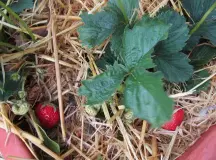
 Strawberries Growing and care
How to grow strawberries
A strawberry bed gives fruit for three or four summers. Plant the crown at the right depth, keep the fruit dry and clean, and keep the birds off.
In short
Plant strawberries in August or September, or in spring, in a sunny, sheltered spot with the crown on the soil surface. Space them 35–40 cm apart in rows 75 cm apart. Water in the morning, tuck straw under the fruit, net it and replant every three or four years.
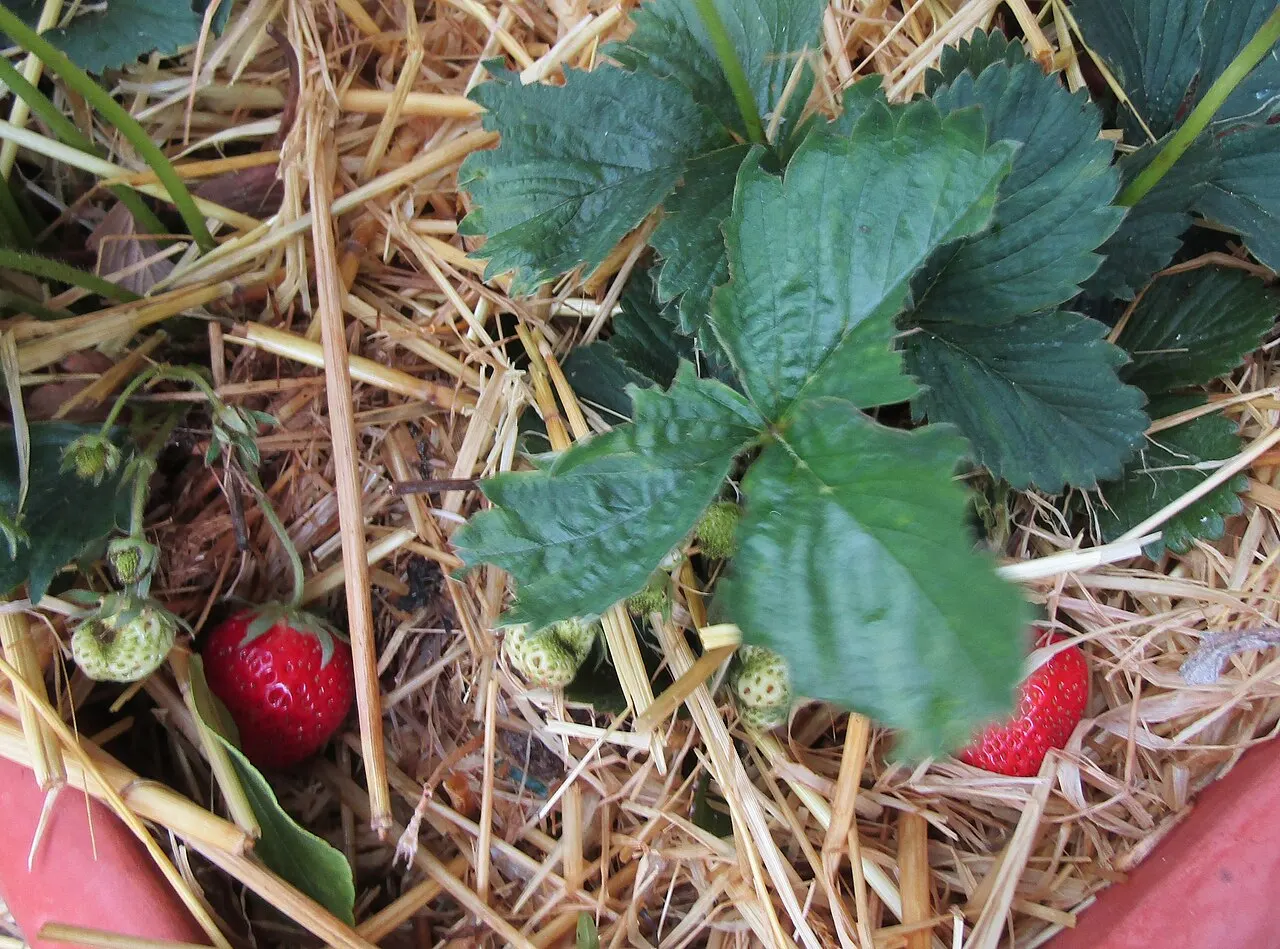

Strawberries at a glance
Fragaria × ananassa · Rosaceae
- Position
- Sunny and sheltered, away from frost pockets
- Soil
- Fertile, well-drained, slightly acidic
- Spacing
- 35–40 cm apart in rows about 75 cm apart (RHS)
- Plant
- August or September, or spring
- Harvest
- Early June to early autumn, by type
- Watering
- Regularly while establishing, in the morning, keeping fruit dry
- Difficulty
- Medium
Strawberries: what to do and when
Under cover and outdoors, for UK conditions. The weather differs from year to year and from north to south, so check your local conditions too.
Summer-fruiting, perpetual or alpine
Summer-fruiting strawberries give the largest fruit, says the RHS. They crop for two or three weeks, somewhere between early June and early August, depending on whether the variety is early, mid or late season. BBC Gardeners' World suggests growing a mix of early, mid and late varieties to stretch the harvest.
Perpetual strawberries, also called everbearers, give small flushes of smaller fruit from early summer to early autumn, sometimes until the first frosts. They make fewer runners. BBC Gardeners' World recommends them for small gardens.
Alpine strawberries (*Fragaria vesca*) give small crops of tiny, aromatic berries over summer. Most are red, though some are white or yellow. BBC Gardeners' World says they suit semi shade and pots.
When to plant
The RHS plants in spring, late summer or early autumn. Planting in August or September lets plants settle in before they fruit the following year. BBC Gardeners' World plants bare-root runners in late summer to early autumn and pot-grown plants in late summer, early autumn or spring, by May at the latest. It avoids winter and early spring, because strawberries dislike being planted into cold, wet soil.
Cold-stored runners are a shortcut. They are sold in spring and early summer, should be planted straight away, and can fruit about 60 days after planting, according to the RHS. BBC Gardeners' World says some nurseries supply them from April to June and they crop in their first summer.
Garden Organic gives two planting windows: September to October and late March to May.
Site, soil and the crown
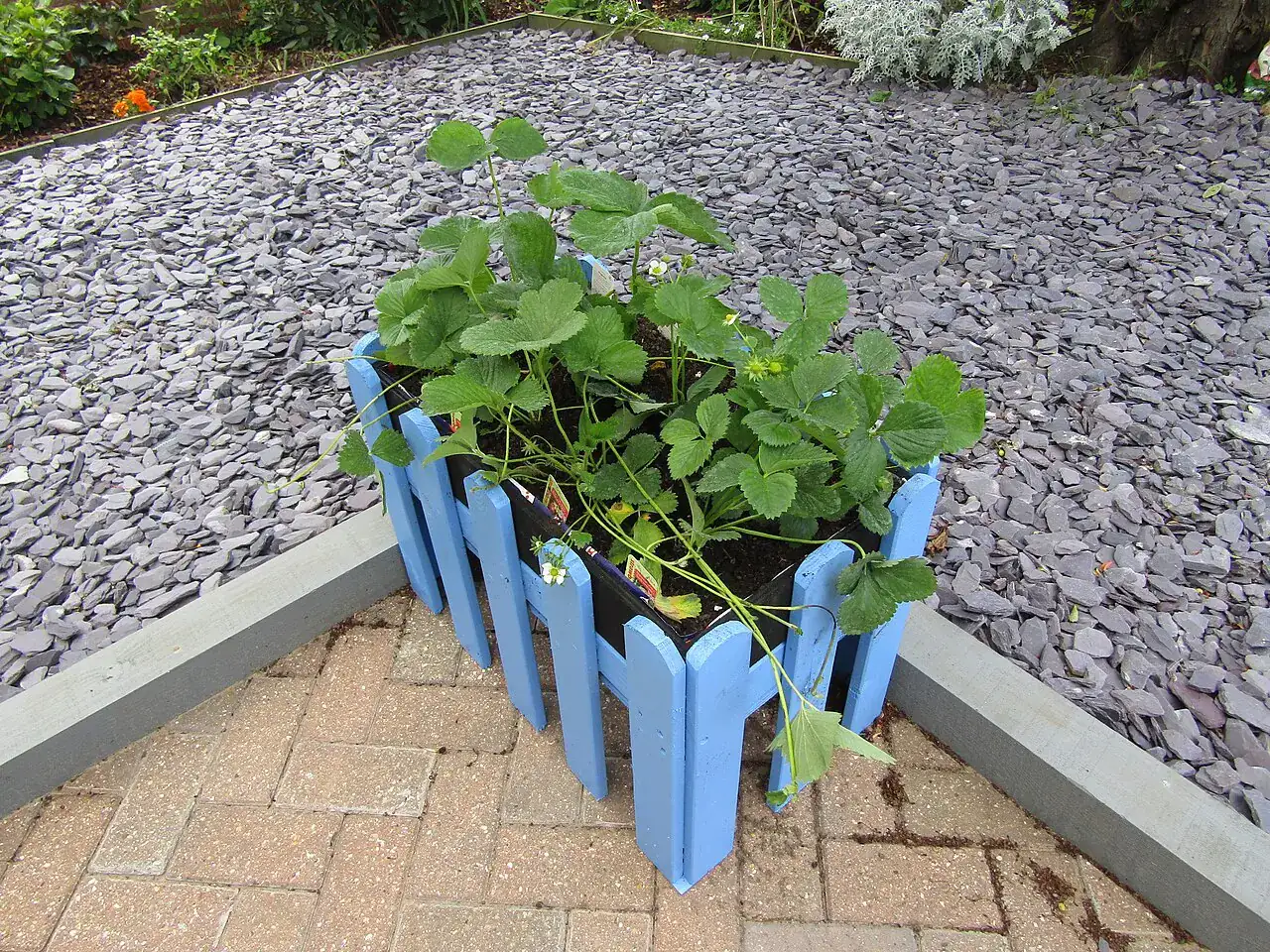

Choose a sheltered, sunny spot. The RHS says plants tolerate some shade but fruit best in full sun, and to avoid frost pockets, because late frosts damage the flowers. Strawberries like fertile, well-drained, slightly acidic soil. On poor or heavy soil, the RHS suggests raised beds.
Before planting, weed the bed and dig in two bucketfuls of well-rotted organic matter per square metre, ideally a few weeks ahead.
Spacing. The RHS plants 35–40 cm apart in rows about 75 cm apart. BBC Gardeners' World uses 30–45 cm in rows 75 cm apart, and Garden Organic 30–40 cm in rows 60 cm apart.
The crown matters most. The RHS warns that if the crown is planted too deeply it will rot, and if too shallowly the plant dries out quickly. The crown should rest lightly on the surface. Trim long roots to 10 cm if needed.
Strawberries in pots and under cover
In a large container, the RHS spaces plants about 20 cm apart in peat-free multi-purpose or soil-based compost, with the crown level with the surface. Pots keep plants away from soil diseases and reduce slug damage, but vine weevil can be a problem. The RHS advises against traditional strawberry pots with planting holes in the sides, because they make plants harder to keep healthy. BBC Gardeners' World fits six to eight plants in a growing bag.
For an earlier crop, the RHS grows strawberries under cloches or in an unheated greenhouse or cold frame. Cloches give fruit at least a week early, and an unheated greenhouse about two weeks early. Move pots under cover in February, and pollinate the flowers by hand with a soft paintbrush.
Watering, feeding and straw
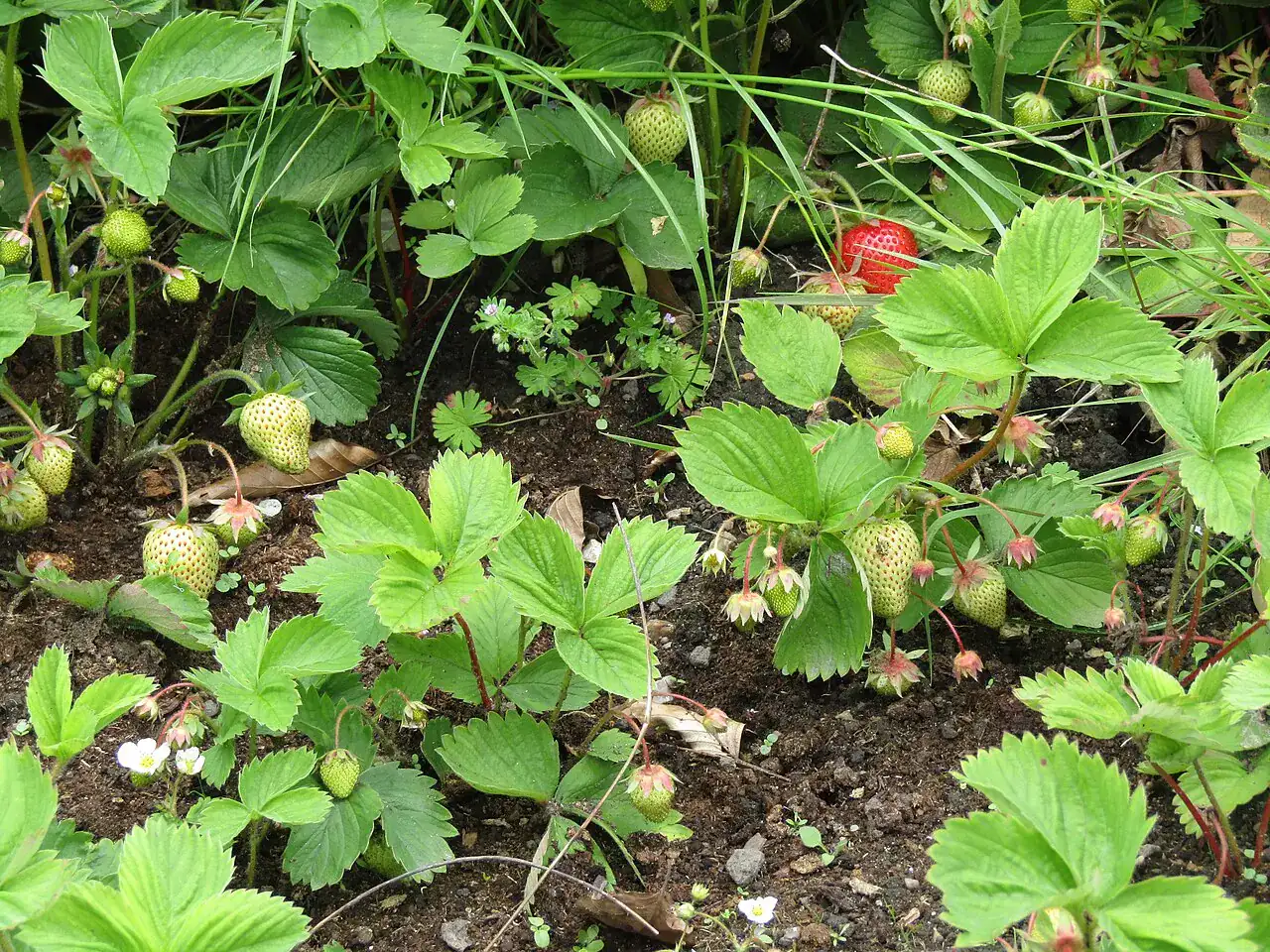

Water new plants regularly while they establish, and all plants during long dry spells, says the RHS. Pots and hanging baskets dry out quickly. Keep water off the crown and fruit and water in the morning.
Feeding. Plants in good, regularly mulched soil are unlikely to need extra feed, says the RHS. If harvests are poor, give an organic high potassium granular fertiliser in spring. Feed plants in pots and growing bags every fortnight during the growing season: a general purpose liquid feed at first, then a high potassium feed once the first flower buds form. BBC Gardeners' World feeds a high potash feed every week or two from early spring.
Straw. When fruit starts to form, tuck dry straw under the plants to keep the berries clean. The RHS says wheat straw is fine and barley straw is softer. BBC Gardeners' World adds that straw deters slugs and snails and suppresses weeds. The RHS removes it in autumn.
Frost and birds
Strawberry plants are hardy, but the flowers are not. When frost is forecast during flowering or early fruiting, the RHS covers plants overnight with fleece, hessian or an old bedsheet. The RHS calls strawberry black eye the most recognisable form of frost damage, and flowers affected by it will not set fruit. BBC Gardeners' World notes that a late frost in May can damage growth.
Birds are the other threat. BBC Gardeners' World names blackbirds as especially fond of the fruit. The RHS builds a frame of canes or wood and stretches netting tightly over it before the berries ripen. Loose netting can trap birds, hedgehogs and slow worms, so BBC Gardeners' World prefers a fixed cage with holes big enough for pollinators. Garden Organic also says to make sure the netting is well secured.
After fruiting: runners, tidying and new plants
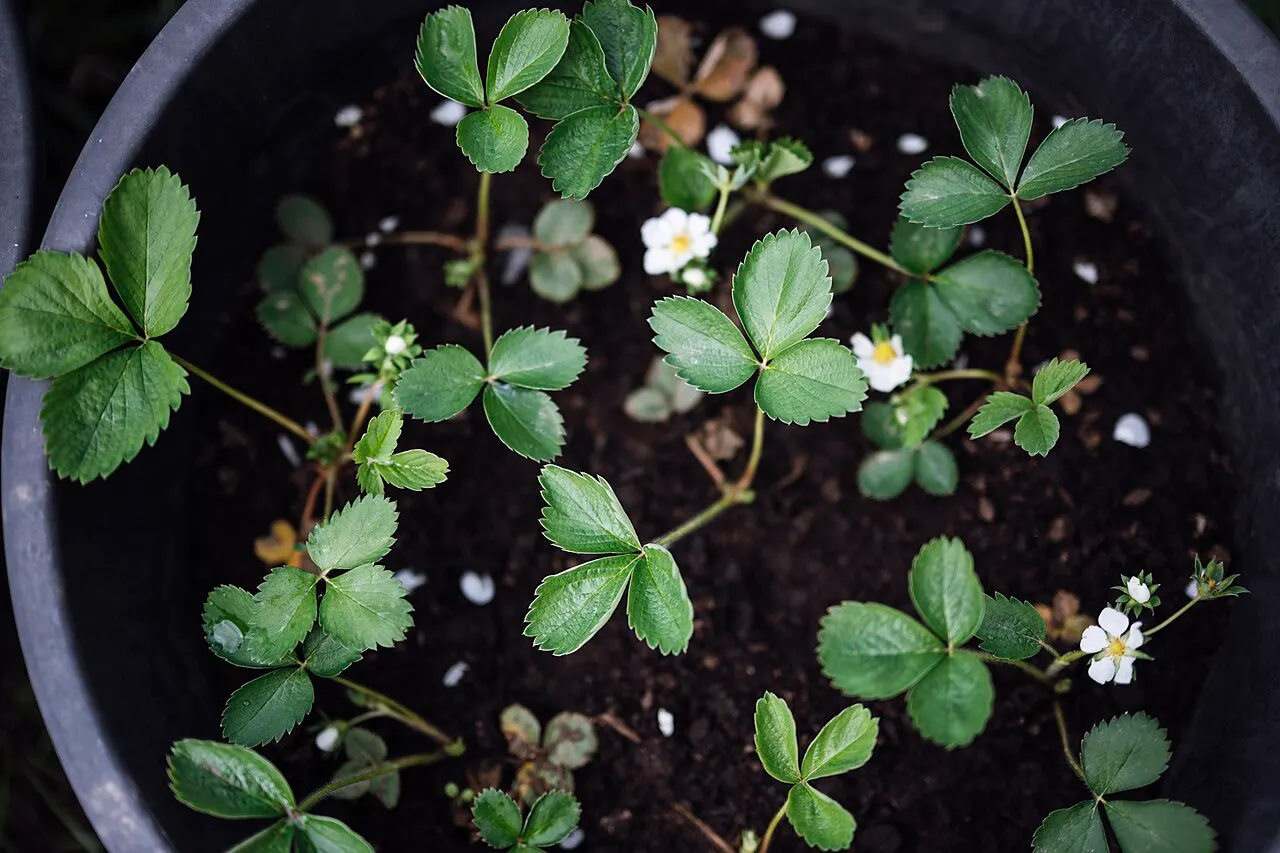

Cut back. After cropping, the RHS cuts the old leaves of summer-fruiting plants about 10 cm above the crown. BBC Gardeners' World cuts to about 5 cm above ground level and feeds with a general purpose fertiliser. On perpetuals, the RHS removes only dead, damaged or diseased leaves.
Runners. Late summer is the ideal time to root runners, the plantlets on long stems. The RHS sets 9 cm pots of peat-free compost beside the plant, pegs the runner in with a U-shaped wire, keeps the compost moist and cuts the young plant free once it has rooted. Remove any runners you do not need.
Replace the bed. A bed usually crops well for up to four years, says the RHS, and should be replanted every three or four years in a different spot to avoid disease building up. Garden Organic replaces plants every three years.
Common problems
Grey mould (*Botrytis cinerea*) causes soft decay and fuzzy growth on the fruit. Keep water off the crown and fruit, says the RHS. BBC Gardeners' World adds watering in the morning, keeping the soil clear of debris and removing damaged fruit.
Powdery mildew gives white, powdery leaves in hot, dry summers, says BBC Gardeners' World. Keep the soil moist, remove affected leaves and space plants widely.
Vine weevil larvae eat the roots and are a bigger threat in pots. BBC Gardeners' World uses a biological control in late summer and autumn. Slugs and snails like damp straw and mulch. The RHS also lists spotted wing drosophila, a fruit fly that damages the berries. If you use any plant protection product, use only one authorised in the UK and follow the label.
Cheat sheet: growing strawberries
| What | Advice |
|---|---|
| Planting time | August or September, or spring |
| Spacing | 35–40 cm apart, rows about 75 cm apart (Garden Organic: 30–40 cm, rows 60 cm) |
| Crown | Resting on the soil surface, not buried |
| Containers | About 20 cm apart, crown level with the compost |
| Feeding in pots | Every fortnight; high potassium once flower buds form |
| Straw | Under the fruit as it forms; remove in autumn |
| After summer fruiting | Cut old leaves about 10 cm above the crown |
| Replace the bed | Every three or four years, in a new spot |
How to do it
- Dig two bucketfuls of well-rotted organic matter per square metre into a sunny, sheltered, weed-free bed.
- Plant in August or September, or in spring, 35–40 cm apart in rows about 75 cm apart.
- Set each plant so the crown rests on the surface. Too deep and it rots, too shallow and it dries out.
- Water new plants regularly, in the morning, without wetting the crown or the fruit.
- Tuck dry straw under the plants as the fruit forms and net the bed before the berries ripen.
- Pick berries when they are red all over. After fruiting, cut summer-fruiting plants back. Remove the straw in autumn.
- Peg down runners in late summer to raise new plants, and replant the bed every three or four years.
Common questions
When is the best time to plant strawberries?
August or September, says the RHS, so plants settle in before fruiting the next year. Spring planting also works, by May at the latest for pot-grown plants.
How deep should I plant strawberries?
With the crown resting lightly on the surface. Planted too deeply the crown rots, and too shallowly the plant dries out.
Should I remove the first flowers?
It depends. The RHS removes the first flush on perpetuals planted in spring, and on summer-fruiting plants only if growth is weak. Leave flowers on cold-stored runners.
What do I do with strawberry runners?
Peg them into small pots of compost in late summer and cut them free once rooted. Remove the ones you do not need.
How long do strawberry plants last?
Three or four years. The RHS and BBC Gardeners' World replace them every three to four years, Garden Organic every three years, ideally in a new spot.
Sources
We wrote this page using the sources below.
- How to grow strawberries, Royal Horticultural Society (RHS)
- How to grow strawberries, BBC Gardeners' World Magazine, 2024
- Strawberry (growing guide), Garden Organic