
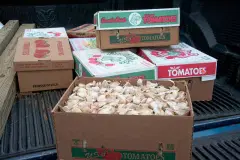
 Garlic Harvest and storage
When to harvest garlic
Garlic gives one clear signal that it is ready, and a short time in which to act on it. Lift too late and the bulbs open up. Dry them badly and they will not see the winter.
In short
Garlic is ready once the leaves have turned yellow, the RHS says: from late spring to early summer if planted in autumn, from mid-summer to early autumn if planted in spring. Lift gently with a fork, dry for two to four weeks, then store cool and dry at 5–10 °C.
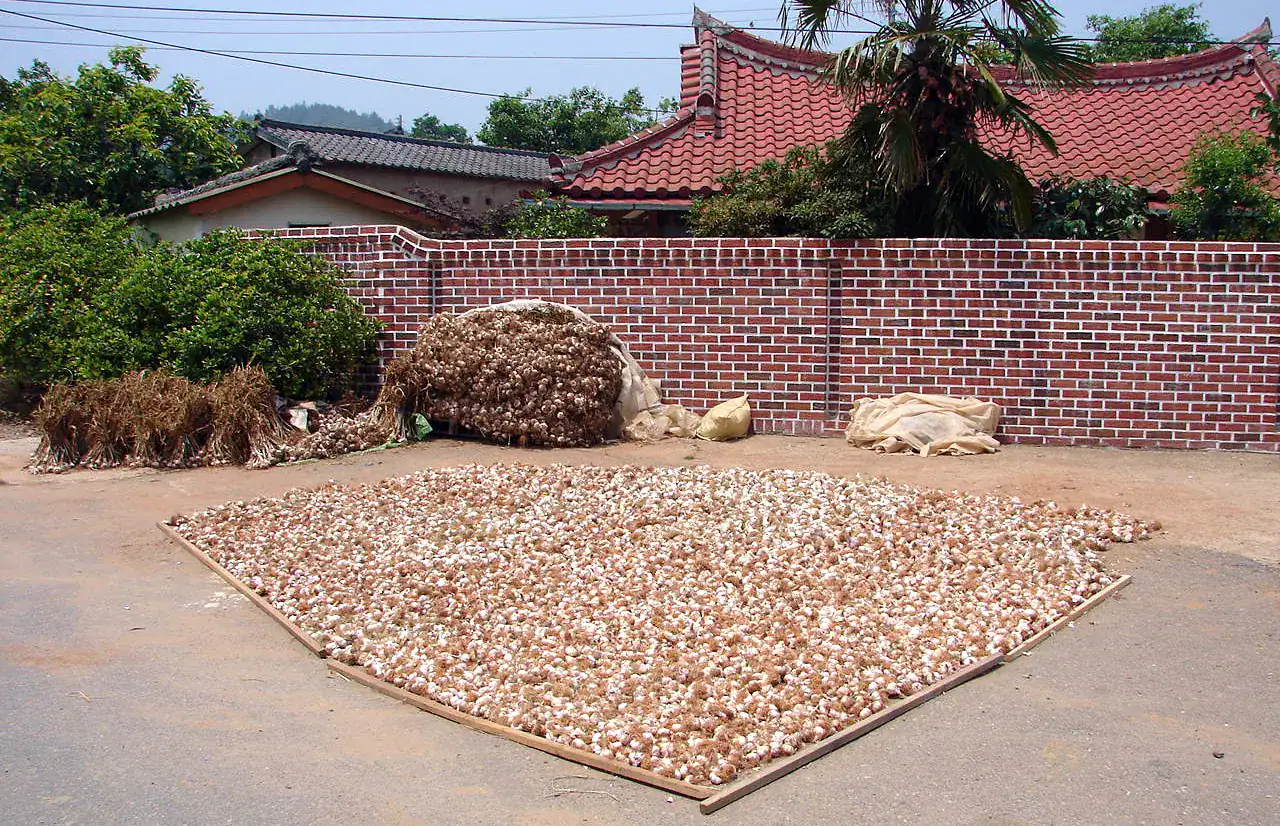

When garlic is ready: the months
When you lift garlic depends first on when you planted it. The RHS gives two seasons.
- Autumn-planted garlic is ready from late spring to early summer. - Spring-planted garlic is ready from mid-summer to early autumn.
Garden Organic gives the harvest as May to August. BBC Gardeners' World says to harvest from July onwards, once the top growth has begun to die back.
These windows are wide, and they have to be. The RHS names seasons, not weeks. Use them to know roughly when to start looking, and let the plant decide the day.
The RHS says garlic is usually planted from mid-autumn to early winter, because most varieties need one to two months at 0–10 °C for good bulb development. If you have not planted yet, see when to plant garlic.
Garlic: what to do and when
Under cover and outdoors, for UK conditions. The weather differs from year to year and from north to south, so check your local conditions too.
The sign to look for: yellow leaves
All three sources point to the same signal.
- The RHS: garlic bulbs are ready to harvest once the leaves have turned yellow. - Garden Organic is more exact: dig out garlic when the first four to six leaves turn yellow. - Gardeners' World: harvest in summer when the leaves turn yellow, once the top growth has begun to die back.
Garden Organic's wording is worth a second look. Its own guide to harvesting and storing separates garlic from its relatives on this point. Onions and shallots are harvested when all the leaves have fallen over naturally. Garlic is dug when just the first few leaves have yellowed. Do not wait for a garlic plant to collapse like an onion.
Yellow leaves can mean something else. BBC Gardeners' World warns that the first sign of onion white rot is also yellowing, wilting foliage, and that it tends to occur around harvest time. The RHS describes what to look for on a lifted plant: white, fluffy fungal growth on the base of the bulb. There is more on this below.
Why you should not wait
The RHS asks you not to delay. Bulbs that are lifted late tend to open up and have a shorter storage life.
It returns to the point in its list of garlic problems. If you find bulbs that have split, this can happen when the crop was harvested late.
So the yellowing leaves are a signal to act on promptly.
How to lift garlic
Use a fork. The RHS says to dig up the bulbs carefully with a fork. Gardeners' World lifts them gently with a fork or trowel, taking care not to damage them. Garden Organic says to dig the garlic out carefully.
Do not bruise them. The RHS explains why gentle handling matters: bruising reduces their storage potential. Gardeners' World says the same about the whole process. Any damage can make the bulbs deteriorate in storage.
Why damage matters so much. Garden Organic gives the general rule for all stored crops. Produce must be undamaged, because once vegetables are no longer growing they have no means to heal.
Green cloves. Sometimes you will lift bulbs with green cloves. The RHS says this is usually due to shallow planting. They can be used as normal, but are unlikely to store well, so send them to the kitchen first.
Drying the bulbs
Garlic is not stored straight from the soil. It is dried first.
How long. The RHS says the initial drying takes two to four weeks, depending on the weather. Garden Organic and Gardeners' World both say a few weeks.
How. The RHS dries the bulbs off thoroughly in a single layer in the sun, in a ventilated greenhouse or a dry shed. Gardeners' World lays them out on a table or on racks, in full sun and out of the rain. Garden Organic keeps them in a hot, dry place. If the weather is fine, it says, they can stay outside, resting above the ground.
Not too hot. The RHS sets a limit. Avoid heat above 30 °C.
How to tell when they are done.
- The RHS: the foliage is dry and rustling. - Garden Organic: the skins are dry and papery. - Gardeners' World: the bulbs are dry and feel papery to the touch.
Then trim, or plait. Once the foliage is dry, the RHS cuts it off. Gardeners' World offers a choice: store the bulbs loose, or keep the foliage and plait it into a traditional string of bulbs.
How to store garlic
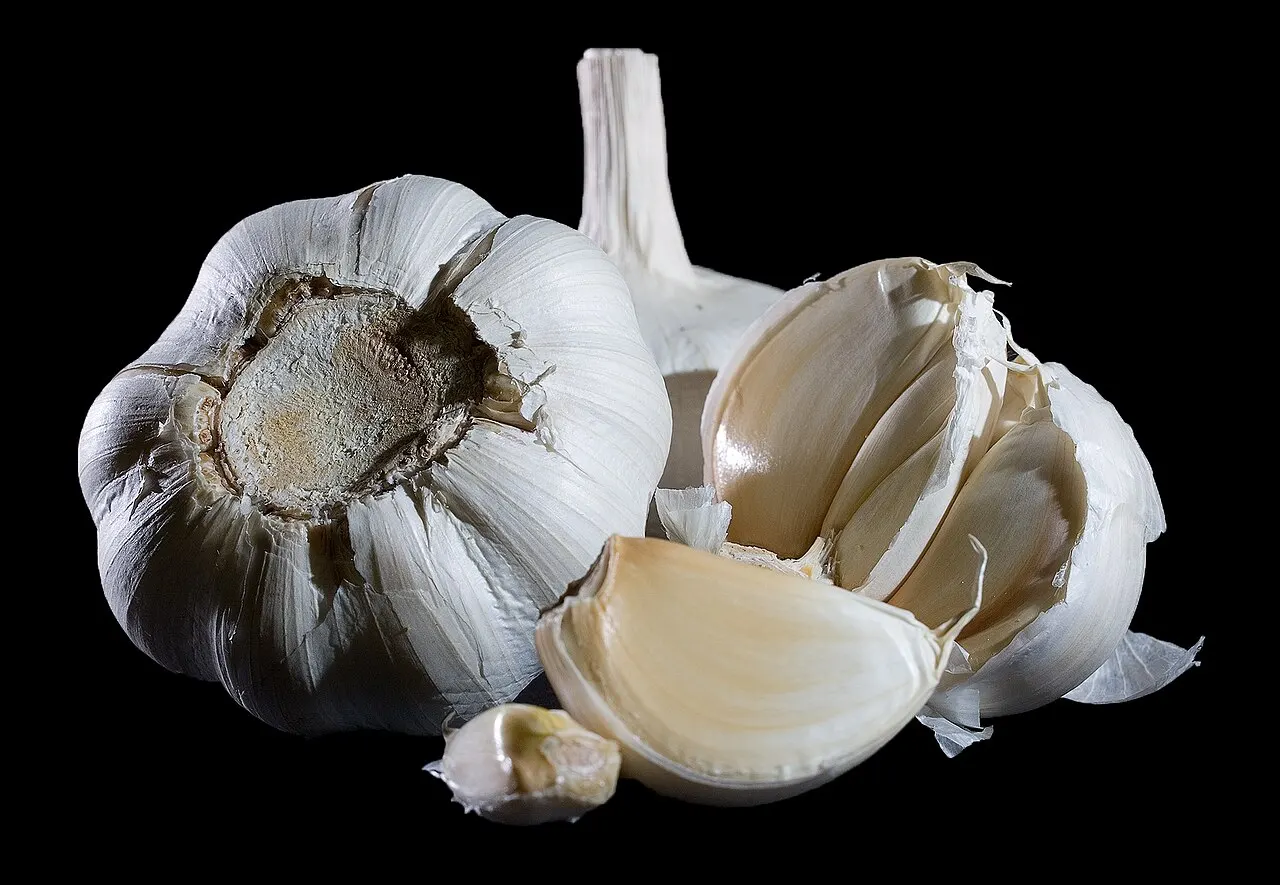

Cool and dry. On this, every source agrees. The RHS stores bulbs in a cool, dry place. Gardeners' World says the same.
How cool? Here they differ.
- The RHS gives 5–10 °C, and notes that the bulbs go on drying there. - Garden Organic gives an ideal temperature of 2–4 °C for onions, shallots and garlic together, and says to protect them from freezing.
Neither source explains the difference.
Air on all sides. Garden Organic says to plait the bulbs into ropes or hang them in net sacks, which allow the air to circulate freely. Gardeners' World stores them loose or plaited.
Which garlic can be plaited. Garden Organic says softneck garlic can be plaited and stored for long periods.
The same principles apply to the rest of the allium harvest. See how to store onions.
How long garlic keeps
This depends on the kind of garlic, and the RHS gives figures.
- Hardneck varieties can store well for four to six months. - Softneck varieties store for longer, potentially up to a year.
It adds a note on planting time for softneck garlic. If planted in autumn, it will keep well into the following winter. If planted in spring, it will keep until the middle of the following spring.
Gardeners' World agrees on the order. Softneck varieties store better than hardneck and should keep for several months, so eat the hardneck varieties first.
Varieties marked as good keepers. In the RHS list, two softneck varieties carry the note "stores well": 'Arno', with ivory-white skin, and 'Solent Wight', which the RHS describes as well adapted to the British climate. Garden Organic advises choosing softneck varieties for storing in general.
Why grow hardnecks, then? For the taste. Garden Organic says they are chosen for their flavour, and Gardeners' World says they tend to have more flavour than softnecks.
Before the harvest: scapes and green leaves
Garlic gives you something to eat before the bulbs are ready.
Scapes. Hardneck garlic readily produces flower stems, the RHS says. These are called scapes. Gardeners' World describes how the stalk straightens out as it matures, to carry a head of tiny clove-like bulbils.
Both sources remove them early. The RHS takes off any flower stems as soon as they start to form. Gardeners' World removes the scape as soon as it appears, so that the plant diverts its energies into producing a larger bulb.
Then eat them. The RHS says scapes are delicious sautéed, barbecued or roasted. Gardeners' World uses them in stir-fries.
Leaves. Before harvest, the RHS says, you can also take a few of the green leaves to use as a garnish or in salads.
Rust and white rot at harvest time
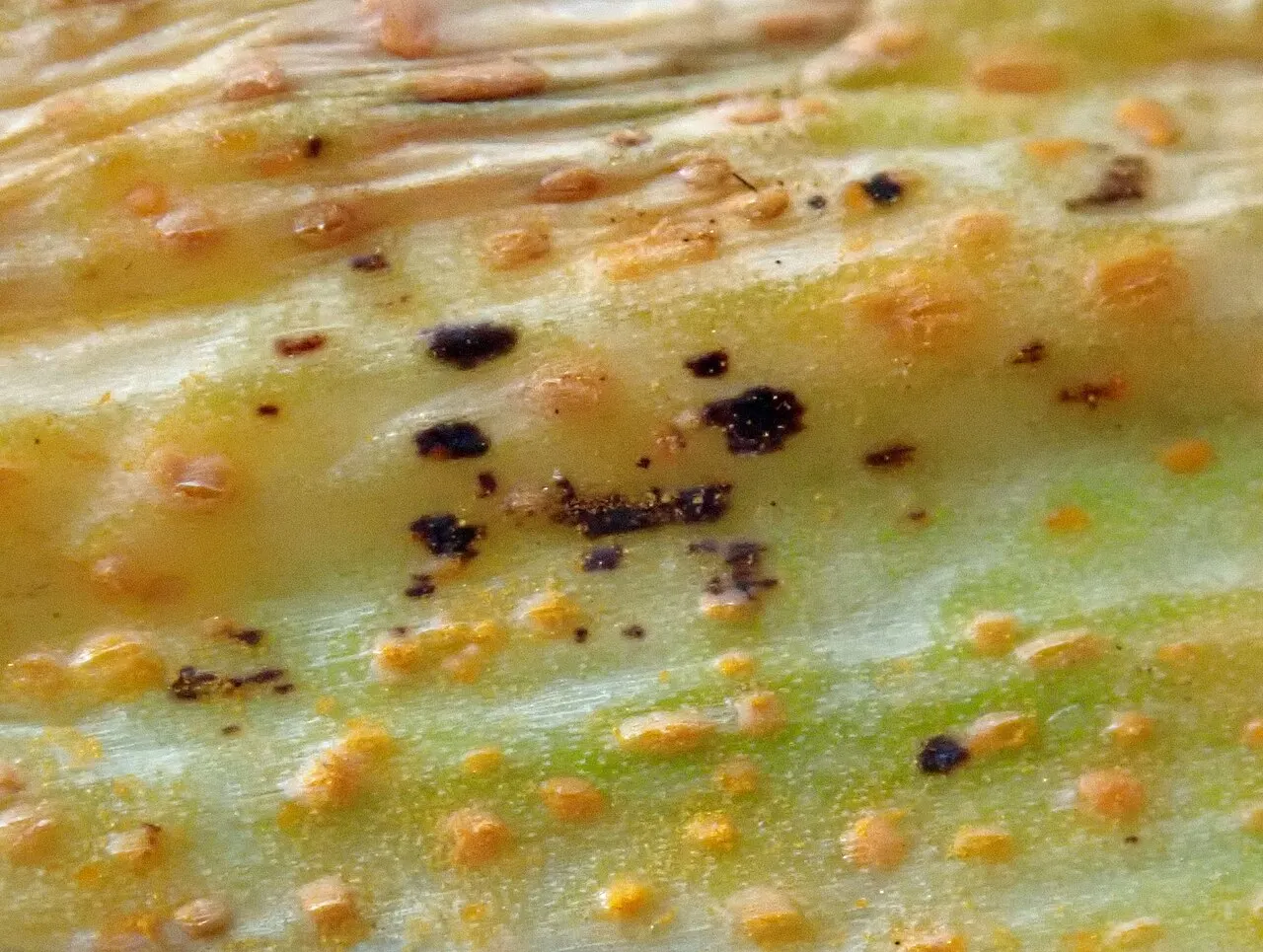

Two diseases are often noticed when the crop is nearly ready.
Leek rust. Despite the name, the RHS says it is important on garlic as well as leeks. Look for bright orange pustules on both sides of the leaves. Most attacks occur from mid-summer until late autumn. Severe attacks may cause leaves to shrivel early and will reduce the plant's vigour.
The bulbs are not spoiled. BBC Gardeners' World says they are perfectly safe to eat. It advises harvesting and eating affected bulbs immediately, to prevent the disease spreading. There is no cure, it says, but the infection is rarely likely to seriously affect your crop.
For next year, the RHS advises:
- Do not crowd plants, as this raises humidity. - Take care with fertiliser. Infection is worse on nitrogen-rich soils with low potassium. - Dispose of all plant debris at the end of cropping.
Onion white rot. This one is serious. The RHS calls it a serious disease of the allium family, especially bulb onions, garlic and leeks. It is caused by a soil-borne fungus.
The foliage yellows and wilts. When you lift the plant, there is a white, fluffy fungal growth on the base of the bulb, which later becomes covered in small black structures. In severe cases, Gardeners' World says, the bulb will be black and rotten.
What to do, according to Gardeners' World:
- Dig up all the affected plants and bin or burn them. Do not compost them. - You may be able to salvage some of the crop to eat, but it will not store well.
The RHS explains why this matters for years to come. The fungus leaves resting bodies in the soil that can remain there for at least 15 years. It spreads in contaminated soil, for example on tools or muddy footwear. Because it lasts so long, the RHS says crop rotation is impractical as a cure. The important thing is not to carry it to clean ground.
Odd things you may find when you lift
The RHS lists a few surprises that turn up at harvest.
A bulb that has not divided into cloves. This is usually the result of insufficient cold weather over winter.
Cloves on the stalk. These are known as top sets. The RHS puts them down to changeable weather in spring.
Elephant garlic with a single round bulb. Elephant garlic is often sold as garlic. It makes a big bulb with a small number of very large, mild cloves. Sometimes it forms a solo bulb instead. The RHS says early planting often reduces this, and that you can eat solo bulbs or replant them the following autumn.
Garlic from lifting to the kitchen shelf
| Stage | Source |
|---|---|
| Sign that it is ready | RHS |
| Sign that it is ready | Garden Organic |
| Autumn-planted garlic | RHS |
| Spring-planted garlic | RHS |
| Drying | RHS |
| Ready to store | RHS, Garden Organic |
| Storage temperature | RHS, Garden Organic |
| Hardneck varieties | RHS |
| Softneck varieties | RHS |
How to do it
- Watch the leaves. Garlic is ready once they have turned yellow.
- Do not wait for long after that. Bulbs lifted late tend to open up and keep less well.
- Lift the bulbs carefully with a fork. Do not bruise them.
- Lay them in a single layer in the sun, in a ventilated greenhouse or a dry shed. Keep them below 30 °C and out of the rain.
- Leave them for two to four weeks, until the foliage is dry and rustles.
- Cut off the dry foliage, or keep it on for plaiting.
- Store the bulbs somewhere cool and dry, in plaits or net sacks so that air can move around them.
- Eat hardneck varieties first. Softneck varieties keep longer.
Common questions
How do I know when garlic is ready to harvest?
The RHS says garlic bulbs are ready once the leaves have turned yellow. Garden Organic digs garlic when just the first four to six leaves turn yellow. BBC Gardeners' World harvests once the top growth has begun to die back.
What month do you harvest garlic in the UK?
The RHS says autumn-planted garlic is ready from late spring to early summer and spring-planted garlic from mid-summer to early autumn. Garden Organic gives May to August. BBC Gardeners' World says from July onwards.
What happens if I leave garlic in the ground too long?
The RHS says bulbs that are lifted late tend to open up and have a shorter storage life. It also names late harvesting as a cause of split bulbs.
How long does garlic need to dry before storing?
The RHS says the initial drying takes two to four weeks, depending on the weather. The bulbs are ready when the foliage is dry and rustling. Garden Organic waits until the skins are dry and papery.
How long will home-grown garlic keep?
The RHS says hardneck varieties can store well for four to six months. Softneck varieties store for longer, potentially up to a year.
Can I eat garlic that has rust on the leaves?
Yes. BBC Gardeners' World says the bulbs are perfectly safe to eat, and advises harvesting and eating affected bulbs immediately to prevent the disease spreading.
Sources
We wrote this page using the sources below.
- How to grow garlic, Royal Horticultural Society (RHS)
- Leek rust, Royal Horticultural Society (RHS)
- Onion white rot, Royal Horticultural Society (RHS)
- Garlic growing guide, Garden Organic
- Harvesting and storing vegetables, Garden Organic
- How to grow garlic, BBC Gardeners' World Magazine