
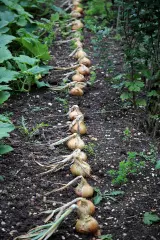
 Onions Harvest and storage
How to store onions
A well-dried onion can hang in the shed until spring. A badly dried one rots from the neck within weeks. Nearly everything that decides which you get happens before the onions go into store.
In short
Lift onions when the leaves yellow and topple, and dry them for about two weeks until all the foliage is papery. Store them in net bags, single-layer trays or plaits in a cool, dry, well-ventilated place. The RHS says spring-planted onions keep well into the following spring.
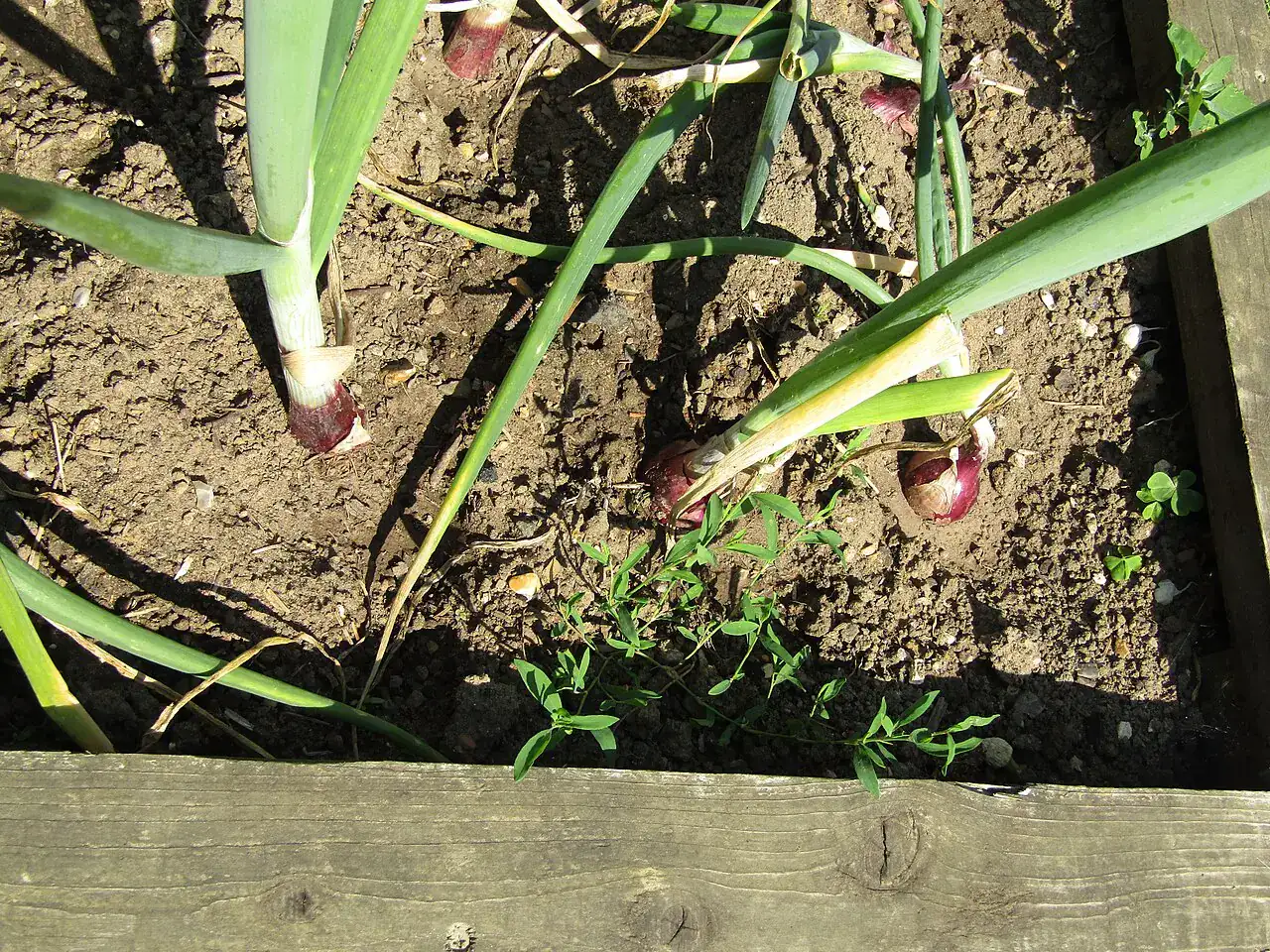

Onions: what to do and when
Under cover and outdoors, for UK conditions. The weather differs from year to year and from north to south, so check your local conditions too.
Storage starts in the row
How well an onion keeps is partly settled months before you lift it. The RHS guides name four things in the growing season that matter.
Feeding. The RHS guide to onion neck rot, a disease that develops in store, says to avoid excess nitrogen and not to apply fertiliser late, which it defines as after July. The aim is hard, well-ripened bulbs.
Watering. Water in dry spells while the bulbs are growing, but stop once they have swollen in midsummer. The RHS says watering spring-planted crops after midsummer can mean they store less successfully.
Flower stems. Remove them as soon as they form. Bulbs that flower will not store well, the RHS says. Garden Organic breaks the stems off too.
Planting time. This decides how long the crop can last at all. The RHS says autumn-planted onions keep until early winter, while spring-planted or seed-raised onions keep well into the following spring. If you want onions for the whole winter, they need to be the spring-planted ones. See when to plant onions.
When to lift onions for storing
The months. The RHS says autumn-planted sets are ready in June and July, and spring-planted sets and seed-raised onions from July to October. Garden Organic gives mid-July to September, and an average time to harvest of 20 weeks.
The sign. Yellowing and toppling of the foliage shows that the crop is reaching maturity, the RHS says. Garden Organic describes the same thing: the leaves turn yellow and fall over.
Do not bend the tops over. It used to be common advice. The RHS now says it is no longer recommended.
How long to wait after the tops fall. The sources put it differently.
- The RHS says to harvest before the foliage dies down completely. - Garden Organic says to dig the bulbs up about two weeks after the leaves fall over. - Gardeners' World waits until the leaves have yellowed and stopped growing, and also lifts before the foliage has browned and died down completely.
These fit together well enough. Let the tops fall, give the bulbs a couple of weeks, and lift while there is still some life in the leaves.
Lifting without bruising
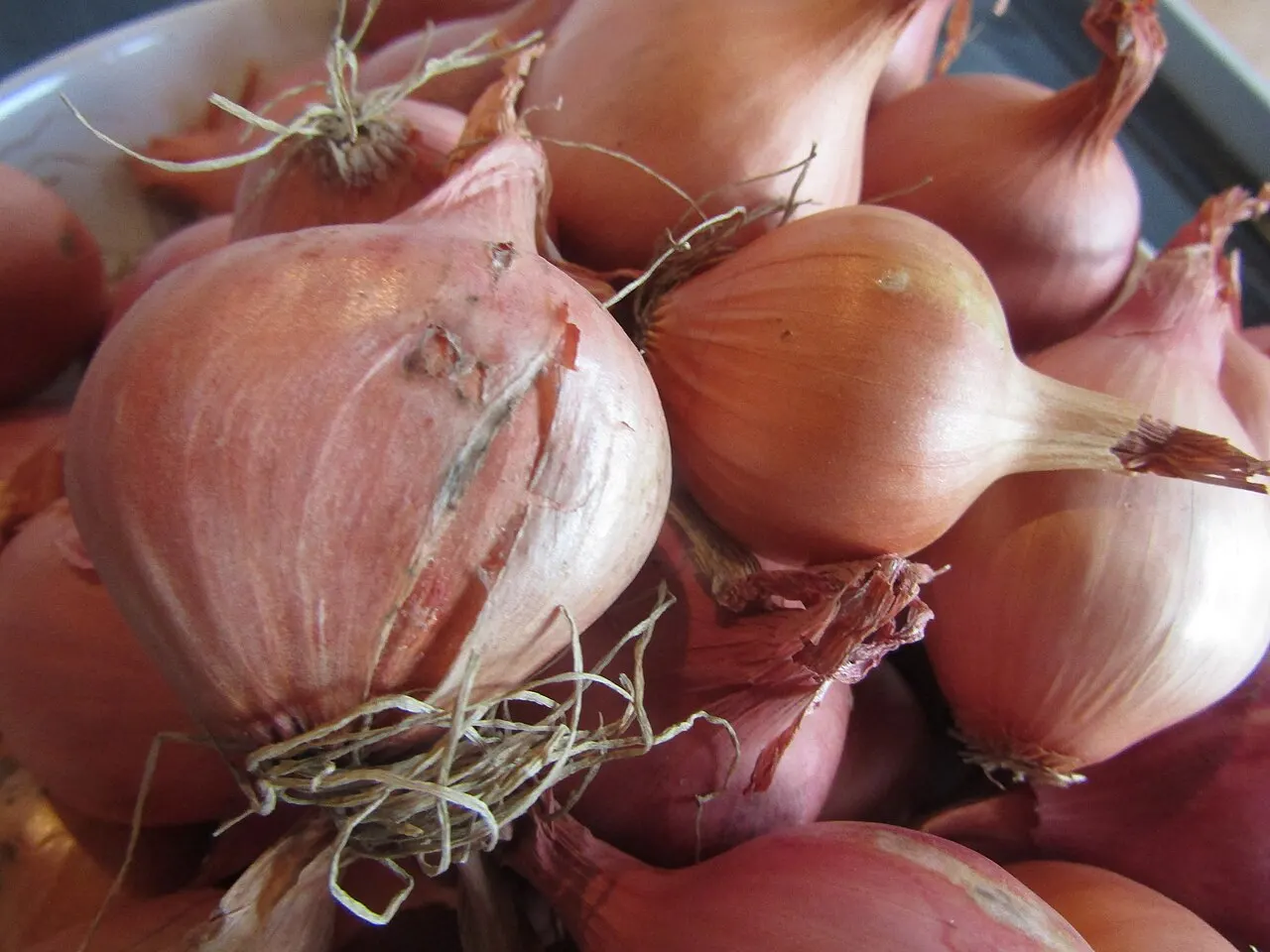

Choose a dry day. Garden Organic says so directly, and the RHS neck rot guide explains why: the bulbs should be kept dry at harvest, and the foliage and necks should dry quickly.
Loosen first. Garden Organic uses a hand fork to loosen the bulbs, which makes lifting easier. The RHS lifts carefully with a fork. Gardeners' World loosens the soil gently, then lifts the onions out.
Handle them gently. The RHS and Gardeners' World both warn about bruising. The RHS says bruised bulbs may rot in storage, and that any damaged onions should be used straight away. Gardeners' World says damaged onions do not store well, so use them first.
Sort as you go. The RHS neck rot guide adds a second group to keep out of the store: thick-necked bulbs. Use them immediately.
Drying: two weeks that decide the winter
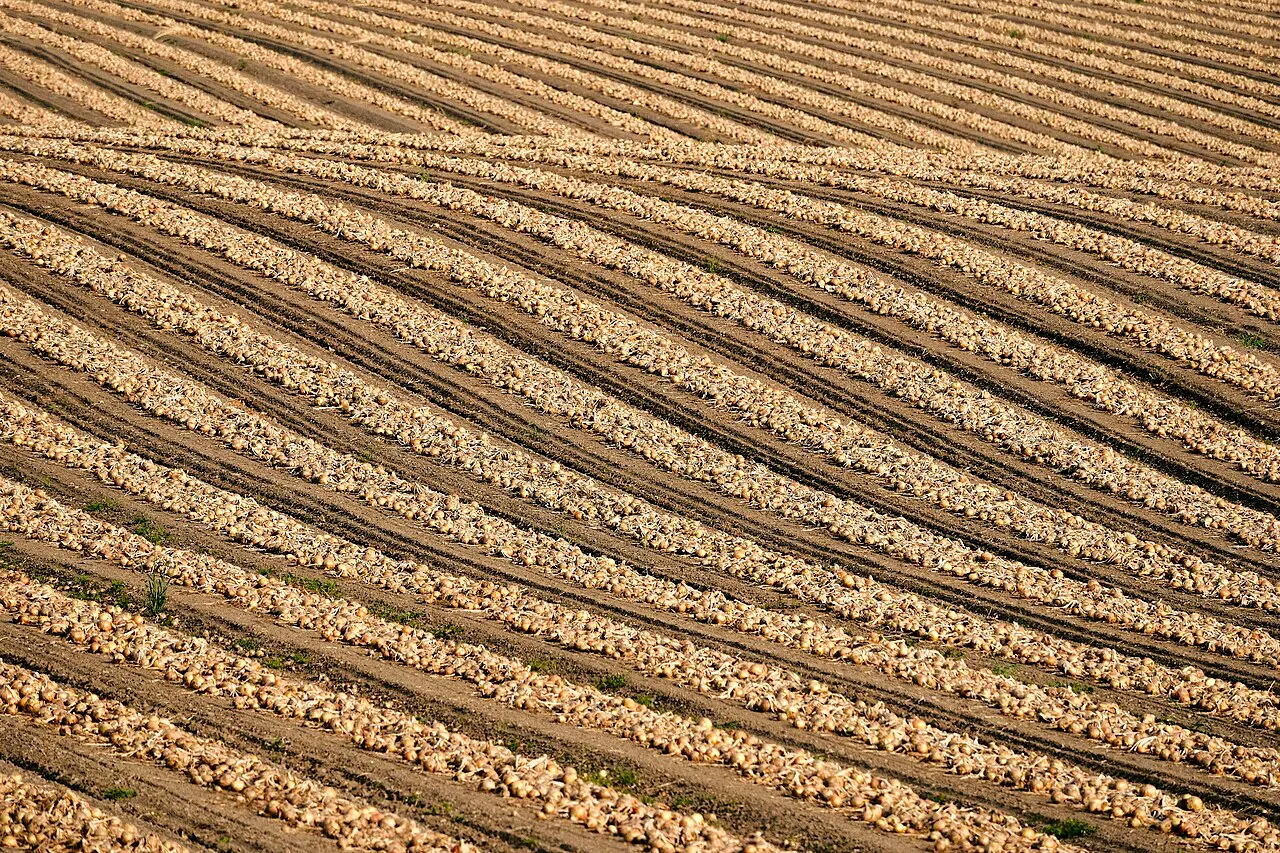

How long. About two weeks, the RHS says.
Where. In full sun outdoors, on wire racks or something similar, so that air can move underneath the bulbs. The RHS neck rot guide lays ripe bulbs on their sides with the roots exposed to the sun. Gardeners' World spreads them on racks or on newspaper. Garden Organic simply says to leave the bulbs in the sun to dry before storing.
If it rains. A British August does not always oblige. The RHS says that in damp weather you should dry onions in a greenhouse or a well-ventilated shed. The neck rot guide says to cover the bulbs if rain threatens, or to dry them under cover.
When they are done. Store onions only once all the foliage is papery and dry, the RHS says. Gardeners' World listens for the skins to rustle.
Nets, trays and plaits
The RHS gives three ways to store dried onions.
1. Net bags. 2. Trays, in a single layer. 3. Plaits, tied and hung up.
The RHS neck rot guide lists the same kind of thing: wire netting, slatted shelves, or strings hung from the rafters. What they share is air on every side of the bulb. Garden Organic recommends plaiting as a way to save space.
Tops on or off? The RHS neck rot guide says to twist off the tops before storing. A plait needs the dry tops left on. Both appear in RHS advice, so choose by method: tops off for nets and trays, tops on for plaits.
Where to keep onions: light or dark?
On most points the sources agree. Onions want a place that is cool, dry and well ventilated. The RHS neck rot guide says warm, damp storage conditions favour the disease.
On light, they disagree.
- The RHS says to keep onions in a light place, and is explicit: do not store them in the dark, as this encourages sprouting. - Gardeners' World says to hang or string them in nets in a cool, dark, dry place.
We have not found a source that explains the difference. The RHS gives a reason for its advice and Gardeners' World does not, so we lean towards the RHS. What neither source disputes is that the store must be cool, dry and airy. A shed or garage with a window meets both the RHS conditions.
How long they last. Gardeners' World says they should last for months. The RHS is more exact: autumn-planted onions until early winter, spring-planted and seed-raised onions well into the following spring.
Neck rot, the disease of the onion store
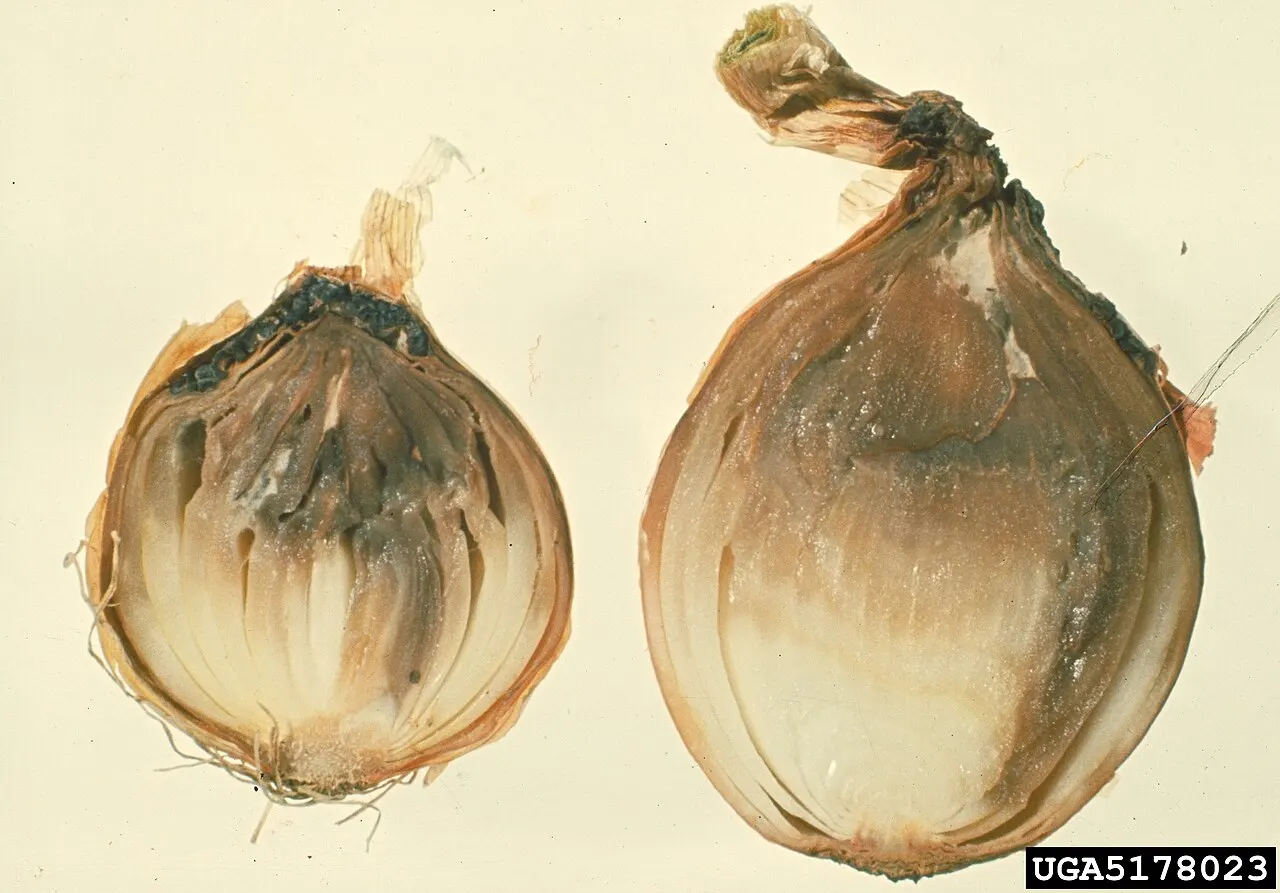

The RHS describes onion neck rot as a fungal disease of onions and shallots, and occasionally garlic, caused by *Botrytis allii*. It can cause severe losses in store.
Why it catches people out. The plants usually look healthy while they are growing. Infection happens during growth and at harvest, but the symptoms usually do not show until the bulbs have been in store for several weeks.
What it looks like. The decay usually starts at the neck and can spread down the whole bulb. The scales turn soft and brown, as if cooked. A dense grey mould follows, and often hard, black, crust-like bodies. In the end the bulb dries out, sinks and mummifies. Gardeners' World describes brown marks and fluffy grey mould.
Where it comes from. The fungus can arrive on seed and sets, the RHS says, and it persists in the soil.
What you can do. There are no fungicides available to gardeners for it. The RHS list of defences is the method on this page:
- Buy seed or sets from a reputable company. - Do not grow onions for three years in soil where the disease has occurred. - No excess nitrogen, and no fertiliser after July. - Keep the bulbs dry at harvest and dry the necks quickly. - Use damaged or thick-necked bulbs straight away. - Store cool, dry and airy.
The RHS adds that white-bulbed cultivars are more likely to be attacked than red or yellow ones.
Checking through winter
Check stored onions regularly, the RHS says. Remove any that are decaying, and any that are sprouting early.
Rotting in store has more than one cause. The RHS growing guide says onions are prone to several fungal diseases, especially in damp conditions or if poorly stored. One soft bulb in a net is a reason to look at all of them.
Sprouting is the other way a store ends. The RHS links it to darkness.
Varieties that store well
If you are choosing sets for next year with the winter in mind, the RHS growing guide marks these as storing well.
- 'Sturon' - 'Centurion', which crops early - 'Red Baron', a red onion that crops in mid- to late summer - 'Marshalls Red Fen', also red - 'Rumba'
Remember the planting time as well. However good the variety, the RHS says autumn-planted onions keep only until early winter.
How much to expect. Gardeners' World gives an average yield of 30 large onions from a 3 m row. That is a useful figure when you plan how many nets or trays you will need.
How long onions keep, and what shortens it
| Onion | What happens |
|---|---|
| Spring-planted sets and seed-raised onions | Keep well into the following spring |
| Autumn-planted onions | Keep until early winter |
| Bruised or damaged bulbs | May rot in storage: use straight away |
| Thick-necked bulbs | Use immediately, do not store |
| Bulbs that flowered (bolted) | Will not store well |
| Crops watered after midsummer | May store less successfully |
| White-bulbed cultivars | More likely to be attacked by neck rot than red or yellow ones |
How to do it
- Stop watering once the bulbs have swollen in midsummer.
- Wait for the leaves to yellow and topple by themselves. Do not bend them over.
- On a dry day, loosen the bulbs with a fork and lift them carefully so that they are not bruised.
- Set aside damaged and thick-necked bulbs for the kitchen.
- Dry the rest in full sun on racks for about two weeks, or in a greenhouse or airy shed if the weather is damp.
- When all the foliage is papery and dry, put the bulbs in net bags or single-layer trays, or plait them and hang them up.
- Keep them somewhere cool, dry and well ventilated.
- Check regularly. Remove any bulb that is rotting or sprouting.
Common questions
How long do onions need to dry before storing?
About two weeks, the RHS says, in full sun on racks so that air circulates beneath them. In damp weather dry them in a greenhouse or well-ventilated shed. They are ready when all the foliage is papery and dry.
Where is the best place to store onions?
Somewhere cool, dry and well ventilated, in net bags, single-layer trays or plaits. The RHS says a light place, because darkness encourages sprouting. Gardeners' World says a cool, dark, dry place.
How long will stored onions keep?
The RHS says spring-planted and seed-raised onions keep well into the following spring. Autumn-planted onions keep only until early winter.
Should I bend over the tops of my onions?
No. The RHS says this is no longer recommended. Wait for the foliage to yellow and topple by itself.
Why are my stored onions rotting?
One cause is neck rot, which the RHS says usually shows only after several weeks in store. It keeps bruised and thick-necked bulbs out of the store, dries the necks quickly, and says warm, damp storage favours the disease.
Should I cut the tops off onions before storing?
For nets and trays, the RHS neck rot guide twists off the dry tops. For plaits, the dry tops are left on. Either way, the foliage must be papery and dry first.
Sources
We wrote this page using the sources below.
- How to grow onions, Royal Horticultural Society (RHS)
- Onion neck rot, Royal Horticultural Society (RHS)
- Onion (bulb) growing guide, Garden Organic
- How to grow onions, BBC Gardeners' World Magazine