
 Hydrangeas Growing and care
How to grow hydrangeas
Hydrangeas forgive a lot, but not dry roots. Keep the soil evenly moist and go easy on the fertiliser, and they will flower from mid-summer onwards.
In short
Grow hydrangeas in light shade, in moist soil that drains well. Mulch in spring, water new plants in dry spells and established ones in hot, dry weather. The RHS says regular feeding is not generally needed. Blue flowers need acid soil. Prune lightly or hard, depending on the type.
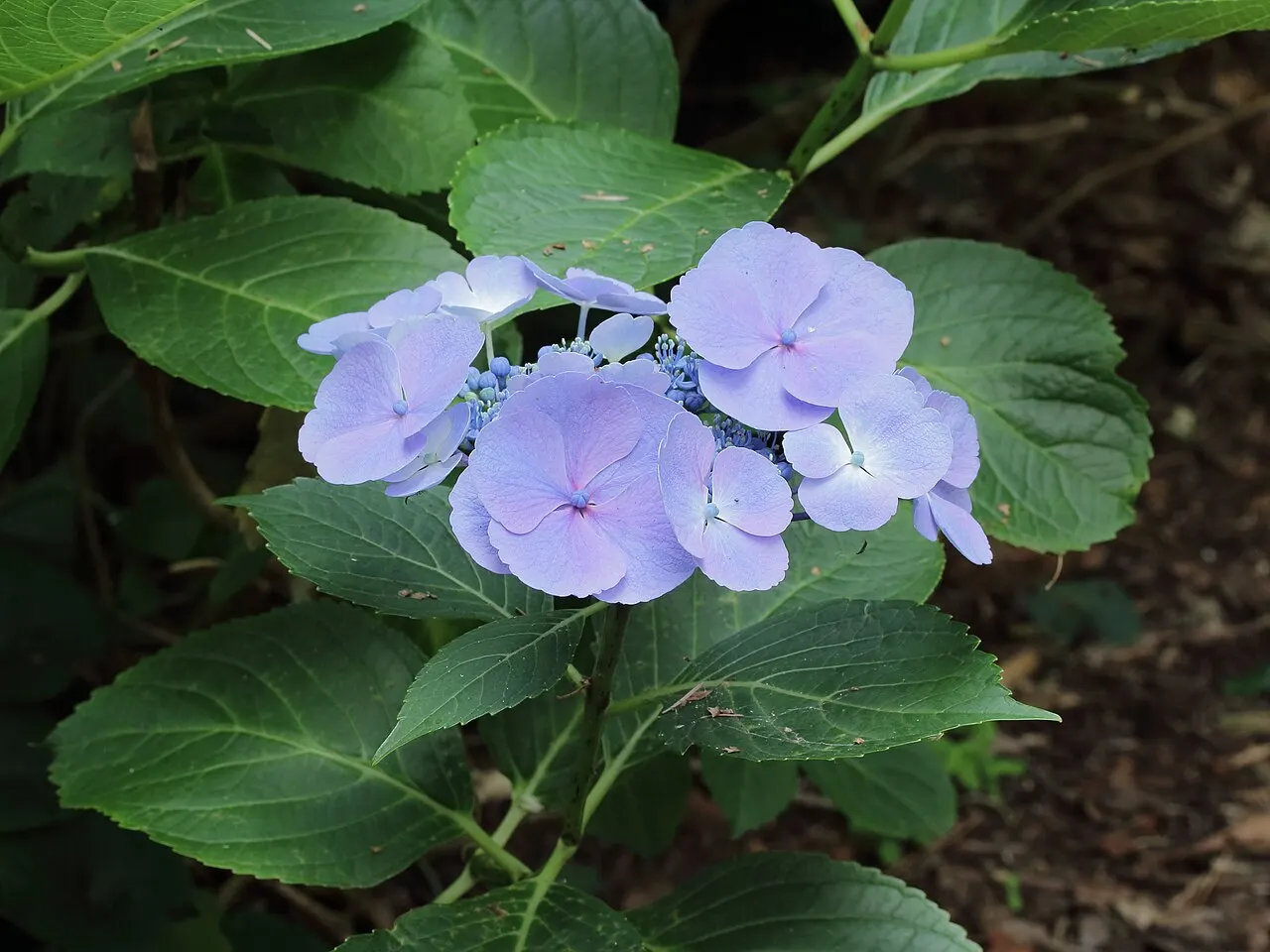

What hydrangeas need
Shrubby hydrangeas give colour from mid-summer onwards, the RHS says, and the flowers last so well that they can also be used for drying and flower arranging.
Their needs fit in three lines.
- Light shade. The RHS says hydrangeas are best in light shade. They tolerate sun if the soil is not too dry. - Moist soil that drains well. They like moister soils that are not prone to waterlogging, and the RHS calls them well suited to clay. - Shelter. The new growth in spring is prone to frost damage. Keep hydrangeas out of frost pockets and away from cold or scorching winds.
BBC Gardeners' World describes the same spot in its own words: moist, free-draining soil in dappled shade, not too sunny and not too shady. It advises against south-facing positions, especially where the soil is very dry.
Planting itself is covered in when to plant hydrangeas.
Hydrangeas: what to do and when
Under cover and outdoors, for UK conditions. The weather differs from year to year and from north to south, so check your local conditions too.
Which hydrangea do you have?
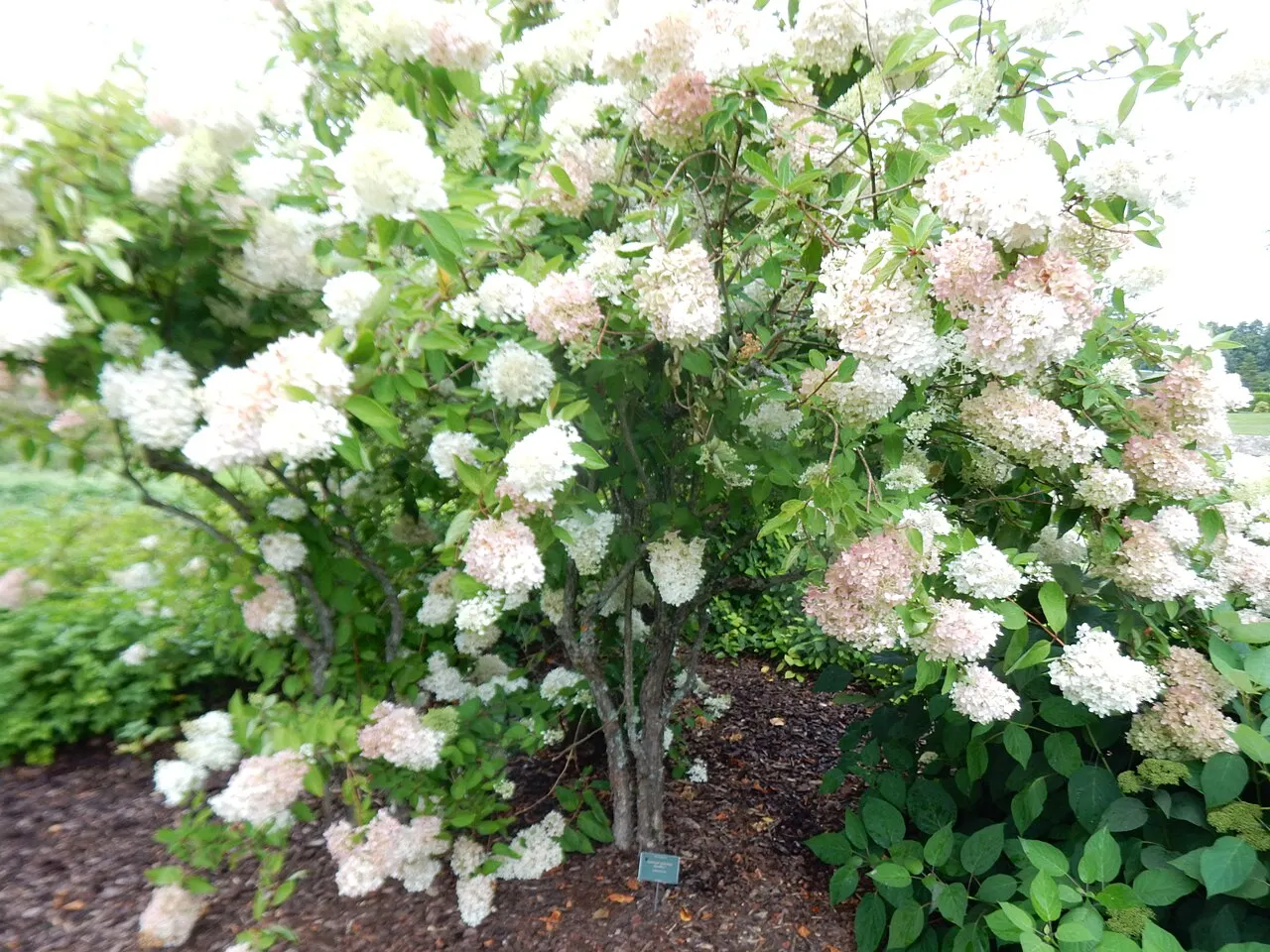

Pruning and flower colour depend on the type, so it helps to know which you have. The RHS sorts them by the shape of the flower head.
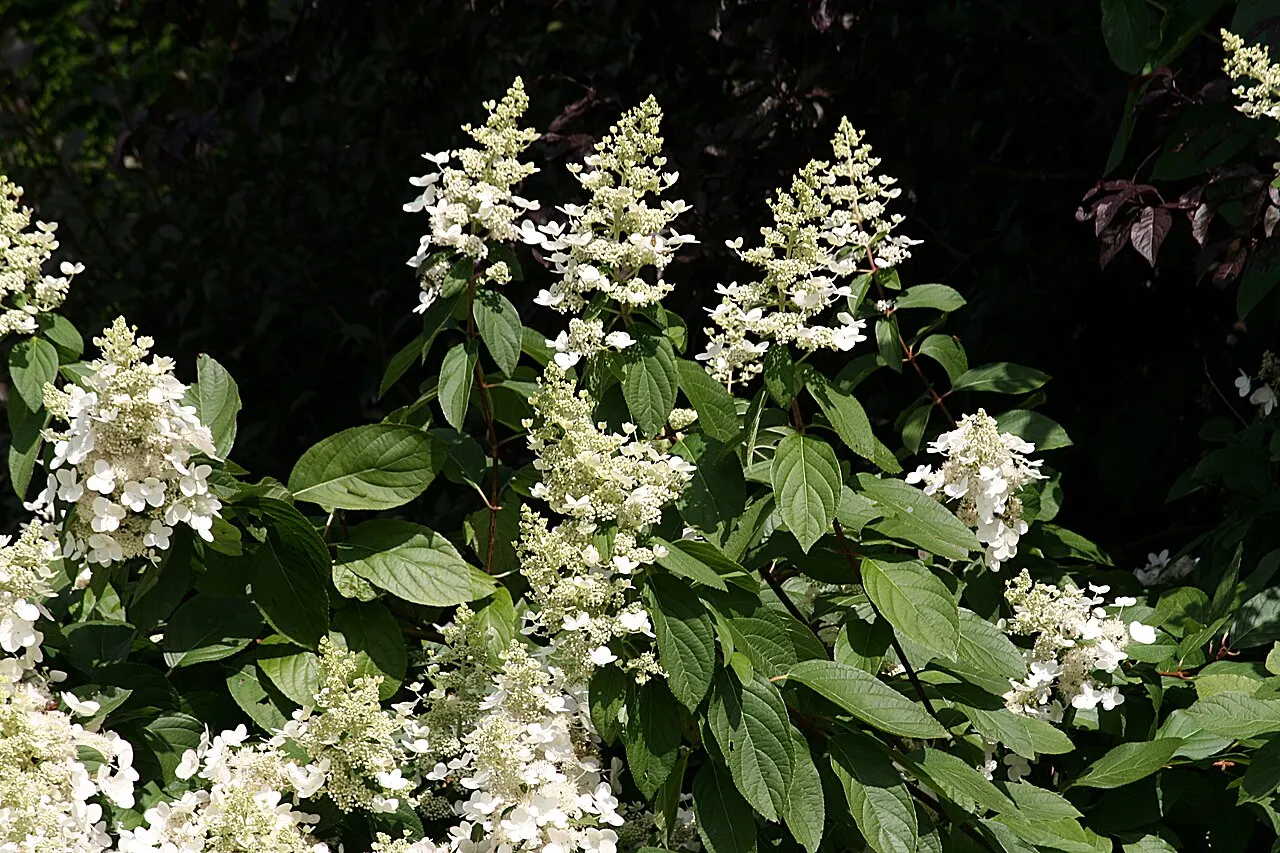
- Round flower heads: mophead *Hydrangea macrophylla*, also called hortensia, or *H. arborescens*. - Flat flower heads: lacecap *H. macrophylla*, *H. serrata*, or *H. aspera*. - Cone-shaped flower heads: *H. paniculata* or *H. quercifolia*.
Size. Hydrangeas range from small shrubs to large, almost tree-like plants, the RHS says, so check the label. Its plant guide gives *H. macrophylla* 'Altona' as 0.5–1 m high, and both *H. arborescens* 'Annabelle' and *H. paniculata* 'Vanille Fraise' as 1.5–2.5 m high.
When to buy. The best choice in garden centres is from mid-summer, when the plants are in flower, the RHS says. Plants in containers can be planted all year round.
Climbers are a separate group. There is a short section on them further down.
Watering
Hydrangeas thrive in evenly moist soil, the RHS says.
New plants. Water newly planted hydrangeas as needed during the first growing season. The RHS gives a rule of thumb for spring and summer: water when there has been no significant rain for 7–10 days. BBC Gardeners' World waters regularly through the first growing season, up to weekly if needed.
Established plants. Even mature plants will benefit from watering during hot, dry spells, the RHS says.
Wilting. BBC Gardeners' World says hydrangeas can wilt in hot weather, especially in full sun, and that the answer is extra water during hot spells. The RHS plant guide warns what happens if the dryness goes on: very dry soil combined with full sun can cause leaf scorch and poor flowering.
Pots. Check the moisture of plants in containers regularly and make sure they do not dry out. The RHS moves pots to a shadier spot in summer.
Blue cultivars. Water these with rainwater if you can, to keep the flower colour. If rainwater runs short, the RHS says to use tap water, so that the plant does not suffer drought stress.
Hydrangeas: growing conditions
Hydrangea
- Position
- Light shade. Sun if the soil is not too dry
- Soil
- Moist but draining well. Suits clay
- Soil pH
- About 4.5–5 for blue flowers
- Plant
- Spring or autumn
- Watering
- New plants after 7–10 days without rain, established plants in hot, dry spells
- Difficulty
- Easy
Mulching
A mulch is the second half of watering. The RHS says to mulch in spring to improve soil moisture retention, and that regular mulching reduces moisture stress.
What to use. The RHS suggests organic matter such as garden compost or a manure-based soil conditioner. BBC Gardeners' World mulches every spring with leaf mould, well-rotted manure or compost.
How. Spread it at least 5 cm thick, and leave a gap of 10–15 cm around the stems.
A note on timing. The RHS growing guide says spring in its quick facts. A pop-up glossary note on the same page defines a mulch in general as something applied in late autumn to late winter, November to February. That note is a general definition, not advice written for hydrangeas, so this page follows the guide's own wording. Spring is also the season BBC Gardeners' World gives.
Feeding: usually none
The RHS says regular feeding of established plants is not generally needed. By established it means plants that have been in their place for two or three years.
It also says what too much does. Too much fertiliser encourages excessive soft, leafy growth, with plants less likely to develop flower buds and more at risk from frost damage. BBC Gardeners' World agrees: apart from the spring mulch, generally avoid feeding, as it favours leaves over flowers.
The exception. Plants that are struggling on lighter, sandier soils may benefit from a spring application of general fertiliser, the RHS says. It gives no amount. And it adds a caution: drought stress can also cause this problem, so mulching may be more helpful.
In short: if a hydrangea looks unhappy, think water and mulch before fertiliser.
Blue, mauve or pink
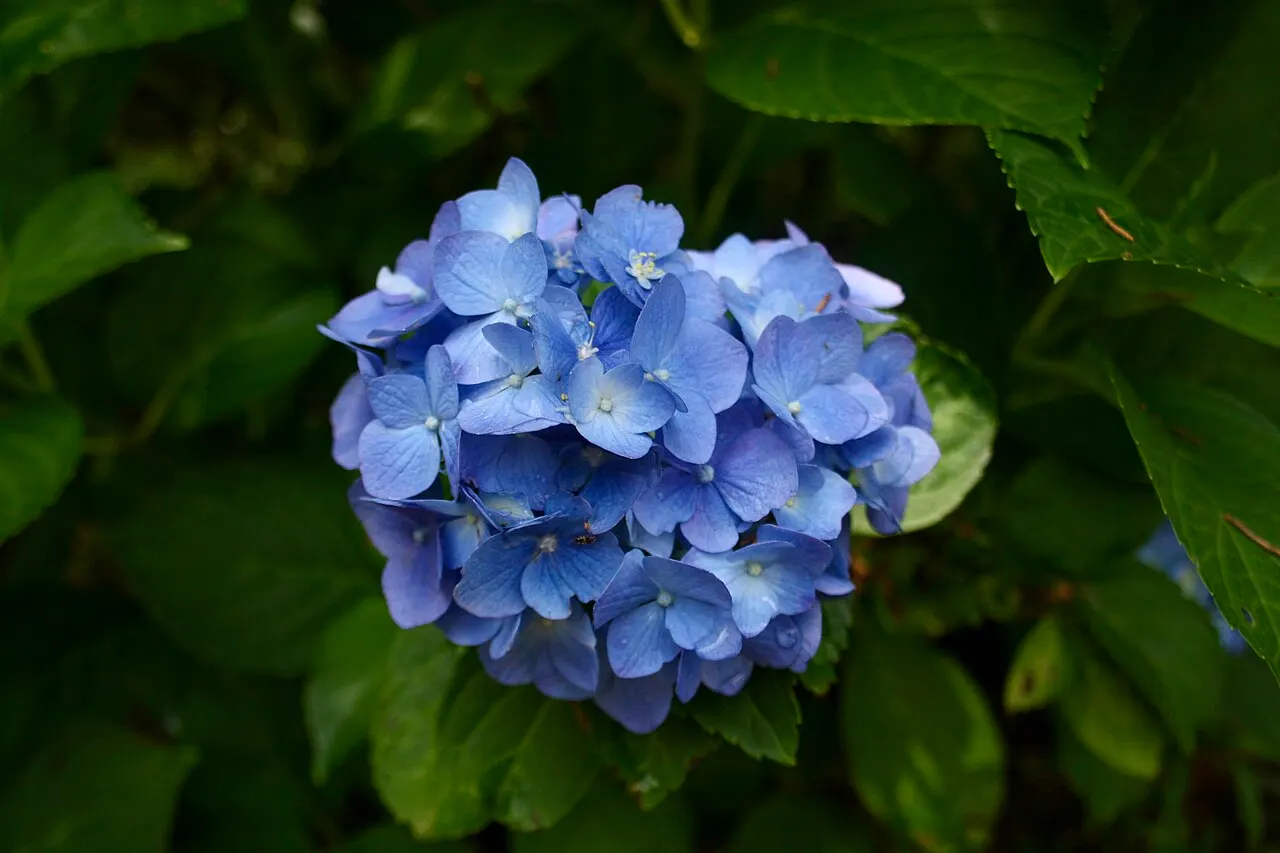

On mophead and lacecap *H. macrophylla*, and on *H. serrata* and *H. involucrata*, the colour of blue and pink cultivars follows the soil. The RHS gives the rule.
- Blue in acid soil. - Mauve in lightly acid to neutral soil. - Pink in alkaline soil.
White, red and green cultivars keep their colour whatever the pH. The RHS plant guide adds the missing piece: flowers are blue in acid soil with high available aluminium.
To keep flowers blue. Keep the soil at about pH 4.5–5. If the colour is unreliable, the RHS suggests a hydrangea blueing compound containing aluminium sulphate, used as the maker says. These will not work in very alkaline soil, or soil with visible pieces of chalk. There, grow the plant in a pot of peat-free ericaceous compost.
For better pink or red. Apply ground limestone or chalk in winter, at 75–100 g per square metre.
Hydrangea flowers also change colour as they age. By August and September, the RHS says, blue and pink flowers turn shades of green and pink or red.
Hydrangeas in pots
Compact cultivars grow well in containers. The RHS names *H. macrophylla* 'Red Hot Violet' and 'Altona'.
Compost. For blue flowers where your soil is alkaline, use peat-free ericaceous compost. Otherwise the RHS mixes two parts peat-free John Innes No 3 with one part peat-free multipurpose compost. BBC Gardeners' World also uses a soil-based compost, and reminds you to check that the pot has drainage holes.
Summer. Check the moisture often and move the pot to a shadier spot.
Winter. The RHS says there is no need to wrap the pot. Raise it on pot feet or a few bricks to improve drainage and prevent waterlogging. You can move it to a more sheltered spot, such as a cold greenhouse or against a sheltered, sunny wall. In dry spells in winter, check that the compost has not dried out.
Through the year

Spring. Mulch. Prune, according to the type. The RHS prunes mopheads, lacecaps and *H. serrata* lightly in mid-spring, and *H. paniculata* and *H. arborescens* in early spring, before they start growing actively. Watch for late frost on the new shoots.
Summer. Water in dry spells. The flowers come from mid to late summer.
Autumn. Leave the faded flower heads on mopheads. The RHS says they protect the new growth below from frost, and its plant guide notes that the fading flowers can last well into the winter months.
Winter. Most hydrangeas are hardy throughout most of the UK, the RHS says. The young buds, though, may be damaged by late frosts. Lime for pink cultivars goes on now.
Pruning is where the types really differ, and a wrong cut can cost a summer of flowers. Each type is taken in turn in pruning hydrangeas.
New plants from cuttings
Hydrangeas are easily propagated from cuttings, the RHS says. It lists three kinds.
- Softwood cuttings from late spring to mid-summer. The RHS guide to softwood cuttings gives a slightly earlier season for softwood cuttings in general: spring to early summer, April to June. - Semi-ripe cuttings in mid-summer. - Hardwood cuttings in winter.
Species hydrangeas can also be grown from seed in spring.
How to take a softwood cutting. The hydrangea guide gives the timing but not the method. The RHS guide to softwood cuttings, which lists hydrangea among the shrubs that suit this method, gives these steps.
1. Collect non-flowering shoots early in the day. 2. Make each cutting about 5–10 cm long, and trim it below a node. 3. Remove the lower leaves. 4. Insert the cuttings in a pot of peat-free cuttings compost, and water from above to settle the compost. 5. Put the pot in a closed propagator, or cover it with a plastic bag. Keep it in good light, but out of direct, scorching sunlight. 6. Rooting takes about two to four weeks. Then pot the cuttings on individually.
BBC Gardeners' World describes much the same method for hydrangeas. It adds two details of its own: reduce the remaining leaves by up to half, and use gritty compost or multi-purpose compost with plenty of perlite.
Be patient. The RHS says the new plants will take two to three years to start flowering.
Problems
Frost damage. New spring shoots are prone to frost damage, the RHS says. Prune badly damaged shoots back to just above the first undamaged pair of buds on live, healthy wood. BBC Gardeners' World describes the sign: brown or blackened leaves or buds in spring.
Hydrangea scale. A sap-sucking insect. The RHS says it is most noticeable in early summer, when the eggs appear on stems and leaves. They are covered in white waxy fibres that form smooth, oval patches 3–4 mm long. The scales themselves are brown, oval and about 3 mm across. Heavily affected plants lack vigour and may shed leaves. The RHS says the scale became established in Britain during the 1980s and is now widespread in English gardens. It can also feed on other woody plants, including *Acer* and *Prunus*.
What to do, according to the RHS:
- Well-tended, healthy plants can tolerate light populations and may need nothing done. - Encourage the predators: ladybirds, parasitoid wasps and some birds. - Remove adult scales and egg masses when you see them, though this may not reduce a large population. - A heavily affected plant can be removed and replaced in autumn.
No flowers. The RHS guides give several causes. Heavy pruning of mopheads, lacecaps and *H. serrata* removes the flowers, because they form on shoots from last year's stems. Too much fertiliser makes plants less likely to develop flower buds. Very dry soil in full sun leads to poor flowering. BBC Gardeners' World says the usual cause is pruning at the wrong time of year.
If you use any plant protection product, use only products approved in the UK, used as the label says.
Climbing hydrangeas, briefly
The climbing hydrangea, *Hydrangea anomala* subsp. *petiolaris*, is hardy and easy, the RHS says. Its care differs in a few ways.
- Where. It suits east- and north-facing walls and fences, and grows in sun or shade. A sunnier site works if the soil does not dry out in summer. - Soil. Not fussy, but it may struggle on excessively wet or chalky soil. - Planting. Set the plant about 45 cm from a wall. - Support. It needs wires or trellis to start. Tie in the new shoots until the aerial roots attach. Use a sturdy support, because mature plants are heavy. - Watering. Water in summer when it is dry, especially near walls and fences. New plants need regular watering in spring and summer for their first few years. - Feeding. Not generally needed unless the plant is struggling, and the RHS says mulching and watering will be more helpful. - Patience. Young plants often take three to five years to flower.
Two evergreen climbers, *H. seemannii* and *H. serratifolia*, are not fully hardy. The RHS says they need a warm, sheltered spot.
A word on safety
The RHS advises wearing gloves when you handle hydrangeas, as contact with the foliage may aggravate skin allergies. It also notes that all parts may cause a mild stomach upset if eaten.
Cheat sheet: growing shrubby hydrangeas
| What | Advice |
|---|---|
| Light | Best in light shade. Sun is tolerated if the soil is not too dry |
| Soil | Moist but draining well. Well suited to clay |
| Mulch | In spring, with organic matter, at least 5 cm thick |
| Watering, new plants | First growing season, after 7–10 days without significant rain |
| Watering, established plants | In hot, dry spells |
| Feeding | Not generally needed for established plants |
| Blue flowers | Acid soil, about pH 4.5–5, and rainwater where possible |
| Pink or red flowers | Ground limestone or chalk in winter, 75–100 g per square metre |
| Pots | Two parts peat-free John Innes No 3 to one part peat-free multipurpose compost |
| Cuttings | Softwood from late spring to mid-summer, semi-ripe in mid-summer, hardwood in winter |
How to do it
- Find out which hydrangea you have. The shape of the flower head tells you the type, and the type decides the pruning.
- Grow it in light shade, in soil that stays moist but drains well, away from frost pockets.
- Mulch around the plant in spring with garden compost or a manure-based soil conditioner, leaving a gap around the stems.
- In the first growing season, water whenever there has been no significant rain for 7–10 days.
- Water established plants in hot, dry spells. Use rainwater on blue cultivars where you can.
- Do not feed an established plant as a routine. If it is struggling, try mulching and watering first.
- Leave the faded flower heads on mopheads over winter and prune in spring.
- Wear gloves when you handle the plant. The RHS says the foliage may aggravate skin allergies.
Common questions
Are hydrangeas easy to grow?
Yes, in the right place. The RHS says they are best in light shade, in moist soil that drains well, and are well suited to clay. Most are hardy throughout most of the UK, though late frosts can damage young buds.
How often should I water a hydrangea?
In its first growing season, whenever there has been no significant rain for 7–10 days, the RHS says. Established plants benefit from watering in hot, dry spells. Do not let hydrangeas in pots dry out.
Should I feed my hydrangea?
Usually not. The RHS says regular feeding of established plants is not generally needed, and that too much fertiliser gives soft, leafy growth and fewer flower buds. Struggling plants on light, sandy soil may benefit from a general fertiliser in spring.
Why is my hydrangea wilting?
BBC Gardeners' World says hydrangeas can wilt in hot weather, especially in full sun, and need extra water in hot spells. The RHS says very dry soil combined with full sun can cause leaf scorch and poor flowering.
How do I turn my hydrangea blue?
Only blue and pink cultivars change. The RHS says they are blue in acid soil, at about pH 4.5–5. It suggests a blueing compound containing aluminium sulphate, or a pot of peat-free ericaceous compost on very alkaline soil.
What are the white blobs on my hydrangea?
Hydrangea scale. The RHS describes eggs covered in white waxy fibres, in smooth, oval patches 3–4 mm long on stems and leaves, most noticeable in early summer. Healthy plants tolerate light populations.
Sources
We wrote this page using the sources below.
- How to grow shrubby hydrangeas, Royal Horticultural Society (RHS)
- Shrubby hydrangeas (plant guide), Royal Horticultural Society (RHS)
- How to grow climbing hydrangeas, Royal Horticultural Society (RHS)
- Hydrangea scale, Royal Horticultural Society (RHS)
- How to grow hydrangeas, BBC Gardeners' World Magazine, 2024
- Cuttings: softwood, Royal Horticultural Society (RHS)