
 Blackcurrants Pruning
Pruning blackcurrants
Blackcurrants crop on young wood, so the job is simple: every winter, take out the oldest stems at the base and let fresh ones grow in their place.
In short
Prune established blackcurrants every winter, while they are leafless and dormant. Cut out up to a third of the stems, choosing the oldest and darkest, right down to the base. Newly planted bare-root bushes are cut to one or two buds above ground straight after planting.
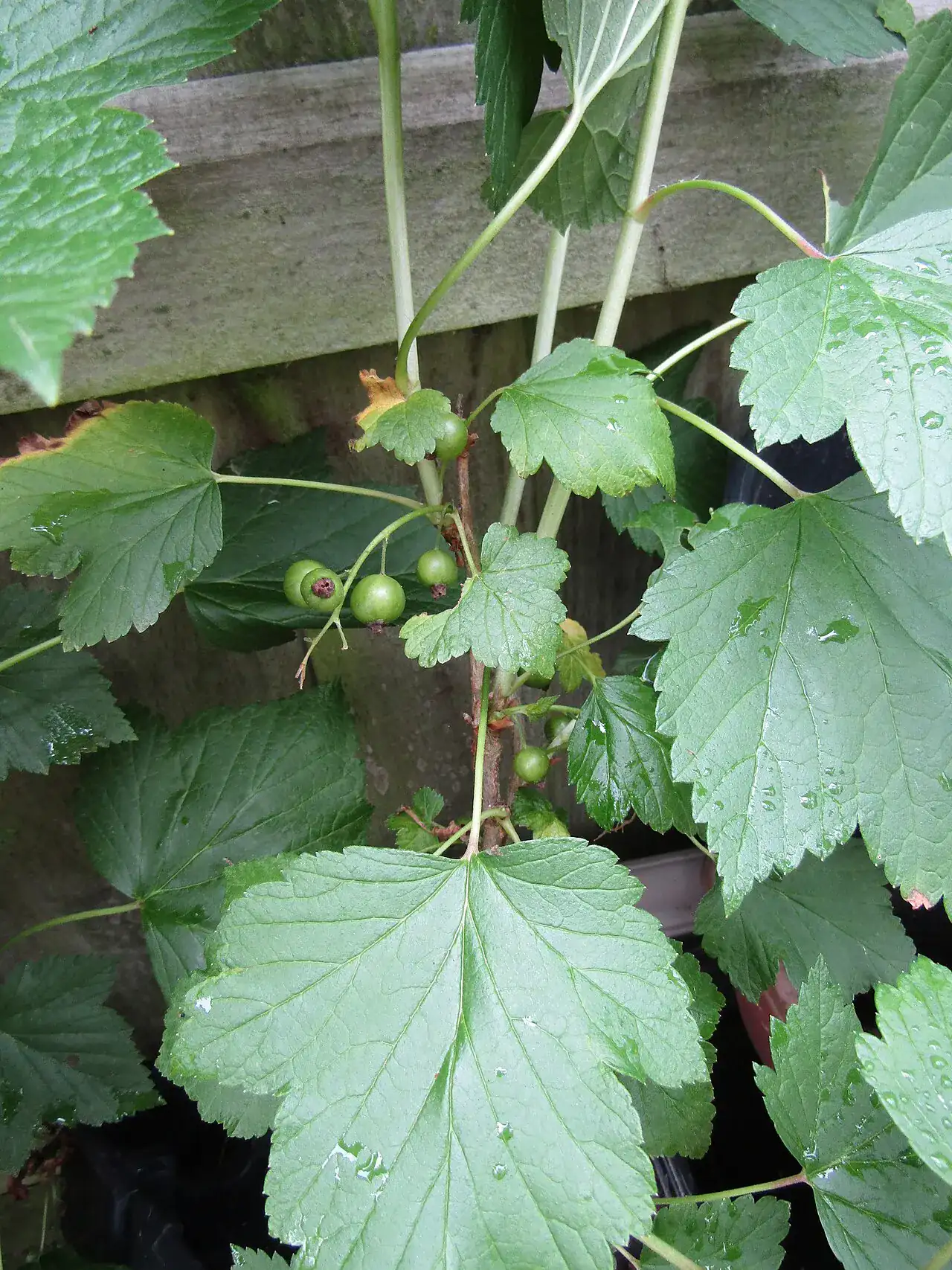

The short answer: every winter, a third of the old stems
Prune established blackcurrants every winter. The RHS growing guide says to cut out up to a third of the oldest stems, right down to the base. The bush is then leafless, so you can see every stem clearly.
Why the oldest. The RHS says blackcurrants fruit best on strong, young growth made in the previous few years. Old stems crop less. Taking a few out each year makes room for new shoots from the base, which carry the next crops.
Which month. The growing guide simply says winter. An RHS feature on winter pruning soft fruit calls February the ideal time to prune currants and berries, and adds that the exact month does not matter much, as long as the plants are leafless and dormant.
What it looks like. A mature bush grows about 1.5 m tall and wide, with six to ten upright stems, the RHS says. After pruning, you should still have most of them, with the oldest gone.
Not to be confused with red and white currants. The RHS gives them a separate pruning guide of their own. Everything on this page is for blackcurrants only.
Blackcurrants: what to do and when
Under cover and outdoors, for UK conditions. The weather differs from year to year and from north to south, so check your local conditions too.
Why blackcurrants are pruned differently
A mature blackcurrant is a bush of six to ten upright stems, the RHS says, and the oldest of them are cut right down to the base. No branch is kept for good.
The RHS winter pruning feature puts it plainly: some soft fruits bear crops on new shoots, and blackcurrants are the example it gives. So the aim is not to keep a shape, but to keep a steady supply of young wood.
Planting follows the same idea. The RHS plants blackcurrants 5 cm (2 in) deeper than they were growing before, and cuts a new bush almost to the ground, so the stems start from low down.
Our reading: think of the bush as a rolling cycle. Each winter, the oldest third leaves; each summer, new stems arrive. After a few years, no stem on the bush is much older than three or four years.
Pruning a newly planted bush
The first cut is the hardest, because it means giving up a crop.
Bare-root and dormant bushes. Prune immediately after planting, the RHS says, cutting all the stems down to one or two buds above ground level. The RHS is clear that this means no fruit in the first year. In return, the bush sends up strong new stems from the base, which crop the following year.
When that is. Bare-root and dormant blackcurrants are planted from late October to March. Container plants can go in at any time of year. Avoid very wet or frozen soil.
How to plant. Dig a hole at least twice the diameter of the rootball. Plant 5 cm (2 in) deeper than before, firm in, water well and lay a thick mulch. Space bushes 1.5–1.8 m (5–6 ft) apart, using the wider spacing for vigorous varieties.
Standards are the exception. A blackcurrant trained on a single stem is planted at its previous depth, with a stake that reaches just below the head of branches. It is not cut to the ground.
The first three years
While the bush is young, the RHS bases the pruning on how well it is growing:
- Strong growth: give just a light prune in autumn or winter, removing weak or low shoots. - Weak growth: cut at least half the shoots down to the base. This sounds drastic, but it pushes the roots to send up stronger stems.
Flopped stems can go too. The writer of the RHS winter pruning feature takes out stems that have flopped over and made it tricky to walk along the plot.
From the fourth year, the bush counts as established and moves to the yearly one-third routine.
Established bushes, step by step
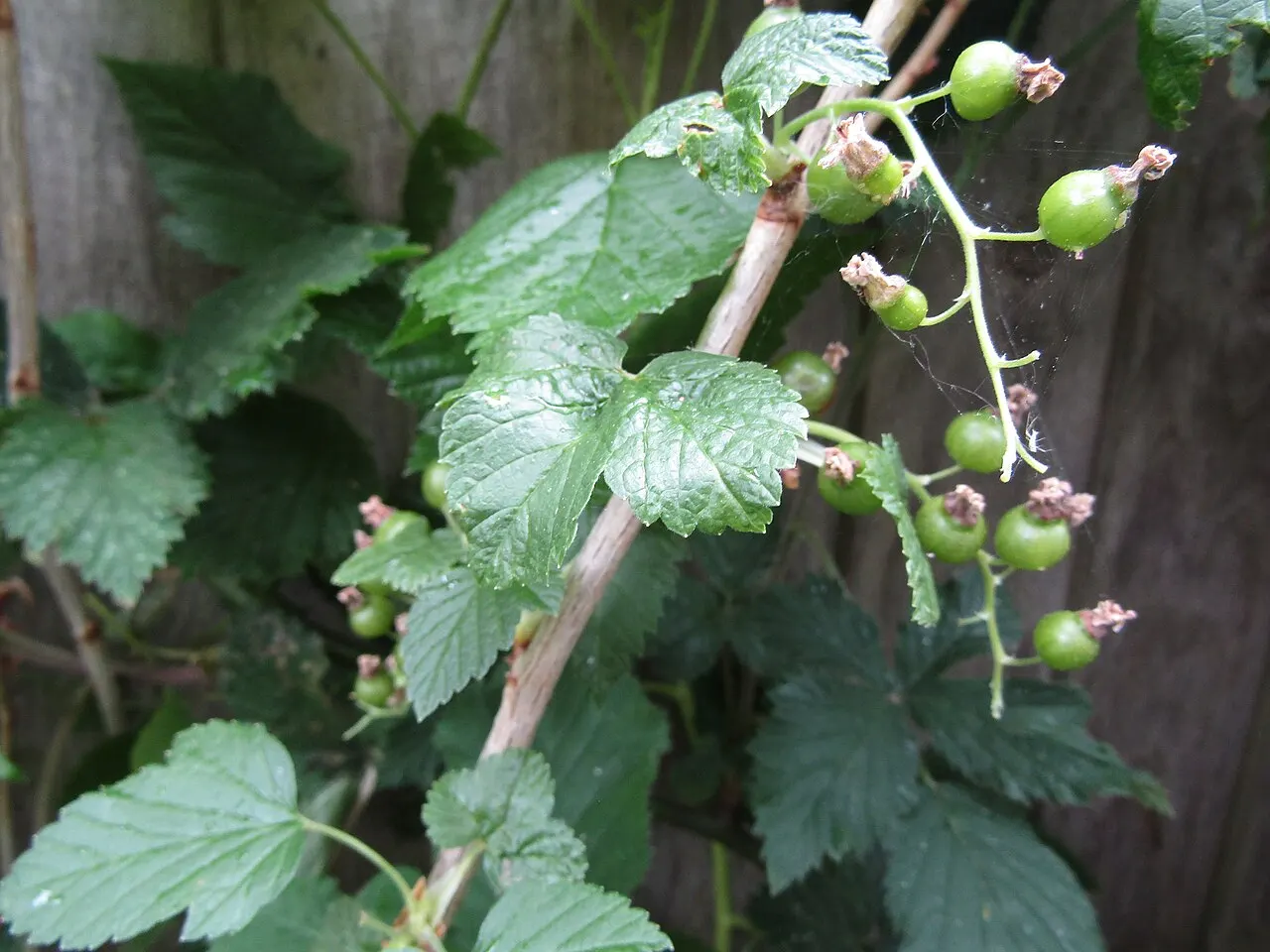

From about four years old, the RHS routine is the same every winter.
1. Find the oldest stems. They are darker and thicker than the rest. Young stems are paler. 2. Cut up to a third of all stems down to the base. The oldest stems may need loppers or a saw. The writer of the RHS feature uses long-handled loppers or a pruning saw and notes that the cut stems have a pleasing smell. 3. Remove sprawling stems. Take out stems that have flopped over or block the path. 4. Shorten with care. Where you do shorten a stem, cut just above an outward-facing bud, if one is visible.
Some bushes need more. The RHS feature admits that some bushes become scraggy, and sterner pruning is then needed to keep them within bounds.
Our reading: if you are unsure, cut fewer stems rather than more. A third is the upper limit the RHS gives, not a target. You can always take out one more next winter.
Afterwards. The RHS mulches blackcurrants in the ground each spring, with a layer of garden compost or well-rotted manure at least 5 cm (2 in) thick. Leave a small mulch-free circle around the base of the stems, so they do not rot. Mulched bushes in the ground usually need no extra feed.
Standard blackcurrants
A standard is a blackcurrant grown as a small tree, with a clear stem and a round head of branches.
The RHS says to prune it the same way each year as a bush, by removing some of the oldest wood. On top of that:
- shorten any overly long branches, - remove weak, crossing or downward-growing branches, - remove any shoots from the main stem below the head.
Our reading: on a standard you cannot cut stems at ground level, so the oldest wood is removed where it joins the head.
Blackcurrants in pots
Pruning is the same in a container. What changes is the care around it.
- Pot size: at least 45 cm (18 in) wide and deep, the RHS says, filled with soil-based compost such as peat-free John Innes No. 3. - Feeding: an organic, high-potassium liquid feed every fortnight in the growing season, or a handful of general-purpose granular feed each spring. - Repotting: every few years in spring. - Long term: blackcurrants generally do not do well in pots for many years. When fruiting declines, the RHS suggests moving the bush into the ground.
The RHS lists 'Ben Sarek' as a compact variety suited to containers.
Big bud: check the buds while you prune
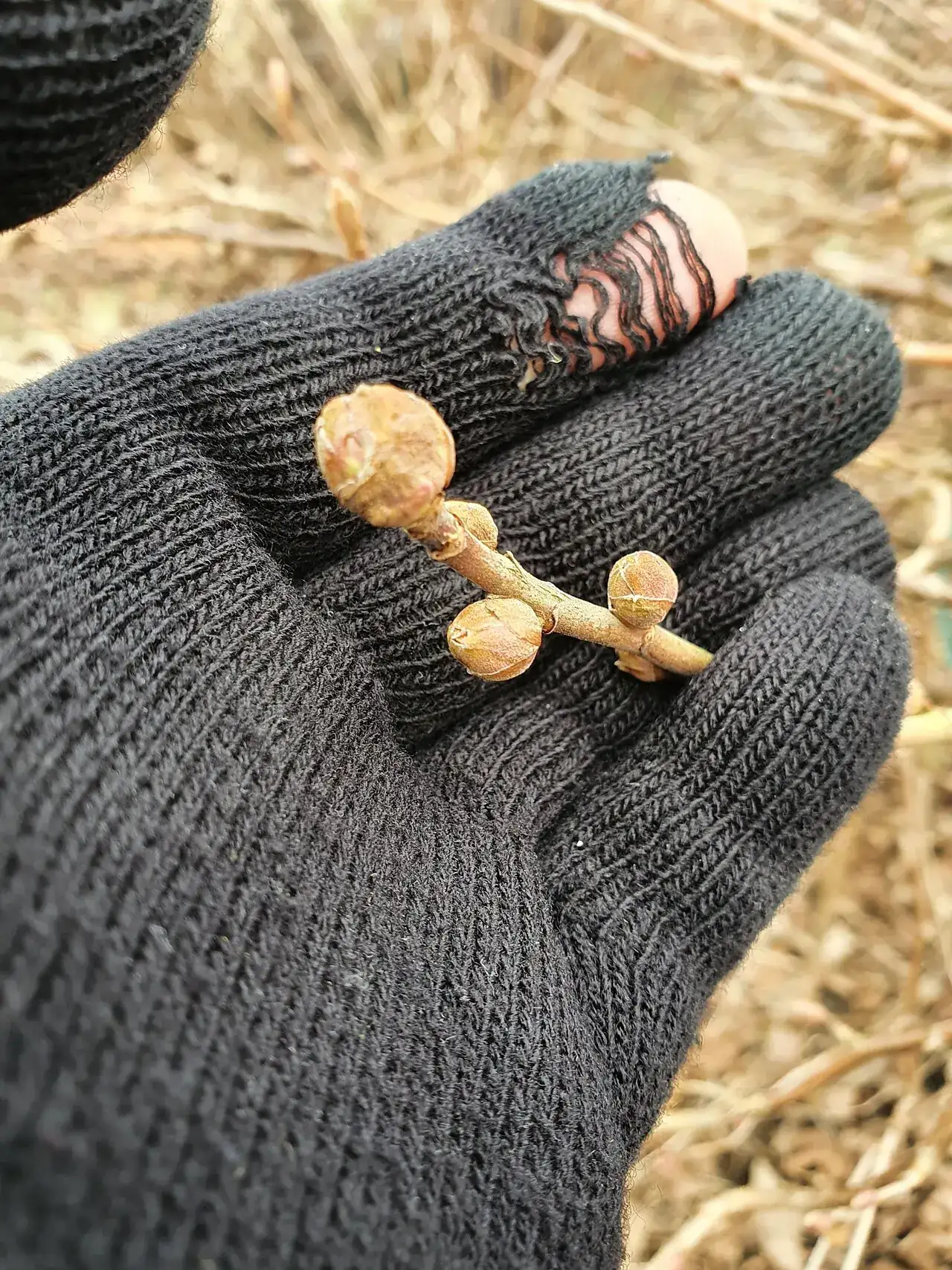

Winter pruning is the best moment to look for big bud mite (*Cecidophyopsis ribis*), because the RHS says symptoms are most easily seen in late winter, when affected buds become abnormally swollen and rounded.
Why it matters. Affected buds often dry up and produce no leaves, or stunted foliage and few flowers. The mite, about 0.25 mm long, can also spread a disease called reversion, which weakens plants and lowers yields.
What to do, following the RHS:
- On lightly affected bushes, pick off the swollen buds during winter. - Heavily affected bushes should be disposed of after the fruit has been picked. Replant in autumn with clean new stock. - Buy plants certified free of big bud. - Grow a resistant variety. The RHS names 'Ben Hope' as mite-resistant, and it is the UK's most popular blackcurrant for home growing.
The RHS says the mites are most active from January to May, and emerge in early summer to crawl over the plant looking for new buds. Our reading: buds picked off in winter take their mites with them before that move.
Other problems the RHS lists: three aphid species that distort leaves, gall midge, leaf spot, mildew and viruses. Many modern varieties resist mildew. Birds are the main problem at picking time, so net bushes before the fruit ripens. Follow the label on any product registered for use on blackcurrants in the UK.
What good pruning gives you
A bigger crop. The RHS says an established bush should produce about 4.5 kg (10 lb) of currants. Its facts page adds that a bush can stay productive for up to fifteen years.
Easier picking. Fruit ripens from midsummer onwards. On modern varieties the whole strig ripens at once, so you can cut it off once the currants turn black. Older varieties are picked berry by berry, starting at the top of the bunch.
Frost at flowering. If frost is forecast while the bush is in flower, cover it overnight and remove the cover in the morning, so pollinators can reach the flowers.
Common mistakes
Trimming the tips like a hedge. Blackcurrants fruit on young wood. Shortening every stem removes fruiting wood and leaves the old stems in place. Cut whole old stems at the base instead.
Leaving every stem. Without pruning, the bush fills with old, dark wood that crops less (RHS).
Cutting too much at once. The RHS limit for established bushes is up to a third of the oldest stems in one winter.
Skipping the first cut. It is tempting to keep the stems of a new bare-root bush for a first crop. The RHS cuts them to one or two buds, trading the first year's fruit for a stronger bush.
Pruning red currants the same way. The RHS has a separate pruning guide for red and white currants.
Ignoring swollen buds. Check for big bud each winter while you prune. Looking after other soft fruit too? See how to prune raspberries and how to prune gooseberries.
Pruning blackcurrants at a glance
| Bush | When | What to do |
|---|---|---|
| New bare-root or dormant bush | Straight after planting | Cut all stems to one or two buds above ground level |
| Young bush, years 1 to 3, strong growth | Autumn or winter | Light prune: remove weak or low shoots |
| Young bush, years 1 to 3, weak growth | Autumn or winter | Cut at least half the shoots down to the base |
| Established bush, 4 years and older | Every winter | Cut up to a third of the oldest stems down to the base |
| Standard (on a stem) | Every winter | As a bush, plus shorten over-long branches and rub off shoots on the stem |
| Bush with big bud | Winter | Pick off swollen buds; dig up heavily affected bushes after picking |
How to do it
- Wait for winter, when the bush is leafless and dormant. Pick a dry day.
- Count the stems. An established bush has about six to ten.
- Find the oldest ones: they are darker and thicker than the young, pale stems.
- Cut up to a third of the stems, the oldest first, right down at the base. Use loppers or a pruning saw for thick ones.
- Remove any stems that have flopped to the ground or block the path.
- Where you shorten a stem, cut just above an outward-facing bud.
- Look for round, swollen buds and pick them off.
Common questions
When should I prune blackcurrants in the UK?
Every winter, while the bushes are leafless and dormant (RHS). An RHS feature calls February the ideal month, but any time the bush is dormant will do.
How much should I cut off a blackcurrant bush?
Up to a third of the stems on an established bush, choosing the oldest and darkest and cutting them right down to the base (RHS).
Do blackcurrants fruit on old or new wood?
On young wood. The RHS says they fruit best on strong, young growth made in the previous few years, which is why old stems are removed each year.
Should I cut back a new blackcurrant bush?
Yes, if it is bare-root or dormant. The RHS cuts all stems to one or two buds above ground straight after planting. You lose the first year's fruit but get a stronger bush.
Can I prune blackcurrants in summer?
The RHS guidance we used sets the main pruning in winter, and light pruning of young bushes in autumn or winter. It gives no summer pruning routine for blackcurrants.
What are the swollen round buds on my blackcurrant?
Most likely big bud mite. The RHS says to pick them off lightly affected bushes in winter, and to replace heavily affected bushes after picking with certified stock.
Sources
We wrote this page using the sources below.
- How to grow blackcurrants, Royal Horticultural Society (RHS)
- Winter pruning soft fruit bushes, Royal Horticultural Society (RHS)
- Blackcurrant big bud mite, Royal Horticultural Society (RHS)
- Fascinating facts: blackcurrants, Royal Horticultural Society (RHS)