 Tomatoes Pruning
How to prune tomato plants
A cordon tomato is grown on a single stem, and three small jobs keep it that way and send its strength into the fruit. A bush tomato needs none of them.
In short
Only cordon tomatoes are pruned. Pinch out or snap off the side shoots that sprout between each leaf and the main stem. The RHS stops the plant two leaves above the top truss, after seven trusses indoors or four outdoors. Remove yellowing lower leaves. Leave bush tomatoes alone.

Cordon or bush: only one of them is pruned
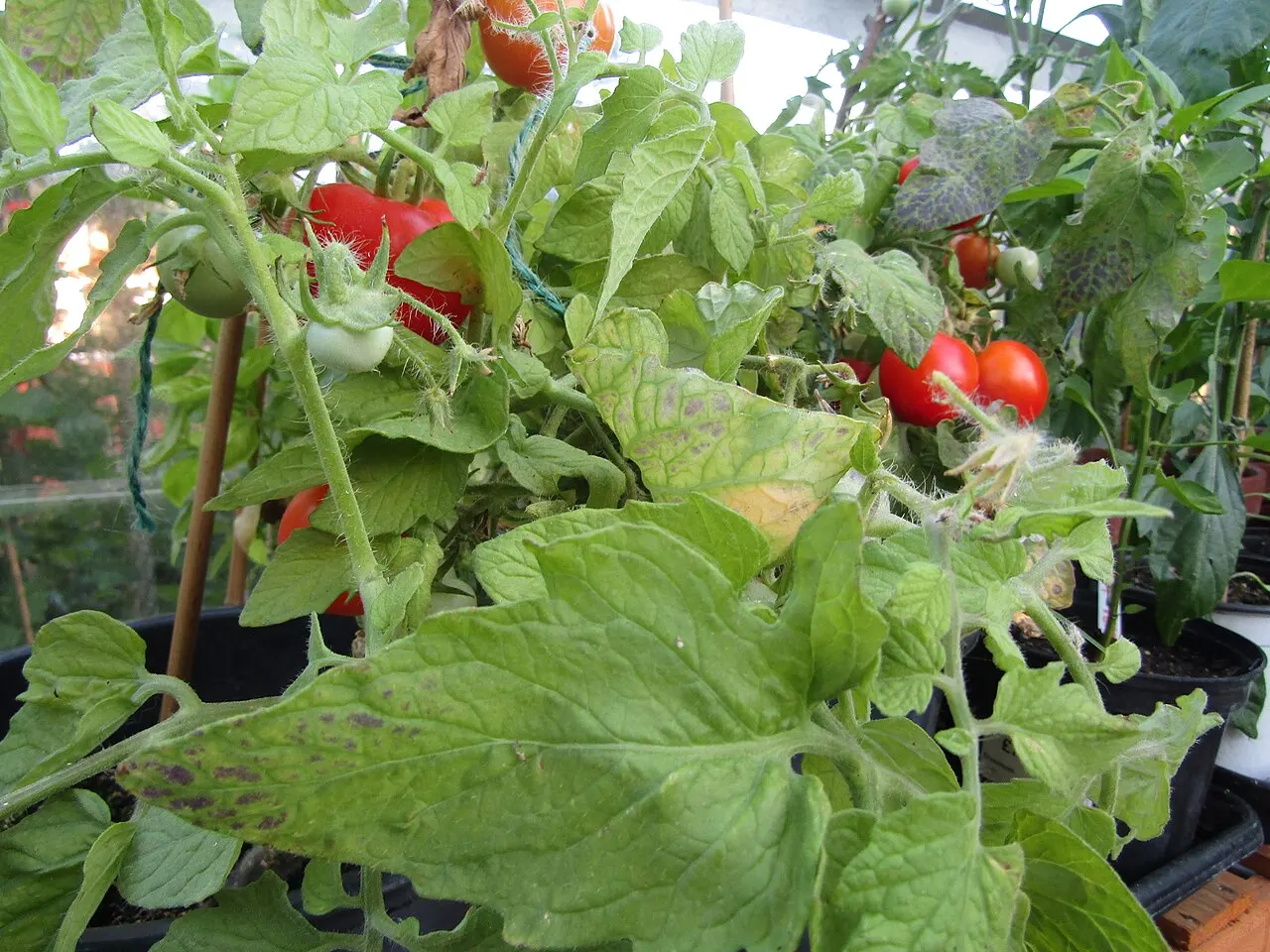
Before you take anything off a tomato plant, find out what kind it is. The seed packet will tell you, Garden Organic says. The two kinds are treated in opposite ways.
Cordon tomatoes. BBC Gardeners' World explains that these are the indeterminate varieties, also known as vine tomatoes. The RHS describes them as vigorous, fast-growing plants that get very tall and need suitably tall supports. They are best grown as single-stemmed plants, the RHS says. Everything on this page is about them.
Bush tomatoes. These are naturally more compact plants, good for smaller spaces. The RHS calls them the easiest type to grow, needing little maintenance. And it is clear about pruning: their side shoots should be left to grow. Gardeners' World agrees. You do not need to pinch out bush or trailing varieties.
So if your plant is a bush, the pruning advice is short. Add short canes where they are needed, tie the shoots in loosely, and take off dead or yellowing leaves. That is all.
For the rest of the plant's care, from planting to feeding, see how to grow tomatoes.
Tomatoes: what to do and when
Under cover and outdoors, for UK conditions. The weather differs from year to year and from north to south, so check your local conditions too.
What a side shoot is, and how to find it
A side shoot is a new shoot that sprouts from the main stem. On a cordon, which is grown on one stem only, it is not wanted.
Where to look. The RHS says they sprout just above each leaf, from the joint between the leaf and the main stem. Gardeners' World describes the same place: at the base of the leaves, where they meet the stem.
Why they are removed. Garden Organic gives the reason in one line. Removing the side shoots between the main stem and the branches focuses the plant's energy into fruiting.
How to remove side shoots
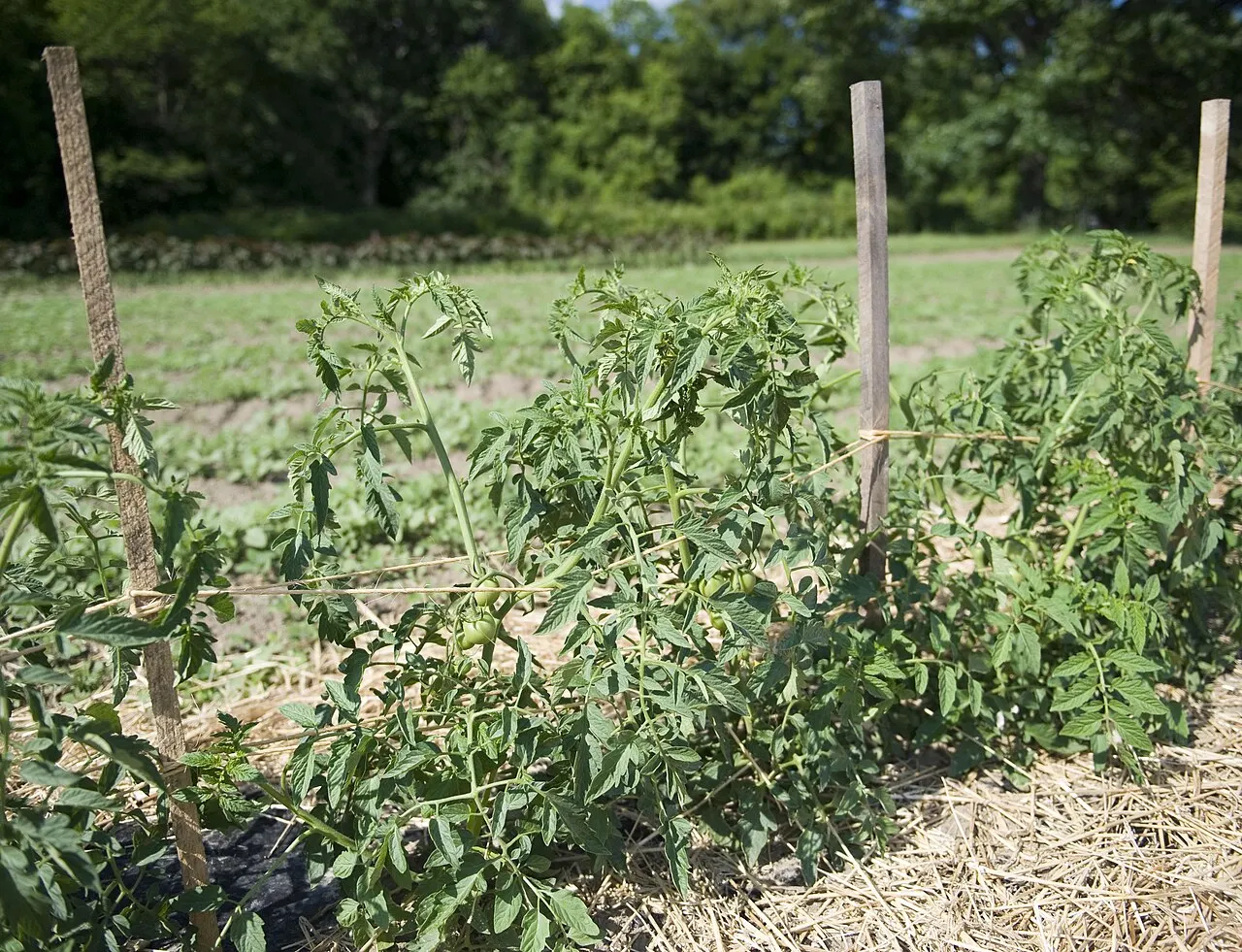

Small shoots. The RHS says simply to pinch these out or snap them off. Gardeners' World uses thumb and forefinger to nip out any small side shoots.
Large shoots. If one has got away from you, Gardeners' World cuts it out with sharp secateurs. Snip as low as possible, close to the base of the shoot, taking care not to damage the plant.
Fingers or blades? Here the advice differs.
- The RHS pinches or snaps. - Gardeners' World pinches small shoots and cuts large ones. - Garden Organic's head gardener prefers scissors or secateurs for all of them, because a sharp cut is less likely to harbour disease.
We have not found a source that compares the methods. Garden Organic is the only one that gives a reason for its choice.
How often. The RHS ties this job to another one: each time you water, check the plant for new shoots. Gardeners' World says to pinch them out every few days. Garden Organic begins when the first flower truss appears.
Tie in as you go. Tomatoes do not cling to supports or wrap around them naturally, the RHS says, so they must be attached by hand as they grow. With a cane, tie the main stem to it at regular intervals. With a string, gently wind the string around the top of the main stem as it grows.
Do not throw the side shoots away
A side shoot is a ready-made cutting. Gardeners' World suggests rooting the side shoots you have picked off in water, then potting them up to raise new plants.
Garden Organic says the same. These side shoots can be used to grow more tomatoes, or passed on to friends.
Stopping: when to pinch out the top
A cordon is not left to grow on all season. Gardeners' World explains why. Late fruit will not have time to develop, and the plant wastes energy producing it. So at some point you remove the growing tip. Gardeners call this stopping the plant.
When. Gardeners' World stops cordon varieties in late summer. The RHS gives two signals instead of a date.
- The plant reaches the top of its support. - It has set the right number of trusses.
How many trusses. This is where the sources give different numbers.
- The RHS: seven fruit trusses indoors, four outdoors. - Garden Organic: the same. Seven trusses set for plants grown under cover, four for outdoor plants. - BBC Gardeners' World, in its tips for better tomatoes: six on indoor plants and four outdoors. In its guide to cordon tomatoes it aims for up to six trusses of fruit under glass by mid-September, and outdoors for around three trusses to ripen fully. It adds that more trusses are possible, but the limitations tend to outweigh the benefits. Its main growing guide says four to five trusses outdoors, or six indoors.
The difference is small and easy to live with. Outdoors, everyone is close to four. Under cover, it is six or seven.
Where to cut. The RHS removes the growing point of the main stem two leaves above the top truss. Gardeners' World cuts back to a leaf joint just above the uppermost truss. The reason it gives: all the plant's energy is then channelled into the fruit.
Which leaves to remove
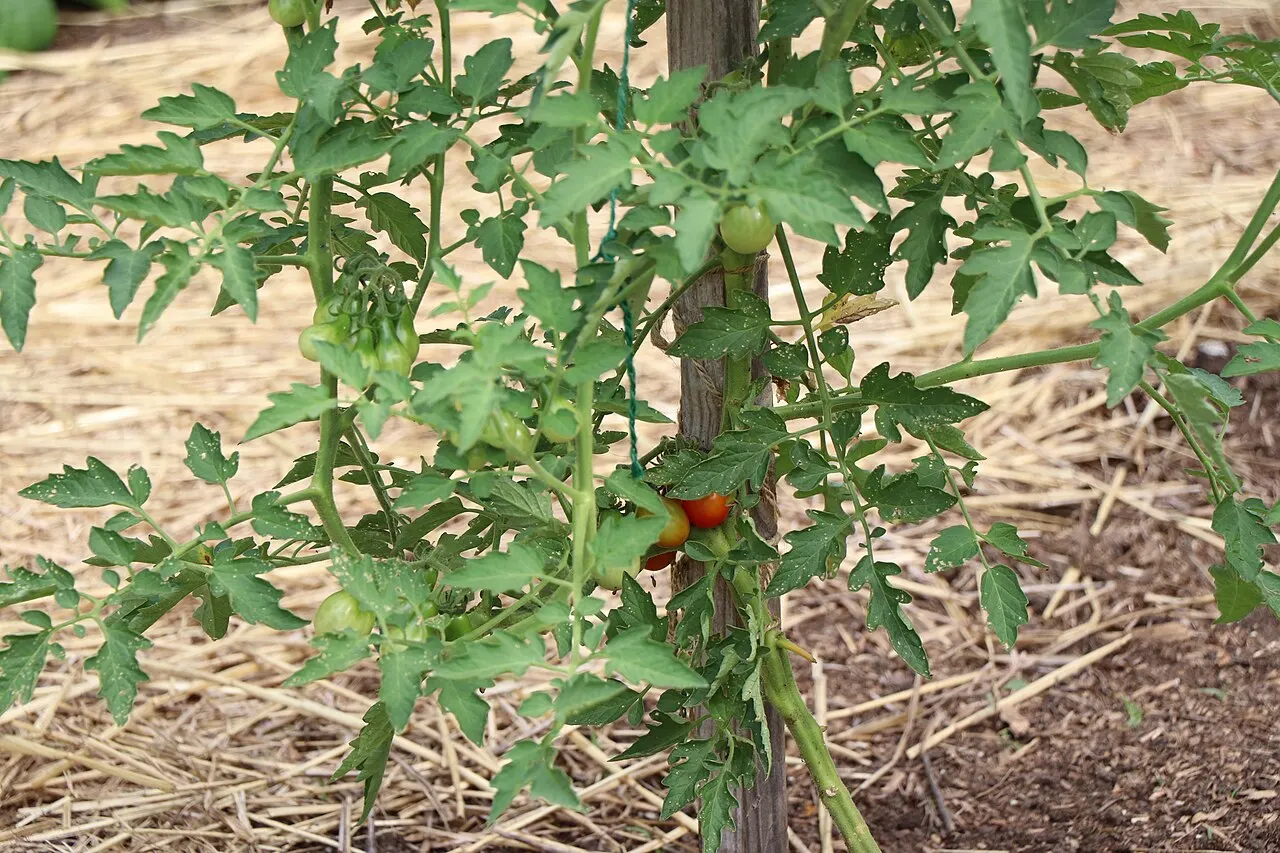

This is the job to be most careful with. Gardeners' World puts the limit clearly: remove dead or yellowing leaves regularly, without completely defoliating the plant.
Within that limit, the sources name three kinds of leaf that can go.
1. Leaves below the lowest truss. Gardeners' World starts once the lowest truss of fruit has formed. It reduces the foliage below that truss by tracing back along the leaf stalks and cutting back to the pair of leaflets closest to the main stem. The RHS, in its advice on tomato leaf mould, says to trim some lower leaves once fruit has set, to encourage air circulation.
2. Yellowing leaves. On cordons, Gardeners' World says, the lowest leaves turn yellow and should be snapped or cut off to improve air flow and help control disease. Garden Organic also removes any yellowing leaves.
3. Leaves that shade the fruit. Garden Organic removes any leaves that shade the lower trusses of fruit.
Yellow leaves are not always a reason to worry. The RHS says mottling and discolouration of older leaves usually points to a shortage of nutrients, especially magnesium. When it is present only in the older leaves, there is no cause for concern, provided the plant is otherwise vigorous.
Leaves you should leave alone
Leaves with oedema. The RHS mentions this problem in its advice on watering and humidity, and it is firm. If oedema occurs, do not remove the damaged leaves, as they are needed to shed surplus moisture.
Curled leaves. Leaf curling can look alarming. The RHS says it is usually caused by variable temperatures at night, or by aphid attack. Nothing in its advice says to cut curled leaves off.
Healthy leaves higher up. The RHS trims only some of the lower leaves, and Gardeners' World works below the lowest truss. Garden Organic takes off only leaves that shade the lower trusses.
Leaf removal and disease
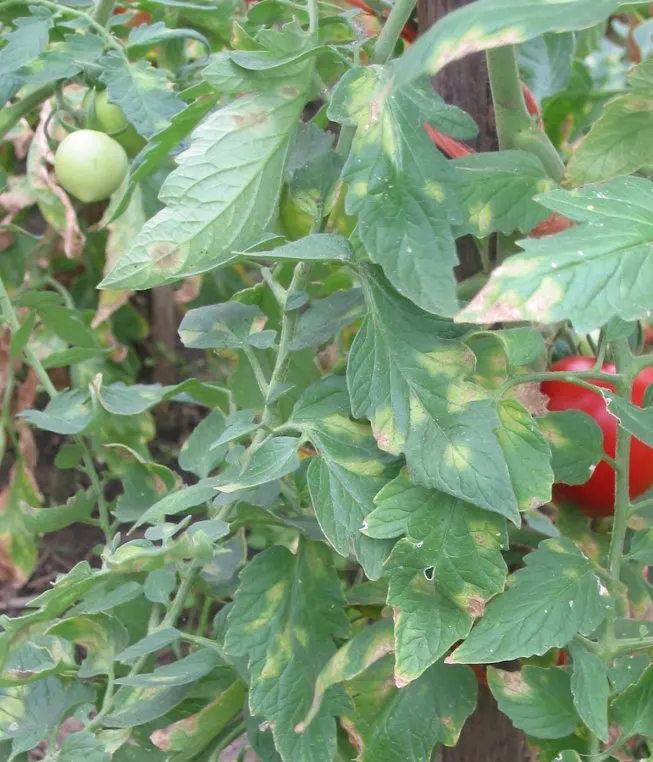

Two diseases are linked with taking leaves off tomatoes, and the RHS advice on each is different.
Tomato leaf mould. This is a fungal disease of the foliage, particularly on tomatoes grown in greenhouses. It is rarely seen on outdoor crops. The RHS says the first symptoms can develop in April or May, but it is usually found in June or July.
The lower leaves are usually attacked first. Yellow blotches develop on the upper surface, with a pale, greyish-brown mould underneath. Heavily infected leaves turn brown and shrivel, but do not fall.
Here pruning helps. The RHS list of defences includes:
- Trim some lower leaves once fruit has set, to encourage air circulation. - Pick off infected leaves as soon as they are seen. - Give ample ventilation, to avoid an excessively moist atmosphere. - Avoid wetting the leaves when you water, especially in the evening. - Try to avoid temperatures above 21 °C.
Tomato blight. Outbreaks in the UK may occur from June onwards, the RHS says, usually earliest in the South West. The first symptom is a rapidly spreading, watery rot of the leaves, which soon collapse, shrivel and turn brown.
Here pruning does not save the plant. The RHS says picking off leaves when just a few are affected may slow the disease very slightly, but will not eradicate the problem. It asks you to keep the foliage of greenhouse tomatoes as dry as possible, and to use the fruit from affected crops as soon as possible. Blighted material should not go on the compost heap.
Both diseases are described more fully in tomato diseases.
At the end of the season
Stopping the plant in late summer is done for the sake of the last fruit. What happens to any that are still green?
The RHS says tomatoes start to ripen from mid-summer onwards. At the end of the season it lifts outdoor plants with unripe fruit and lays them on straw under cloches to ripen. Or the fruit can be picked and put somewhere warm and dark. It also mentions the old method of putting unripe tomatoes in a drawer with a banana.
Garden Organic brings unripe green tomatoes indoors and ripens them in a sunny spot, or in a dark place next to a ripe banana. Gardeners' World keeps them in a warm, dark place.
One last point from Gardeners' World: do not leave ripe fruits on the plant, or they will soften, split and rot.
Pruning tomatoes: who says what
| Job | What to do |
|---|---|
| Side shoots on cordons | Check each time you water. Pinch out or snap off |
| Side shoots on cordons | Pinch out every few days |
| Side shoots on cordons | Start when the first flower truss appears. Cut with scissors or secateurs |
| Side shoots on bush tomatoes | Leave them to grow |
| Stopping, under cover | After seven trusses have set |
| Stopping, outdoors | After four trusses have set |
| Stopping, under cover | Six trusses |
| Where to cut the top | Two leaves above the top truss |
| Lower leaves | Trim some once fruit has set, to encourage air circulation |
| Yellowing leaves, and leaves shading lower trusses | Remove |
How to do it
- Check whether your variety is a cordon or a bush. Only cordons are pruned.
- Tie the main stem of a cordon to its cane or string as it grows.
- Each time you water, look just above every leaf for a new side shoot.
- Pinch out small side shoots with thumb and forefinger. Cut large ones off close to the base.
- Once fruit has set on the lowest truss, trim some of the leaves below it.
- Through the season, remove dead and yellowing leaves. Never strip the plant bare.
- When seven trusses have set under cover, or four outdoors, cut off the growing tip two leaves above the top truss.
Common questions
Should I remove the side shoots from my tomato plants?
On cordon tomatoes, yes. The RHS says they are best grown as single-stemmed plants, with side shoots pinched out or snapped off. On bush tomatoes, no. The RHS says their side shoots should be left to grow.
How often should I pinch out tomato side shoots?
The RHS checks each time the plant is watered. BBC Gardeners' World says every few days. Garden Organic starts when the first flower truss appears.
When should I pinch out the top of my tomato plants?
The RHS and Garden Organic stop cordons once seven trusses have set under cover or four outdoors. The RHS also stops plants when they reach the top of their support. BBC Gardeners' World says late summer, with six trusses indoors and four outdoors.
Should I remove the lower leaves from tomato plants?
Some of them. The RHS trims some lower leaves once fruit has set, to encourage air circulation. Garden Organic removes yellowing leaves and leaves that shade the lower trusses. BBC Gardeners' World warns against completely defoliating the plant.
Can I grow new plants from tomato side shoots?
Yes. BBC Gardeners' World suggests rooting the side shoots you have picked off in water, then potting them up. Garden Organic also says side shoots can be used to grow more tomatoes.
Does removing leaves stop tomato blight?
No. The RHS says picking off leaves when just a few are affected may slow the progress of the disease very slightly, but will not eradicate the problem.
Sources
We wrote this page using the sources below.
- How to grow tomatoes, Royal Horticultural Society (RHS)
- Tomato leaf mould, Royal Horticultural Society (RHS)
- Tomato blight, Royal Horticultural Society (RHS)
- Tomatoes: leaf problems, Royal Horticultural Society (RHS)
- Tomatoes growing guide, Garden Organic
- Tips for terrific tomatoes, Garden Organic
- How to grow cordon tomatoes, BBC Gardeners' World Magazine
- Tips for growing better tomatoes, BBC Gardeners' World Magazine
- How to grow tomatoes, BBC Gardeners' World Magazine