
 Blackberries Pruning
How to prune blackberries
A blackberry cane grows one year, fruits the next and is then finished. Pruning is simply a matter of taking out the canes that have done their work and giving their wires to the new ones.
In short
Prune blackberries every year after harvesting, in summer or autumn, the RHS says. Cut the canes that fruited out at the base, then train this year's new canes along the wires. Keep up to 16 canes on modern varieties. The variety 'Reuben' is pruned in February.

How a blackberry grows, and why that decides the pruning
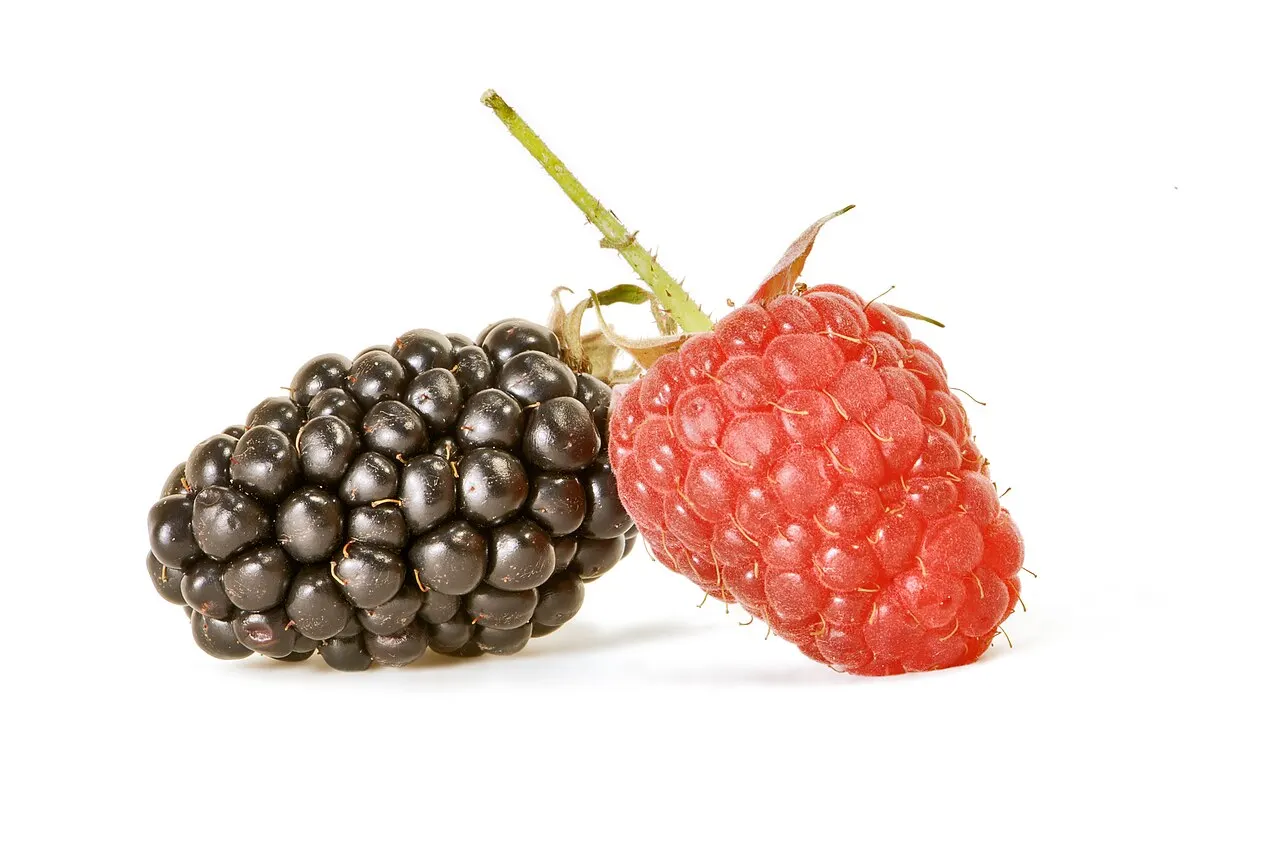
To prune a blackberry well, you only need to know how its canes live.
The RHS puts it this way. Blackberries produce their fruit on stems, called canes, that grew the previous spring and summer. BBC Gardeners' World says they fruit on two-year-old canes, which need to be cut out completely after fruiting, down to soil level. Garden Organic gives the same rule from the other side: leave the non-fruiting canes, the ones that grew in the current season, to fruit next year after overwintering.
So in any summer an established plant carries two sets of canes.
- Last year's canes, which flower and fruit now. - This year's new canes, which only grow. They are next year's crop.
Pruning removes the first set. Training looks after the second. The RHS explains why the removal matters: taking out the old fruited stems is necessary to create space for new productive stems.
The same method serves the blackberry's relatives. The RHS pruning advice covers blackberries, tayberries, wineberries, boysenberries, loganberries and other hybrid berries together.
Blackberries: what to do and when
Under cover and outdoors, for UK conditions. The weather differs from year to year and from north to south, so check your local conditions too.
When to prune blackberries
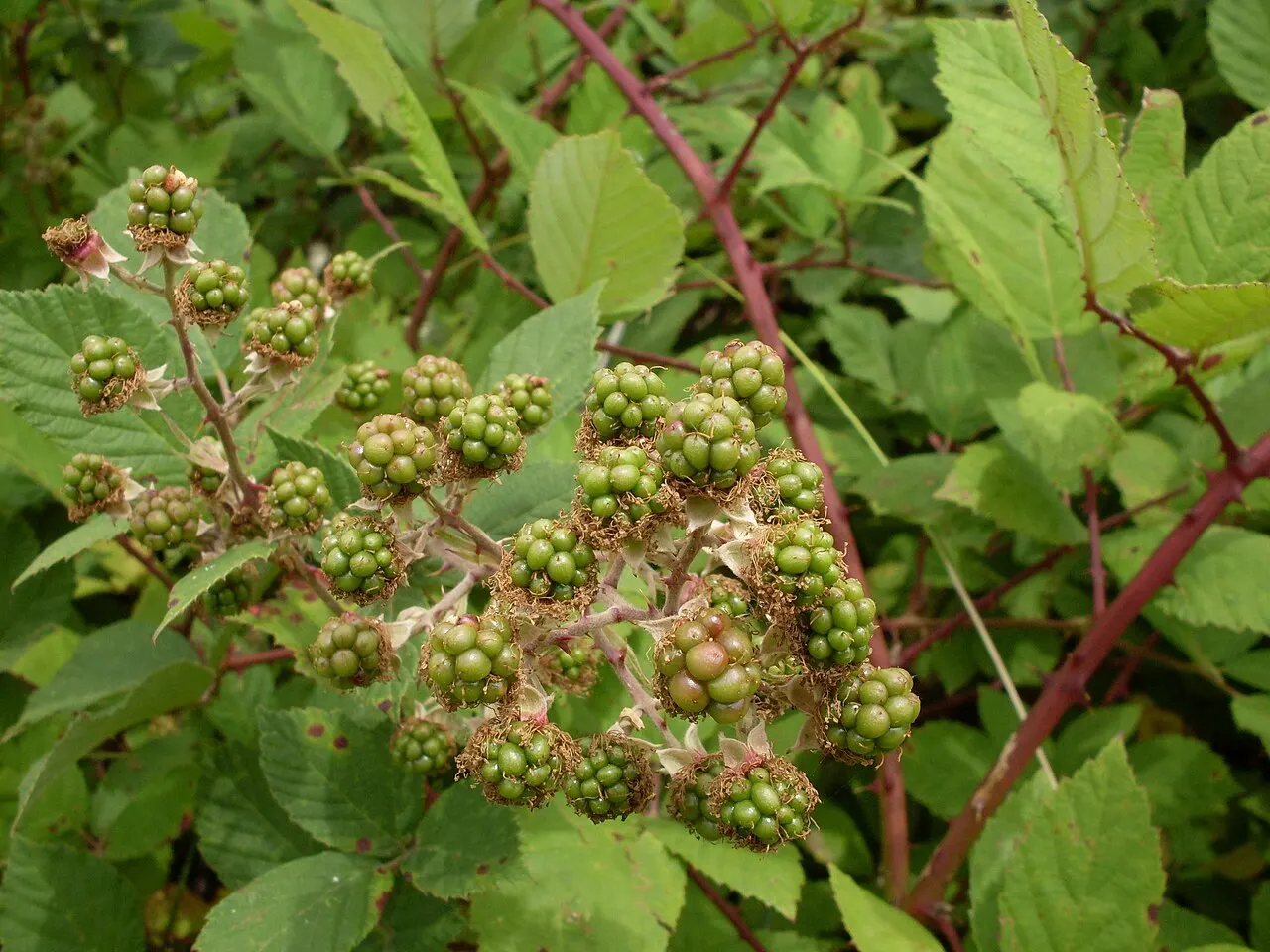

The RHS: after harvesting, in summer or autumn. Pruning should be done every year, it says, once the fruit has been picked. In its growing guide, fruit ripens from mid-summer to early autumn, depending on the species and variety.
Garden Organic: autumn. Cut fruited canes to soil level in the autumn. It lists the harvest as July to October.
BBC Gardeners' World: a wider window. Its growing guide says to do this any time from when fruiting finishes until late winter. Its guide to cane fruit prunes blackberries and hybrid berries in summer, after they have finished fruiting.
These do not really conflict. All three start the clock at the end of picking. The RHS and Garden Organic finish the job in autumn. Gardeners' World allows you to leave it until late winter if you must.
One exception: 'Reuben'. The RHS singles out this variety. It is a primocane blackberry, which means it fruits on canes produced in the same season. It is pruned in February, in the same way as autumn fruiting raspberries. That method is described in how to prune raspberries.
And spring. The RHS adds that some extra pruning may be needed in spring, to remove growth damaged by frost over winter.
The first two years
A new plant is pruned before it has fruited at all.
Straight after planting. The RHS cuts down all the stems to healthy buds 20–25 cm from the ground. BBC Gardeners' World cuts the stems of bare-root plants to 30 cm before planting. The RHS says its cut generally means you will not get any fruit in the first year.
The first summer. Gardeners' World goes a step further. It says blackberries should not be allowed to fruit in the first year after planting, and cuts off any flowering shoots so that the plant puts its energy into a good root system.
The first winter. The RHS cuts back any side shoots produced on the first year's stems to about 7.5 cm long.
The second year. Those stems now fruit, and the RHS starts the regular training and pruning in the second year. Garden Organic gives an average time to harvest of 18 months from planting.
Planting itself is covered in when to plant blackberries.
Keeping old and new canes apart
Pruning is easy when you can see at a glance which cane is which. Every source arranges this the same way: the two sets are kept apart.
The RHS says to keep this year's fruiting canes separate from the young new canes as the season goes on. It describes how.
- New canes are tied in a vertical bunch in the centre of the plant as they grow. They can also be tied out along the top wire in bunches, to keep them tidy. - Fruiting canes are trained along the lower three wires and tied in with twine.
Then, in autumn, the fruited canes are cut out at the base. The new canes are untied from the centre and trained along the lower wires. That leaves the centre free for next year's new canes.
The alternative. Tie fruiting canes in one direction and the current year's canes in the other. The RHS offers this as a second method. Garden Organic recommends it too: train fruiting and non-fruiting canes in opposite directions, to make picking and pruning easier.
Two more ways, from BBC Gardeners' World.
- Tie the fruiting canes onto the framework in a fan shape with a gap in the middle. Once the old canes are pruned out, the new ones are spread along the wires. - Gather the new canes into two groups lying on the ground, to left and right, and hold them with pegs if necessary.
Gardeners' World also says simply to tie in new stems as and when you need to.
The yearly prune, step by step
If the canes have been kept apart, the work itself is short.
1. Wait for the end of the crop. 2. Cut out every cane that fruited, at the base. The RHS says to prune out the old, fruited stems at the base. Gardeners' World cuts them out completely, down to soil level. 3. Release the new canes from their bunch in the centre. 4. Train them along the lower wires and tie them in. 5. Count. If there are more canes than the plant should carry, take out the extra ones. The numbers are in the next section.
BBC Gardeners' World points out that new canes should already have been produced by the time you prune. They are the ones that go onto the support framework.
A plant that was never trained. The RHS warns what happens without a support. The plants grow out of control, become harder to prune and are less productive. It is one more reason to put wires up before planting.
How many canes to keep
The RHS gives two figures, and which one applies depends on the variety.
- Modern cultivars: up to 16 canes. On a fan-trained plant, that is eight on each side. - Older, very vigorous cultivars: up to 24 fruiting canes per plant. The RHS names 'Himalayan Giant', 'Fantasia' and 'Ashton Cross'.
Vigour varies a great deal. In the RHS growing guide, very vigorous varieties can grow up to 4 m wide, and less vigorous ones to 2.5 m. At the other end, it lists 'Little Black Prince', which only reaches 1 m tall and wide. Gardeners' World says compact varieties do not need to be trained up support wires at all.
Fans, twists and wires
How you lay the canes on the wires depends on how stiff they are. The RHS describes two cases.
Very vigorous varieties. Some, such as 'Himalayan Giant', can have their fruiting canes twisted around the wires in patterns. This saves space.
Rigid canes. Varieties whose canes cannot easily be twisted, such as 'King's Acre Berry', can be trained as a fan, with the new growth bunched in the centre.
The wires themselves. On this the sources give different measurements.
- The RHS pruning guide stretches galvanised wire between posts at 30 cm vertical intervals. The posts are 2.5 m long, driven 75 cm into the ground and set 5 m apart. - The RHS growing guide spaces horizontal wires about 45 cm apart, with the lowest about 45 cm above the ground. - BBC Gardeners' World fixes wires 30 cm apart, with the lowest at 90 cm from the ground.
The sources do not explain the differences. The method of pruning is the same on all of them.
Gardeners' World adds that blackberries can be trained vertically, which gives a lot of productive growth from a small area of ground.
Thorns and thornless varieties
Pruning a blackberry can be a prickly job. The RHS notes that many varieties have sharp thorns. It also says that some are thornless, which makes pruning, training and picking easier.
If you are choosing a plant with the yearly prune in mind, the RHS growing guide describes these as thornless.
- 'Loch Ness': compact, with thornless stems. - 'Loch Tay': a compact blackberry with semi-upright, thornless stems. - Loganberry 'Ly 654': a thornless loganberry.
New plants from the tips of the canes
The long new canes can also give you a new plant. The RHS describes how blackberries are propagated: by rooting the ends of vigorous young stems into the ground in mid- to late spring. The method is known as stem-tip layering.
Problems to look for while you prune
The RHS pruning guide lists the troubles that can affect blackberries and hybrid berries: aphids, grey mould, cane blight, spur blight and viruses.
Cane blight is mainly a raspberry disease. The RHS says blackberries can also be affected, but that on them the disease is of little significance. For raspberries, its advice is to prune only during dry periods and to handle the canes carefully to avoid unnecessary damage, because infection enters through wounds.
Spur blight mainly affects raspberries and occasionally loganberries, the RHS says. Its first advice against it is to avoid overcrowding.
On the fruit, the RHS growing guide mentions birds, which will happily eat the berries, raspberry beetle, whose grubs can damage the fruit, and red berry mite, which can cause blackberries to ripen unevenly.
For plant protection, use only products approved in the UK, exactly as the label says.
After pruning. Garden Organic's care advice is brief: water and mulch the bushes. For how to do that well, see mulching.
Blackberry pruning at a glance
| Job | When | What to do |
|---|---|---|
| Newly planted blackberry | Straight after planting | Cut all stems to healthy buds 20–25 cm from the ground |
| Young plant, first winter | First winter | Cut side shoots on the first year's stems to about 7.5 cm |
| Established plant, main prune | After harvesting, in summer or autumn | Cut fruited canes out at the base |
| New canes | Spring and summer, then after the prune | Bunch in the centre while growing, then train along the lower wires |
| Modern varieties | At the main prune | Keep up to 16 fruiting canes, eight on each side of a fan |
| Older, very vigorous varieties | At the main prune | Can carry up to 24 fruiting canes per plant |
| 'Reuben' | February | Prune as for autumn fruiting raspberries |
| Frost-damaged growth | Spring | Remove it |
How to do it
- Wait until the crop is finished. Prune in summer or autumn, after harvesting.
- Find the canes that carried fruit this year. If you trained them apart from the new ones, they are already separate.
- Cut each fruited cane out at the base.
- Untie this year's new canes from the centre of the plant.
- Spread them along the lower wires and tie them in with twine.
- Keep up to 16 canes on a modern variety, eight to each side on a fan.
- Next spring and summer, tie the new canes that appear in a bunch in the centre.
- In spring, cut off any growth damaged by frost.
Common questions
When should I prune blackberries in the UK?
The RHS says every year after harvesting, in summer or autumn. Garden Organic says autumn. BBC Gardeners' World allows any time from when fruiting finishes until late winter. The variety 'Reuben' is pruned in February.
Which blackberry canes do I cut out?
The ones that carried fruit this year. Blackberries fruit on canes that grew the previous spring and summer, the RHS says, so a cane that has fruited is cut out at the base. This year's new canes are kept for next year's crop.
How many canes should a blackberry have?
The RHS keeps up to 16 canes on modern cultivars, eight on each side of a fan-trained plant. Older, very vigorous cultivars such as 'Himalayan Giant' can support up to 24 fruiting canes per plant.
Do I cut a blackberry back after planting?
Yes. The RHS cuts all the stems down to healthy buds 20–25 cm from the ground straight after planting. BBC Gardeners' World cuts the stems of bare-root plants to 30 cm. This generally means no fruit in the first year.
Are loganberries and tayberries pruned the same way?
Yes. The RHS pruning guide covers blackberries, tayberries, wineberries, boysenberries, loganberries and other hybrid berries together. BBC Gardeners' World also prunes loganberries and tayberries after fruiting, in the same way.
What happens if I do not prune a blackberry?
The RHS says removing old fruited stems is necessary to create space for new productive stems. Without support and training, it says, the plants grow out of control, become harder to prune and are less productive.
Sources
We wrote this page using the sources below.
- Blackberry and hybrid berry: pruning and training, Royal Horticultural Society (RHS)
- How to grow blackberries and hybrid berries, Royal Horticultural Society (RHS)
- Raspberry cane blight, Royal Horticultural Society (RHS)
- Raspberry spur blight, Royal Horticultural Society (RHS)
- How to grow blackberry, Garden Organic
- How to grow blackberries, BBC Gardeners' World Magazine
- Tips for pruning cane fruits, BBC Gardeners' World Magazine