
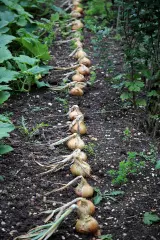
 Onions Growing and care
How to grow onions
Onions are easy, as long as you remember three things: they hate weeds, they need their leaves early, and they want to be left dry at the end.
In short
Grow onions in a sunny spot with free-draining soil, enriched with a bucketful of garden compost per square metre. Plant sets or sow seed in early to mid-spring, 10–15 cm apart. Weed by hand, water only in long dry spells, and stop once the bulbs have swollen in mid-summer.
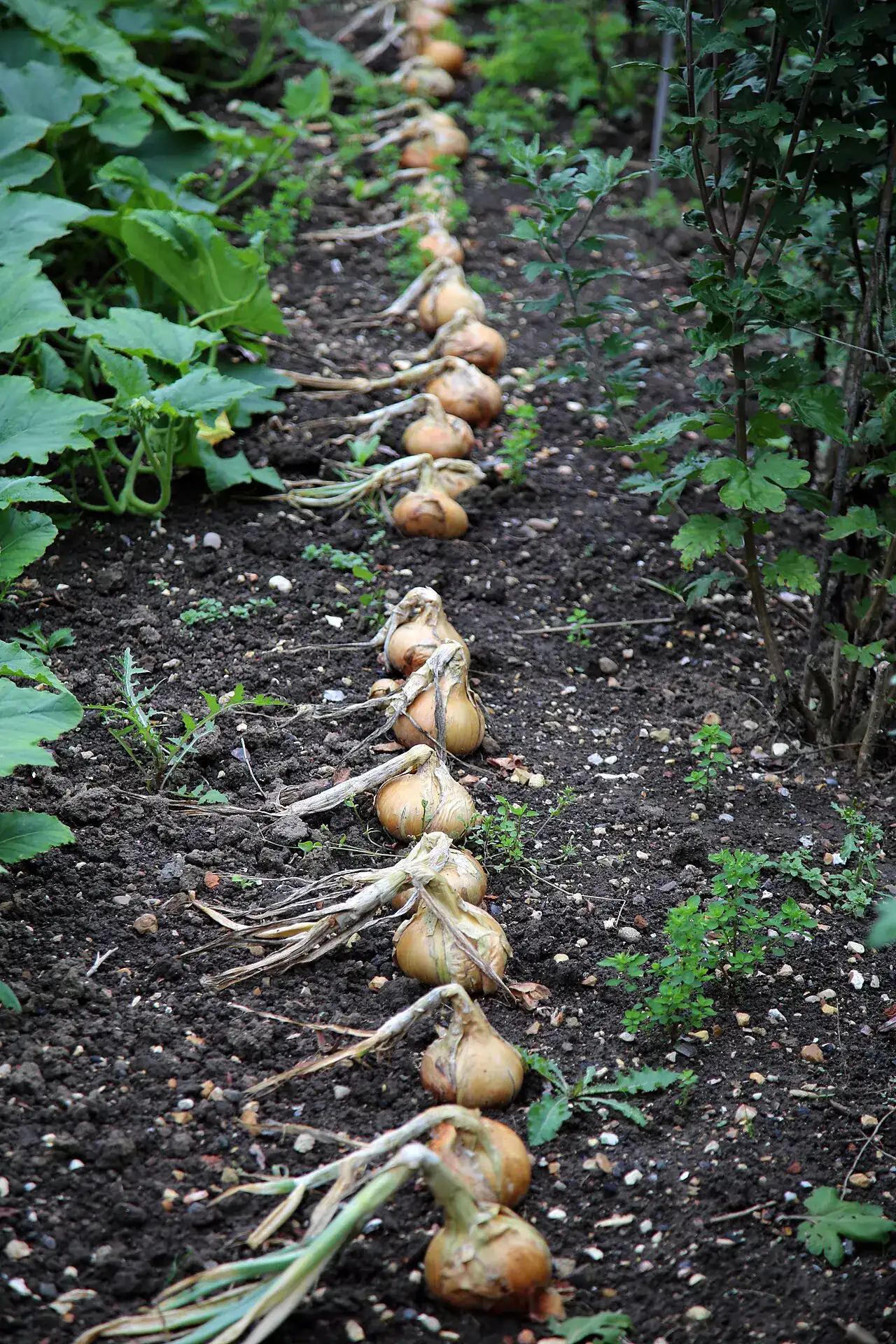

What onions need
The RHS calls onions easy to grow. Give them a warm, sunny spot with well-drained soil, or a large container, and they are ready in summer or early autumn.
Feed the soil first. The RHS weeds the ground thoroughly, then digs in about a bucketful of homemade garden compost or well-rotted manure per square metre. It warns against fresh manure. On a no-dig bed it mulches the soil and plants or sows into the mulch. Its glossary note describes a mulch as a layer at least 5 cm thick, put down between late autumn and late winter, which it gives as November to February.
No bed to spare? The RHS grows onions in a container at least 45 cm wide and deep, filled with peat-free soil-based compost and stood in a sunny spot.
That is the whole preparation. What makes the difference after that is how you start the crop, and how you look after it in spring.
Onions: what to do and when
Under cover and outdoors, for UK conditions. The weather differs from year to year and from north to south, so check your local conditions too.
Sets or seed?
You can start onions in two ways, and the RHS sets out what each one gives you.
Sets are small bulbs. The RHS says they are the easiest and fastest way to grow onions. The cost is that sets are more prone to bolting, which means running to flower. Heat-treated sets greatly reduce this risk.
Seed is cheaper and gives you a wider choice of varieties, but takes more time and care. One thing to know before you use up an old packet: the RHS says the germination rate of onion seed declines after a year or two.
There is one more point in favour of sets. The RHS guide to onion fly says that growing onions from sets rather than seed can help the plants survive attacks by the first generation of larvae.
Planting sets has a page of its own, with the autumn and spring dates, depth and spacing. See when to plant onion sets. The rest of this section and the next are about seed.
Growing onions from seed

Indoors. The RHS sows from mid-winter to early spring. Sow about 1.3 cm deep in modular trays of peat-free seed compost, in a heated propagator or on a warm, sunny windowsill. Seedlings should appear within a couple of weeks. Then move them into bright light and keep the compost slightly moist.
One seed or several. You can sow one seed per module, or three or four. The RHS says multi-sown bulbs are likely to be smaller. When you plant them out, do not split the clump. Plant it as it is.
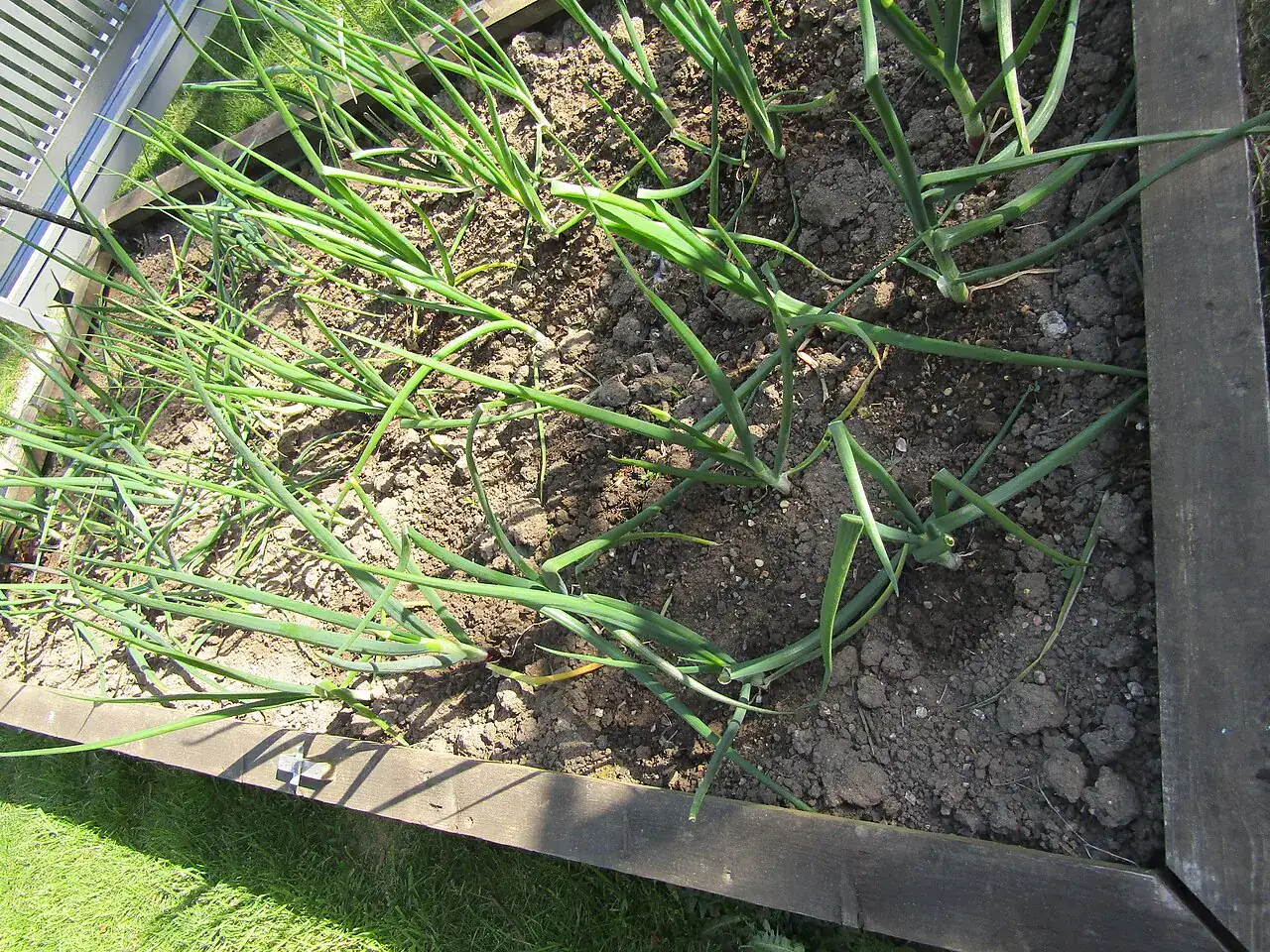
Planting out. Harden the seedlings off in spring, then plant them about 10 cm apart in rows 25–30 cm apart. For large onions, the RHS gives 15 cm between plants.
Outdoors. The RHS sows from early to mid-spring, once the soil begins to warm, 1.3 cm deep in rows 20–30 cm apart. Thin the seedlings to 5 cm apart, then later to 10 cm. Garden Organic sows outdoors from March to mid-April, 1.5 cm deep in rows 15–20 cm apart, and thins to 5–10 cm. It gives a germination time of 21 days and an average of 20 weeks to harvest.
Why the date matters. Onions must be growing strongly by late spring, the RHS says, because lengthening days trigger bulb formation.
Overwintering onions from seed. The RHS says overwintering varieties such as 'Toughball' can be sown indoors in late summer or early autumn, and hardened off in early autumn before planting out.
Onions: growing conditions
Allium cepa
- Position
- Warm and sunny
- Soil
- Free-draining, with garden compost dug in
- Spacing
- 20 cm between rows, 10 cm apart in the row, sets 10–15 cm apart in rows 20–30 cm apart (RHS)
- Sow
- Indoors from mid-winter, outdoors in early to mid-spring
- Plant
- Sets in early to mid-spring, or overwintering sets in autumn
- Harvest
- June to October, by planting time
- Watering
- Only in prolonged dry spells, none once the bulbs have swollen
- Difficulty
- Easy
Watering
The RHS guide to watering vegetables says onions, shallots and leeks only need to be watered when they are establishing, and in very dry spells.
The onion guide gives three rules.
- Water during prolonged dry spells, especially early on, when the roots are forming. - Stop once the bulbs have swollen in mid-summer. - Avoid wetting the foliage.
Garden Organic gives the same advice in fewer words: water in dry weather, and stop once the bulbs have swollen.
One RHS page puts the stress elsewhere. Its guide to onion neck rot, a disease that shows up in the store, lists an irregular water supply among the risks and says to water the crop regularly during dry spells.
Weeding: the job that matters most
The RHS watering guide says onions, garlic and leeks do not cope well with competition from weeds.
The RHS says to weed regularly, removing weeds by hand where they are close to the onions. If you hoe, take care not to damage the bulbs or the foliage. Garden Organic says the same: remove weeds by hand, carefully.
Weeding has a second benefit. The RHS guide to onion downy mildew says to keep weeds under control so that air can move through the crop.
Feeding
Most onions need no feeding after planting. The RHS says the organic matter added before planting, such as garden compost, should be enough for most soils.
There is one exception. On poor soil, the RHS gives autumn-planted onions an organic, nitrogen-rich fertiliser in late winter. It adds that this can also suppress premature flowering. Its guide to bolting is more exact: for overwintered onions, a topdressing of nitrogen-rich fertiliser in January at 70–100 g per square metre can suppress bolting.
Do not overdo it, and do not feed late. The RHS neck rot guide says to avoid excessive nitrogen and late applications of fertiliser, which it defines as after July. The aim is hard, well-ripened bulbs. Its leek rust guide gives another reason for care with fertiliser: rust infection is worse on nitrogen-rich soils that are low in potassium.
Bolting and flower stems
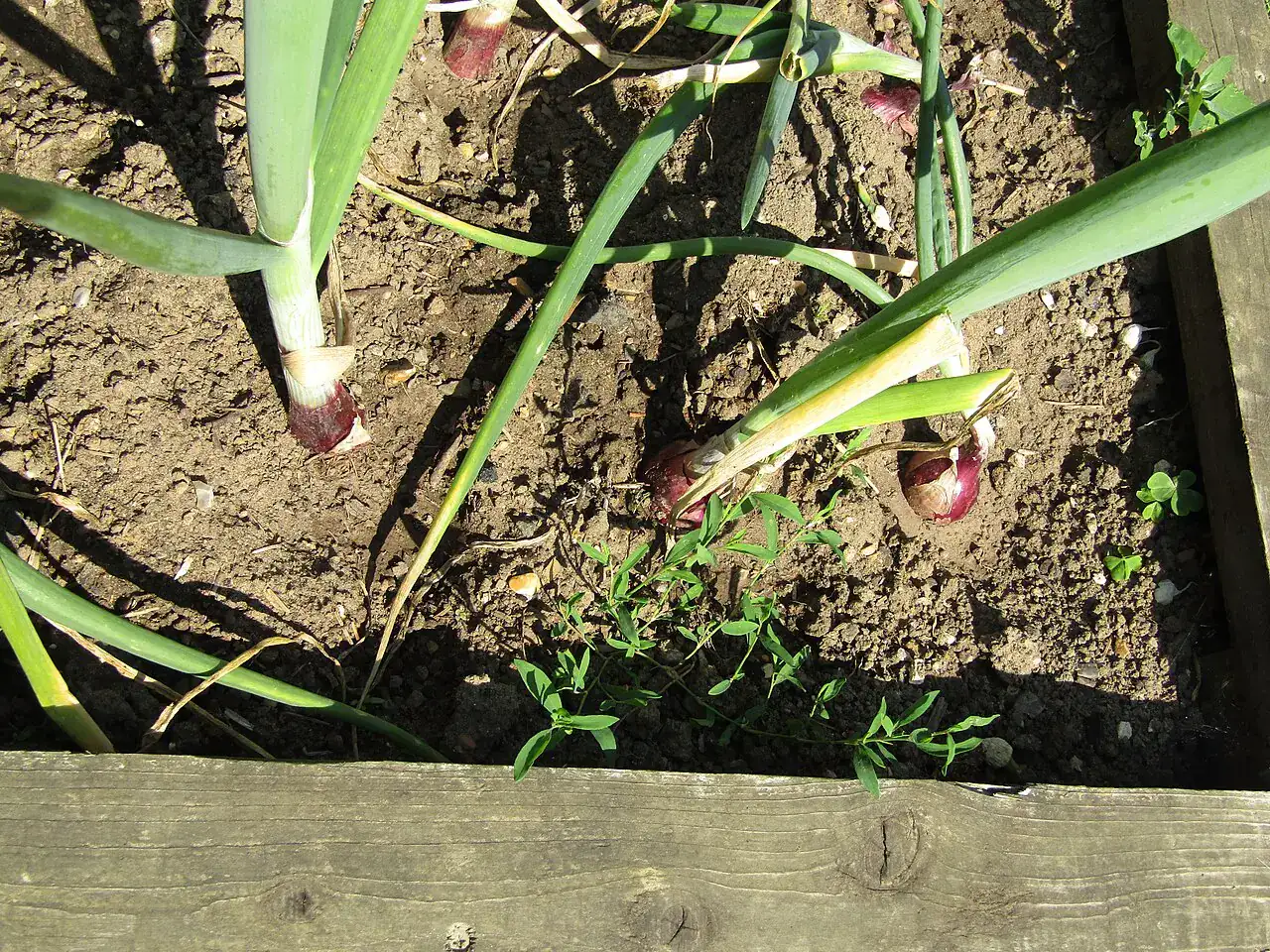

Sometimes an onion sends up a thick flower stem in its first summer. This is bolting.
Why it happens. Onions are biennial, the RHS guide to bolting explains, so they are able to flower. Flowering in the first year is due to unsettled weather early in the season and usually occurs after a prolonged cold spell. Cold nights, hot days and late frosts may also contribute. The onion guide names low spring temperatures as the cause.
Which onions bolt most. Sets bolt more readily than seed-raised onions. The bolting guide adds that red onions are more likely to bolt than white or brown types.
What to do. Remove flower stems as soon as they start to form, the RHS says. Garden Organic removes them too, and notes that the softer part of the stem is edible. A bulb that has flowered will not store well, the RHS says.
How to avoid it next year.
- If bolting keeps happening, plant heat-treated sets in early spring. The RHS explains that exposure to high temperature suppresses the formation of flower buds. - Choose a variety with resistance. The RHS describes 'Hercules' as having good bolting resistance. - Raise early crops in modules in a greenhouse and plant them out when it is warmer, or grow them under cloches or fleece.
Diseases to know
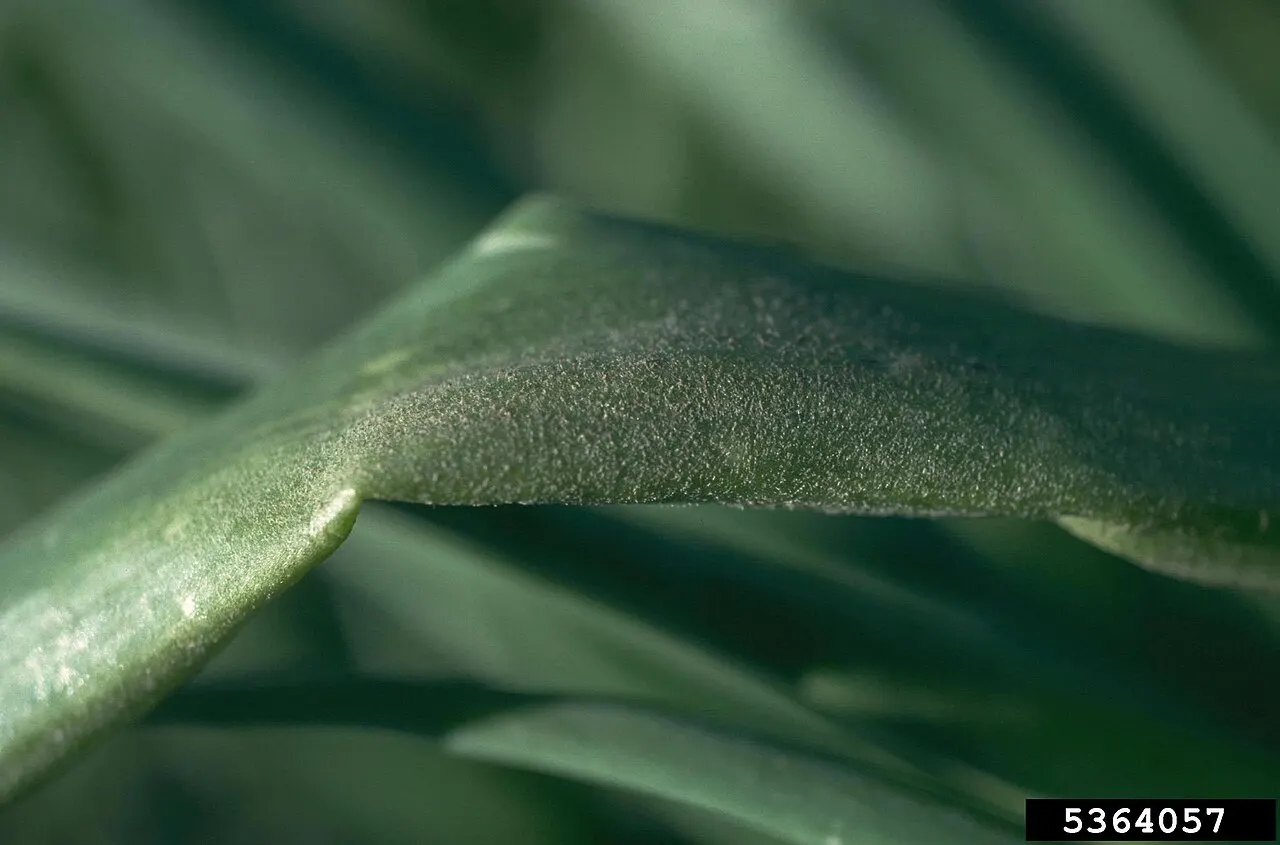

The RHS calls onions relatively trouble free, but prone to fungal diseases in damp conditions or poor storage. Three matter most.
Onion downy mildew. The leaves yellow and die back from the tip downwards. In moist conditions a white mould appears on them, which later turns purplish. The RHS says it comes in late spring and summer and is worse in cool, wet seasons. Avoid overcrowded crops and sheltered, damp sites. Remove and dispose of affected plants, and do not compost them. After an attack, do not plant onions or shallots in the same ground for five years. The RHS says the varieties 'Hylander' and 'Santero' appear to offer good protection.
Onion white rot. The foliage yellows and wilts, and the base of the bulb carries a white, fluffy growth that is later covered in small, round, black structures. Look for it from mid-summer until early autumn. This one is serious, because the fungus can remain in the soil for at least 15 years, and the RHS says it is effectively impossible to eliminate. It spreads in contaminated soil, on tools and muddy footwear. The best defence is not to bring it in.
Onion neck rot. Plants look healthy while growing, and the bulbs rot from the neck after several weeks in store. The RHS says white-bulbed onions are more likely to be attacked than red or yellow ones. Where it has occurred, do not grow onions in that soil for three years.
Leek rust also turns up on onions as bright orange pustules, but the RHS says onions are rarely severely affected in the UK.
For downy mildew, neck rot and leek rust alike, the RHS says there are no fungicides available to gardeners, and for white rot no chemical treatments either. So prevention is what counts. The downy mildew guide says soft, mouldy or otherwise suspect sets should not be planted.
Pests to know

Birds. They pull up newly planted sets. The RHS covers the row with biodegradable fleece or netting until the sets have rooted.
Onion fly. White maggots up to 10 mm long feed on the roots and inside the bulb. Seedlings can be killed, and on older plants the outer leaves yellow and wilt. The RHS says the fly is most damaging in June and July, is most often found in central and eastern England, and can have three generations a year. Insect-proof mesh can give some protection. Birds, hedgehogs and ground beetles eat the maggots.
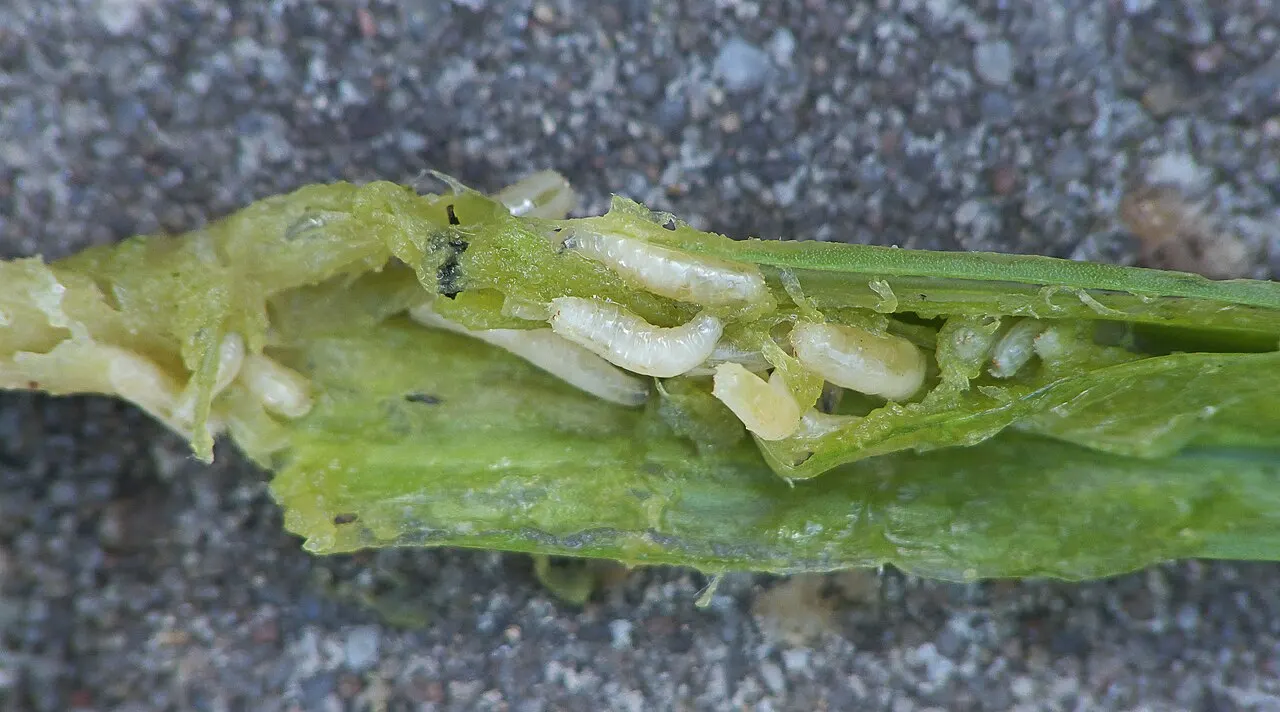
Allium leaf miner. A newer pest. The RHS says it was first detected in Britain in 2002 and is now widespread in England and parts of Wales. The first sign is lines of white dots on the leaves. The maggots then tunnel through foliage, stems and bulbs, and rots follow. There are two generations a year. The RHS covers plants with insect-proof mesh while the adult flies are active, in March to April and September to November, and rotates the crop so that flies do not emerge under the cover.
Leek moth. Its caterpillars feed on the crop. The RHS says it is mainly found in southern England but is spreading north.
If you use any plant protection product, use only products approved in the UK, used as the label says.
Varieties the RHS recommends
Onions come in yellow, white and red, the RHS says, and mature from early summer to early autumn. Its guide lists these, most with the Award of Garden Merit (AGM).
- 'Sturon' (AGM): popular and reliable, stores well. - 'Centurion' (AGM): early cropping, stores well. - 'Hercules' (AGM): large, strong flavour, good bolting resistance. - 'Rumba' (AGM): medium, yellow, grows and stores well. - 'Red Baron' (AGM): red, crops in mid to late summer, stores well. - 'Marshalls Red Fen': red, good flavour, stores well. Its sets can be planted in autumn.
The RHS says a limited range of sets is also available in autumn. It advises buying or ordering early, as popular varieties often sell out quickly.
When to lift them
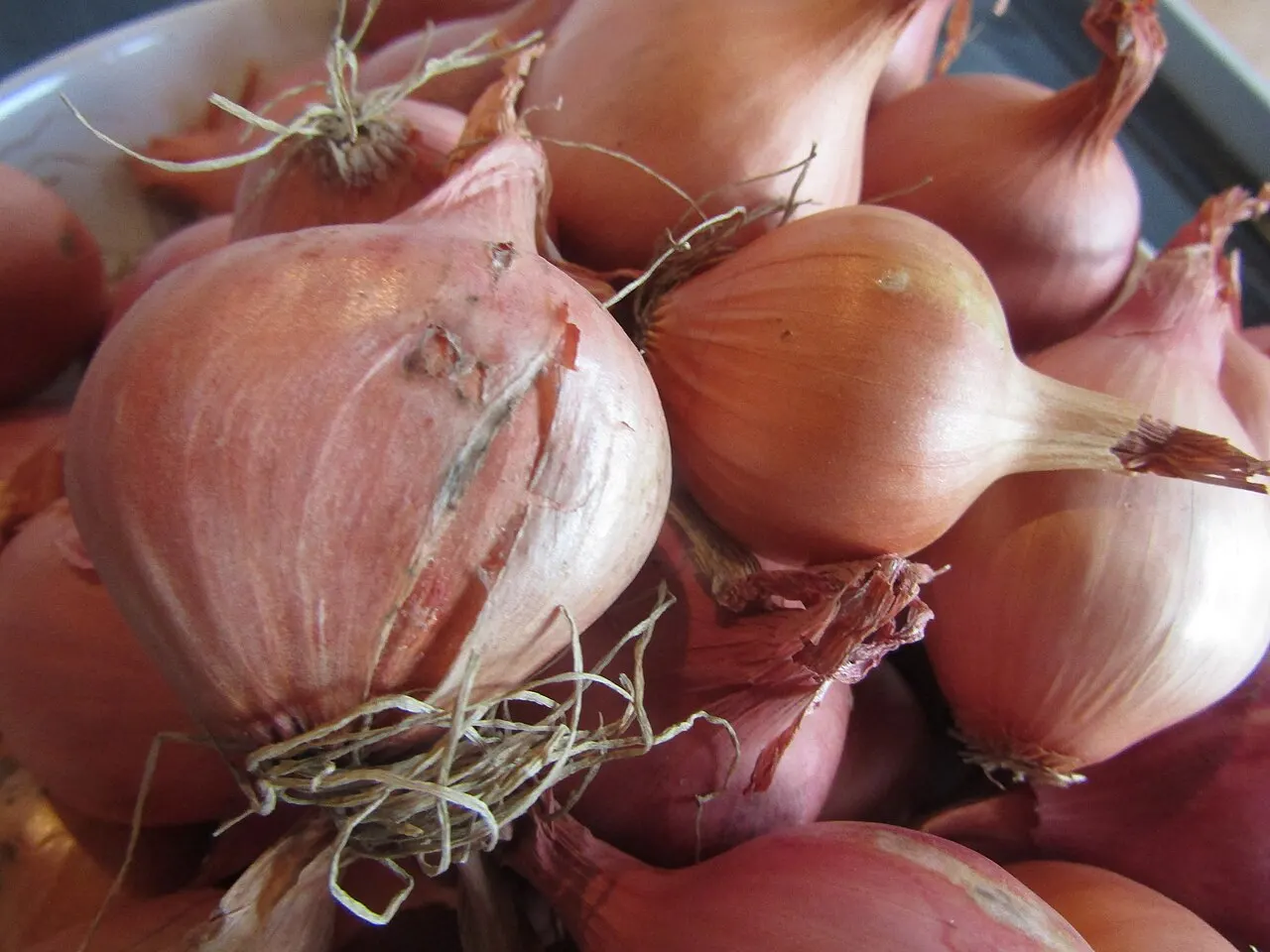

The RHS gives June and July for autumn-planted sets, and July to October for spring-planted sets and onions raised from seed. Garden Organic gives mid-July to September.
The sign is the foliage. When it yellows and topples, the crop is ready. The RHS lifts the bulbs carefully with a fork before the foliage dies down completely, so that they are not bruised, and uses any damaged onions first.
After that the bulbs need about two weeks of drying before they go into store. Drying, plaiting and keeping onions through the winter are covered in how to store onions.
Cheat sheet: growing onions
| What | Advice |
|---|---|
| Site | Warm and sunny, with well-drained soil |
| Before planting | About a bucketful of garden compost or well-rotted manure per square metre. No fresh manure |
| Seed indoors | Mid-winter to early spring, about 1.3 cm deep, in modules |
| Seed outdoors | Early to mid-spring, 1.3 cm deep, thinned to 5 cm and later 10 cm |
| Sets | 2 cm deep, tip just showing, 10–15 cm apart, rows 20–30 cm apart |
| Watering | In prolonged dry spells. Stop once the bulbs have swollen in mid-summer |
| Feeding | Usually none after planting. On poor soil, nitrogen-rich fertiliser for autumn-planted onions in late winter |
| Weeding | Regularly, by hand close to the bulbs |
| Flower stems | Remove as soon as they start to form |
| Harvest | When the foliage yellows and topples |
How to do it
- Choose a warm, sunny site with free-draining soil and weed it thoroughly.
- Dig in about a bucketful of garden compost or well-rotted manure per square metre. Do not use fresh manure.
- Plant sets 2 cm deep with the tip just showing, or sow seed 1.3 cm deep, in early to mid-spring.
- Cover newly planted sets with fleece or netting until they have rooted, so birds cannot pull them up.
- Thin seedlings to 5 cm apart, then later to 10 cm.
- Weed regularly, by hand close to the plants.
- Water in prolonged dry spells, without wetting the foliage. Stop once the bulbs have swollen in mid-summer.
- Remove any flower stems as soon as they start to form.
- Lift the bulbs with a fork when the foliage yellows and topples, before it dies down completely.
Common questions
Is it better to grow onions from seed or sets?
Sets are the easiest and fastest, the RHS says, but more prone to bolting. Seed is cheaper and offers more varieties, but takes more time and care. Heat-treated sets greatly reduce the bolting risk.
How often should I water onions?
Only in prolonged dry spells, especially early on while the roots form. The RHS stops watering once the bulbs have swollen in mid-summer, and avoids wetting the foliage.
Do onions need feeding?
Usually not. The RHS says garden compost dug in before planting should be enough for most soils. On poor soil it feeds autumn-planted onions with a nitrogen-rich fertiliser in late winter. Do not apply fertiliser after July.
Why are my onions flowering?
That is bolting. The RHS says it usually follows a prolonged cold spell early in the season. Sets and red onions are more prone to it. Remove the flower stem as soon as it forms. The RHS says a bulb that has flowered will not store well.
Should I bend over the tops of my onions?
No. The RHS says bending over the foliage, or loosening the bulbs to break the roots, is no longer recommended. Wait for the leaves to yellow and topple naturally.
Can I grow onions in pots?
Yes. The RHS uses a container at least 45 cm wide and deep, filled with peat-free soil-based compost, in a sunny spot.
Sources
We wrote this page using the sources below.
- How to grow onions, Royal Horticultural Society (RHS)
- Bolting in vegetables, Royal Horticultural Society (RHS)
- Watering vegetables and fruit, Royal Horticultural Society (RHS)
- Onion downy mildew, Royal Horticultural Society (RHS)
- Onion white rot, Royal Horticultural Society (RHS)
- Onion neck rot, Royal Horticultural Society (RHS)
- Leek rust, Royal Horticultural Society (RHS)
- Onion fly, Royal Horticultural Society (RHS)
- Allium leaf miner, Royal Horticultural Society (RHS)
- Onion (growing guide), Garden Organic